



Gjør som tusenvis av andre bokelskere
Abonner på vårt nyhetsbrev og få rabatter og inspirasjon til din neste leseopplevelse.
Ved å abonnere godtar du vår personvernerklæring.Du kan når som helst melde deg av våre nyhetsbrev.

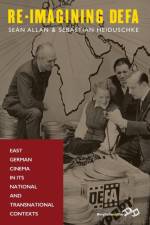
In this stimulating collection, leading international experts assess this vibrant landscape and plot an ambitious course for future research that considers other cinematic traditions, genre works, and DEFA's post-unification "afterlife."
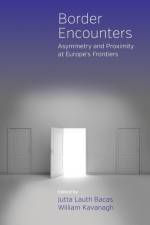
Addresses the changes in European political frontiers. Investigates border encounters from a local, ground-up perspective. Uses anthropological case studies from European borderlands to explain the changing interactions and social relationships between people at a political frontier.
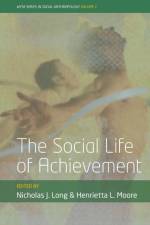
Innovatively explains the multiple effects of "achievement". Brings together cutting-edge insights into politics, psychology, ethics and materiality. Advances a new agenda for the study of achievement within anthropology. Promotes "achievement" as a moment of cultural invention, and the complexity of the achiever.
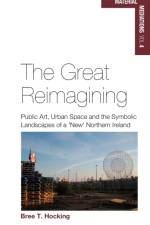
While sectarian violence has greatly diminished on the streets of Belfast and Derry, proxy battles over the right to define Northern Ireland's identity through its new symbolic landscapes continue. Offering a detailed ethnographic account of Northern Ireland's post-conflict visual transformation, this book examines the official effort to produce new civic images against a backdrop of ongoing political and social struggle. Interviews with politicians, policymakers, community leaders, cultural workers, and residents shed light on the deeply contested nature of seemingly harmonized urban landscapes in societies undergoing radical structural change. Here, the public art process serves as a vital means to understanding the wider politics of a transforming public sphere in an age of globalization and transnational connectivity.
The author combines a case study approach with his analyses. Examines the historical, social and political dynamics of chemical contamination. A well-timed study of how chemicals affect the environment and how humans deal with that effect.
The Cameroon Grassfields, home to three ethnic groups - Grassfields societies, Mbororo, and Hausa - provide a valuable case study for the anthropological examination of identity politics and interethnic relations. In the midst of the political liberalization of Cameroon in the late 1990s and 2000s, local responses to political and legal changes took the form of a series of performative and discursive expressions of ethnicity. Confrontational encounters stimulated by economic and political rivalry, as well as socially integrative processes, transformed collective self-understanding in Cameroon in conjunction with recent global discourses on human, minority, and indigenous rights. The book provides a vital contribution to the study of ethnicity, conflict, and social change in the anthropology of Africa.
Central to discussions of multiculturalism and minority rights in modern liberal societies is the idea that the particular demands of minority groups contradict the requirements of equality, anonymity, and universality for citizenship and belonging. The contributors to this volume question the significance of this dichotomy...
Papua New Guinea's two most powerful legal orders - customary law and state law -undermine one another in criminal matters. This phenomenon, called legal dissonance, partly explains the low level of personal security found in many parts of the country. This book demonstrates that a lack of coordination in the punishing of wrong behavior is both problematic for legal orders themselves and for those who are subject to such legal phenomena Legal dissonance can lead to behavior being simultaneously promoted by one legal order and punished by the other, leading to injustice, and, perhaps more importantly, undermining the ability of both legal orders to deter wrongdoing.
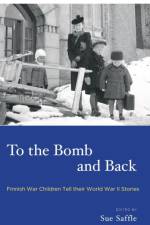
Between 1939 and 1945 some 80,000 Finnish children were sent to Sweden, Denmark, and elsewhere, ostensibly to protect them from danger while their nation's soldiers fought superior Soviet and German forces. This was the largest of all World War II children's transports...
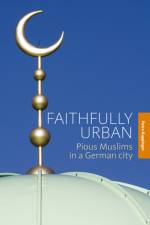
In the southern German city of Stuttgart lives a pious Muslim population that has merged with the local population to create a meaningful shared existence. In this ethnographic account, the author introduces and examines the lives of ordinary residents, neighborhoods, and mosque communities to analyze moments and spaces where Muslims and non-Muslims engage with each other and accommodate their respective needs. These accounts show that even in the face of resentment and discrimination, this pious population has indeed become an integral part of the urban community.
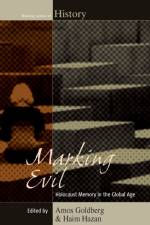
Talking about the Holocaust has provided an international language for ethics, victimization, political claims, and constructions of collective identity. As part of a worldwide vocabulary, that language helps set the tenor of the era of globalization.
Entrepreneur and Nazi functionary Fritz Kiehn lived through almost 100 years of German history, from the Bismarck era to the late Bonn Republic. A successful manufacturer, Kiehn joined the Nazi Party in 1930 and obtained a number of influential posts after 1933, making him one of the most powerful Nazi functionaries in southern Germany. These posts allowed him ample opportunity to profit from "e;Aryanizations"e; and state contracts. After 1945, he restored his reputation, was close to Adenauer's CDU during Germany's economic miracle, and was a respected and honored citizen in Trossingen. Kiehn's biography provides a key to understanding the political upheavals of the twentieth century, especially the workings of the corrupt Nazi system as well as the "e;coming to terms"e; with National Socialism in the Federal Republic.
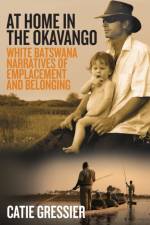
An ethnographic portrayal of the lives of white citizens of the Okavango Delta, Botswana, this book examines their relationships with the natural and social environments of the region. In response to the insecurity of their position as a European-descended minority in a postcolonial African state, Gressier argues that white Batswana have developed cultural values and practices that have allowed them to attain high levels of belonging. Adventure is common for this frontier community, and the book follows their safari lifestyles as they construct and perform localized identities in their interactions with dangerous wildlife, the broader African community, and the global elite via their work in the nature-tourism industry.
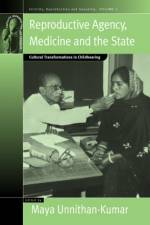
Recent years have seen many changes in human reproduction resulting from state and medical interventions in childbearing processes. Based on empirical work in a variety of societies and countries, this volume considers the relationship between reproductive processes (of fertility, pregnancy, childbirth and the postpartum period)...
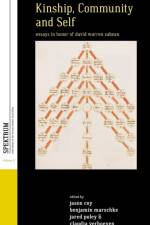
David Warren Sabean was a pioneer in the historical-anthropological study of kinship, community, & selfhood in early modern & modern Europe. The significance of Sabean's scholarship is reflected in original research contributed by former students & essays written by his contemporaries, demonstrating Sabean's impact on the discipline of history.
In this book, an international group of contributors train attention on the concepts of disjuncture, field, social space, sociability, organizations and network, mid-range concepts that are "good to think with." Neither too narrowly defined nor too sweeping, these concepts can be used to think through a myriad of ethnographic situations.
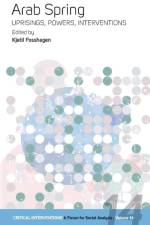
The events of the Arab Spring presented a dramatic reconstitution of politics and the public sphere through their aesthetic and performative uses of public space. Mass demonstrations have become a new global political form, grounded in the localization of globalizing processes, institutions, and relationships. This volume delves beneath the seemingly chaotic nature of events to explore the structural dynamics underpinning popular resistance and their support or suppression. It moves beyond what has usually been defined as Arab Spring nations to include critical views on Bahrain, the Palestinian territories, and Turkey. The research and analysis presented explores not just the immediate protests, but also the historical realization, appropriation, and even institutionalization of these critical voices, as well as the role of international criminal law and legal exceptionalism in authorizing humanitarian interventions. Above all, it questions whether the revolutions have since been hijacked and the broad popular uprisings already overrun, suppressed, or usurped by the upper classes.
In Theses on Feuerbach, Marx writes "The philosophers have only interpreted the world differently; the point is to change it." This collection examines how filmmakers have tried to change the world by engaging in emancipatory politics in their work, and how audiences have received them.
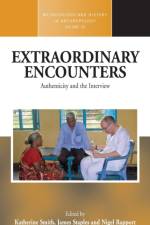
The interview creates a context of interaction with a particular authenticity to experience. Contributors explore how the interview is experienced as a particular kind of knowing within which personal, biographic, and social norms are explored and interrogated, providing direction and awareness for future encounters.
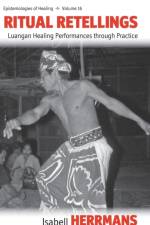
Belian is an exceptionally lively tradition of shamanistic curing rituals performed by the Luangans, a politically marginalized population of Indonesian Borneo. This volume explores the significance of these rituals in practice and asks what belian rituals do - socially, politically, and existentially - for particular people in particular circumstances. Departing from the conception that rituals exist as ethereal, liminal or insulated traditional domains, this volume demonstrates the importance of understanding rituals as emergent within their specific historical and social settings. It offers an analysis of a number of concrete ritual performances, exemplifying a diversity of ritual genres, stylistic modalities and sensual ambiences, from low-key, habitual affairs to drawn-out, crowd-seizing community rituals and innovative, montage-like cultural experiments.
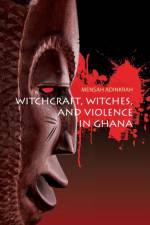
Witchcraft violence is a feature of many contemporary African societies. In Ghana, belief in witchcraft and the malignant activities of putative witches is prevalent. Purported witches are blamed for all manner of adversities including inexplicable illnesses and untimely deaths. As in other historical periods and other societies, in contemporary Ghana, alleged witches are typically female, elderly, poor, and marginalized. Childhood socialization in homes and schools, exposure to mass media, and other institutional mechanisms ensure that witchcraft beliefs are transmitted across generations and entrenched over time. This book provides a detailed account of Ghanaian witchcraft beliefs and practices and their role in fueling violent attacks on alleged witches by aggrieved individuals and vigilante groups.
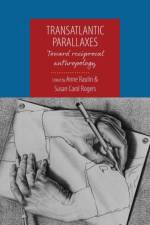
Now that we live in a world that seems increasingly familiar, putatively marked by a spreading sameness, anthropology must re-envision itself. This volume, the product of a novel encounter of American anthropologists of France and French anthropologists of the United States, explores the possibilities of that path...
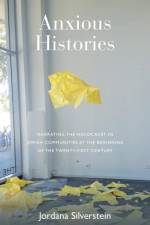
Over the last seventy years, memories and narratives of the Holocaust have played a significant role in constructing Jewish communities. The author explores one field where these narratives are disseminated: Holocaust pedagogy in Jewish schools in Melbourne and New York. Bringing together a diverse range of critical approaches, including memory studies, gender studies, diaspora theory, and settler colonial studies, Anxious Histories complicates the stories being told about the Holocaust in these Jewish schools and their broader communities. It demonstrates that an anxious thread runs throughout these historical narratives, as the pedagogy negotiates feelings of simultaneous belonging and not-belonging in the West and in Zionism. In locating that anxiety, the possibilities and the limitations of narrating histories of the Holocaust are opened up once again for analysis, critique, discussion, and development.
Mauritian independence in 1968 marked the end of a regime favorable to the Franco-Mauritians, the island's white colonial elite. Now, in postcolonial Mauritius, this group is faced with a much more diverse power constellation and often feels in competition with others vying for their privileges. Though this is a clear departure from the colonial heydays, Franco-Mauritians have been able to continue their elite position into the early twenty-first century. This book focuses on the power of white elites still lingering on in postcolonial realities, and with regards to elites and power in general, addresses anew how an elite group aims to prolong its position over time.
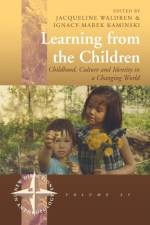
Children and youth, regardless of their ethnic backgrounds, are experiencing lifestyle choices their parents never imagined and contributing to the transformation of ideals, traditions, education and adult - child power dynamics.
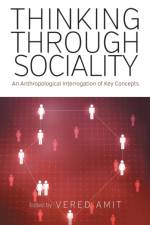
The notion of 'sociality' is now widely used within the social sciences and humanities. However, what is meant by the term varies radically, and the contributors here, through compelling and wide ranging essays, identify the strengths and weaknesses of current definitions and their deployment in the social sciences.
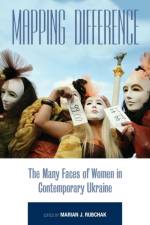
Drawn from various disciplines and a broad spectrum of research interests, these essays reflect on the challenging issues confronting women in Ukraine today. The contributors are an interdisciplinary, transnational group of scholars from gender studies, feminist theory, history, anthropology, sociology, women''s studies, and literature. Among the issues they address are: the impact of migration, education, early socialization of gender roles, the role of the media in perpetuating and shaping negative stereotypes, the gendered nature of language, women and the media, literature by women, and local appropriation of gender and feminist theory. Each author offers a fresh and unique perspective on the current process of survival strategies and postcommunist identity reconstruction among Ukrainian women in their current climate of patriarchalism.
In the spring of 1933, German society was deeply divided - in the Reichstag elections on 5 March, only a small percentage voted for Hitler. Yet, once he seized power, his creation of a socially inclusive Volksgemeinschaft, promising equality, economic prosperity and the restoration of honor and pride after the humiliating ending of World War I.
Demographic study & the idea of a "population" was developed & modified over the course of the 20th century, mirroring the political, social, & cultural situations & aspirations of different societies. This growing field adapted itself to specific policy concerns & was therefore never apolitical, despite the protestations of practitioners...
Between the two world wars, a distinct and vibrant film culture emerged in Europe. Film festivals and schools were established; film theory and history was written that took cinema seriously as an art form; and critical writing that created the film canon flourished. This scene was decidedly transnational and creative, overcoming traditional boundaries between theory and practice, and between national and linguistic borders. This new European film culture established film as a valid form of social expression, as an art form, and as a political force to be reckoned with. By examining the extraordinarily rich and creative uses of cinema in the interwar period, we can examine the roots of film culture as we know it today.
Abonner på vårt nyhetsbrev og få rabatter og inspirasjon til din neste leseopplevelse.
Ved å abonnere godtar du vår personvernerklæring.