







Gjør som tusenvis av andre bokelskere
Abonner på vårt nyhetsbrev og få rabatter og inspirasjon til din neste leseopplevelse.
Ved å abonnere godtar du vår personvernerklæring.Du kan når som helst melde deg av våre nyhetsbrev.

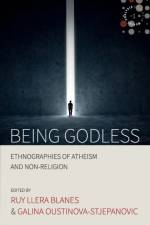
Drawing on ethnographic inquiry and the anthropological literature on doubt and atheism, this volume explores people's reluctance to pursue religion.
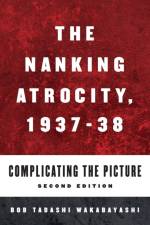
First published in 2007, The Nanking Atrocity remains an essential resource for understanding the massacre. This second edition includes an extensive new introduction reflecting on the historiographical developments of the last decade, making this even more relevant as we approach the 80th anniversary of the Nanking massacre.
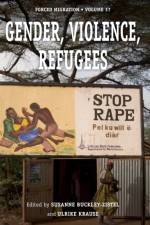
Providing nuanced accounts of how the social identities of men and women, the context of displacement and the experience or manifestation of violence interact, this collection offers conceptual analyses and in-depth case studies to illustrate how gender relations are affected by displacement, encampment and return.
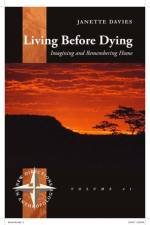
This in-depth description of life in a nursing/care home, told in a year of daily conversations with patients and staff, highlights the daily care of frail or ill residents of extreme old age, emphasising interaction with care assistants and the different behaviours of men and women.
This book provides a fascinating survey of the ways in which Jewish communities in Europe, North America, and the Middle East participated in and were changed by the Great War during and after the conflict.
First published in 2007, The Nanking Atrocity remains an essential resource for understanding the massacre. This second edition includes an extensive new introduction reflecting on the historiographical developments of the last decade, making this even more relevant as we approach the 80th anniversary of the Nanking massacre.
House of the Waterlily is a historical novel set in the world of the Late Classic Period Maya of the Southern Lowlands. Through the story of Lady Winik, a young Maya noble girl, the reader is immersed in the everyday world of the Maya.
Combining accessible prose with scholarly rigor, The Participants presents fascinating profiles of the all-too-human men who implemented some of the most inhuman acts in modern history.
Combining accessible prose with scholarly rigor, The Participants presents fascinating profiles of the all-too-human men who implemented some of the most inhuman acts in modern history.
Marilyn Strathern is among the most creative and celebrated contemporary anthropologists, and her work draws interest from across the humanities and social sciences.
This volume explores what draws students to study or volunteer abroad. In doing so, the book sheds light on how affect is managed by educators and mobilized by students and volunteers themselves, and how these structures of feeling related to broader social and economic forces.
This landmark study analyzes the debates over compensation within France and Great Britain, establishing a compelling analysis of the Atlantic slave trade's aftermath.
Heritage studies necessarily must deal with strong emotions and political commitments. In this, it poses particular challenges for teachers and their students. Guided by a shared focus on these "sensitive pasts," the contributors to this volume draw on new theoretical and empirical research to provide valuable insights into heritage pedagogy.
In 1944, members of the Sonderkommando-the "e;special squads,"e; composed almost exclusively of Jewish prisoners, who ensured the smooth operation of the gas chambers and had firsthand knowledge of the extermination process-buried on the grounds of Auschwitz-Birkenau a series of remarkable eyewitness accounts of Nazi genocide. This careful and penetrating study examines anew these "e;Scrolls of Auschwitz,"e; which were gradually recovered, in damaged and fragmentary form, in the years following the camp's liberation. It painstakingly reconstructs their historical context and textual content, revealing complex literary works that resist narrow moral judgment and engage difficult questions about the limits of testimony.
This book contributes to our understanding of modern European history through the lens of sound by examining diverse subjects such as performed and recorded music, auditory technologies like the telephone and stethoscope, and the ambient noise of the city.
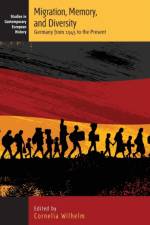
German attitudes toward migrants have been profoundly shaped by the legacies of the Second World War. This volume explores the history of migration and diversity in Germany from 1945 onward.
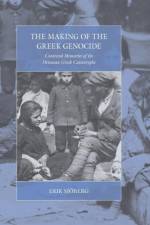
After World War I, over one million Ottoman Greeks were expelled from Turkey, resulting in hundreds of thousands of deaths. This study analyzes the fight for international recognition of the Greek genocide narrative, showing how its memory developed as a cultural trauma with both nationalist and cosmopolitan dimensions.
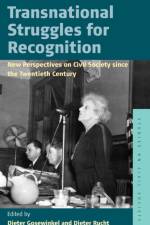
"Recognition" is a critical concept for social movements, and while its theoretical and empirical dimensions have usually been studied separately, this collection focuses on both against a transnational backdrop.
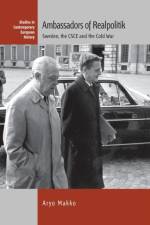
This groundbreaking study looks at the tension between realism and idealism in Swedish diplomacy during the Conference on Security and Cooperation in Europe and 1975 Helsinki Accords.
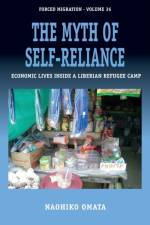
The Myth of Self-Reliance provides valuable insights into refugees' experiences of repatriation to Liberia after protracted exile and their responses to the ending of refugee status for remaining refugees in Ghana.
This valuable book introduces Mary Douglas's theories, and outlines the ways in which her work is of continuing importance for the future of the social sciences.
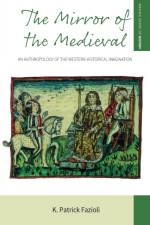
This book gives an eye-opening account of the ways various political and intellectual projects have appropriated the medieval past for their own ends, grounded in an analysis of contemporary struggles over power and identity in the Eastern Alps.
Polish cinema has inescapably been shaped by the nation's succession of different economic and ideological regimes over the last century. This volume is the first to analyze the entirety of the nation's film history-from independence in 1918 to today-through the lenses of political economy and social class.
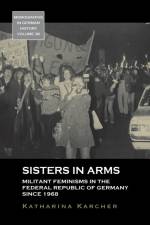
Drawing on a wealth of new source material, Sisters in Arms gives a bracing account of how radical feminism was enacted by key German leftist organizations, such as the infamous Red Army Faction and June 2 Movement.
This volume pursues the idea by revealing how lawbreakers and lawmakers have related to one another on the shadowy terrains of power over wide stretches of time and space.
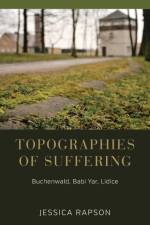
Commentary on memorials to the Holocaust has been plagued with a sense of "e;monument fatigue"e;, a feeling that landscape settings and national spaces provide little opportunity for meaningful engagement between present visitors and past victims. This book examines the Holocaust via three sites of murder by the Nazis: the former concentration camp at Buchenwald, Germany; the mass grave at Babi Yar, Ukraine; and the razed village of Lidice, Czech Republic. Bringing together recent scholarship from cultural memory and cultural geography, the author focuses on the way these violent histories are remembered, allowing these sites to emerge as dynamic transcultural landscapes of encounter in which difficult pasts can be represented and comprehended in the present. This leads to an examination of the role of the environment, or, more particularly, the ways in which the natural environment, co-opted in the process of killing, becomes a medium for remembrance.
The contributors to this volume analyze the evolving anti-Jewish policies in the annexed territories and their impact on the Jewish population, as well as the attitudes and actions of non-Jews, Germans, and indigenous populations.
Bringing together leading scholars from across Europe, this volume represents a landmark intervention in the historiography of concepts.
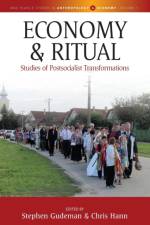
These six ethnographies offer a different vision. Comparative, historical, and contemporary, the studies stretch from Macedonia to Kyrgyzstan, each one illuminating the changes in an area as it emerged from socialism and (re-)entered market society.
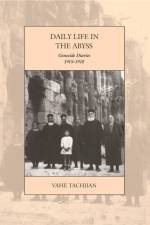
Research into the Armenian Genocide has grown tremendously in recent years, surprisingly little is known about the actual experiences of the genocide's victims. Daily Life in the Abyss illuminates this aspect through the intertwined stories of two Armenian families who endured forced relocation and deprivation in and around modern-day Syria.
Abonner på vårt nyhetsbrev og få rabatter og inspirasjon til din neste leseopplevelse.
Ved å abonnere godtar du vår personvernerklæring.