





















Gjør som tusenvis av andre bokelskere
Abonner på vårt nyhetsbrev og få rabatter og inspirasjon til din neste leseopplevelse.
Ved å abonnere godtar du vår personvernerklæring.Du kan når som helst melde deg av våre nyhetsbrev.

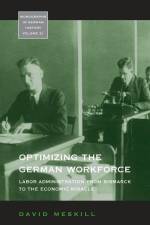
During the twentieth century, German government and industry created a highly skilled workforce as part of an ambitious program to control and develop the country's human resources. Yet, these long-standing efforts to match as many workers as possible to skilled vocations and to establish a system of job training have received little scholarly attention, until now. The author's account of the broad support for this program challenges the standard historical accounts that focus on disagreements over the German political-economic order and points instead to an important area of consensus. These advances are explained in terms of political policies of corporatist compromise and national security as well as industry's evolving production strategies. By tracing the development of these policies over the course of a century, the author also suggests important continuities in Germany's domestic politics, even across such different regimes as Imperial, Weimar, Nazi, and post-1945 West Germany.
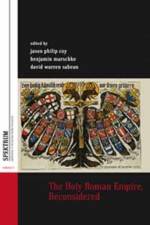
The Holy Roman Empire has often been anachronistically assumed to have been defunct long before it was actually dissolved at the beginning of the nineteenth century. The authors of this volume reconsider the significance of the Empire in the sixteenth, seventeenth, and eighteenth centuries.
A great deal of attention continues to focus on Berlin's cultural and political landscape after the fall of the Berlin Wall, but as yet, no single volume looks at the divided city through an interdisciplinary analysis.
In writings about travel, the Balkans appear most often as a place travelled to. Western accounts of the Balkans revel in the different and the exotic, the violent and the primitive traits that serve (according to many commentators) as a foil to self-congratulatory definitions of the West as modern, progressive and rational.
Basing his extensive research into hitherto unexploited archival documentation on both sides of the Rhine, Allan Mitchell has uncovered the inner workings of the German military regime from the Wehrmacht's triumphal entry into Paris in June 1940 to its ignominious withdrawal in August 1944. Although mindful of the French experience and the fundamental issue of collaboration, the author concentrates on the complex problems of occupying a foreign territory after a surprisingly swift conquest. By exploring in detail such topics as the regulation of public comportment, economic policy, forced labor, culture and propaganda, police activity, persecution and deportation of Jews, assassinations, executions, and torture, this study supersedes earlier attempts to investigate the German domination and exploitation of wartime France. In doing so, these findings provide an invaluable complement to the work of scholars who have viewed those dark years exclusively or mainly from the French perspective.
Popular presentations of history have recently been discovered as a new field of research, and even though interest in it has been growing noticeably very little has been published on this topic. This volume is one of the first to open up this new area of historical research, introducing some of the work that has emerged in Germany...
German Jews faced harsh dilemmas in their responses to Nazi persecution, partly a result of Nazi cruelty and brutality but also a result of an understanding of their history and rightful place in Germany. T
Longstanding and resilient local ideas of property and practices of inheritance control the destinies of those living in Bearn, a region of south-west France in the foothills of the French Pyrenees. Based on extensive fieldwork and archival research that combines ethnography and intellectual history...
It is commonly acknowledged that anthropologists use personal experiences to inform their writing. However, it is often assumed that only fieldwork experiences are relevant, and that the personal appears only in the form of self-reflexivity. This book takes a step forward from anthropology at home and auto-ethnography.
The Sahrawi and Afghan refugee youth in the Middle East have been stereotyped regionally and internationally: some have been objectified as passive victims; others have become the beneficiaries of numerous humanitarian aid packages which presume the primacy of the Western model of child development.
An examination of the role of history and memory is vital in order to better understand why the grand design of a United Europe-with a common foreign policy and market yet enough diversity to allow for cultural and social differences-was overwhelmingly turned down by its citizens.
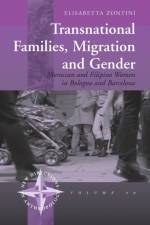
By linking the experiences of immigrant families with the increased reliance on cheap and flexible workers for care and domestic work in Southern Europe, this study documents the lived experiences of neglected actors of globalization - migrant women - as well as the transformations of Western families more generally. However, while describing in detail the structural and cultural contexts within which these women have to operate, the book questions dominant paradigms about women as passive victims of patriarchal structures and brings out instead their agency and the creative ways in which they take control of their lives in often difficult circumstances. Based on extensive ethnographic fieldwork and interviews, the author offers a valuable dual comparison between two Southern European countries on the one hand and between two migrant groups, one Christian and one Muslim, on the other, thus bringing to light unique detailed data on migration decision-making, settlement and on the multiple ways in which different women cope with the consequences of their transnational lives.
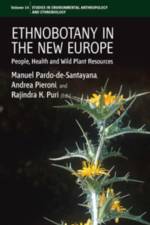
The study of European wild food plants and herbal medicines is an old discipline that has been invigorated by a new generation of researchers pursuing ethnobotanical studies in fresh contexts. Modern botanical and medical science itself was built on studies of Medieval Europeans' use of food plants and medicinal herbs.
"e;Only unity saves the Serbs"e; is the famous call for unity in the Serb nationalist doctrine. But even though this doctrine was ideologically adhered to by most of the Serb leaders in Croatia and Bosnia, disunity characterized Serb politics during the Yugoslav disintegration and war. Nationalism was contested and nationalist claims to homogeneity did not reflect the reality of Serb politics. This book provides a comprehensive analysis of Serb politics and challenges widespread assumptions regarding the Yugoslav conflict and war. It finds that although Slobodan Milosevic played a highly significant role, he was not always able to control the local Serb leaders. Moreover, it adds to the emerging evidence of the lack of importance of popular attitudes; hardline dominance was generally based on the control of economic and coercive resources rather than on elites successfully "e;playing the ethnic card."e; It moves beyond an assumption of automatic ethnic outbidding and thus contributes toward a better understanding of intra-ethnic rivalry in other cases such as Israel/Palestine, Northern Ireland, Nagorno-Karabakh and Rwanda.
Existing critical traditions fail to fully account for the impact of Austrian director, and 2009 Cannes Palm d'Or winner, Michael Haneke's films, situated as they are between intellectual projects and popular entertainments. In this first English-language introduction to, and critical analysis of, his work, each of Haneke's eight feature films are considered in detail. Particular attention is given to what the author terms Michael Haneke's 'ethical cinema' and the unique impact of these films upon their audiences. Drawing on the moral philosophy of Immanuel Kant and Stanley Cavell, Catherine Wheatley, introduces a new way of marrying film and moral philosophy, which explicitly examines the ethics of the film viewing experience. Haneke's films offer the viewer great freedom whilst simultaneously imposing a considerable burden of responsibility. How Haneke achieves this break with more conventional spectatorship models, and what its far-reaching implications are for film theory in general, constitute the principal subject of this book.
Businesses and other organizations are increasingly hiring anthropologists and other ethnographically-oriented social scientists as employees, consultants, and advisors. The nature of such work, as described in this volume, raises crucial questions about potential implications to disciplines of critical inquiry such as anthropology. In addressing these issues, the contributors explore how researchers encounter and engage sites of organizational practice in such roles as suppliers of consumer-insight for product design or marketing, or as advisors on work design or business and organizational strategies. The volume contributes to the emerging canon of corporate ethnography, appealing to practitioners who wish to advance their understanding of the practice of corporate ethnography and providing rich material to those interested in new applications of ethnographic work and the ongoing rethinking of the nature of ethnographic praxis.
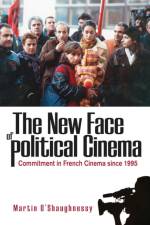
Since 1995 there has been a widespread return of commitment to French cinema taking it to a level unmatched since the heady days following 1968. But this new wave of political film is very different and urgently calls out for an analysis that will account for its development, its formal characteristics and its originality. This is what this book provides. It engages with leading directors such as Cantet, Tavernier, Dumont, Kassovitz, Zonca and Gudiguian, takes in a range of less well known but important figures and strays across the Belgian border to engage with the seminal work of the Dardenne brothers. It shows how the works discussed are helping to reinvent political cinema by finding stylistic and narrative strategies adequate to the contemporary context.
Marcel Mauss (1872-1950) was the leading social anthropologist in Paris between the world wars, and his Manuel d'ethnographie, dating from that period, is the longest of all his texts. Despite having had four editions in France, the Manuel has hitherto been unavailable in English.
Hannah Arendt (1906-1975) first argued that there were continuities between the age of European imperialism and the age of fascism in Europe in The Origins of Totalitarianism (1951). She claimed that theories of race, notions of racial and cultural superiority, and the right of 'superior races' to expand territorially were themes...
In this volume, leading chroniclers of war provide thoughtful and powerful essays that reflect on their ethnographic work at the frontlines. The contributors recount not only what they have seen and heard in war zones but also what is being read, studied, analyzed and remembered in a wide variety of locations.
The demise of the New German Cinema and the return of popular cinema since the 1990s have led to a renewed interest in the postwar years and the complicated relationship between East and West German cinema in particular. A survey of the 1950s, as offered here for the first time, is therefore long overdue.
Anthropology has long shied away from examining how human beings may lead happy and fulfilling lives. This book, however, shows that the ethnographic examination of well-being-defined as the optimal state for an individual, a community, and a societyA"-and the comparison of well-being within and across societies is a new and important area...
Recent years have witnessed a significant growth of interest in the consequences of political violence and displacement for the young. However, when speaking of childrenA" commentators have often taken the situation of those in early and middle childhood as representative of all young people under eighteen years of age.
Using Germany as a case study of the impact of American culture throughout a period characterized by a totalitarian system, two destructive wars, ethnic cleansing, and economic disaster, this book explores the political and cultural parameters of Americanization and anti-Americanism.
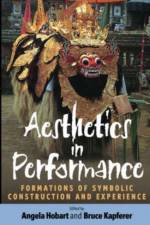
Explores the structures and aesthetic possibilities of music, dance and dramatic representation in ritual and theatrical situations in a diversity of ethnographic contexts in Europe, Americas, Africa and Asia. This book aims to explore the way artistic and aesthetic practices in performance produce and structure experience.
During the Cold War, Britain had an astonishing number of contacts and connections with one of the Soviet Bloc's most hard-line regimes: the German Democratic Republic. The left wing of the British Labour Party and the Trade Unions often had closer ties with communist East Germany than the Communist Party of Great Britain (CPGB). There were strong connections between the East German and British churches, women's movements, and peace movements; influential conservative politicians and the Communist leadership in the GDR had working relationships; and lucrative contracts existed between business leaders in Britain and their counterparts in East Germany. Based on their extensive knowledge of the documentary sources, the authors provide the first comprehensive study of Anglo-East German relations in this surprisingly under-researched field. They examine the complex motivations underlying different political groups' engagement with the GDR, and offer new and interesting insights into British political culture during the Cold War.
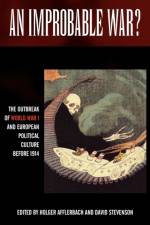
The WW I has been described as the primordial catastrophe of the twentieth century. Arguably, Italian Fascism, German National Socialism and Soviet Leninism and Stalinism would not have emerged without the cultural and political shock of WW I. This volume focusses on the connection between the WW I and the short- and long-term causes of WW I.
Race, ethnicity and nation are all intimately linked to family and kinship, yet these links deserve closer attention than they usually get in social science, above all when family and kinship are changing rapidly in the context of genomic and biotechnological revolutions.
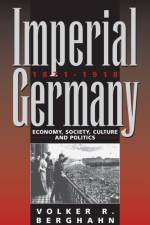
A comprehensive history of German society in this period, providing a broad survey of its development. The volume is thematically organized and designed to give easy access to the major topics and issues of the Bismarkian and Wilhelmine eras. The statistical appendix contains a wide range of social, economic and political data. Written with the English-speaking student in mind, this book is likely to become a widely used text for this period, incorporating as it does twenty years of further research on the German Empire since the appearance of Hans-Ulrich Wehler's classic work.
Abonner på vårt nyhetsbrev og få rabatter og inspirasjon til din neste leseopplevelse.
Ved å abonnere godtar du vår personvernerklæring.