














Gjør som tusenvis av andre bokelskere
Abonner på vårt nyhetsbrev og få rabatter og inspirasjon til din neste leseopplevelse.
Ved å abonnere godtar du vår personvernerklæring.Du kan når som helst melde deg av våre nyhetsbrev.

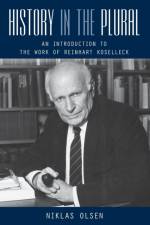
Reinhart Koselleck (1923-2006) was one of most imposing and influential European intellectual historians in the twentieth century. Constantly probing and transgressing the boundaries of mainstream historical writing, he created numerous highly innovative approaches, absorbing influences from other academic disciplines as represented in the work of philosophers and political thinkers like Hans Georg Gadamer and Carl Schmitt and that of internationally renowned scholars such as Hayden White, Michel Foucault, and Quentin Skinner. An advocate of "e;grand theory,"e; Koselleck was an inspiration to many scholars and helped move the discipline into new directions (such as conceptual history, theories of historical times and memory) and across disciplinary and national boundaries. He thus achieved a degree of international fame that was unusual for a German historian after 1945. This book not only presents the life and work of a "e;great thinker"e; and European intellectual, it also contributes to our understanding of complex theoretical and methodological issues in the cultural sciences and to our knowledge of the history of political, historical, and cultural thought in Germany from the 1950s to the present.
Although the end of the Cold War was greeted with great enthusiasm by people in the East and the West, the ensuing social and especially economic changes did not always result in the hoped-for improvements in people's lives. This led to widespread disillusionment that can be observed today all across Eastern Europe.
A fundamental natural resource, water and its use not only reflect "modes of production" but also that complex interplay between resources and their exploitation (and domination) by various social agents, who in their turn are inevitably influenced by the abundance or rarity of water supplies. Focusing on scientific, social and economic issues from the 16th to the 19th century, the author, one of Italy''s leading historians in this field, looks at the innumerable conflicts that arose over water resources and the environmental impact of projects intended to control them. Venice and Holland are undoubtedly the two most fascinating cases of societies "built on water," with the conquest of vast expanses of marshland - either inland or on the coast (the Dutch polders or the Venetian lagoon) - not only stimulating agricultural production, but also nurturing a deeply-felt relationship between the local populations and the element of water itself. The author rounds off his study by looking at the influence the hydraulic technology developed in Holland would have on many European countries (France, England and Germany in particular) and at questions raised by contemporaries about the environmental impact of agricultural progress and its effects upon the social-economic equilibria within the communities concerned.Salvatore Ciriacono teaches Modern History at the University of Padua. He was fellow several times by the Max-Planck Institut für Geschichte in Göttingen (Germany) and visiting Professor in Paris (Maison des Sciences de l''Homme), Boston University and Tokyo-Komaba. Taught at the Conservatoire des Arts et Métiers in Paris. He is author of La rivoluzione industriale. Dalla protoindustrializzazione alla produzione flessibile (Milan 2000) and editor of Eau et développement dans l''Europe moderne (Paris 2004) and Land Drainage and Irrigation (London 1998).
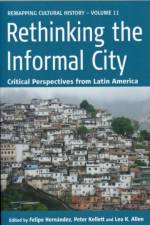
Latin American cities have always been characterized by a strong tension between what is vaguely described as their formal and informal dimensions. However, the terms formal and informal refer not only to the physical aspect of cities but also to their entire socio-political fabric.
In the 1960s and 1970s, Western Europe's "Golden Age", a new youth consciousness emerged. This volume moves beyond the conflation of youth culture and "Americanization" and sets out to show how international developments fused with national traditions to produce specific youth cultures that became the leading trendsetters.
Showing how in North America, the United Kingdom, Europe, Australia and the South Pacific, radio provides distinctive forms of content for the individual listener, this volume also shows how it enables ethnic and cultural groups to maintain their sense of identity. It suggests that the benefits and gratifications which radio confers remain unique.
To most outsiders, the hills of the Scottish Borders are a bleak and foreboding space - usually made to represent the stigmatized Other, Ad Finis, by the centers of power in Edinburgh, London, and Brussels. At a time when globalization seems to threaten our sense of place, people of the Scottish borderlands provide a vivid case study of how the being-in-place is central to the sense of self and identity. Since the end of the thirteenth century, people living in the Scottish Border hills have engaged in armed raiding on the frontier with England, developed capitalist sheep farming in the newly united kingdom of Great Britain, and are struggling to maintain their family farms in one of the marginal agricultural rural regions of the European Community. Throughout their history, sheep farmers living in these hills have established an abiding sense of place in which family and farm have become refractions of each other. Adopting a phenomenological perspective, this book concentrates on the contemporary farming practices - shepherding, selling lambs and rams at auctions - as well as family and class relations through which hill sheep fuse people, place, and way of life to create this sense of being-at-home in the hills.
The rapidly expanding population of youth gangs and street children is one of the most disturbing issues in many cities around the world. These children are perceived to be in a constant state of destitution, violence and vagrancy, and therefore must be a serious threat to society, needing heavy-handed intervention and 'tough love' from concerned adults to impose societal norms on them and turn them into responsible citizens. However, such norms are far from the lived reality of these children. The situation is further complicated by gender-based violence and masculinist ideologies found in the wider Ethiopian culture, which influence the proliferation of youth gangs. By focusing on gender as the defining element of these children's lives - as they describe it in their own words - this book offers a clear analysis of how the unequal and antagonistic gender relations that are tolerated and normalized by everyday school and family structures shape their lives at home and on the street.
In northwest Namibia, people's political imagination offers a powerful insight into the post-apartheid state. Based on extensive anthropological fieldwork, this book focuses on the former South African apartheid regime and the present democratic government; it compares the perceptions and practices of state and customary forms of judicial administration, reflects upon the historical trajectory of a chieftaincy dispute in relation to the rooting of state power and examines everyday forms of belonging in the independent Namibian State. By elucidating the State through a focus on the social, historical and cultural processes that help constitute it, this study helps chart new territory for anthropology, and it contributes an ethnographic perspective to a wider set of interdisciplinary debates on the State and state processes.
Louis Dumont's concept of hierarchy continues to inspire social scientists. Using it as their starting point, the contributors to this volume introduce both fresh empirical material and new theoretical considerations.
Where lived experience of surroundings is shifting, visceral, and immersive, interpretation of social spaces tends to be static and remote. "Space" and "place" are also often analyzed without grappling much (if at all) with the social, political, and historical roots of spatial practice.
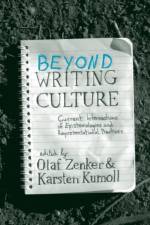
Two decades after the publication of Clifford and Marcus' volume Writing Culture, this collection provides a fresh and diverse reassessment of the debates that this pioneering volume unleashed.
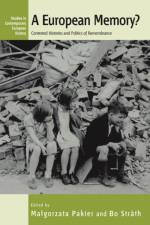
An examination of the role of history and memory is vital in order to better understand why the grand design of a United Europe - with a common foreign policy and market yet enough diversity to allow for cultural and social differences - was overwhelmingly turned down by its citizens.
The First World War has been described as the "primordial catastrophe of the 20th century." Arguably, Italian Fascism, German National Socialism and Soviet Leninism and Stalinism would not have emerged without the cultural and political shock of World War I. The question why this catastrophe happened therefore preoccupies historians to this day.
Over the last fifteen years, the South African post-apartheid Transitional Amnesty Process - implemented by the Truth and Reconciliation Commission (TRC) - has been extensively analysed by scholars and commentators from around the world and from almost every discipline of human sciences.
Bla Balzs's two works, Visible Man (1924) and The Spirit of Film (1930), are published here for the first time in full English translation. The essays offer the reader an insight into the work of a film theorist whose German-language publications have been hitherto unavailable to the film studies audience in the English-speaking world. Balzs's detailed analyses of the close-up, the shot and montage are illuminating both as applicable models for film analysis, and as historical documents of his key contribution - alongside such contemporaries as Arnheim, Kracauer and Benjamin - to critical debate on film in the 'golden age' of the Weimar silents.
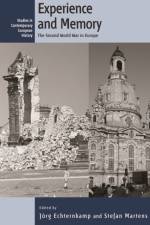
Modern military history, inspired by social and cultural historical approaches, increasingly puts the national histories of the Second World War to the test. New questions and methods are focusing on aspects of war and violence that have long been neglected. What shaped people's experiences and memories? What differences and what similarities exist
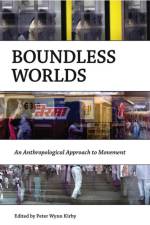
Discarding the term "globalization" for analytic purposes, this book suggests that the significance of globalizing processes is best understood as an experiential, imaginary and epistemological dimension in people's lives. It explores how meaningful relations and connections are made and unmade that reach beyond the specificity of time and place.
The Allied agreement after the Second World War did not only partition Germany, it divided the nation along the fault-lines of a new bipolar world order.
"e;In this fascinating in-depth study of the impact of nostalgia on contemporary American cinema, Christine Sprengler unpicks the history of the concept and explores its significance in theory and practice. She offers a lucid analysis of the development of nostalgia in American society and culture, navigating a path through the key debates and aligning herself with recent attempts to recuperate its critical potential. This journey opens up the myriad permutations of nostalgia across visual and material culture and their interface with cinema, with the 1950s emerging as a privileged moment. Four case studies (Sin City, Far From Heaven, The Aviator and The Good German) analyse the ways in which aspects of visual design such as props, costume and colour contribute to the nostalgic aesthetic, allowing for both critical distance and emotion. Written with verve, style and impressive attention to detail, Screening Nostalgia is an invaluable addition to existing scholarship. It is also essential reading for anyone interested in the ways in which we access the past through cinema."e;Pam Cook, Professor Emerita in Film, University of Southampton
Whereas the history of workers and labor movements has been widely researched, the history of work has been rather neglected by comparison. This volume offers original contributions that deal with cultural, social and theoretical aspects of the history of work in modern Europe, including the relations between gender & work, working and soldiering..
Anthropological interest in new subjects of research and contemporary knowledge practices has turned ethnographic attention to a wide ranging variety of professional fields. Among these the encounter with international development has perhaps been longer and more intimate than any of the others.
This volume responds to the call to attend to educational research outside the United States and to break out of "metropolitan provincialism." A guide to the anthropologies and ethnographies of learning and schooling published in German, French, Spanish, Portuguese, Italian, Slavic languages, Japanese, and English as a second language...
Recent studies on the meaning of cultural diplomacy in the 20th century often focus on the United States and the Cold War, based on the premise that cultural diplomacy was a key instrument of foreign policy in the nation's effort to contain the Soviet Union. As a result, the term cultural diplomacyA" has become one-dimensional...
Anthropological interest in new subjects of research and contemporary knowledge practices has turned ethnographic attention to a wide ranging variety of professional fields. Among these the encounter with international development has perhaps been longer and more intimate than any of the others. Anthropologists have drawn critical attention to the interfaces and social effects of development's discursive regimes but, oddly enough, have paid scant attention to knowledge producers themselves, despite anthropologists being among them. This is the focus of this volume. It concerns the construction and transmission of knowledge about global poverty and its reduction but is equally interested in the social life of development professionals, in the capacity of ideas to mediate relationships, in networks of experts and communities of aid workers, and in the dilemmas of maintaining professional identities. Going well beyond obsolete debates about 'pure' and 'applied' anthropology, the book examines the transformations that occur as social scientific concepts and practices cross and re-cross the boundary between anthropological and policy making knowledge.
For many years, histories of the Holocaust focused on its perpetrators, and only recently have more scholars begun to consider in detail the experiences of victims and survivors, as well as the documents they left behind.
Chapters based on fieldwork from such diverse sites as India, Nepal, Sri Lanka, China, Turkey, Morocco, Tunisia, and Vietnam demonstrate how sharing and tolerance are both more complex and multifaceted than they are often recognized to be.
The present book is a workroom in which anthropologists and philosophers have begun a dialogue on trust and hope. The interdisciplinary efforts of the contributors demonstrate how the collaboration of anthropologists and philosophers can result in new and challenging ways of thinking about trust and hope.
Liminality has the potential to be a leading paradigm for understanding transformation in a globalizing world. This book explores the methodological range and applicability of the concept to a variety of concrete social and political problems.
Recently considerable interest has developed about the degree to which anthropological approaches to kinship can be used for the study of the long-term development of European history. From the late middle ages to the dawn of the twentieth century, kinship-rather than declining, as is often assumed-was twice reconfigured in dramatic ways...
Abonner på vårt nyhetsbrev og få rabatter og inspirasjon til din neste leseopplevelse.
Ved å abonnere godtar du vår personvernerklæring.