









Gjør som tusenvis av andre bokelskere
Abonner på vårt nyhetsbrev og få rabatter og inspirasjon til din neste leseopplevelse.
Ved å abonnere godtar du vår personvernerklæring.Du kan når som helst melde deg av våre nyhetsbrev.

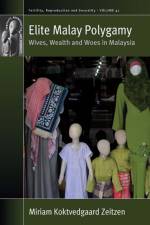
An ethnography of elite polygamy in urban Malaysia, this volume explores the impact this growing practice has on Malay gender relations, examining the varied and often-conflicted polygamy narratives of elite Malay women, who manage their lives and loves under the "threat" of husbands able to marry another woman without their knowledge or consent.
Through histories of these extremely cold environments, this volume makes a novel intervention in Cold War historiography, one whose global and transnational approach undermines the simple opposition of "East" and "West."
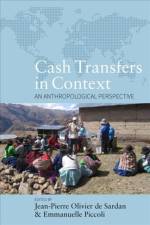
Cash transfer programs have become the preferred channel for delivering emergency aid or tackling poverty in low-and middle-income countries. This book sheds light on their unpredicted consequences worldwide, detailing how they are used by actors to pursue their own strategies and how local populations relate to the external norms they impose.
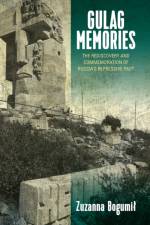
Gulag Memories explores the impact of the Gulag on collective memory as it applies to the language of commemoration in Russia, focusing on four regions particularly affected by the Gulag: Solovetsky Islands, the Komi Republic, the Perm region, and Kolyma.
Divided History uniquely explores how East and West Germany responded to the new challenges and crises of the 1970s, and reunification. Topics range from political, labor, and business issues to migration and environmental issues, showing how the two German states remained inextricably connected in the 1970s and 1980s.
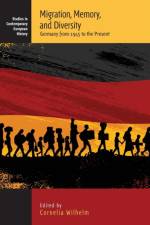
This volume explores the history of migration and diversity in Germany from 1945 onward, showing how conceptions of "otherness" developed while memories of Nazism were still fresh, and identifying the continuities and transformations they have exhibited up until today.
Using the work of a range of feminist theorists, Backman Rogers situates Coppola's work as a critique of postfeminist lifestyles that offer the viewer a feminist and feminine philosophy through beguilement, mood and surface.
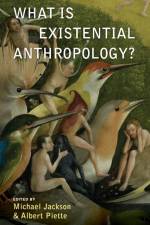
What is existential anthropology, and how would you define it? Contributing anthropologists join editors Michael Jackson and Albert Piette in answering these questions and exploring how various approaches to the human condition might be brought together on the levels of method and of theory.
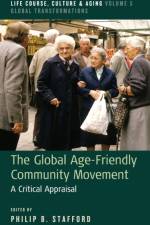
This book provides an introduction to the global phenomenon of the age-friendly community movement, through an extensive collection of international case studies by researchers and practitioners. It explores current tensions in the movement and offers a wide-ranging set of recommendations for advancing age-friendly community development.
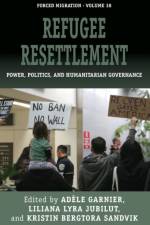
The first of its kind, this volume explores refugee resettlement as a form of humanitarian governance; it offers a detailed understanding of resettlement practices, from the selection of refugees to their long-term integration in resettling states, and highlights the relevance of a lifespan approach to resettlement analysis.
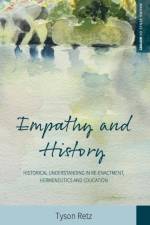
The History and Function of Empathy in Historical Studies is the first comprehensive account of empathy's place in historical scholarship, history pedagogy, and the philosophy of history. It explains how empathy became central to teaching history in schools, and traces its roots in nineteenth-century German historicism.
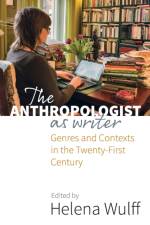
Writing is crucial to anthropology, but which genres are anthropologists expected to master in the 21st century? Although academic writing is an anthropologist's primary genre, they also write in many others, from drafting administrative texts and filing reports to composing ethnographically inspired journalism and fiction.
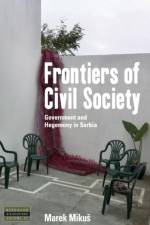
Frontiers of Civil Society is a historical anthropological analysis of the roles of `civil society' in Serbia's postsocialist and postauthoritarian transformation.
In design history, globalization is deeply intertwined with a long-held bias towards Western, industrialized nations. By reassessing the role of regional and national design histories and challenging the claim that nation states are obsolete in identity construction, Designing Worlds reflects on new national narratives from around the world.
While the Armenian genocide is today widely recognized, the broader context of Ottoman violence against minority groups-including the indigenous, largely Christian Assyrians-are less well known. This volume is the first scholarly edited collection focused on the Assyrian genocide, or "sayfo."
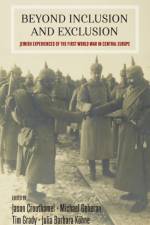
This collection explores rare sources and employs novel interdisciplinary methods to illuminate four interconnected themes: minorities and the meaning of military service, Jewish-Gentile relations, the cultural legacy of the war, and memory politics.
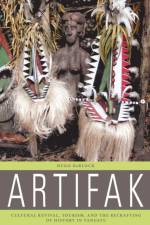
Artifak investigates the meaning and value of (art) objects as commodities in Vanuatu, in differing states of transit and transition: in the local place, on the market, and in the museum. It provides an ethnographic account of commoditization in the context of revitalization of culture and the arts in Vanuatu.
The essays in this volume explore significant physical and psychological aspects of life in the GDR, such as health and diet, leisure and dining, memories of the Nazi past, as well as identity, sports, and experiences of everyday humiliation.
The history of modern Europe is often presented with the hindsight of present-day European integration, which was a genuinely liberal project based on political and economic freedom.
This state-of-the-field collection systematically explores the transcultural, transgenerational, transmedial, and transdisciplinary dimensions of memory-four key concepts that have sometimes been studied in isolation but never in such an integrated manner.
By exploring the lifeworlds of two middle-aged Somalis living in Melbourne, Australia, Being-Here sheds light on the existential dynamics of being-in-place.
Since unification, eastern Germany has witnessed a rapidly changing memorial landscape. Memorializing the GDR provides the first in-depth study of this key topic, investigating the individuals and groups involved in the creation or destruction of memorials while addressing the subject's complex aesthetic, political, and historical dimensions.
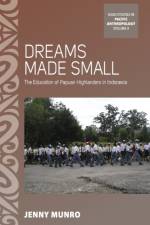
Dreams Made Small offers an in-depth, ethnographic look at journeys of education among young Papuans under Indonesian rule, ultimately revealing how dreams of transformation, equality, and belonging are shaped and reshaped in the face of multiple constraints.
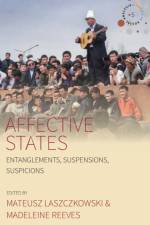
The volume enhances the anthropological understanding of the various ways through which the state comes to be experienced as a visceral presence in social life.
Analyzing the workings of boundary maintenance in the areas of anthropology, energy, gender, and law, Nader contrasts dominant trends in academia with work that pushes the boundaries of acceptable methods and theories.
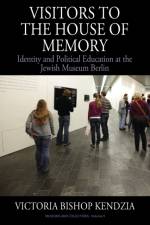
By accompanying a range of senior high school history students before, during and after their visits to the museum, Visitors to the House of Memory is an intimate exploration of how young Berliners from across the city experience the Jewish Museum Berlin.
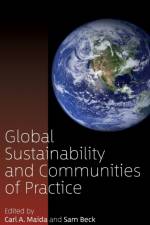
Using case-based and theoretical chapters that examine rural and urban communities of practice, this volume illustrates how participatory researchers and students as well as policy and community leaders find ways to engage with the broader public when it comes to global sustainability research and practice.
Urban areas in Arctic Russia are experiencing unprecedented social and ecological change. This collection outlines the key challenges that city managers will face in navigating this shifting political, economic, social, and environmental terrain.
This book is the first of its kind to analyze how the Great War was interpreted, commemorated, or forgotten across all the ex-Habsburg territories.
Abonner på vårt nyhetsbrev og få rabatter og inspirasjon til din neste leseopplevelse.
Ved å abonnere godtar du vår personvernerklæring.