












Gjør som tusenvis av andre bokelskere
Abonner på vårt nyhetsbrev og få rabatter og inspirasjon til din neste leseopplevelse.
Ved å abonnere godtar du vår personvernerklæring.Du kan når som helst melde deg av våre nyhetsbrev.

This volume brings together theoretical and practical considerations to provide transnational memory scholars with an interdisciplinary investigation into agency-the "who" and the "how" of cross-border commemoration that motivates activists and fascinates observers.
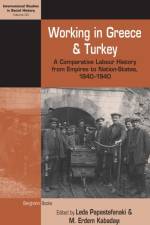
Provides an overdue exploration of labour history on both sides of the Aegean, before as well as after the fall of the Ottoman Empire. Deploying the approaches of global labour history as a framework, this volume presents transnational, transcontinental, and diachronic comparisons that illuminate the shared history of Greece and Turkey.
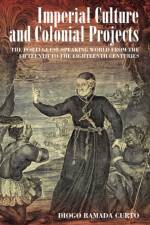
In a series of illuminating case studies, Curto follows the history and perception of major Portuguese colonial initiatives while integrating the complex perspectives of participating agents to show how the empire's life and culture were richly inflected by the operations of imperial expansion.
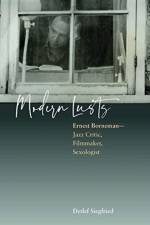
Detlef Siegfried's long-awaited English translation chronicles Ernest Borneman's journey from his days as a young Jewish Communist in Berlin to his ventures in England and Canada, and ultimately, to his endeavors as the most prominent sexologist spearheading the sexual revolution in West Germany and Austria in the twentieth century.
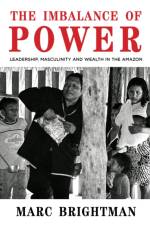
The Imbalance of Power demonstrates that the indigenous societies of the Guiana region of Amazonia do not fit conventional characterizations of 'simple' political units with 'egalitarian' political ideologies and 'harmonious' relationships with nature.
There has been a recent revival of interest in the work of Polish film director Walerian Borowczyk, a label-defying auteur and "escape artist" if there ever was one. This collection serves as an introduction and a guide to Borowczyk's complex and ambiguous body of work, including panoramic views of the director's output, focused studies of particular movies, and more personal, impressionistic pieces. Taken together, these contributions comprise a wide-ranging survey that is markedly experimental in character, allowing scholars to gain insight into previously unnoticed aspects of Borowczyk's oeuvre.
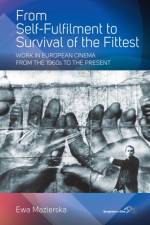
Contrary to the assumption that Western and Eastern European economies and cinemas were very different from each other, they actually had much in common. After the Second World War both the East and the West adopted a mixed system, containing elements of both socialism and capitalism, and from the 1980s on the whole of Europe, albeit at an uneven speed, followed the neoliberal agenda. This book examines how the economic systems of the East and West impacted labor by focusing on the representation of work in European cinema. Using a Marxist perspective, it compares the situation of workers in Western and Eastern Europe as represented in both auteurist and popular films, including those of Tony Richardson, Lindsay Anderson, Jean-Luc Godard, Andrzej Wajda, DuA anMakavejev, Jerzy Skolimowski, the Dardenne Brothers, Ulrich Seidl and many others.
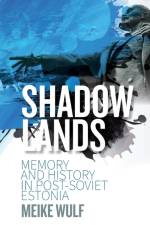
Located within the forgotten half of Europe, historically trapped between Germany and Russia, Estonia has been profoundly shaped by the violent conflicts and shifting political fortunes of the last century. This innovative study traces the tangled interaction of Estonian historical memory and national identity in a sweeping analysis extending from the Great War to the present day. At its heart is the enduring anguish of World War Two and the subsequent half-century of Soviet rule. Shadowlands tells this story by foregrounding the experiences of the country's intellectuals, who were instrumental in sustaining Estonian historical memory, but who until fairly recently could not openly grapple with their nation's complex, difficult past.
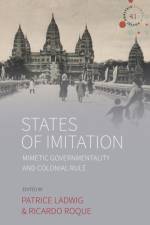
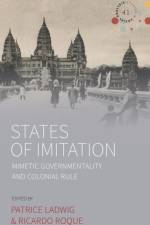
Examines how the colonial state attempted to administer, control, and integrate its indigenous subjects through mimetic governmentality, as well the ways indigenous states adopted these imitative practices to establish reciprocal ties with, or to resist the presence of, the colonial state.
Examines how the colonial state attempted to administer, control, and integrate its indigenous subjects through mimetic governmentality, as well the ways indigenous states adopted these imitative practices to establish reciprocal ties with, or to resist the presence of, the colonial state.
Advances our understanding of cities in the far north by applying elements of the international standard for urban sustainability (ISO 37120) to numerous Arctic cities.
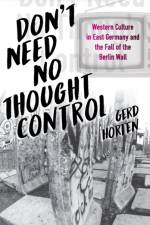
Don't Need No Thought Control explores the dynamic interplay between popular demands, intensifying economic crises, and cultural policy decisions during the Erich Honecker era in a comprehensive and comparative analysis.
While taking a critical look at the labor and social issues related to timber, the story of labor, immigration, and development around the San Francisco Bay region is told through the lens of an archaeological case study of a major player of the timber industry between 1885 and 1920.
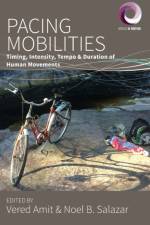
Turning the attention to the temporal as well as the more familiar spatial dimensions of mobility, this volume looks at the means of mobility in twenty-first century movement. Through a focus on pacing and pace, this volume looks at how people are moving rather than the more usual focus in mobility studies on where they are heading.
This volume offers the first extensive analysis of entreaties from persecuted Jews in the Nazi era, demonstrating their largely unappreciated value as a historical source and as an attempt to reclaim agency in increasingly desperate political circumstances.
Taking as its point of departure Omer Bartov's acclaimed recent monograph Anatomy of a Genocide, this volume brings together three extensive and previously unknown accounts of residents from the Ukrainian town of Buczacz, covering events during and between both world wars.
Framing the emergence of queer enclaves in reference to place, this volume explores the physical and symbolic spaces of LGBTQ Americans. Authors provide an overview of the concept of "place" and its role in informing identity formation and community building.
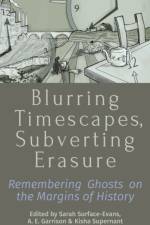
This volume demonstrates the value of conceiving of ghosts not just as metaphors, but for making the past more concrete and allowing the negative specters of enduring historical legacies, such as colonialism and capitalism, to be exorcised.
Conservation's Roots illuminates the diversity of practices in premodern environmental history across Europe from the Middle Ages to the brink of modernity.
Studying the im/mobility trajectories of West Africans in the EU, this book presents a new approach to West African migrants in Europe. Based on a trajectory ethnography, this book discusses how African migrants are confronted with rigid mobility regimes, but also how they manage to transgress and circumvent them.
With chapters by leading scholars on the economic, financial and commercial ramifications of his work, this multifaceted volume connects the Bard to both early modern and contemporary economic conditions, revealing Shakespeare to have been a serious economist in his own right.
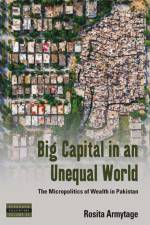
Following the hidden lives of the global "1%", this book examines the networks, social practices, marriages, and machinations of the elite in Pakistan. In doing so, it reveals the daily, even mundane, ways in which elites contribute to and shape the inequality that characterises the modern world.
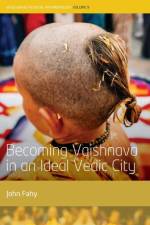
Becoming Vaishnava in an Ideal Vedic City centers on a growing multinational community of ISKCON devotees in Mayapur, West Bengal. Paying particular attention to devotees' failure to consistently live up to ISKCON's ideals, and the ongoing struggle to realize the utopian vision of an `ideal Vedic city'.
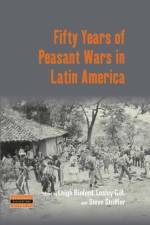
Informed by Eric Wolf's Peasant Wars of the Twentieth Century, published in 1969, this book examines selected peasant struggles in seven Latin American countries during the last fifty years and suggests the continuing relevance of Wolf's approach.
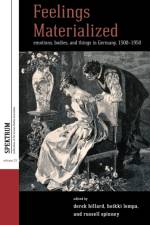
Examining the material aspects of emotion, this volume encompasses technology, photography, aesthetics, and a variety of other historical themes in an innovative application of emotion studies. Feelings Materialized brings together an interdisciplinary group of Germanists to unveil the emotions embedded in the world of things and bodies.
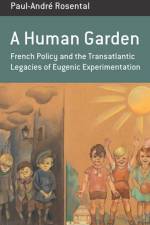
A Human Garden explains the longevity of the Ungemach Gardens, an experimental eugenic city that survived on the outskirts of Strasbourg from the 1920s to the 1980s. He reveals the inheritance of eugenics, examining ways in which eugenics have come to influence social, health, and educational policymaking in the post-war era.
Abonner på vårt nyhetsbrev og få rabatter og inspirasjon til din neste leseopplevelse.
Ved å abonnere godtar du vår personvernerklæring.