















Gjør som tusenvis av andre bokelskere
Abonner på vårt nyhetsbrev og få rabatter og inspirasjon til din neste leseopplevelse.
Ved å abonnere godtar du vår personvernerklæring.Du kan når som helst melde deg av våre nyhetsbrev.

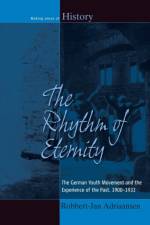
The Weimar era in Germany is often characterized as a time of significant change. Such periods of rupture transform the way people envision the past, present, and future. This book traces the conceptions of time and history in the Germany of the early 20th century. By focusing on both the discourse and practices of the youth movement, the author shows how it reinterpreted and revived the past to overthrow the premises of modern historical thought. In so doing, this book provides insight into the social implications of the ideological de-historicization of the past.
Though often depicted as a rapid political transformation, the Nazi seizure of power was in fact a process that extended from the appointment of the Papen cabinet in the early summer of 1932 through the Roehm blood purge two years later. This book offers a compelling collective investigation of this critical period in modern German history.
Drawing from perspectives from within the everyday life of basic organizations and the practices of the party apparatuses, Communist Parties Revisited sheds light on the inner workings the Eastern Bloc, and the effects of state socialist policy on a micro historical level.
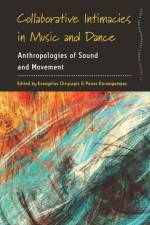
Across varied domains, music and dance both emerge from and give rise to intimate collaboration. This theoretically rich collection takes an ethnographic approach to understanding the collaborative dimension of sound and movement in everyday life...
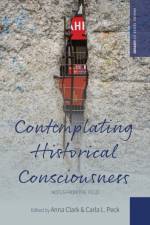
Draws on three decades of applied research to tease out what has been learned from the field. Leading scholars from around the world reflect on their practice as historians, ethnographers, social scientists and demographers in order to explore the possibilities and limitations of research into historical consciousness.
This painstakingly researched book explains how Egypt's once-robust Greek population dwindled to virtually nothing, beginning with the abolition of foreigners' privileges in 1937 and culminating in the nationalist revolution of 1952.
What draws people to study abroad or volunteer in far-off communities? This volume explores what draws students to study or volunteer abroad. In doing so, the book sheds light on how affect is managed by educators and mobilized by students and volunteers themselves, and how these structures of feeling related to broader social and economic forces.
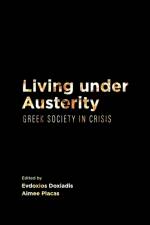
Since its sovereign debt crisis in 2009, Greece has been living under austerity. This volume explores the effects of austerity policies on politics, health care, education, media, and other areas, and examines the crisis as the context for changing attitudes in Greek society regarding immigration, crime, minorities, consumption and more.
This book explores how various types of migration that are often seen as distinct phenomena - such as marriage migration, romance tourism and sex work migration - are in fact variations of cross-border mobilities that evolve around experiences and constructions of "intimacy"...
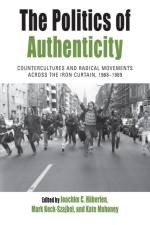
This volume shows not only how authenticity came to define a variety of social contexts, but also how it helped to lay the groundwork for the neoliberalism of a subsequent era.
Biomedical Entanglements is an ethnographic study of the Giri people of Papua New Guinea, focusing on the indigenous population's interaction with modern medicine. The study bridges medical anthropology and global health, exploring how the 'biomedical' is imbued with social meaning and how biomedicine affects Giri ways of life.
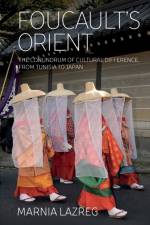
Using interviews with scholars from Tunisia and Japan, this book examines the manner in which Foucault experienced and explained his encounters with non-Western cultures, unraveling the anthropological implications of his unwavering commitment to cultural difference.
Having taken over the leadership of the French school of sociology after the death of his uncle, Emile Durkheim, in 1917, Mauss, celebrated author of The Gift, re-launched the flagship journal, the Anne sociologique. Here are two of Mauss's most significant statements on the social sciences. The first, written with Fauconnet, outlines the methodological orientations of the school. The second examines the internal organization of sociology as a division of intellectual labor. The essays are of interest to anthropologists as well as sociologists for Mauss, like Durkheim, did not distinguish in detail the two disciplines.
Marcel Mauss's writings on techniques and technology are at the forefront of an important anthropological and sociological research tradition, and they also highlight the theoretical and ideological challenges surrounding this field of study.
What does it mean to be a man in our biomedical day and age? Through ethnographic explorations of the everyday lives of Danish sperm donors, Being a Sperm Donor explores how masculinity and sexuality are reconfigured in a time in which the norms and logics of (reproductive) biomedicine have become ordinary. It investigates men's moral reasoning regarding donation, their handling of transgressive experiences at the sperm bank, and their negotiations of gender, sexuality, intimacy, and relatedness, showing how the socio-cultural and political dimensions of (reproductive) biomedicine become intertwined with men's intimate sense of self.
Combining historiographical, conceptual, and empirical perspectives on the bystander, the case studies in this book provide powerful insights into the complex social processes that accompany state-sponsored genocidal violence.
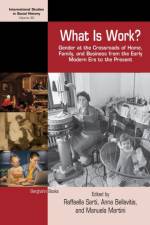
What Is Work? offers a multi-disciplinary approach to understanding labor within the highly gendered realm of household economies.
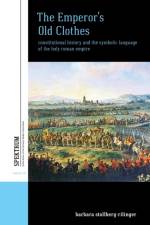
For many years, scholars struggled to write the history of the constitution and political structure of the Holy Roman Empire. This book argues that this was because the political and social order could not be understood without considering the rituals and symbols that held the Empire together. What determined the rules (and whether they were followed) depended on complex symbolic-ritual actions.By examining key moments in the political history of the Empire, the author shows that it was a vocabulary of symbols, not the actual written laws, that formed a political language indispensable in maintaining the common order.
A recent coinage within international relations, "nation branding" designates the process of highlighting a country's positive characteristics for promotional purposes, using techniques similar to those employed in marketing and public relations. Nation Branding in Modern History takes an innovative approach to illuminating this contested concept.
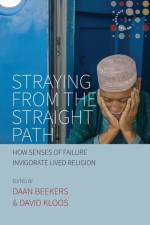
Responding to the need for comparative approaches in the face of the increasingly separated fields of the anthropology of Islam and Christianity, This book gives full attention to moral failure as a constitutive and potentially energizing force in the religious lives of both Muslims and Christians in different parts of the world.
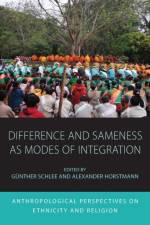
What does it mean to "fit in?" This volume of essays demystifies the discourse on identity, challenging common assumptions about role of similarity in inclusion and exclusion. Armed with intimate knowledge of local social structures, these essays tease out the ways in which ethnicity, religion and nationalism are used for social integration.
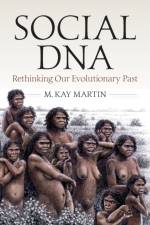
What set our ancestors off on a separate evolutionary trajectory was the ability to flex their reproductive and social strategies in response to changing environmental conditions. Exploring new cross-disciplinary research that links this capacity to critical changes in the organization of the primate brain, Social DNA presents a new synthesis of ideas on human social origins - challenging models that trace our beginnings to traits shaped by ancient hunting economies, or to genetic platforms shared with contemporary apes.
Written for study abroad practitioners, this book introduces theoretical understandings of key study abroad terms including "e;the global/national,"e; "e;culture,"e; "e;native speaker,"e; "e;immersion,"e; and "e;host society."e; Building theories on these notions with perspectives from cultural anthropology, political science, educational studies, linguistics, and narrative studies, it suggests ways to incorporate them in study abroad practices. Through attention to daily activities via the concept of immersion, it reframes study abroad not as an encounter with cultural others but as an occasion to analyze constructions of "e;differences"e; in daily life, backgrounded by structural arrangements.
This volume explores the indeterminacy left behind by conventional understandings of progress and shows how totalizing forward movement may be resisted by fragments, open-endedness, and the possibility of going nowhere at all.
Built around key events, from the eviction of a self-managed social centre in Copenhagen in 2007 to the Climate Summit protests in 2009, this book contributes to anthropological literature on contemporary Euro-American politics foreshadowing recent waves of public dissent. Stine Krijer explores political forms among left radical and anarchist activists in Northern Europe focusing on how forms of action engender time. Drawing on anthropological literature from both Scandinavia and the Amazon, this ethnography recasts theoretical concerns about body politics, political intentionality, aesthetics, and time.
This volume explores emerging cultural meanings and social responses to population aging in contemporary East Asian societies. Drawing on ethnographic, demographic, policy, archival, and media data, the authors trace both common patterns and diverging trends across China, Hong Kong, Taiwan, Singapore, Japan, and Korea.
In the early 1980s, when the contributors to this volume completed their graduate training at Oxford, the conditions of practice in anthropology were undergoing profound change. Here self-ethnography is used to portray the contributors' anthropological trajectories, showing how analytical and academic engagements interacted creatively over time.
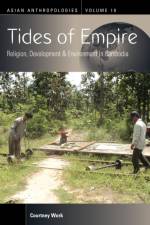
Set at the forested edge of Cambodia's frontier, this book shares stories and insights from migrants, loggers, and soldiers carving homesteads into a new village.
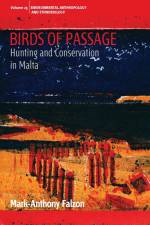
This book traces the complex interactions between hunters, birds and the landscapes they inhabit, as well as the dynamics and politics of bird conservation. It looks at the practice and meaning of hunting in a specific context, and raises broader questions about human-wildlife interactions and the uncertain outcomes of conservation.
By combining close analyses of five films made between 1947 and 1988 with extensive archival research, this book unravels the complex status of films dealing with Jewish persecution produced in a country that consistently privileged narratives of political persecution above racial victimhood.
Abonner på vårt nyhetsbrev og få rabatter og inspirasjon til din neste leseopplevelse.
Ved å abonnere godtar du vår personvernerklæring.