
























Gjør som tusenvis av andre bokelskere
Abonner på vårt nyhetsbrev og få rabatter og inspirasjon til din neste leseopplevelse.
Ved å abonnere godtar du vår personvernerklæring.Du kan når som helst melde deg av våre nyhetsbrev.

Looking at anthropologists at work, this book investigates what kind of morality they perform in their occupations and what the impact of this morality is. The book includes ethnographic studies in four professional arenas: health care, business, management and interdisciplinary research. The discussion is positioned at the intersection of 'applied or public anthropology' and 'the anthropology of ethics' and analyses the ways in which anthropologists can carry out 'moral work' both inside and outside of academia.
"The final volume in this landmark 3-volume series The Anthropology of Obstetrics and Obstetricians: The Practice, Maintenance, and Reproduction of a Biomedical Profession looks at the challenges, and even violence, that obstetricians face across the world. Part I of this volume addresses obstetric violence and systemic racial, ethnic, gendered, and socio-structural disparities in obstetricians' practices in the Dominican Republic, Mexico, Peru, and the US. Part II addresses decolonizing and humanizing obstetric training and practice in the UK, Russia, Brazil, New Zealand, and the US. Part 3 presents the ethnographic challenges that the chapter authors in Volumes II and III of this series faced in finding, surveying, interviewing, and observing obstetricians in various countries. This book is a must-read for students, social scientists, and all maternity care practitioners who seek to understand the diverse challenges that obstetricians must overcome"--
While it is widely acknowledged that climate change is among the greatest global challenges of our times, it has local implications too. This volume forefronts these local issues, giving anthropology a voice in this great debate, which is otherwise dominated by natural scientists and policy makers. It shows what an ethnographic focus can offer in furthering our understanding of the lived realities of climate debates. Contributors from communities around the world discuss local knowledge of, and responses to, environmental changes that need to feature in scientifically framed policies regarding mitigation and adaptation measures if they are to be effective.
Comparing first-person ethnographic accounts of young people living, working, and creating relationships in cities across Asia, this volume explores their contemporary lives, pressures, ideals, and aspirations. Delving into topical issues such as education, social inequality, family pressures, changing values, precarious employment, and political discontent, the book explores how young people are pushing boundaries and imagining their future. In this way, they explore and create the identities of their local and global surroundings.
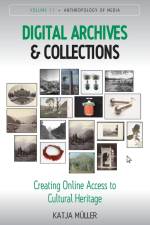
Museums and archives all over the world digitize their collections and provide online access to heritage material. But what factors determine the content, structure and use of these online inventories? This book turns to India and Europe to answer this question. It explains how museums and archives envision, decide and conduct digitization and online dissemination. It also sheds light on born-digital, community-based archives, which have established themselves as new actors in the field. Based on anthropological fieldwork, the chapters in the book trace digital archives from technical advancements and postcolonial initiatives to programming alternatives, editing content, and active use of digital archives.
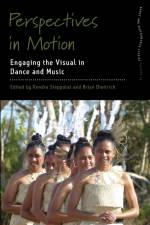
Focusing on visual approaches to performance in global cultural contexts, Perspectives in Motion explores the work of Adrienne L. Kaeppler, a pioneering researcher who has made a number of interdisciplinary contributions over five decades to dance and performance studies. Through a diverse range of case studies from Oceania, Asia, and Europe, and interdisciplinary approaches, this edited collection offers new critical and ethnographic frameworks for understanding and experiencing practices of music and dance across the globe.
The book Profiles of Anthropological Praxis is something of a sequel to Anthropological Praxis: Translating Knowledge into Action, published in 1987 (Westview Press).¿ As a casebook of anthropological projects, the new version shares a fascinating breadth of award-winning projects undertaken by applied anthropologists to address the needs of an array of stakeholders and situations. Each chapter will describe a problem and how a project attempted to address it with the following structure: Problem Overview, Project Description, Anthropologist¿s Role and Impact, Outcomes, and the Anthropological Difference ¿ that is, how the unique approaches of anthropology were effectively applied to address human problems.
From 1967 to 1974, the military junta ruling Greece attempted a dramatic reshaping of the nation, implementing ideas and policies that left a lasting mark on both domestic affairs and international relations. Bringing together leading scholars from a range of disciplines, The Greek Military Dictatorship explores the junta's attempts to impose authoritarian rule upon a rapidly modernizing country while navigating a complex international landscape. Focusing both on foreign relations as well as domestic matters such as economics, ideology, religion, culture and education, this book offers a fresh and well-researched study of a key period in modern Greek history.
Countless studies have assessed the dramatic reforms of Mikhail Gorbachev, but their analysis of the impact on European communism has focused overwhelmingly on the Soviet Union and Eastern bloc nations. This ambitious collection takes a much broader view, reconstructing and evaluating the historical trajectories of glasnost and perestroika on both sides of the Iron Curtain. Moving beyond domestic politics and foreign relations narrowly defined, the research gathered here constitutes a transnational survey of these reforms' collective impact, showing how they were variably received and implemented, and how they shaped the prospects for "proletarian internationalism" in diverse political contexts.
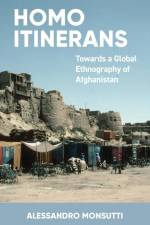
Afghan society has been marked in a lasting way by war and the exodus of part of its population. While many have emigrated to countries across the world, they have been matched by the flow of experts who arrive in Afghanistan after having been in other war-torn countries such as the Democratic Republic of the Congo, Palestine or East Timor. This book builds on more than two decades of ethnographic travels in some twenty countries, bringing the readers from Afghanistan, Pakistan and Iran to Europe, North America and Australia. It describes the everyday life and transnational circulations of Afghan refugees and expatriates.
Xenocracy offers a much-needed account of the islands of the Ionian Sea during their half-century of oversight by Great Britain. It recounts how, despite Britain's liberal reforms, the Ionian State's economic deterioration anticipated the "neocolonial" condition with which the Greek nation struggles even today.
Focusing on the major ceremonial cycle of the Enawene-nawe people, Vital Diplomacy sheds new light on classic Amazonian themes.
The Communist Party dictatorships in Hungary and East Germany sought to win over the "e;masses"e; with promises of providing for ever-increasing levels of consumption. This policy-successful at the outset-in the long-term proved to be detrimental for the regimes because it shifted working class political consciousness to the right while it effectively excluded leftist alternatives from the public sphere. This book argues that this policy can provide the key to understanding of the collapse of the regimes. It examines the case studies of two large factories, Carl Zeiss Jena (East Germany) and Rba in GyA r (Hungary), and demonstrates how the study of the formation of the relationship between the workers' state and the industrial working class can offer illuminating insights into the important issue of the legitimacy (and its eventual loss) of Communist regimes.
Explores how design and innovation shape people's lives in the Pacific. Focusing on plant materials from the region, it reveals ways in which a variety of people - from craftswomen and scientists to architects and politicians - work with materials to transform worlds.
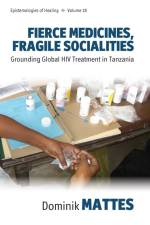
Dominik Mattes examines the implementation of antiretroviral HIV-treatment (ART) in Tanzania, exploring the manifold infrastructural and social fragilities of treatment provision in public HIV clinics as well as patients' multi-layered struggles of coming to terms with ART in their everyday lives.
Drawing on a set of interviews and a thousand letters written over fifty years, Friendship, Power, and Everyday Life considers how a group of women, self-defined as non-political, experienced, accepted, rejected, or countered the exercise of power across twentieth-century regimes in Germany.
Abonner på vårt nyhetsbrev og få rabatter og inspirasjon til din neste leseopplevelse.
Ved å abonnere godtar du vår personvernerklæring.