












Gjør som tusenvis av andre bokelskere
Abonner på vårt nyhetsbrev og få rabatter og inspirasjon til din neste leseopplevelse.
Ved å abonnere godtar du vår personvernerklæring.Du kan når som helst melde deg av våre nyhetsbrev.

Civics 107: Insights About America's Cities was written by a career City Manager that worked in and managed some of the largest Council-Manager Form of Government cities on both coasts of America. He also dealt with public officials, department managers, employees, and citizens that worked and lived in the cities that he managed during his city management career. The major sections of this book include America's Cities, Politics and Politicians, The Urban Scene, The Government, From the Trenches, Personal Reflections, and the last section, called Closing Thoughts. Various appendices are also included in this volume to help educate the reader. These include a glossary of terms, our nation's voting rights history, and resource directories for our states, as well as our country's national resource directories.
Jonathan waited. His friend near death. His life fueled by forgetfulness and isolation. He wanted nothing more than to go home. To watch the Brevington Knights face off against whatever foe dare challenge them. But he couldn't. For all that he'd lost over the years, Charles was the only person to remain. His friend gasped. Life slowly ebbing. A familiar pain creeping up his spine as Jonathan waited for the Reaper to claim one more victim. Instead, he heard a whisper. Leaning closer, Jonathan understood his friend's words. He wished he hadn't. He wished, in that moment, that he could have saved his friend's life instead of searching for another.
Dawson was home. Lost in his world of fantasy. Content while peace filled his mind. He knew another novel meant another therapeutic visit to his past. Each journey committed to a title. Each title telling another version of his life. Happiness; wealth; security. This lasted for a while. Until security met Judge Daniels. Until wealth met Savannah Redding. Until happiness collided with the infamous lawyer, Theresa Davis. Little by little, Dawson Biello's life started to turn. The longer he breathed, the more he realized his secret was not safe after all.
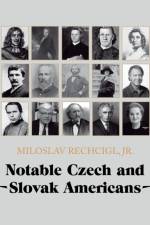
The contribution to the development and culture of America by the immigrants from the territory of former Czechoslovakia, be they Czechs or Slovaks, or Bohemians, as they used to be called, has been enormous. Yet little has been written about the subject. This compendium is part of an effort to correct this glaring deficiency.In this compendium, the focus is on religion, law and jurisprudence, business and entrepreneurship and the notable people in the government, with the narration and assessment about the Czechoslovak American explorers, adventurers and pioneers who paved the way for the colonists and settlers who followed them. An important role among them played the social movement activists. some of whose ideas won the respect and ultimately acceptance by general population, to which subject an entire section has been devoted. Among other, you will find among them abolitionists, freethinkers. suffragists, civil & human rights activists, environmentalists and conservationists, climate change activists, philanthropists, inventors and even futurists or futurologists. Their innovative ideas, inevitably, led to the rise of the plethora of Czech and Slovak American leaders, encompassing, practically, every aspect of human endeavor. As stated in the Foreword, this reference will serve as a powerful research tool for many years to come for scholars and all Czechs and Slovaks on both sides of the Atlantic.
Rainey was born during the great depression in a rural country in Arkansas. She was born of a sickly, prostitute mother, who lived with a grandmother on a small, hard scrabble piece of farmland. Their situation was so dire, with the mother knowing she had not long to live, and the grandmother too old to attempt to raise a child under such difficult circumstances, the mother reluctantly offers Rainey up for adoption. (This was not uncommon during the depression when children were shunted off to relatives or neighbors.) Given first to another farm family, which by today's standards would be considered dysfunctional, she runs away at the age of six. She eventually ends up with a group of women, mostly old-maid schoolteachers, who make some attempt to restore a degree of normalcy to the child's life. This is the nearest thing to a functional family she would ever know, but an unfortunate and ill-advised wartime marriage, once again, turns her on the wrong road of life. She goes through a series of misfortunes, including a jail term, before she eventually meets the love of her life. But once again, fate is cruel to her because he is married. She has an illegitimate child by him and, knowing he cannot marry her, leaves him with no forwarding address. She returns to the area of her childhood, where he, now single, eventually finds her, and in true romance fashion, they are brought together and supposedly live happily-ever-after.
Rainey was born during the great depression in a rural country in Arkansas. She was born of a sickly, prostitute mother, who lived with a grandmother on a small, hard scrabble piece of farmland. Their situation was so dire, with the mother knowing she had not long to live, and the grandmother too old to attempt to raise a child under such difficult circumstances, the mother reluctantly offers Rainey up for adoption. (This was not uncommon during the depression when children were shunted off to relatives or neighbors.) Given first to another farm family, which by today's standards would be considered dysfunctional, she runs away at the age of six. She eventually ends up with a group of women, mostly old-maid schoolteachers, who make some attempt to restore a degree of normalcy to the child's life. This is the nearest thing to a functional family she would ever know, but an unfortunate and ill-advised wartime marriage, once again, turns her on the wrong road of life. She goes through a series of misfortunes, including a jail term, before she eventually meets the love of her life. But once again, fate is cruel to her because he is married. She has an illegitimate child by him and, knowing he cannot marry her, leaves him with no forwarding address. She returns to the area of her childhood, where he, now single, eventually finds her, and in true romance fashion, they are brought together and supposedly live happily-ever-after.
Bedtime was special when my children were very young. We enjoyed reading aloud and telling stories to each other. Such times were special, to be savored and treasured; out of those times came The Davey Family Stories. Each is an extension of our family at the time, and each embodies a modicum of truth--the way it was and the way we wanted it to remain. This wish is still true.As with all fiction, this book is a roman a clef, life remembered but couched as fiction. That doesn't make it any less true; in fact, it may serve to emphasize the truth of being, of existing, of our petty attempts to make a mark on time, an enduring impression which may outlast our lives and memories. At any rate such can I hope.
"Thank you, Paul!" said the Little Spider, is a heartfelt, thought-provoking story intended for a maturing audience. The miracle we call life is found in an almost infinite variety of bodies. Arachnida, mammals, insects, fish, crustaceans, birds, reptiles, amphibians, plants, flowers, trees, and the microscopic literally are life's hosts. Humans are quick to tout their dominating position in a grand pyramid scheme they alone designed and continue to manipulate. This book implores everyone to take this self-appointed stewardship of earth with more understanding, empathy, and humility. Go outside. The lives you encounter will assume a defensive posture. The last thing any creature needs is another threat to its survival. People need to stop kowtowing to screens and start paying attention to real-life scenes.
Pat's "The Best For Last" book begins with fiction, then memoir, about a portion of her life, and ends with fiction. Pat began writing this book many years ago. As her life progressed so did the book. It starts with the main character happy and thankful for her new life with the man of her dreams. Then, she thinks back about her childhood, her marriage, divorce, and living with abuse.For many years Pat experienced terrible verbal and emotional abuse. She wrote the book to expose the effects of this abuse. Her desire is to help any person going through anything like what she experienced, "Get help or get out." Pat's advice is "do not waste valuable youth and years in such a hurtful, harmful, situation." For Pat, her journey saw her born into poverty. Raised during the 1930's depression. Ambitious at a young age. Working various jobs. A difficult life in a broken down trailer in Anchorage, Alaska. Much time spent in the "School of Hard Knocks."She had success in real estate, and investing, only to lose it all. The devastating loss of the home she designed and had built, plus all the rental properties. All because of her wrong choices and wrong decisions. For those Pat paid dearly. The book reveals years and years of unhappiness. There were many stormy, hurtful years.Pat's poems are scattered throughout the book. Poems taken from some seventeen hundred poems Pat has written over the years. In both the fiction ending, and the real life ending, Pat finally ended up with a man who truly loved her. He often told her she was the "love of his life." She would find love and contentment and a happy marriage at last. God is good. God is so good.
In the book called Secrets of the Phone Psychic, I tell my story and the stories of some of the thousands of people I counseled by phone. It is a story of help, desperation, and soul searching for spiritual guidance, destiny, fear, courage, and hope. It is a story that happens in our daily lives. I learned that these people were suffering in the same way our earth is suffering, from neglect and ill-treatment. It is not just the poor and powerless that need healing. I have worked with both the powerful and the powerless in my job as a phone psychic. Many people today are looking for answers to everyday problems and unrealized dreams. The audience for Secrets of the Phone Psychic, is huge What follows are my transcribed interviews with some professional people on how psychics and psychic abilities fit into their areas of expertise. Doctor Richard Boylan, a psychologist, a clinical therapist, and researcher; revealed to me that psychic phenomenon has been recognized in the intelligent community. He sees a growing open mind in the scientific community and the general public eventually leading to full acceptance. Doctor Lois Turi, a well known Astrologer and Psychic, provides insights and personal interpretation of psychic phenomena. He says that we can all use astrology to help us in our daily lives. George Wilkins, the Developer of the Star Quest Consciousness, clarifies the psychic personality and the psychic realm. Marlene O'Neil is an Ordained Minister as well as holding degrees in psychology and mathematics. In her interview, she addresses how the religious community views psychic abilities. She sees believers in psychic and believers in the religious community continuing to see psychic abilities in a dim perspective. My Biography talks about the ancient history of my Island, Fiji. And how we value our culture. And reassure and protect the ancestral ways.
Abonner på vårt nyhetsbrev og få rabatter og inspirasjon til din neste leseopplevelse.
Ved å abonnere godtar du vår personvernerklæring.