

Gjør som tusenvis av andre bokelskere
Abonner på vårt nyhetsbrev og få rabatter og inspirasjon til din neste leseopplevelse.
Ved å abonnere godtar du vår personvernerklæring.Du kan når som helst melde deg av våre nyhetsbrev.

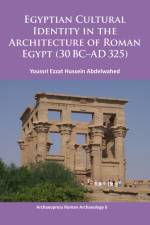
This volume considers the relationship between architectural form and different layers of identity assertion in Roman Egypt. It stresses the sophistication of the concept of identity, and the complex yet close association between architecture and identity.
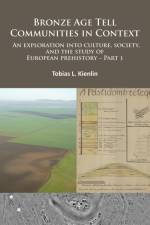
This study challenges current modelling of Bronze Age tell communities in the Carpathian Basin in terms of the evolution of functionally-differentiated, hierarchical or 'proto-urban' society under the influence of Mediterranean palatial centres.
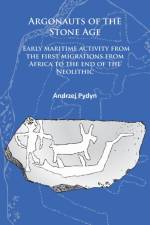
This book gives a full account of stone age seafaring presenting the archaeological evidence in the context of the changing world environment and uses ethnographic sources to broaden the readers understanding of the worlds earliest sea craft.
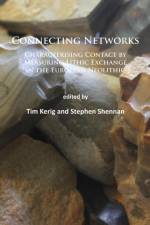
This volume brings together a group of peer reviewed papers, most of them presented at a workshop held at University College London, 15-17 October 2011, as part of the European Research Council (ERC) funded project Cultural Evolution of Neolithic Europe (EUROEVOL 2010-2015).
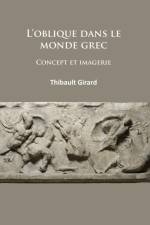
Explores the ancient Greeks' apprehension (or lack thereof) of the concept of oblique. The study of written and figurative languages each bring a different and complementary perspective.
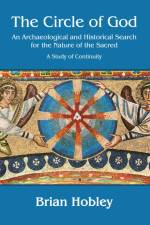
This study is focussed on circular solar/cosmic symbolism which has endured for seven millennia in the European and Mediterranean worlds. The potency of the solar/cosmic circle should not be understated, as this study will demonstrate, with its worldwide affiliation.
Presents a diachronic investigation providing a rich case study as well as an approach tracing the contours of a category of Roman material culture defined by the Roman period technique of openwork carving. This work shows how openwork vessels are a reflection of a wide-reaching Roman cultural aesthetic.
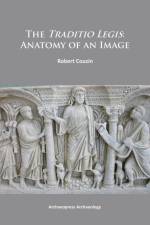
This monograph engages in a close reading of the traditio legis, highlighting its novelty and complexity to early Christian viewers. The image is analyzed as a conflation of two distinct forms of representation, each constructed of unusual and potentially multivalent elements.
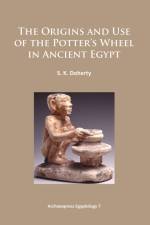
Despite many years work on the technology of pottery production it is perhaps surprising that the origins of the potter's wheel in Egypt have yet to be determined. This volume seeks to rectify this situation by determining when the potter's wheel was introduced into Egypt.
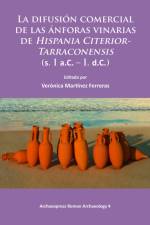
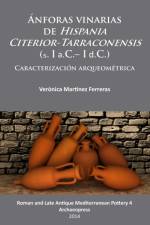
This volume presents a series of studies of the wine from Hispania Citerior-Tarraconensis traded in amphorae, with the aim of demonstrating (as has recently been done for the amphora production) the existence of different trade dynamics, according to individual cases, territories and periods.
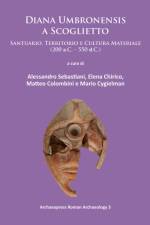
This volume, the first in a series of works detailing the archaeological investigations of the ager Rusellanus, in coastal southern Etruria, focuses on the Roman temple and sanctuary dedicated to Diana Umbronensis, located at Scoglietto (Alberese - GR) on the ancient Tyrrhenian coast.
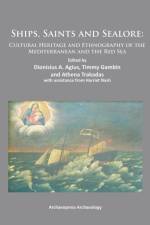
Just as the sea has played a pivotal role in the connectivity of people, economies and cultures, it has also provided a common platform for inter-disciplinary cooperation amongst academics.
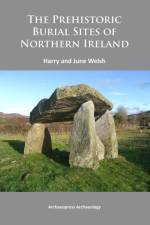
Much has been written about the history of Northern Ireland, but less well-known is its wealth of prehistoric sites, particularly burial sites, from which most of our knowledge of the early inhabitants of this country has been obtained.
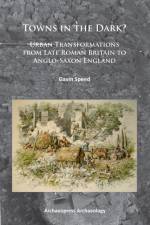
The focus of this book is to draw together still scattered data to chart and interpret the changing nature of life in towns from the late Roman period through to the mid-Anglo-Saxon period. Did towns fail? Were these ruinous sites really neglected by early Anglo-Saxon settlers and leaders?
Dionysos carried the blessing of wine to the whole world, and his triumphant return from India became a popular subject for the arts of Greece and Rome in many media. The iconography survived the ancient world into Renaissance and neo-Classical arts, and may even have contributed to the practices of modern circus parades.
This volume presents the results of a multidisciplinary archaeological and archaeometric study of the wine amphorae produced in Hispania Citerior (Tarraconensis, in Augustus' reorganisation) between the first century BC and the first century AD.
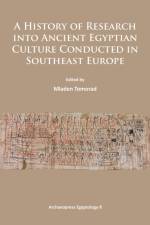
This book will try to give a review of the history of the studies of Ancient Egypt done in Southeast Europe, and present some of the latest research. The book comprises a selection of papers in which scholars from various institutions of the region reviewed the different aspects of past studies along with recent research in the field.
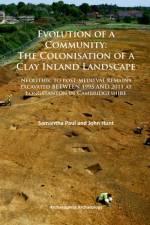
Chronologically documents the colonisation of a clay inland location north-west of Cambridge at the village of Longstanton and outlines how it was not an area on the periphery of activity, but part of a fully occupied landscape extending back into the Mesolithic period.
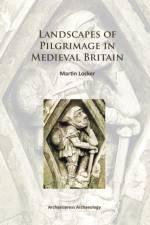
This book seeks to address the journeying context of pilgrimage within the landscapes of Medieval Britain. Using four case studies, an interdisciplinary methodology developed by the author is applied to four different geographical and cultural areas of Britain to investigate the practicalities of travel along the Medieval road network.
What was it like to use and live with Etruscan pottery? Characterising that experience of Etruscan pottery is the concern of this book. More specifically, this volume aims to unpick both the physical encounter between vessel and hand, and the emotional interaction between the user of a pot and the images inscribed upon its surface.
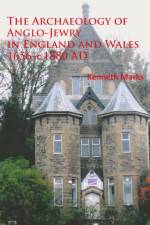
This volume presents a comprehensive study of the urban topography of Anglo-Jewry in the period before the mass immigration of 1881. The book brings together the evidence for the physical presence of at least 80% of the Jewish community. London and thirty-five provincial cities and towns are discussed.
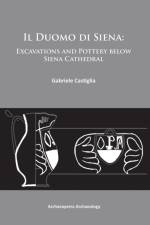
Presents excavation data and pottery finds from the stratigraphy underneath the cathedral of Siena. The surveys were conducted between 2000-2003. The ultimate goal is to trace a view of the settlement types and economic framework that has affected the hill of the Cathedral from the Classical age to the late Middle Ages.
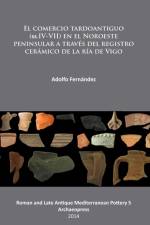
This work investigates a large assemblage of potentially late-dated Roman ceramics excavated in the early 1990s during rescue interventions in Vigo (N/E Spain) and its surroundings. Based on the analyses of these investigations, this study posits the northwest of the Iberian Peninsula well within the trading dynamics of the Mediterranean world.
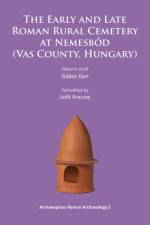
Presents finds from thirty-seven graves at the Roman Cemetery at Nemesbod (Hungary), which consisted of mainly cremation but also of some inhumation burials. Detailed analysis of grave goods (bronze vessels, pottery, glass, personal accessories, lamps etc.) provides a study of burial customs and their evolution.
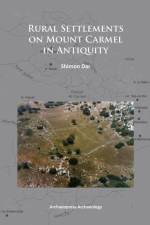
In the years 1983-2013, an archaeological expedition under the auspices of the Department of Land of Israel Studies and Archaeology of Bar-Ilan University, Ramat Gan, was active on Mount Carmel, Israel.
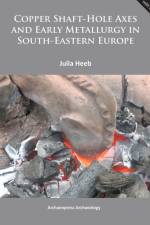
Although the copper axes with central shaft-hole from south-eastern Europe have a long history of research, they have not been studied on a transnational basis since the 1960s. What has also been missing, is trying to use as many methods as possible to better understand their production, use and context.
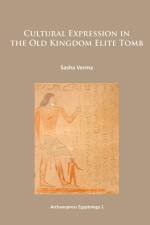
Cultural Expression in the Old Kingdom Elite Tomb considers the material and immaterial culture left behind by the ancient Egyptian elite in their tombs starting some 5000 years ago. The book intends to understand this culture reflecting the intention of the ancient Egyptians. All these intentions are now inaccessible to us, a paradox indeed.
Mabel Virginia Anna Hall-Dare, the wife of English archaeologist and explorer James Theodore Bent, kept a series of notebooks on her travels. Volume II (of III) relates to the following journeys: Egypt (1885); Zimbabwe (1891); Ethiopia (1893); Sudan (1896); Egypt (1898).
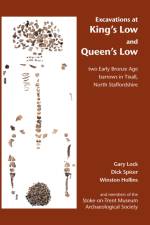
Two barrows in the parish of Tixall, north of Stafford, were excavated between 1986-1994. The results are important because little excavation of round barrows has been carried out in this area of North Staffordshire and these add considerably to the local corpus of knowledge concerning Early Bronze Age burial practices.
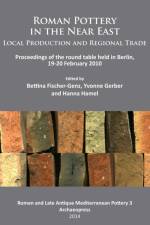
Presents papers presented at an international workshop dedicated to the study of Roman common ware pottery in the Near East held in Berlin on 18th and 19th February 2010.
Abonner på vårt nyhetsbrev og få rabatter og inspirasjon til din neste leseopplevelse.
Ved å abonnere godtar du vår personvernerklæring.