

Gjør som tusenvis av andre bokelskere
Abonner på vårt nyhetsbrev og få rabatter og inspirasjon til din neste leseopplevelse.
Ved å abonnere godtar du vår personvernerklæring.Du kan når som helst melde deg av våre nyhetsbrev.

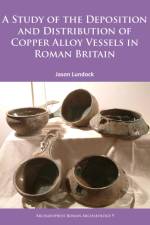
This book collects together data concerning copper alloy vessels from Roman Britain and relates this evidence to prevailing theories of consumption, identity and culture change in Britain during this time.
From antiquity onwards people have opted to live near rivers and major watercourses. This volume explores rivers as facilitators of movement through landscapes, and it investigates the reasons for living near a river, as well as the role of the river in the human landscape.
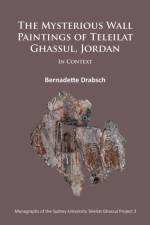
This volume is primarily concerned with the re-analysis of the wall paintings from the Jordanian Chalcolithic period (ca. 4700-3700 BC) settlement site of Teleilat Ghassul, first excavated in 1929 by scholars from the Pontifical Biblical Institute Rome and latterly by Australians from the University of Sydney.
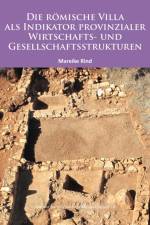
The investigation of the Roman villa and its economic structures in the western provinces has clearly shown that rural settlement developed at different paces and intensities that largely depended on the specific region in which a villa landscape was intended and created, strongly linked to the existence of pre- Roman infrastructure.
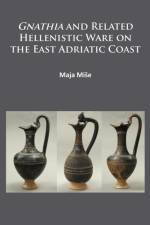
This book aims to present Gnathia ware on the East Adriatic coast, to define local Issaean Gnathia production from manufacturing to distribution, to identify other pottery workshops along the East Adriatic coast and, finally, to understand the trade and contacts in the Adriatic during the Hellensitic period.
Manetho's obscure reference to a race of invaders has been a constant source of debate and controversy. This book assesses the rise to power of the Hyksos, exploring the preliminary stages that enabled them to gain control over a portion of Egyptian territory and thus to merit a small mention in Manetho's history.
This publication honours Birgitta Hardh on her 70th birthday. Birgitta Hardh is one of the leading experts on European Viking Age, engaged in diverse research projects, and also a vital collaborator in various networks specializing in the period. Through time, Birgitta has extended her research to comprise other periods of the Iron Age.
This volume seeks, through both case studies and more synthetic works, to discuss how the patterns drawn from the observation of 'living' megalithic societies have been used to try and shed light on the functioning of European Neolithic societies.
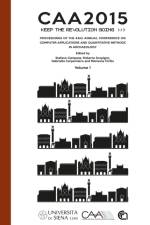
This volume brings together all the successful peer-reviewed papers submitted for the proceedings of the 43rd conference on Computer Applications and Quantitative Methods in Archaeology that took place in Siena (Italy) from March 31st to April 2nd 2015.
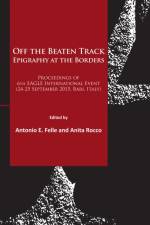
This volume contains the papers presented during 'Off the Beaten Track - Epigraphy at the Borders' (24-25 September 2015, University of Bari Aldo Moro, Italy), the sixth in a series of international events planned by the EAGLE, Europeana network of Ancient Greek and Latin Epigraphy international consortium.
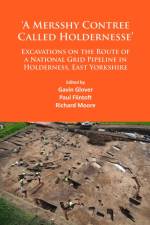
Presents the results of excavations along the route of a national grid pipeline in Holderness, East Yorkshire shedding light on rural life in the claylands to the east of the Yorkshire Wolds, from the Mesolithic to the Iron Age and Roman periods, and beyond.
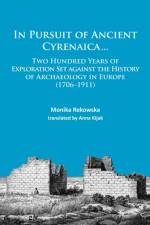
This work examines travellers' accounts of their journeys to Cyrenaica, focusing in the main on an analysis of these accounts within the context of their significance to topographic surveys of the region.
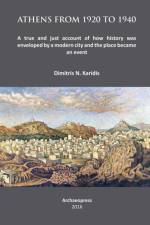
During the short interwar period of the early 20th century, Athens entered into a process of meteoric urban transformation which gave her a unique place among European capital cities of the time.
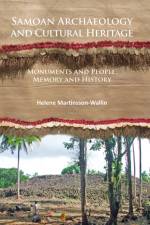
The overall purpose of this book is to provide a foundation for Samoan students to become the custodians of the historical narrative based on Archaeological research.
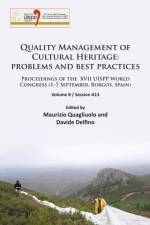
Proceedings of the XVII UISPP World Congress (1-7 September, Burgos, Spain). Volume 8 / Session A13: Quality Management of Cultural Heritage: problems and best practices
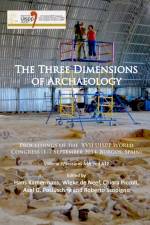
This volume brings together presentations from two sessions organized for the XVII World UISPP Conference: The scientific value of 3D archaeology, and Detecting the Landscape(s).
This book is the result of more than a dozen years of research in the field of the hitherto unstudied medieval settlement pattern of the Syrian coastal region in the 12th and 13th centuries.
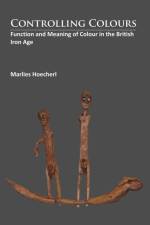
Colour defines our material world, operates as a communication tool and creates meaning. This book revisits well known and well documented sites or artefacts and explores their colours and colour connotations by looking at various contexts such as processes, landscape, iconography, body decoration or the colour connotations of death.
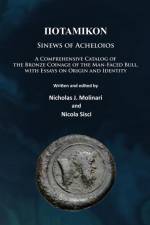
This book, Potamikon, presents an investigation into the origin and identity of the man-faced bull, as well as a catalogue of coins.
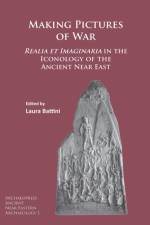
This book brings together the main discussions that took place at an international conference on the iconology of war in the ancient Near East, a subject never addressed at an international meeting before.
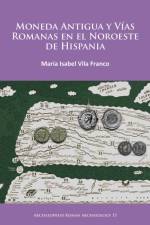
The main objective of this work was to obtain an overview of the Roman monetary circulation in Gallaecia following the road network that crossed this territory in Roman times.
The present volume gathers the communications of the three sessions organized under the auspices of the Commission 'History of Archaeology' at the XVII UISPP World Congress Burgos 2014.
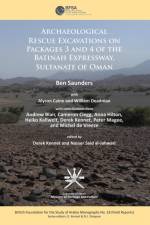
This report presents the results of rescue excavations conducted during the spring and summer of 2014 in preparation for the construction of the Batinah Expressway (Packages 3 and 4) on the Batinah coastal plain in al-Batinah North Governate
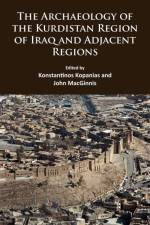
Conference proceedings presenting the first opportunity for leading figures in the burgeoning area of archaeological research in the Kurdish Autonomous Region of Iraq to gather and present all the key new projects which are revolutionising our understanding of the region.
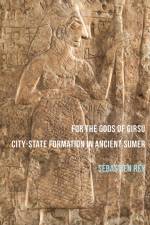
This book demonstrates Girsu is a primary locale for re-analyzing, through an interdisciplinary approach combining archaeological and textual evidence, the origins of the Sumerian city-state.
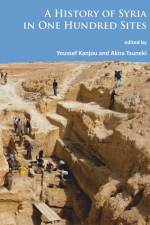
This volume presents the long history of Syria through a jouney of the most important and recently-excavated archaeological sites. The sites cover over 1.8 million years and all regions in Syria; 110 academics have contributed information on 103 excavations for this volume
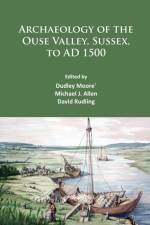
This is the first review of the archaeology of this important landscape - from Palaeolithic to medieval times by contributors all routed in the archaeology of Sussex.
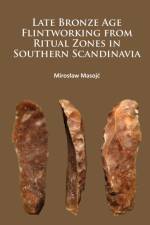
This book is devoted to flintworking encountered in the so-called cult houses and ritual zones from the Late Bronze Age in southern Scandinavia, where thousands of barrows were built in the period from the Neolithic to the end of the Early Bronze Age
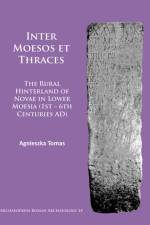
Excavations at the Roman legionary base at Novae in Lower Moesia reveal one of the most important sites in the Lower Danubian provinces. Towards late Antiquity, the military camp was transformed into a civil town with Episcopal residence and survived until the beginning of the 7th century.
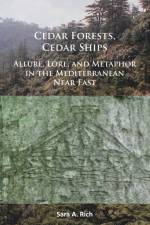
It is commonly recognized that the Cedars of Lebanon were prized in the ancient world, but how can the complex archaeological role of the Cedrus genus be articulated in terms that go beyond its interactions with humans alone?
Abonner på vårt nyhetsbrev og få rabatter og inspirasjon til din neste leseopplevelse.
Ved å abonnere godtar du vår personvernerklæring.