
Gjør som tusenvis av andre bokelskere
Abonner på vårt nyhetsbrev og få rabatter og inspirasjon til din neste leseopplevelse.
Ved å abonnere godtar du vår personvernerklæring.Du kan når som helst melde deg av våre nyhetsbrev.

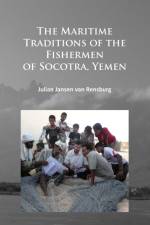
This research analyses the Socotri maritime traditions and addressing the question as to how social, environmental and technological influences have shaped the maritime traditions of the fishermen of Socotra (205 nautical miles south of Yemen).
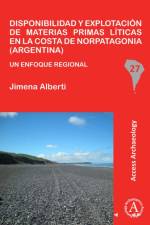
The present book aims to study the use of lithic raw materials on the coast of the San Matias gulf (Rio Negro, Argentina) during the middle and late Holocene.
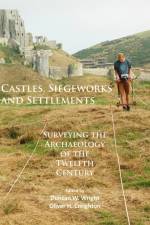
This volume comprises thirteen reports detailing fieldwork undertaken by a research project which sought to assess the archaeological evidence of the period of conflict that took place in mid-twelfth-century England popularly known as 'the Anarchy'.
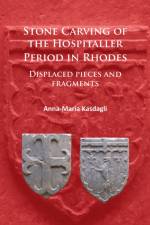
The work presents 230 stone carvings of the Hospitaller period in Rhodes (1309-1522), which for various reasons are no longer in their original setting.
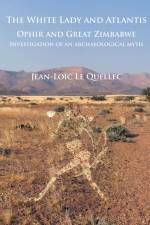
This meticulous investigation, based around a famous rock image, the 'White Lady', makes it possible to take stock of the mythical presuppositions that infuse a great deal of scientific research, especially in the case of rock art studies.
This volume contains 23 articles written by 26 authors in order to express the extent of their respect and friendship for Christine Kepinski. Several papers are directly connected to fieldwork she conducted in Iraq and in Turkey: Haradum and the Middle Euphrates area, Tilbeshar and Kunara.
This volume studies the architecture of the city of Mardin in South-east Anatolia produced under the patronage of the Artuqids, whose influence held sway from c. 1101-1409.
This session focuses on Filiform rock art which appears as a spontaneous technique, more simple and immediate than pecking, good either for autonomous strands of expression, or for sketches and first drafts regarding works of painting or pecking.
The island of Sant' Andrea, situated on the road that since ancient times has linked the Adige Valley with the Lake Garda, is now little more than a small hump on the edge of a vast marshy basin. Excavations reveal a multi-layered archeological site with finds ranging from the prehistoric age right through to the First World War.
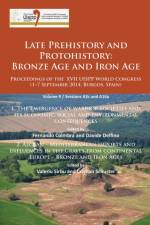
Proceedings of two sessions from the XVII UISPP World Congress, 2014: A3c The Emergence of warrior societies and its economic, social and environmental consequences and A16a Aegean - Mediterranean imports and influences in the graves from continental Europe - Bronze and Iron Ages.
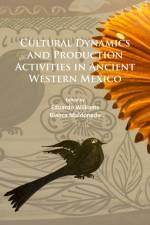
This book presents a collection of papers from the Symposium on Cultural Dynamics and Production Activities in Ancient Western Mexico, held at the Center for Archaeological Research of the Colegio de Michoacan on September 18-19, 2014.
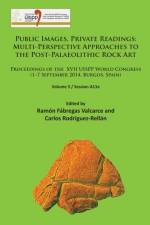
A significant number of Holocene societies throughout the world have resorted at one time or another to the making of paints or carvings on different places. The aim of the session A11e, held within the XVII World UISPP Congress, was to put together the experiences of specialists from different areas of the Iberian Peninsula and the World.
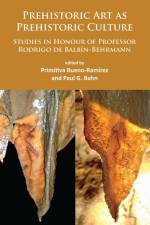
The diverse papers in this volume, published in honour of Professor de Balbin, cover a wide variety of the decorated caves which traditionally defined Palaeolithic art, as well as the open-air art of the period, a subject in which he has done pioneering work at Siega Verde and elsewhere.
Excavations of a large Iron Age farming settlement in Northamptonshite spread across five sites, four studied here (The Lodge, Long Dole, Crick Hotel and Nortoft Lane, Kilsby) with Covert Farm, Crick studied in Volume I (9781784912086).
Buried under a meter of volcanic ash deposited by the eruption of Vesuvius, the remarkable preservation of this Early Bronze Age village in Southern Italy is unmatched in Europe. Here, micromorphology is used to identify the type and range of human activities, the function of features and buildings, and the intensity of site occupation.
Excavations of a large part of an extensive Iron Age settlement carried out between 1997 - 1998 at Covert Farm located near Crick in northwestern Northamptonshire.
Proceedings of the Fifth International Congress on Black Sea Antiquities (Belgrade - 17-21 September 2013). The theme of the congress included archaeological, historical, linguistic, anthropological, geographical and other investigations across the huge area through which the Argonauts passed in seeking to return from Colchis.
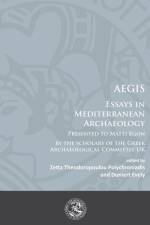
Festschrift in honour of Matti Egon. Papers range from prehistory to the modern day on Greece and Cyprus. Neolithic animal butchery rubs shoulders with regional assessments of the end of the Mycenaean era, Hellenistic sculptors and lamps, life in Byzantine monasteries and the politics behind modern museum exhibitions.
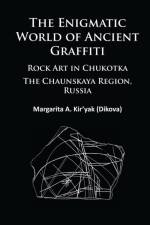
This monograph is devoted to small forms of engraving on stone. It summarises the archaeological material obtained during the course of excavations at the Rauchuvagytgyn I site in northern Cukotka (dated to 2500 years ago). The book analyses the content and semantics of the pictorial resources and ethnic identification is made.
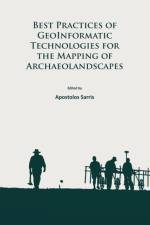
Twenty-five papers from the Institute for Mediterranean Studies in Crete provide a best practice guide for the use of geophysical, geoarchaeological, geochemical and surveying techniques to study ancient landscapes.
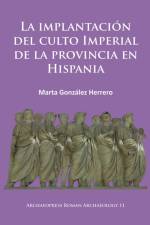
The aim of this study is to show the preferential qualitative value of epigraphy as a historical source and to proclaim the considerable interest offered by that found in Lusitania for understanding the introduction and organisation of the Imperial Cult in ancient Hispania.
Ritual landscapes and borders are recurring themes running through Professor Kalle Sognnes' long research career. This anthology contains 13 articles written by colleagues from his broad network in appreciation of his many contributions to the field of rock art research.
This volume presents the results of the CEDRE multidisciplinary project NAHR IBRAHIM that was led on the Lebanese mountain centered around the Nahr Ibrahim valley (the famous Adonis valley in Antiquity), in the hinterland of the ancient city of Byblos.
Provides analysis of production trends and complex, quantified distribution patterns of the principal traded sigillatas and slipped table wares in the Roman East, from the early Empire to Late Antiquity.
The contributions to this volume address the archaeology and history of the ancient Syrian city of Palmyra.
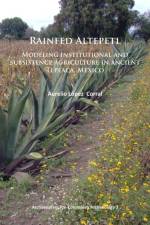
This work seeks to model food production in ancient Tepeaca, a Late Postclassic (AD 1325-1521) and Early Colonial (16th century) state level-polity settled on the central highlands of Puebla.
This volume focuses on the complex issues of long-term cultural change in the populations surrounding the Western Carpathians, with the aim of striking a balance between local cultural dynamics, subsistence economy and the alleged importance of far-reaching contacts, and communication and exchange involved in this process.
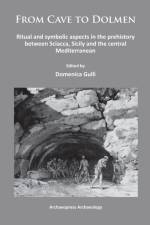
Bringing together the scientific contributions of a wide panel of Sicilian and mainland Italian specialists in prehistory, this book focuses on the Sciacca region and its landscape which is extraordinarily rich in natural geological phenomena and associated archaeological activity.
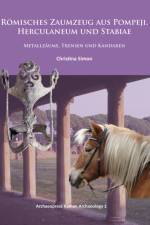
Few regions possess so many and mainly complete Roman bridles as do the Vesuvian sites. Singular find conditions permit both comprehensive antiquarian-historian analyses of their production, functionality, and everyday use and new approaches to their typology and chronology.
The lector is first attested during the 2nd Dynasty and is subsequently recognised throughout ancient Egypt history. This study challenges previous approaches to studies on the Lector and explores his diverse functions in a wide ranging review of the relevant evidence.
Abonner på vårt nyhetsbrev og få rabatter og inspirasjon til din neste leseopplevelse.
Ved å abonnere godtar du vår personvernerklæring.