





Gjør som tusenvis av andre bokelskere
Abonner på vårt nyhetsbrev og få rabatter og inspirasjon til din neste leseopplevelse.
Ved å abonnere godtar du vår personvernerklæring.Du kan når som helst melde deg av våre nyhetsbrev.

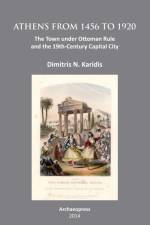
Architectural and urban analysis of Athens between 1456 and 1920 discloses the metamorphosis of a town to a city, experienced as an invigorating adventure through the meandering routes of history.
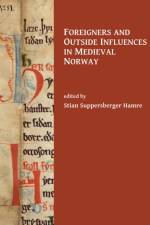
Seven articles discuss different aspects of immigration and foreign influences in medieval Norway, from the viewpoint of different academic disciplines. The book will give the reader an insight into how the population of medieval Norway interacted with the surrounding world, how and by whom it was influenced, and how the population was composed.
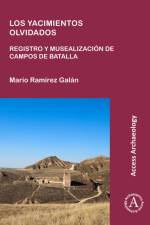
This book shows the great potential of Spanish battlefields and their heritage for archaeological study. It suggests Spain could be regarded as a very important country regarding battlefield archaeology.
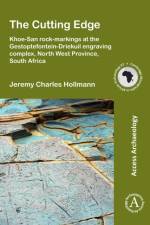
This book addresses rock engravings on the wonderstone hills just outside Ottosdal, South Africa. Much of the rock art has been destroyed due to mining activities, with very few records and the largest remaining outcrop is still threatened. The study hopes to bring this situation to the attention of the public and the heritage authorities.
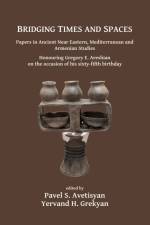
This book presents papers written by colleagues of Professor Gregory E. Areshian on the occasion his 65th birthday. The range of topics includes Near Eastern, Mediterranean and Armenian archaeology, theory of interpretation in archaeology and art history, interdisciplinary history, historical linguistics, art history, and comparative mythology.
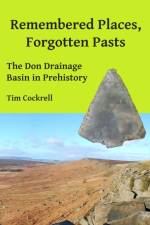
South Yorkshire and the North Midlands have long been ignored or marginalized in narratives of British Prehistory. In this book, unpublished data is used for the first time in a work of synthesis to reconstruct the prehistory of the earliest communities across the River Don drainage basin.
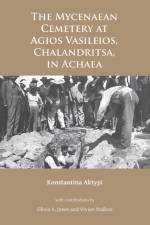
The Mycenaean chamber-tomb cemetery at Agios Vasileios in Achaea, was first investigated in the late 1920s, followed by small-scale research in 1961. In the years 1989-2001 further rescue excavations revealed 30 chamber tombs, some looted. Based mostly on the latest research, this study is the first major presentation of the cemetery and its finds.
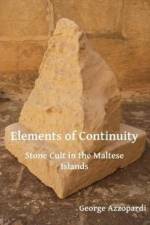
The stones dealt with in this study are non-figural (or aniconic) or, sometimes, semi-figural. They come from ritual contexts and, as such, act as a material representation of divine presence in their role as betyls. The Maltese islands are presented as a case study to demonstrate the phenomenon of continuity through a study of these stones.
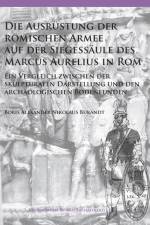
The reliefs of the column of Marcus Aurelius in Rome are used extensively for the illustration of Roman soldiers. However, there is no direct comparison between this work of official Roman art and the archaeological finds. This book aims to address this lacuna.
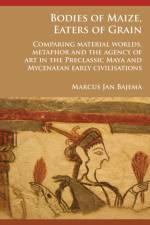
This book offers a comparative study of the civilisations of the Late Preclassic lowland Maya and Mycenaean Greece. The approach used here seeks to combine traditional iconographic approaches with more recent models on metaphor and the social agency of things.
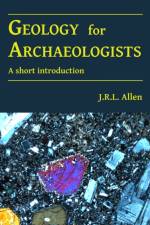
This short introduction aims to provide archaeologists of all backgrounds with a grounding in the principles, materials, and methods of geology. Each chapter ends with a short reading list, and many have selected case-histories in illustration of the points made. Included is a glossary of technical terms.
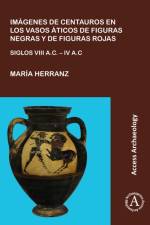
The centaur, a hybrid being with the body of horse and a human head and torso, first appeared in the mountains of Thessaly. This book is composed of a catalogue divided into nine chapters. Each chapter comprises catalogue entries for a number of black-figure and red-figure Attic vases.
The Proceedings of 12th International Conference of Archaeological Prospection draws together over 100 papers addressing archaeological prospection techniques, methodologies and case studies from around the world.
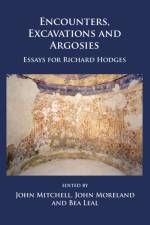
Richard Hodges, one of Europe's preeminent archaeologists, has, throughout his career, transformed the way we understand the early Middle Ages; this volume pays tribute to him with a series of reflections on some of the themes and issues which have been central to his work over the last forty years.
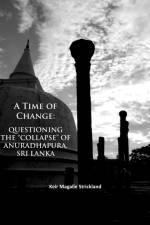
This book reassesses the apparent collapse of Anuradhapura, Sri Lanka, through explicit reference to the archaeological record, rather than focusing solely upon textual sources which have been overly relied upon in previous studies.
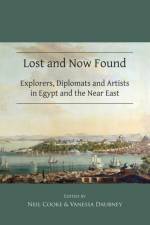
Long distance travel and mass tourism are not recent phenomena. Papers from the 2015 ASTENE Conference in Exeter demonstrate that over the centuries many individuals and groups of people have left the safety of their family home and travelled huge distances both for adventure and to learn more about other peoples and places.
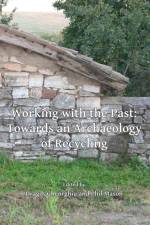
This book invites archaeologists to approach the significant process of recycling within the archaeological record at two different levels: of artefacts and of landscape.
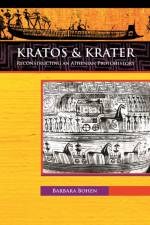
Athenian governance and culture are reconstructed from the Bronze Age into the historical era based on traditions, archaeological contexts and remains, foremost the formal commensal and libation krater.
Archaic humans were present for over a million years in western Mediterranean Europe where they left very many traces of their early stone-age activities and behaviour, and sometimes even human skeletal remains. This book evaluates archaeological findings about their life-ways at many important sites in Italy, southern France, and Spain.
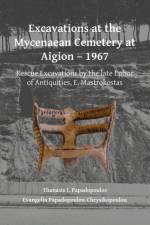
In this monograph the authors present the finds of four Mycenaean chamber tombs, from the rescue excavation of Ephor Mastrokostas at Aigion in 1967.
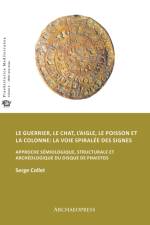
Collet brings a new approach to the study of the Phaistos Disc, one of the most studied documents of the Minoan civilization. It's not a deciphering but an interpretation, a depiction of the Minoan Weltanschauung through the symbols on the Disc and their connections with reality.
This book considers the early copper and copper-alloy metallurgy of the entire Circum- Alpine region. It introduces a new approach to the interpretation of chemical composition data sets, which has been applied to a comprehensive regional database for the first time.
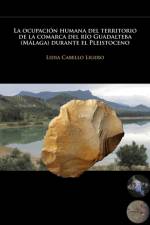
This investigation exhaustively gathers the archaeological evidence of the Palaeolithic human settlement in the Guadalteba river region (Malaga, Spain) during the Pleistocene.
The Cuyes River Valley, Ecuador, located in the Northwest of South America, acts as a transition corridor between the Andean and Amazon regions. This volume attempts to determine the ethnic origin of the pre-Columbian inhabitants of the Cuyes valley through the study of ceramics excavated in 2009.
Urban archeology in the central area of the City of Cordoba, Argentina. Excavations at the corporate headquarters of the Bank of the Province of Cordoba (2014-2016).
Environmental and spatial analysis in the archeology of hunter-gatherers from Magallania (southernmost South America)
Presents the results of open area excavations on 14.45ha of land at Cambridge Road, Bedford, carried out in 2004-5 in advance of development.
Presents 22 papers from the 18th annual meeting of the Symposium on Mediterranean Archaeology (SOMA), held in Wroclaw-Poland, 24th to 26th April 2014.
Papers from the fiftieth meeting of the Seminar for Arabian Studies, the principal international academic forum for research on the Arabian Peninsula.
The central hypothesis of this research is that there was a wide range of resource utilization along with rice farming around 3,400-2,600 BP. This hypothesis contrasts with prevailing rice-based models, where climatically driven intensive rice agriculture from 3,400 BP is thought to be the dominant subsistence strategy that drove social complexity.
Abonner på vårt nyhetsbrev og få rabatter og inspirasjon til din neste leseopplevelse.
Ved å abonnere godtar du vår personvernerklæring.