Gjør som tusenvis av andre bokelskere
Abonner på vårt nyhetsbrev og få rabatter og inspirasjon til din neste leseopplevelse.
Ved å abonnere godtar du vår personvernerklæring.Du kan når som helst melde deg av våre nyhetsbrev.

Extensive excavations by MOLA (Museum of London Archaeology) near Houghton Regis and Toddington, in south Central Bedfordshire, provide a detailed multi-period dataset for regional and national comparison. Evidence ranges from middle/late Bronze Age pits to medieval settlements.
On June 15, 1944, Afetna Point was called 'Yellow Beach 2' by the U.S. Marines and Army infantry braving Japanese resistance to establish a beachhead before capturing As Lito airfield in the following days. After 75 years, this book presents archaeological evidence, archival records, and respected elders' accounts from WWII.
Eynsham was one of the few religious foundations in England in continuous use from the late Saxon period to the Dissolution. This book aims to rescue this important abbey from obscurity by summarising its history and examining its material remains, most of which have never been published before.
How did past communities view, understand and communicate their pasts? And how can we, as archaeologists, understand this? This volume brings together a range of case studies in which objects of the past were encountered and reappropriated.
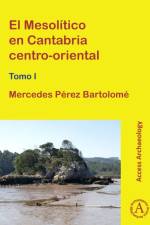
This book explores the Mesolithic period in the central-eastern area of Cantabria (Spain) as a manifestation of sociocultural evolution and change of the societies that lived in the area between the ninth and sixth millennia cal BC, until the introduction of farming.
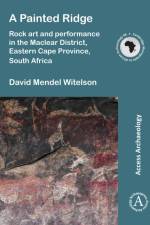
This book explores a suite of spatially close San (Bushmen) rock painting sites in the Maclear District of South Africa's Eastern Cape Province. As a suite, the sites are remarkable because, despite their proximity to each other, they share patterns of similarity and simultaneous difference.
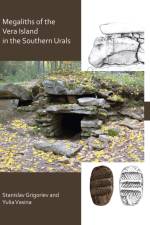
The largest and brightest megalithic complex in Russia's Ural Mountains is located on Vera Island, represented by three chambered megaliths and sanctuaries of the Eneolithic period (mid-4th - 3rd millennium BC). The oldest samples of stone sculpture in the Urals have been revealed within this complex.
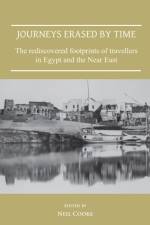
Early travellers in Egypt and the Near East made great contributions to our historical and geographical knowledge and gave us a better understanding of the different peoples, languages and religions of the region. Travellers in this volume are a mixture of rich and poor, bravely adventuring into the unknown, not knowing if would ever return home.
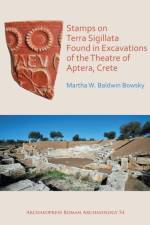
Aptera yields more stamped fragments of terra sigillata than any other Cretan city, including Knossos. This book presents stamped fragments of Italian and eastern sigillata found in excavations of the Theatre of Aptera and examines Crete's strategic position amid crossroads of transit and exchange as well as integration into the Roman economy.
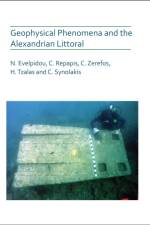
This book presents the geomorphology and recent geoarchaeological history of Alexandria which has been repeatedly struck by natural disasters. The Coastal area offers archaeological evidence (burial sites, quarry activities and ancient building remnants), as well as geomorphological features, all revealing a complex evolution of the coastal zone.
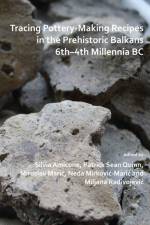
Balkan ceramic studies is an emerging field within archaeology. This book brings together diverse studies by leading researchers and upcoming scholars, capturing the variety of current archaeological, ethnographic, experimental and scientific studies on Balkan ceramic production, distribution and use.
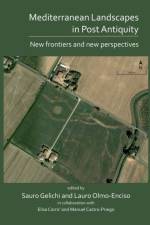
The study of landscape has in recent years been a field for considerable analytical archaeological experimentation. Although the Mediterranean is the home of classicism, it has seen the implementation of projects of this new kind, and in regions of Spain and Italy, after some delay, the proliferation of landscape archaeology studies.
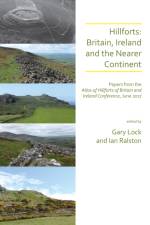
The Atlas of Hillforts of Britain and Ireland project (2012-2016) compiled a massive database on hillforts by a team drawn from the Universities of Oxford, Edinburgh and Cork. This volume outlines the history of the project, offers preliminary assessments of the online digital Atlas and presents initial research studies using Atlas data.
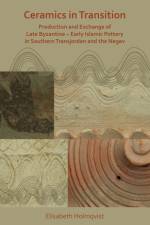
This book focuses on the utilitarian ceramic traditions during the socio-political transition from the late Byzantine into the early Islamic Umayyad and 'Abbasid periods, in southern Transjordan and the Negev. Production clusters, manufacturing techniques, distribution patterns, and material links between communities are analysed.
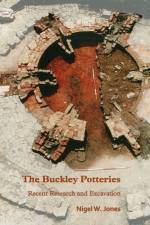
A regional pottery industry flourished in Buckley, Flintshire, from the medieval period to the mid-20th century. This book, based on recent research and excavations, identifies over 30 production sites. It considers the factors that influenced siting and development, how it changed through time and the reasons for its eventual demise.
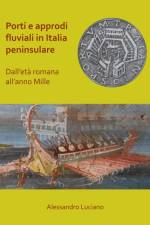
This book analyses the Roman and early medieval ports of Italy and the building techniques used in their structures; it displays the elements of continuity and discontinuity revealed during these centuries.
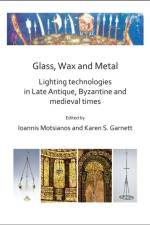
This volume provides an extensive look at the technological development of lighting and lighting devices during Late Antiquity and the Middle Ages in Western Europe and Byzantium. 29 papers are gathered from two International Lychnological Association (ILA) Round Tables held in Olten, Switzerland (2007) and Thessaloniki, Greece (2011).
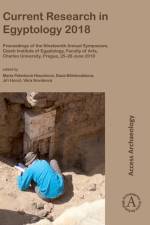
Current Research in Egyptology 2018 is a collection of papers and posters presented at the nineteenth symposium of the prestigious international student conference, held at the Faculty of Arts, Charles University in Prague on 25th-28th June 2018.
This essay presents a unique forensic / bioarchaeological investigation of the traumatised remains of an older male from Thasos, exploring the nature of the executing weapon reconstructed in bronze, the archaeometry on the trajectory and factors of speed and force at the deliverance of the deadly strike.
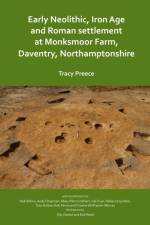
MOLA (Museum of London Archaeology) has undertaken archaeological work at Monksmoor Farm on the north-eastern edge of Daventry in six different areas. Finds presented here include two early Neolithic pits, a middle Iron Age settlement and two late Iron Age settlements.
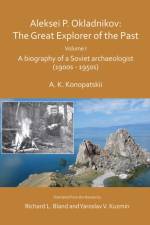
Aleksei P. Okladnikov (1908-1981), a prominent Russian archaeologist, spent more than 50 years studying prehistoric sites in various parts of the Soviet Union - in Siberia, Central Asia and Mongolia. This biography will appeal to archaeologists, historians, and anyone interested in the history of the humanities in the twentieth century.
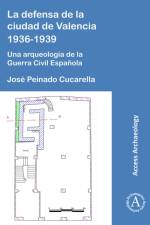
This publication presents the defense of the city of Valencia during the years 1936-1939 under two premises; whether Valencia was strategically bombed and which were the targets. The second premise is whether the city was efficiently organized to protect its civilians.
This book proposes that Coffin Texts spells 154-160, recorded at the beginning of the 2nd millennium BCE, form the oldest composition about the moon in ancient Egypt and, indeed, the world. Based on a new translation, the detailed analysis of these spells reveals that they provide a chronologically ordered account of the phenomena of a lunar month.
In a period when the study of archaeological remains is enriched through new methods derived from the natural sciences and when there is general agreement on the need for more investment in the study, restoration and conservation of the tangible cultural heritage, this book presents contributions to these fields from South-Eastern Europe.
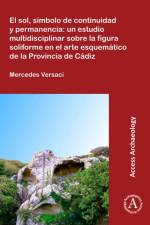
The purpose of this study is to analyze the soliform figures in schematic cave paintings in the area of Laguna de la Janda and Campo de Gibraltar (Cadiz). Technological, typological, stylistic, semiotic, astronomical, anthropological and landscape aspects of the cave paintings are considered.
This anthology is a collection of works from the Europa Postmediaevalis conference held in Prague in the spring of 2018. As the name of the conference suggests, the subject of interest is the Early Modern period (15th to 18th century) and the manner in which this relatively young discipline in the field of archaeology is approached in Europe.
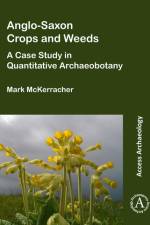
Farming practices underwent momentous transformations in the Mid Saxon period, between the 7th and 9th centuries AD. This study applies a standardised set of repeatable quantitative analyses to the charred remains of Anglo-Saxon crops and weeds, to shed light on crucial developments in crop husbandry between the 7th and 9th centuries.
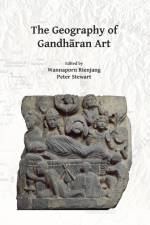
This second volume of the Gandhara Connections project at Oxford University's Classical Art Research Centre aims to pick apart the regional geography of Gandharan art, presenting new discoveries at particular sites, textual evidence, and the challenges and opportunities of exploring Gandhara's artistic geography.
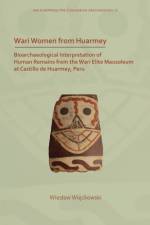
Excavations at the Castillo de Huarmey archaeological site brought to light the first intact burial of female high-elite members of the Wari culture. This book presents the results of bioarchaeological analyses performed to date, and focuses on reconstructing the funeral rite and social status of the deceased.
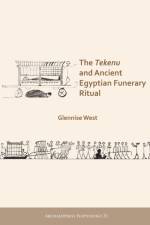
Attested from the Fifth Dynasty until, and including, the Saite Period, the Tekenu is a puzzling icon depicted within funerary scenes in the tombs of some ancient Egyptian nobles. In this work four distinct types of Tekenu are identified and classified and then a Corpus Catalogue is formed.
Abonner på vårt nyhetsbrev og få rabatter og inspirasjon til din neste leseopplevelse.
Ved å abonnere godtar du vår personvernerklæring.