


Gjør som tusenvis av andre bokelskere
Abonner på vårt nyhetsbrev og få rabatter og inspirasjon til din neste leseopplevelse.
Ved å abonnere godtar du vår personvernerklæring.Du kan når som helst melde deg av våre nyhetsbrev.

A festschrift in honour of Jonathan Tubb, former Levant curator and Keeper of the Department of the Middle East at the British Museum. 44 contributions reflect Jonathan's career and professional interests with a focus on the Jordan Valley and southern Levant, but also north Syria, Mesopotamia, and the protection of endangered cultural heritage.
In this rich volume, articles range across all the main phases of Greek Archaeology from Prehistory to the Postmedieval era, and cover a wonderful range of topics.
The Cote d'Or in Upper Burgundy is a zone of passage between basins more than an area of permanent settlement, except in the most temperate periods of early prehistory. The Boccard cave, which has the most complete stratigraphic sequence in the region, is here the subject of a previously unpublished detailed monograph.
Jose C. Martin de la Cruz is a pioneer scholar whose contributions both to Prehistory and the diffusion of cultural heritage have been acknowledged at an international level. The present volume pays homage to his professional career, by inviting more than 40 international scholars who tackle the study of Prehistory and the dissemination of heritage from several thematic and temporal perspectives. It is thus a multidisciplinary volume in which scholars from different fields investigate Prehistory from its origins to the period immediately before Greek and Phoenician colonization; at the same time, they explore the different ways in which Prehistoric heritage is transmitted. The volume is composed of four different but related parts, organized chronologically and starting with the most recent Prehistory. The first part deals with the intercultural connections which took place during the Bronze Age in the Mediterranean area. The second part goes back in time and investigates the first settlements and early food producing societies. The third examines our remote past and its natural environment. Finally, the closing part includes a set of multidisciplinary chapters which study prehistory from several different scientific fields. All in all, this volume becomes a scientific meeting point where senior professors and junior scholars get together to offer their scientific findings, at the same time as they pay homage to Professor Martin de la Cruz.
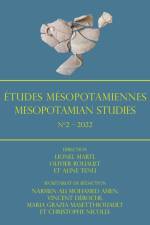
EMMS 2 is in two parts: Part 1 offers proceedings of a colloquium exploring the crisis of State and Monarchy between the 13th-10th centuries in northern Mesopotamia and Syria. The second part is dedicated to archaeological and textual studies from three archaeological sites that are currently being excavated in Iraqi Kurdistan.
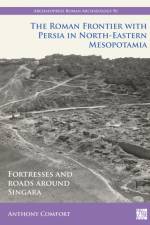
This volume investigates the Roman city of Singara and the fortifications and roads in the surrounding area. The Rome / Persia frontier has been little studied, in part because of the difficulty of access for scholars, but was of great importance because it separated the two major civilisations of the early first millennium CE.
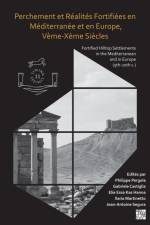
The result of an international congress (Roquebrune-sur-Argens, October 2019) about the fortified hilltop settlements of Late Antiquity and the Early Middle Ages, papers present both brand new data and syntheses on wide contexts throughout the European continent, the Mediterranean basin and beyond.
Presents Issues 1 and 2 of ARAMAZD: Armenian Journal of Near Eastern Studies Volume XIV 2020 in one combined print edition.
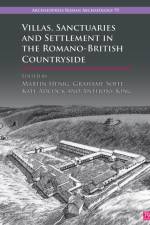
This volume brings together a range of papers on buildings that have been categorised as 'villas', mainly in Roman Britain, from the Isle of Wight to Shropshire. It comprises the first such survey for almost half a century.
The remains of the Roman frontiers in Wales are unique in the Roman Empire. More than 60 stone and timber fortresses, forts and fortlets, some of which seem to have been occupied for only a few years, while others remained in use for far longer, tell the story of the long and brutal war against the Celtic tribes.
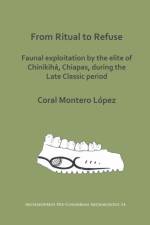
From Ritual to Refuse explores the faunal exploitation by the Maya elite at the site of Chinikiha, Chiapas, during the end of the Late Classic period (AD 700-850) by applying zooarchaeological and statistical analyses to a faunal assemblage located in a basurero or midden behind a palatial structure at the core of the site.
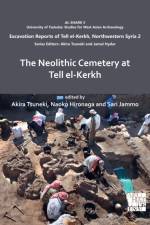
The Neolithic Cemetery at Tell el-Kerkh is the second volume of the final reports on the excavations at Tell el-Kerkh, northwest Syria, focusing on the discovery of a Pottery Neolithic cemetery dating between c. 6400 and 6100 BC, one of the oldest outdoor communal cemeteries in West Asia.
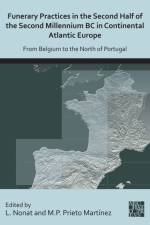
This edited volume presents a selection of essays dedicated to funerary practices from Belgium to the north of Portugal. It aims at filling gaps in the documentation and helping to better understand the relationships between these Atlantic regions during the Bronze Age.
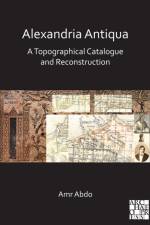
Alexandria Antiqua aims to catalogue the archaeological sites of Alexandria, from the records of the French Expedition (1798-99) to the present day, and to infer the urban layout and cityscape at the time of its foundation (4th century BC), and then through the successive changes which took place up to the Arab conquest (7th century AD).
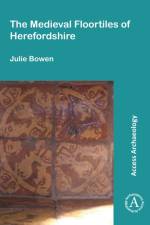
This volume presents a survey, in the form of a gazetteer, of the extant decorated floortiles of Herefordshire, with some tiles that are no longer available but which are known from records also included. For each site, each individual floortile design is illustrated, and parallels from other sites are outlined.
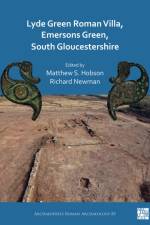
The Roman villa at Lyde Green was excavated between mid-2012 and mid-2013 along with its surroundings and antecedent settlement. The results of the stratigraphic analysis are given here, along with specialist reports on the human remains, pottery (including thin sections), ceramic building material, small finds, coinage and iron-working waste.
This study presents an articulated historical interpretation of Egyptian 'animal worship' from the Early Dynastic to the New Kingdom, and offers a new understanding of its chronological development through a fresh review of pertinent archaeological and textual data.
JHP is an independent learned journal dedicated to the research of ceramics and objects of daily use of the Hellenistic period in the Mediterranean region and beyond. It aims at bringing together archaeologists, historians, philologists, numismatists and scholars of related disciplines engaged in the research of the Hellenistic heritage.
Fifteen diverse essays honour the distinguished career of Beth Alpert Nakhai, a scholar of Canaan and ancient Israel; in this volume, Professor Nakhai's students and colleagues celebrate her important contributions to the field of Near Eastern Archaeology and tireless efforts to acknowledge and support women in the profession.
This book presents results of an archaeological research project focused on a specific monumental area, the citadel, in the city of Urfa (Turkey), known in ancient times as Edessa. Three seasons of fieldwork were carried out (2014-2016) in order to identify the building sequence of the citadel and establish an absolute chronology of events.
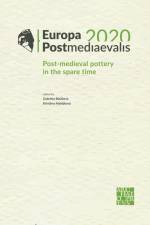
'Post-medieval pottery in the spare time' is a collection of papers planned for what would have been the second Europa Postmediaevalis conference. The focus is on the Early Modern period (15th to 18th centuries) and the growing use of new ceramic forms for leisure activities (smoking, drinking coffee or alcohol, garden strolls or games).
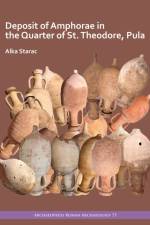
This book examines a large group of amphorae from the quarter of St. Theodore in Pula, Croatia, used for drainage and levelling as part of the construction of the terrace of the Roman temple complex and adjacent public thermae. Investigations in 2005-2007 uncovered 2119 amphorae, of which 1754 were extracted and thoroughly documented.
KOINON includes papers concerning iconography, die studies, provenance research, forgery analysis, translations of excerpts from antiquarian works, specialized bibliographies, corpora of rare varieties and types, ethical questions on laws and collecting, book reviews, and more.
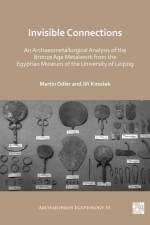
The Egyptian Museum of the University of Leipzig has the largest university collection of ancient Egyptian artefacts in Germany. This volume presents an analysis of 86 of these artefacts using a range of archaeometallurgical methods in order to provide a diachronic sample of Bronze Age Egyptian copper alloy metalwork from Dynasty 1 to Dynasty 19.
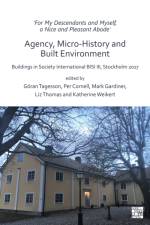
This volume examines how people have been making, using and transforming buildings and built environments, and how buildings have been perceived, from the Byzantine period to modern times. It also considers a diversity of built constructions - including dwellings and public buildings, sheds and manor houses, and secular and sacral structures.
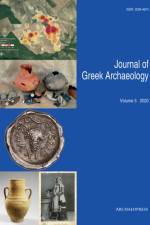
Volume 5 of the Journal of Greek Archaeology is the richest and most diverse so far. Keeping to the core brief to cover all major periods of Greek Archaeology, articles range from the Neolithic through Greco-Roman times, the Middle Ages and up to the 19th century AD. Geographically, papers range from Sicily through the Aegean to Turkey.
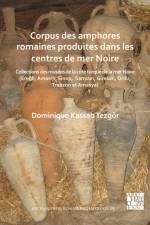
The Black Sea cities of Turkey's northern coast - Eregli, Amasra, Sinop, Samsun, Giresun, Ordu, and others - feature museums holding important collections of amphorae. Their state of preservation is exceptional since the majority were recovered intact from the sea. This volume brings them together for analysis in light of recent investigations.
Abonner på vårt nyhetsbrev og få rabatter og inspirasjon til din neste leseopplevelse.
Ved å abonnere godtar du vår personvernerklæring.