



Gjør som tusenvis av andre bokelskere
Abonner på vårt nyhetsbrev og få rabatter og inspirasjon til din neste leseopplevelse.
Ved å abonnere godtar du vår personvernerklæring.Du kan når som helst melde deg av våre nyhetsbrev.

In 1922, the US Forest Service offered one of the largest timber sales in the agency''s history, encompassing 890 million board feet of mostly Ponderosa pine timber in the mountains north of Burns, Oregon. Among other requirements, the sale terms required the successful bidder to build and operate 80 miles of common carrier railroad through some of the most remote and undeveloped country in the state. The Fred Herrick Lumber Company and its Malheur Railroad initially won the bidding, only to lose it when a crash in the lumber market forced the company into insolvency. The Edward Hines Lumber Company of Chicago picked up the pieces, and from 1929 until 1984, its subsidiary Oregon & Northwestern Railroad made a living hauling logs, lumber, and occasional livestock between Burns and Seneca, Oregon.
Once the site of a Ute Indian settlement, Basalt began life as several sleepy little hamlets. From the original Frying Pan Junction and later Aspen Junction, the town of Basalt is comprised of five areas. In the early 20th century, located midway between Aspen and Glenwood Springs, Basalt became the heart of the valley''s mining, ranching, and farming operations as pioneering families homesteaded the land. Many hoped to build their fortunes along the tracks of the Denver & Rio Grande Western and Colorado Midland Railroads, whose rail lines merged in the center of today''s downtown area. As the silver-mining era passed into history and the railroad operations ceased, so did the fortunes of early Basalt. Today''s Basalt is a vibrant and vital residential and commercial community located on the confluence of two world-class Gold Medal fishing rivers.
In 1908, William Kriegbaum, a California citrus grower, arrived as the first settler in what was to become Litchfield Park. He, along with other settlers from California, owned the land until 1916, when Paul Litchfield of Goodyear Tire & Rubber Company came to the area and purchased 16,000 acres to plant cotton for tires. In 1918, the townsite was planned with tree-lined streets and buildings to include an "organizational house" for Goodyear executives, which is now the famed Wigwam Resort. When new materials for tires were developed, cotton was no longer needed for cord. Shortly thereafter, Goodyear brought its tire-testing fleet to Litchfield, and farm equipment companies followed suit, sending engineers to design and test new machinery. The steel-wheeled tractor tire was replaced by Paul Litchfield''s newly patented pneumatic tire as the standard for farm equipment. The World War II years brought changes to the area as an influx of new residents transformed the company town to a more planned community.
Stevens County was first inhabited by a Paleo-Indian culture that occupied Kettle Falls along the Columbia River for 9,000 years. A gathering place for several Salish Indian tribes, the area called Shonitkwu, meaning "Falls of Boiling Baskets," was an abundant resource for fishing--specifically salmon. Traveling downriver from Kettle Falls to the trading post Spokane House in 1811, Canadian fur trapper David Thompson described the village as "built of long sheds of 20 feet in breadth" and noted the tribe''s ceremonial dances worshiping the arrival of salmon. In 1829, Fort Colville was producing large amounts of food from local crops. And in 1934, work began on the Columbia Dam to generate a much-needed power source for irrigation from the Columbia River. Upon its completion in 1940, the native tribes gathered one last time, not to celebrate the return of the salmon but for a "ceremony of tears" on the salmon''s departure.
Arizona''s 20 national parks and monuments celebrate the natural wonders and rich heritage of Arizona, preserved through the efforts of countless citizens and the American Antiquities Act of 1906. Aggressively implemented by eight US presidents, this legislation permits the president to unilaterally proclaim sites as national monuments without congressional action. The Antiquities Act was applied in Arizona 23 times, more so than any other state in the union. Using more than 200 historical photographs, many of which have never been published, this book contains the stories of the creation of each of Arizona''s national parks and monuments, emphasizing the importance of the landscape and cultural heritage to Arizona''s identity.
Say the words "California Gold Rush," and images of miners plying glittering gold from streams and mines come to mind. But there is a larger story in the California Gold Country than just the discovery of this precious metal. Immigrants from around the world rushed into the area, bringing with them their own languages and traditions in a quest for riches. One of those traditions was wine making, which, for some, would prove to be a greater boon than panning for gold as they discovered that the region''s soils and microclimates were ideal for vineyards.
Encompassing 27 square miles, Dallas/Fort Worth International is one of the world''s largest and busiest airports, accommodating more than 150,000 passengers each day. The 1974 opening of "D/FW" was preceded by nearly half a century of an often acrimonious aviation rivalry between Dallas and Fort Worth that featured a colorful cast of business leaders, municipal officials, and airline executives. Through its first 40 years, D/FW grew from a regional hub into a global crossroads for passenger and air cargo service. Bold, imaginative leadership sustained the airport through the failure of its largest tenant airline, the effects of 9/11, an air traffic controllers'' strike, and more than one fuel crisis. An extraordinary economic engine for North Texas, D/FW stands poised to become home to the world''s largest airline, validating the original planners'' dream of a dynamic focal point for domestic and international commercial aviation.
The towns of Cave Creek and Carefree are nestled in the lush foothills of the Sonoran Desert 35 miles north of Phoenix. Theprehistoric Hohokam first inhabited the area, settling along Cave Creek and elsewhere above the washes. The settlement of Cave Creek dates to the 1870s and has a rich history of mining, ranching, and homesteading. Early settlers persevered in this beautiful but rugged environment, isolated from the conveniences of urban life. Carefree, in contrast, was a master-planned town built in the late 1950s, providing modern amenities and infrastructure. Both towns offer a dramatic landscape and profuse desert plant life. Visitors are drawn to the area for the abundant recreational activities, community festivals, and art fairs as well as a unique blend of Western and contemporary cultures. The two towns are committed to protecting the desert environment and the welcoming, small-town atmosphere that is their historical legacy.
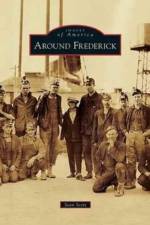
In the 1880s, Frederick was nothing but prairieland, and its only inhabitants were prairie dogs, rabbits, coyotes, and snakes. Coal brought settlers to the area, and Frederick was incorporated in 1907 as a coalmining town. The mines needed workers, and immigrants arrived from across the globe to help fill this need for labor. Men and their families came from Italy, Russia, Turkey, Greece, Mexico, and the Slavic countries to make Frederick their home. While not considered a gold or silver boomtown, Frederick had its share of growing pains. Liquor and illegal gambling were constant sources of problems, and the town saw natural disasters such as persistent flooding as well. As its location on the Union Pacific Railroad helped the miners, farmers, and merchants build a strong community, the history of Frederick provides a classic example of growth and development on the eastern Colorado plains.
On the banks of the Skagit River in the late 1800s, an untamed wilderness was settled by Jasper Gates. He was followed by Harrison Clothier and Edward English, who had a vision for a new town. But before the city of Mount Vernon could become a reality, the early settlers would have to use simple tools and pure determination to clear two ancient logjams that prohibited travel up the river. Once the river was navigable, the logging industry could flourish, which, in turn, cleared fertile lands that would support world-class farming and culminate in a booming dairy industry. Eventually, Mount Vernon would be referred to as "Milk City." The area was a top seed producer as well as the site for food processing and canning. Today, it is best known for bulb and flower growing; every April, hundreds of thousands of people journey to view the spectacular flower fields.
Abonner på vårt nyhetsbrev og få rabatter og inspirasjon til din neste leseopplevelse.
Ved å abonnere godtar du vår personvernerklæring.