

Gjør som tusenvis av andre bokelskere
Abonner på vårt nyhetsbrev og få rabatter og inspirasjon til din neste leseopplevelse.
Ved å abonnere godtar du vår personvernerklæring.Du kan når som helst melde deg av våre nyhetsbrev.

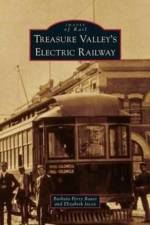
Idaho's Treasure Valley, named for the gold and silver once mined in the area, encompasses Ada and Canyon Counties in the southwest corner of the state. Boise City was founded in 1863 when the US Army built a fort at the crossroads of the Oregon Trail and the road to the Boise Basin gold mines. Boise soon became the major distribution center for supplies and fresh food for miners. By 1890, with the development of agriculture and the expansion of the railroad, towns stretched west along the Boise River to the Oregon border. A boom in the early 20th century was due in part to the electric railway, a modern transportation system linking Boise to the communities of Meridian, Eagle, Nampa, Caldwell, and Middleton. The electric railway era lasted from 1891 to 1928 and supported the growth of neighborhoods and communities, inspired the creation of local parks, and provided recreation and entertainment opportunities to rural and urban residents.
San Antonio Heights is an unincorporated community in San Bernardino County nestled at the head of historic Euclid Avenue. The rich history of this area can be traced back to the community's distinctive design, carved out by its curved and circular streets, which officially took shape in 1887. These curves and circles, as well as San Antonio Heights' profoundly independent residents, typify a charming community on the hill. San Antonio Heights and San Antonio Canyon were a main stage for many innovations of irrigation, hydroelectric power, passenger railroad, and other conveniences that contributed to an improved quality of life for the entire nation.
In Portland's first decades, the northwest side remained dense forests. Native Americans camped and Chinese immigrants farmed around Guild's Lake. In the 1870s, Slabtown acquired its unusual name when a lumber mill opened on Northrup Street. The mill's discarded log edges were a cheap source of heating and cooking fuel. This slabwood was stacked in front of working-class homes of employees of a pottery, the docks, icehouses, slaughterhouses, and lumber mills. Development concentrated along streetcar lines. The early 20th century brought the 1905 Lewis and Clark Centennial Exposition, manufacturing, shipbuilding, Montgomery Ward, and the Vaughn Street Ballpark. Today, Slabtown is a densely populated residential neighborhood, with many small shops and restaurants and an industrial area on its northern border. Tourists still arrive by streetcar to the charming Thurman, NW Twenty-first, and Twenty-third Avenues. Famous residents include author Ursula Le Guin, baseball greats Johnny Pesky and Mickey Lolich, NBA player Swede Halbrook, and Portland mayors Bud Clark and Vera Katz.
Located at the end of the road in the land of the midnight sun, the historic village of Talkeetna has played a significant role in trapping, mining, railroading, and mountaineering history. Talkeetna's function as a gathering place and transportation hub in America's last frontier has been important from its onset and continues today. People from around the world gather in Talkeetna each year in preparation to ascend Denali (Mount McKinley), North America's tallest peak and one of the world's most challenging mountains. Talkeetna continues to preserve its rural Alaskan character, charm, and culture while annually hosting thousands of climbers and visitors from around the globe. Locals and guests enjoy Talkeetna's Bachelor Auction, Mountain Mama Contest, and Moose on the Loose events.
What can be considered the first major exploration of the Sacramento River, from its mouth northward, began on May 13, 1817, when Padres Duran and Abella and 20 other men under the command of Lt. Louis Antonio Argullo sailed in two launches up the river. They continued north until May 20, 1817, when they turned back. The group recorded their point of farthest exploration by carving a cross into an oak tree; some believe this point is near the present-day town of Freeport. Three decades later, Clarksburg was established, followed by Walnut Grove, Paintersville, Rio Vista, Onsibo, Freeport, Courtland, Emmaton, Isleton, Vorden, Ryde, Hood, and Locke. Each one of the settlements has its own exciting tale about its founders and the origins of the name that it was given.
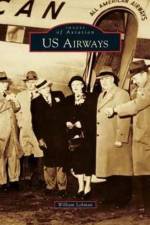
The history of US Airways begins in 1939 as All American Aviation, flying single-engine Stinson Reliant aircraft to carry mail under a contract by the US Postal Service. By 1953, All American became Allegheny Airlines with the goal to become one of America's premier airlines in the East. Allegheny grew by acquiring other airlines, the first being Lake Central Airlines in 1968, followed by Mohawk Airlines in 1972. In 1979, Allegheny became US Air to reflect the airline's desire to grow to the West Coast; this was followed by merging with PSA in 1988, Piedmont in 1989, Trump Shuttle in 1992, and America West in 2005. US Airways is now the fifth-largest airline in the United States, operating more than 2,000 flights daily. This book tells the story of the many men and women who transformed a small regional airline to become one of America's great success stories.
Abonner på vårt nyhetsbrev og få rabatter og inspirasjon til din neste leseopplevelse.
Ved å abonnere godtar du vår personvernerklæring.