


Gjør som tusenvis av andre bokelskere
Abonner på vårt nyhetsbrev og få rabatter og inspirasjon til din neste leseopplevelse.
Ved å abonnere godtar du vår personvernerklæring.Du kan når som helst melde deg av våre nyhetsbrev.

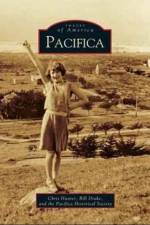
Predominantly built as a "bedroom" community for the San Francisco Bay Area, Pacifica's rich and diverse heritage stretches back to the Spanish explorers of the 17th century. Captured here in over 200 vintage images is a tribute to this coastal community and the settlers and pioneers who made it what it is today. From the early 1900s story of the Ocean Shore Railroad to the recent battles over the California red-legged frog, Pacifica has often been shaped by outside forces. Like few other cities, it is primarily the result of a mixture of people and location; blue-collar families from the 1950s discovered Pacifica's oceanside charm, and helped create it. In the 21st century, the wealthy from the Peninsula and Silicon Valley are rediscovering the same charms, choosing Pacifica over the hustle and bustle of the rest of the Bay Area. This book of photographs, culled from the collection of the Pacifica Historical Society, the files of the Pacifica Tribune, and contributions of local residents, offers a glimpse of the history of one of California's "best kept secrets."
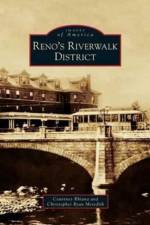
During the mid-1800s, Charles Fuller established the first bridge to cross the Truckee River in Reno. Shortly after, settlers took residence, built a vibrant community, and called the banks of the Truckee River home. From the booming Comstock Lode and the expansion of the Transcontinental Railroad, Reno was a town of growth. By the mid-1900s, Reno showcased some of the state's most historic structures and had become known as the divorce capital of the country. The area of Reno now recognized as the Riverwalk District faced reckless floods, storms, and devastating fires, and yet its rich history and culture has prevailed for more than 98 years.
In a region desperate for transportation to rich, gold-bearing creeks, the narrow-gauge Tanana Mines Railroad was built over permafrost, bogs, and hills to carry miners and supplies in 1905. Reorganized as the Tanana Valley Railroad, this little line promised the survival of both gold mining and Fairbanks until Fairbanks's economic base broadened. The railroad, built with Klondike Gold Rush earnings, prospered for only a few years and was acquired by the Alaska Railroad. The narrow-gauge survived 25 years, serving as the terminus for the Alaska Railroad and ensuring the development of Interior Alaska.
The land area of Warm Springs and the warm bubbling waters for which it was named slope from just below Mission Peak to the southern part of the San Francisco Bay. Native Americans established early settlements near the springs. Rancho Agua Caliente defined the borders of the hamlet of Harrisburg, later named Warm Springs. The Warm Springs Health Resort on this land was known worldwide in the 1850s. In 1869, Gov. Leland Stanford purchased the resort area as a private estate that his brother Josiah developed into a famous winery. Henry Curtner farmed large tracts of land planted in wheat, barley, and grapes. Products were shipped from Dixon and Warm Springs Landings to the large markets in San Francisco. The town of Drawbridge was established off its shores as a sportsman's haven and is now a ghost town. A Portuguese festival drew 10,000 people in 1935. The popular Weibel Winery and Hidden Valley Dude Ranch were established just after World War II.
Abonner på vårt nyhetsbrev og få rabatter og inspirasjon til din neste leseopplevelse.
Ved å abonnere godtar du vår personvernerklæring.