














Gjør som tusenvis av andre bokelskere
Abonner på vårt nyhetsbrev og få rabatter og inspirasjon til din neste leseopplevelse.
Ved å abonnere godtar du vår personvernerklæring.Du kan når som helst melde deg av våre nyhetsbrev.

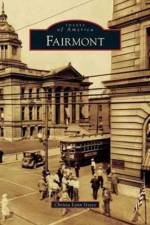
Situated where the West Fork and the Tygart Valley Rivers converged to form the Monongahela River, Fairmont was an attractive location for early settlers. In 1820, Fairmont, then named Middletown, was officially established as a town by the Virginia Assembly and was renamed Fairmont in 1843. The 1800s witnessed significant advancement in community formation, commerce, transportation, and education. Coal and natural gas extraction as well as the transportation sector would fuel an increasing demand for skilled and unskilled laborers. This resulted in an influx of European workers who would further enrich the culture of Fairmont. The 1900s saw the emergence of a variety of glass manufacturing companies, a packaging plant, flour mills, and an electrical service company. Fairmont became the most diversified and plentiful city in the region.
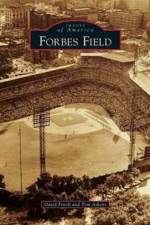
In 1909, Pittsburgh Pirates president Barney Dreyfuss began construction on a new facility for his team in the Oakland section of Pittsburgh. Dreyfuss decided to call his palace--the first concrete and steel facility built in the National League--Forbes Field, after the British general John Forbes, a hero in the French and Indian War. Opened on June 20, 1909, Forbes Field was a hit from the onset; the venue hosted large crowds that came to watch the Pirates win in their first World Series against the Detroit Tigers that year. As the years went on, Forbes Field became synonymous with the greatest sports memories in the city's history. Patrons saw the trials and tribulations of the Steelers as well as some of the greatest collegiate football teams in the history of the game. The University of Pittsburgh won three collegiate football national championships, and Duquesne University and Carnegie Tech also fielded many winning teams while calling Forbes Field home. Alongside football, boxing was a constant event at the famed facility, hosting some of the most memorable pugilists this city has ever produced. Above all else, it was a baseball mecca. While the field is no longer in use, the wall remains intact, reminding Pittsburghers of the field's rich history.
Harrisburg State Hospital opened in 1851 as the Pennsylvania State Lunatic Hospital, the first public institution in the state. Situated atop a hill overlooking the Susquehanna River, the original building was an early example of a Kirkbride design hospital. The facility closed in 2006 after serving the commonwealth for 155 years. Harrisburg State Hospital: Pennsylvania's First Public Asylum presents a pictorial history of the hospital from the first year of only 12 patients through the peak of state care, when the population reached over 2,500 in the 1950s. Harrisburg State Hospital was an innovative leader in the treatment of the mentally ill, pioneering new methods of therapy even before they were common practice. It was a community and a home for those whom society could not otherwise care for.
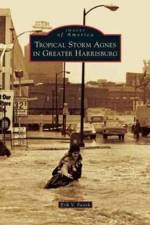
Tropical Storm Agnes, along with the unprecedented flooding which resulted from it, is arguably the most significant event to have transpired in the Harrisburg area in the last 150 years. Over the course of June 21 and June 22, 1972, Agnes drenched the region with more than a foot of rain. As a result, the Susquehanna River rose to record-breaking levels and backed into the already overwhelmed feeding creeks and streams. In Harrisburg, armed National Guardsmen patrolled the vacant streets and set up checkpoints to enforce a curfew and deter looting. Surrounded by floodwaters, row homes near the governor's mansion burned, and firefighters waded through chest-high water as they attempted to reach the blaze. Entire neighborhoods in both Shipoke and Steelton were ultimately lost due to the high waters entering homes. To this day, Agnes continues to serve as the measuring stick by which all storms since have been judged.
Abonner på vårt nyhetsbrev og få rabatter og inspirasjon til din neste leseopplevelse.
Ved å abonnere godtar du vår personvernerklæring.