







Gjør som tusenvis av andre bokelskere
Abonner på vårt nyhetsbrev og få rabatter og inspirasjon til din neste leseopplevelse.
Ved å abonnere godtar du vår personvernerklæring.Du kan når som helst melde deg av våre nyhetsbrev.

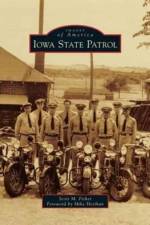
The Iowa State Patrol was started by Iowa's first female secretary of state, Ola Babcock Miller, who was a champion for highway safety. Her vision for the Iowa Highway Patrol was a group of well-trained officers who would enforce Iowa's traffic laws but also, more critical to her, spread the word about the importance of safe driving. In 1935, fifty men were sworn in as officers of the Iowa Highway Safety Patrol. Known thereafter as the "First Fifty," they had been selected from a group of more than 3,000 applicants and more than 100 invited for the initial training at Camp Dodge. One member of that group, Buck Cole, proposed the patrol's motto of "Courtesy-Service-Protection," a tradition that has been passed down through the generations to today's Iowa State Patrol, whose male and female troopers promote Mrs. Miller's original premise of keeping the driving public safe.
The partner communities of Whiting and Robertsdale epitomize Americana and the melting-pot concept at its finest. Whiting started out as a small, frontier-like town settled by German and Irish immigrants and quickly became a booming industrial city after Standard Oil Company arrived in 1889 to build a refinery. Neighboring Robertsdale became home to thousands of Eastern European immigrants who came to the area in search of jobs and new opportunities. Together, they built beautiful churches, quality schools, and recreational facilities. They raised their families to be proud Americans and incorporated traditions from their homelands into daily life. This pictorial history is a tribute to the citizens who created a warm and inviting environment amidst the cold, hard steel of the industries that surrounded them and who left behind a legacy rich in tradition, tenacity, and a tendency to celebrate everything!
Situated in the heart of the Great Plains, Wichita has been a city of energy and change. The Great Depression and World War II brought both challenges and opportunities. During the postwar years, commercial and business activities downtown thrived, while shopping malls and drive-ins appeared in new suburbs. Meanwhile, African Americans, countercultural figures, and other groups struggled to reshape local affairs. Urban renewal transformed whole sections of the city, while redevelopment brought new life into older structures. Events such as Riverfest and a host of museums have improved the quality of life. A strong entrepreneurial tradition has remained, and populations from Asia and Latin America have brought new perspectives. Aviation has remained the economy's heart, although health care, higher education, and other ventures have made their mark as well. Through it all, the rhythms of everyday life have continued, creating a vibrant, complex community facing the dawn of the 21st century.
Alexandria is situated near the center of Douglas County, surrounded by a chain of beautiful lakes. These lakes brought pioneer settlers to the area as early as 1858, when Minnesota achieved statehood and the town was established. The lakes remain a key factor that continue to draw residents and visitors. The images in Postcard History Series: Alexandria tell the community's story, recalling fond memories of the businesses, churches, homes, schools, and recreational opportunities that form the generous and caring nature of the welcoming community that is Alexandria.
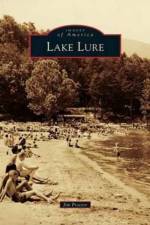
Lake Lure, North Carolina, is known as the "Gem of the Carolinas." Twenty-five years after Dr. Lucius Morse and his brothers Hiram and Asahil purchased Chimney Rock in 1902, their dream of creating Lake Lure and the town of Lake Lure was realized. Lake Lure is surrounded by majestic mountain cliffs and fed by the idyllic Rocky Broad River. A popular tourist destination, Lake Lure hosted famous figures through the years, including Franklin D. Roosevelt and F. Scott Fitzgerald. Also significant in film history, it provided the backdrop for Dirty Dancing and Last of the Mohicans. Lake Lure showcases the rich community, tourism, and recreational history of this mountain community.
Abonner på vårt nyhetsbrev og få rabatter og inspirasjon til din neste leseopplevelse.
Ved å abonnere godtar du vår personvernerklæring.