
Gjør som tusenvis av andre bokelskere
Abonner på vårt nyhetsbrev og få rabatter og inspirasjon til din neste leseopplevelse.
Ved å abonnere godtar du vår personvernerklæring.Du kan når som helst melde deg av våre nyhetsbrev.

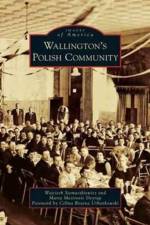
The years after World War I heralded a large influx of Polish immigrants fleeing war-torn homelands in search of a better life. Drawn by the opportunity to work in the textile and manufacturing mills, Polish immigrants moved to Wallington, New Jersey, a newly incorporated borough in Bergen County. The Polish community of Wallington established themselves as local store owners and businessmen. They constructed churches and social club buildings; established restaurants, pubs, and grocery stores; and participated in the social life of their community. By the 1920s, Polish Americans began to dominate local politics; in 1929, the first Polish American mayor, Leo Strzelecki, was elected. Polish Americans became the majority in Wallington between 1935 and 1945, representing about 70 percent of the population. In 2012, Polish Americans comprise over 50 percent of Wallington's population. Through vintage photographs that capture the spiritual life of these people and the struggles they overcame, Wallington's Polish Community honors the Polish immigrants of the past while educating new generations.
Clark County, located in central Wisconsin, was organized in 1853. The first settlers, primarily lumbermen, arrived in the 1830s. After seeing the massive forests of standing timber, they built sawmills and lumber camps. Soon, towns and villages sprang up, complete with businesses, hotels, homes, schools, and churches. The railroad arrived by the 1880s, starting a new chapter for Clark County. As the timber was logged and the land was cleared of tree stumps, the fertile farmland attracted new settlers. People in pursuit of the American dream, including immigrants from European countries, arrived to homestead the land. Images of America: Clark County presents the lumber years, agriculture, businesses, communities, and of course the people of Clark County in photographs from the 1850s to the present day. The final chapter, "Unique Clark County," features the people and places that help make the county so special to those fortunate enough to live here.
The Industrial Revolution, along with free land, created fierce competition among American railroad companies to connect the country with a web of track. Goods, as well as people, needed to be transported. The railroads would create towns, then profit from the sale of the land and transporting of people and goods. The plan worked brilliantly, as there were no other means of transportation--or roads--to these new communities. Aberdeen, platted in 1881, was known as an "end of line" stop for several years. During this time, the town boomed into a city. Main Street sprawled southward, and wooden boomtown businesses were quickly replaced with elaborate brick buildings, some six stories tall. Examples of Aberdeen's eclectic style of architecture, spanning nearly 60 years, can be found within Images of America: Aberdeen. Many of these treasures still exist today; others, along with their lost stories, are forever preserved here.
As drivers in the 1950s and 1960s traveled the roads of Wisconsin, they often came across billboards inviting them to Eagle River, "the nation's vacationland." Then, as now, vacationers and sportsmen came to Eagle River for the clean air, the restful woods and lakes, and the peace and quiet of the Northwoods. Eagle River, created in 1885, is the county seat of Vilas County and is home to the longest chain of freshwater lakes in the world--28 in total. By the late 1890s, the virgin pine forests were depleted, but Eagle River residents recognized that the abundant local hunting and fishing promised a new thriving industry: tourism. Anglers from all over the Midwest were lured to the Northern waters to try their luck. Resorts and summer camps quickly sprang up to accommodate these early tourists along with their families. Their descendants understand that "all hearts come home to Eagle River."
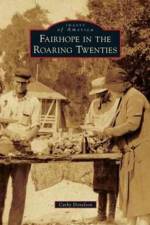
The 1920s roared into the quiet bay-front utopian village of Fairhope in roadsters and riverboats carrying free thinkers, nudists, bootleg whiskey, Socialists, progressives, and some of the leading counter-culture authors and artists of the century. Founded in 1894 as a model cooperative colony, Fairhope had a name before it was a place because its settlers believed their unique venture would have a "fair hope" of success. Its cornerstone was the law of equal freedom for all. During the Jazz Age, flappers and wealthy visitors from metropolitan centers of Chicago and New York abounded during the post-war boom. They flocked to the beautiful resort spot on Mobile Bay, an entertainment center with dance and yacht clubs and a waterfront casino. The town's individualistic roots also attracted famous idealists, intellectuals, and social critics of the day, as well as mavericks, Communists, and some just plain kooks.
Greenhills is an American treasure. It is one of only three "model" greenbelt towns built during the Great Depression by the New Deal's Resettlement Administration, designed to move working people out of crowded cities and into new, well-planned communities in the suburbs. Construction began in December 1935, and the first families moved there in 1938. Greenhills featured schools, churches, and stores within easy walking distance, as well as wonderful amenities: walking paths, green spaces, and community and recreational facilities. In hard times, when many struggled with crowded, decrepit housing, Greenhills offered affordable, well-built homes with the latest conveniences. When one-third of the country was out of work, many men were employed in the planning and building of Greenhills.
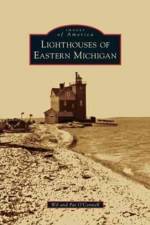
From the Straits of Mackinac to the Detroit River, Images of America: Lighthouses of Eastern Michigan reveals intriguing stories of lighthouses and the people who depended on them. Readers will enjoy discovering what happened when a large ship fell 20 feet over one of the Soo Locks and the captain commented, "Good-bye Old World," as well as of a persistent ghost that caused havoc with the Coast Guard. Which lighthouse was a construction miracle in 1874? And whatever happened to the lost lighthouses of the Detroit River? A collection of the mysteries, storms, fires, and heroics surrounding the lighthouses of eastern Michigan are waiting within.
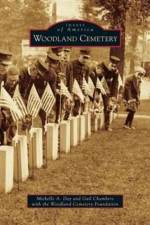
Woodland Cemetery, the second-oldest cemetery in Cleveland, was named after a romantic description of an unseen Cleveland that was part of a popular 1803 pastoral poem, The Pleasures of Hope, by Scottish poet Thomas Campbell. Its 60 acres provide a primer on American cemetery design, from the "rural cemetery" intricacies of the 1850s to the more rambling style of the late 19th century to the rectangular 20th-century grid. Its mausoleums are designed in Classical, Victorian, Egyptian, and Richardson rustic styles. These varied structures--along with angels, obelisks, and military memorials--are symbolic of the residents resting within the gates.
Abonner på vårt nyhetsbrev og få rabatter og inspirasjon til din neste leseopplevelse.
Ved å abonnere godtar du vår personvernerklæring.