




Gjør som tusenvis av andre bokelskere
Abonner på vårt nyhetsbrev og få rabatter og inspirasjon til din neste leseopplevelse.
Ved å abonnere godtar du vår personvernerklæring.Du kan når som helst melde deg av våre nyhetsbrev.

Which organizations provide customer satisfaction or inspire customer loyalty? Which is more important? This book gives detailed examples of how to deploy the Kano model of customer service excellence in a manufacturing setting, as well as, in service and other environments. Readers will learn how to directly apply Kano principles in their own business environments, establish priorities, increase efficiency, improve communication, and expand on business relationships.
Suitable for both beginners and more advanced users, this book explores why Blender is ideal for animation films. It demonstrates Blender¿s capability to do the job in each production department. Familiarizing readers with the animation industry, the book helps readers manage their projects from start to finish, understand the different stages in any animation production, and see how studios work and develop their animation projects. It guides readers toward finding efficient solutions for issues with their production files or pipeline.
Ready technology is a new category of information technology (IT) that allows companies to rapidly pilot and deploy new technologies at a very low cost. This book explains the ready technology adoption process in detail, enabling companies to exploit new technology immediately and effectively. It covers the latest trends and processes in ready technology. It also describes the characteristics of ready companies and recommends ready technology pilots that should be launched by the following industries: higher education, retail, and healthcare.
Its scale, flexibility, cost effectiveness, and fast turnaround are just a few reasons why crowdsourced testing has received so much attention lately. While there are a few online resources that explain what crowdsourced testing is all about, thereΓÇÖs been a need for a book that covers best practices, case studies, and the future of this technique.Filling this need, Leveraging the Wisdom of the Crowd in Software Testing shows you how to leverage the wisdom of the crowd in your software testing process. Its comprehensive coverage includes the history of crowdsourcing and crowdsourced testing, implementation practices, and future trends.The book discusses best practices in implementationΓÇöexplaining what, when, and how to crowdsource in a testing effort. It also includes case studies that illustrate how both product and service companies have successfully applied crowdsourcing in their testing programs.Explaining how to use the combined advantages of crowdsourcing and cloud computing for software testing, the book examines various engagement models in which you could implement crowdsourced testing. It addresses effective defect management in crowdsourced testing and considers both the business and engineering aspects of crowdsourced testing.The book explores the challenges, limitations, and situations when crowdsourced testing will not work and provides powerful best practices for mitigating the constraints and challenges, including how to build a crowdsourcing platform to test software products. Covering career opportunities for crowd testers, the book concludes by taking a look at the need to build a crowdsourced testing ecosystem, who the players of such an ecosystem would be, and who would need to champion such an effort.
The fact that a process produces garbage is a testament to design inefficiency, and this book explains how to use the nature of that garbage to pinpoint and eliminate those inefficiencies. Lean Waste Stream: Reducing Material Use and Garbage Using Lean Principles supplies an unprecedented look at how to address business waste in a manner that will improve your organizationΓÇÖs environmental and financial performance.Tackling the problem of business garbage from a Lean perspective, the book maintains a focus on how to minimize garbage in ways that cut costs. It considers the problem of garbage in terms of transportation, inventory, and labor costsΓÇöwith an effort to connect reductions in garbage production at all stages with lower operating costs and improved productivity.Explaining how to use garbage analysis as a tool to identify the problems in process flow that produced the garbage, this book describes how to look downstream for options to reuse, repurpose, and recycle garbage to minimize landfill impact and costs. The text includes practical exercises with step-by-step instructions, as well as real-world examples that illustrate how specific wastes have been dealt with profitably by various organizations.
In order for an organization to thrive in a competitive business environment, its strategy, people, and branding must be fully optimized. The Innovative Lean Machine: Synchronizing People, Branding, and Strategy to Win in the Marketplace explains how to use Lean principles and visual tools to maximize these core components in any business.The book demystifies theory with examples of the various visual tools any organization can rely on during the idea generation, product development, and branding processes. Filled with easy-to-follow graphics, charts, and tables, the text provides a simple, yet effective, series of visual frameworks that readers can immediately apply with little or no difficulty.Describing how to ensure your business planning reflects what is most valuable to your customers, this resource presents the insights of a creative thought process that drives innovative solutions. It considers the key aspects of Lean that can help you drive innovation in the development of your organizationΓÇÖs branding, strategy, and in the selection and management of its people. It also includes discussions on the characteristics of highly effective and trustworthy people.After reading this book, you will better understand how to use Lean tools to build a stronger brand, build better market strategies, and identify and retain effective people. You will also gain an understanding of what it takes to align all organizational activities to ensure maximum value for your customers while relentlessly driving out waste.
This book describes how to use logic, reasoning, critical thinking, and the scientific method to conduct and improve criminal and civil investigations.
This book provides solutions for the range of interview challenges found in today's multilingual environments.
This book is about an actual Lean transformation that took place in a 100-year-old North American manufacturer''s factory. Lean Today, Rich Tomorrow: Succeeding in Today''s Globalization Chaos tells the story of how an obsolete factory destined for closure was transformed into the most productive North American manufacturer in its field, but this shift didn''t happen without its share of obstacles.Despite the problems the company encountered, the implementation of the Lean/TPS with JIT and Kaizen absolutely ensured its survival while many companies in the field fell under the shadow of bankruptcy. The company eliminated the bad habits associated with its antiquated push system, including piecework, batch process, and rework, and transformed its factory into a JIT/Lean philosophy-driven plant with one-piece flow, U-shaped production lines, and productivity sharing.Telling a tale of adventure, the book guides readers through the steps taken by the company to improve processes and results over a ten-year period. This success story will give managers the tools to succeed in rallying and training a workforce to achieve Lean goals through a substantive change in culture. The book keeps the use of theory to a minimum. However, to make it useful to both students and professionals, it explains the basic concepts of the Toyota system.Presented in a compelling story format, Lean Today, Rich Tomorrow: Succeeding in Today''s Globalization Chaos is a practical work, told the way it was experienced. It avoids complex formulas, algorithms, and grand theories and instead illustrates the process used by this Canadian enterprise and its employees to achieve their successful implementation without the help of consultants.
What if you could double your productivity without additional capital investment? What if you could outperform your competition by changing the way you think? What if you could be fast, flexible, and low cost?In The Process Mind, Philip Kirby not only opens your mind to these possibilities but shows you how it is done. The book emphatically makes the case that the new thoughtware® of process thinking is imperative if you are to compete in the twenty-first century.Business performance is rooted in your processes, and superior performance depends on how you think about and run these processes. To improve and sustain performance, you need a process mind.With game-changing thinking, thought-provoking principles, and eye-opening examples, Kirby brings to life the operating intelligence of a process mind and demonstrates why process is the most innovative product you can build.This book covers the downside of old thoughtware and the upside of new thoughtware. It sets out the principles on which thoughtware operates, describes its application at every level of work, and illustrates the impact of new thoughtware with real-life examples and case reports.Kirby presents insights gained through decades of successful implementation of new thoughtware practices across North America, Europe, Asia, and Australia. Kirby’s track record is so exceptional that by following the proven concepts discussed in this book, you can expect a 50 percent improvement in performance.The game-changing principles and practices covered in this book, from the shop floor to the corner office, make it a compelling and inspiring must-read.
A comprehensive data analytics program can help utility companies meet the continually evolving challenges of modern grids that are operationally efficient, while reconciling the demands of greenhouse gas legislation and establishing a meaningful return on investment. This book addresses the requirements for applying big data technologies and approaches, including Big Data cybersecurity, to the critical infrastructure that makes up the electrical utility grid. It explores the unique needs of electrical utility grids, including operational technology, IT, storage, processing, and how to transform grid assets for the benefit of both the utility business and energy consumers.
"Preface Based on experience in helping people to prepare for the PMP."
This book explores the characteristics of the Baltic states as positioned in the northeast corridor in terms of military strife and polity development such as democratization. It then details governments' efforts to abet transparency and trust by way of developing new public and private institutions for advancements like innovation and private wealth creation. The book concludes with a realistic picture of future hurdles for this region, looking at lingering challenges and regional instabilities, policy mistakes not to be made again, and recommendations for national planning and resource management.
This book is the go-to guide for all things Oracle. It provides management-level guidance for successfully navigating and managing the full range of Oracle products. Coverage includes executive-level overviews of the Oracle product line, management best practices, user/developer lessons learned, management considerations, compliance and security considerations, and management metrics. The book provides readers with access to a set of helpful resources on the book¿s page at www.crcpress.com, including cloud procurement best practices, cloud migration tips, a sample project procurement plan template, and various glossaries.
Through decades of teaching management theory, the author has frequently questioned many modern-day management practices. This book explains, in a user-friendly and humorous manner, why these practices are based on worn out logic that needs to be rethought. The book reviews a range of management theories, including Six Sigma, downsizing, and management by objective. After showing where the holes lie, it offers alternative approaches that have proven effective in a growing number of private and public sector organizations, including some that enable a more positive workplace culture.
This book explains how to combine two widely known statistical methods¿statistical design and statistical control¿in a manner that can help any business, government, or research organization solve problems quickly, with sustained results. Because the problem-solving strategy employed is based on pure scientific method, it makes integration into any existing problem-solving or research method quite simple. Organizations can immediately apply the concepts discussed with existing staff, releasing latent energy rather than adding to their workload.
This edited book provides an accessible introduction to the field of intelligent systems. Capturing the state of the art in intelligent computing research, it contains numerous case studies that examine recent developments, developmental tools, programming, and approaches related to artificial intelligence (AI) applications. Illustrating the challenges currently facing practitioners, the book presents powerful solutions that have been proposed by leading researchers. The examination of the various case studies will help readers develop the practical understanding required to begin participating in the development of intelligent computing applications.
This book gathers the latest research with case studies in secure computing from many researchers. It compiles the recent work and findings through case studies, where the growing security attacks and countermeasures in the mobile and networking world has been explained, along with other pertinent security issues with the technology of the application itself. It discusses the challenges faced and solutions proposed by different researchers in this area.
This book gathers important ideas related to combinatorial maps and explains how the maps are applied in geometric modeling and image processing. It focuses on two subclasses of combinatorial maps: n-Gmaps and n-maps. The book presents the data structures, operations, and algorithms that are useful in handling subdivided geometric objects. It shows how to study data structures for the explicit representation of subdivided geometric objects and describes operations for handling the structures. The book also illustrates results of the design of data structures and operations.
This book explains how sports centers factor into downtown economies. Dubious planning decisions surrounding large-scale centers have led to stagnation rather than revitalization. But with the right planning, design, and financing, large-scale centers can be integrated into a development area with successful returns. Combining theory and practice, the book offers insightful, detailed studies of some of the most dramatic cases of city arena projects. The new edition incorporates longer-term data on the original case studies, and adds cases in Denver, Minneapolis, Phoenix, Detroit, Los Angeles, San Diego, as well as information on Canadian development projects.
For some organizations, Lessons Learned (LL) is an informal process of discussing and recording project experiences during the closure phase. For others, LL is a formal process that occurs at the end of each phase of a project. Regardless of when they are performed, if you are a project team member, chances are you will soon be required to present an evaluation of your project using Lessons Learned. Presenting new information that updates the award-winning first edition, The Basics of Project Evaluation and Lessons Learned, Second Edition supplies practical guidance on conducting project Lessons Learned. The first edition won the Project Management Institute's (PMI(R)) David I. Cleland Project Management Literature Award. Following in the footsteps of its popular predecessor, this second edition provides an easy-to-follow, systematic approach to conducting Lessons Learned on a project. Updated to align with the PMBOK(R) Guide, Fifth Edition Includes three new chapters--PRINCE2(R), Agile Retrospectives, and Knowledge Transfer-- in response to information requests from readers of the first edition from around the world Enhanced with valuable new resources in the Project Evaluation Resource Kit (PERK) found on the downloadable resources, including a fully functional MS Access Lessons Learned Database The research in this book is based on four years of doctoral dissertation research and is supported by renowned experts in the field of evaluation. The concepts covered are applicable to all types of organizations that implement projects and need to conduct Lessons Learned. Providing tools and techniques for active engagement, the text is founded on the principles of conducting project evaluations as recommended by the Project Management Institute (PMI), the world's leading not-for-profit membership association for the project management profession, and PRINCE2(R) (Project in Controlled Environments version 2), a major governing body of project management. Simplifying and formalizing the methodology of conducting LL in projects, the contents of this book will help organizations, large and small, more effectively implement processes and systems to support effective LL. The text is supported by a Project Evaluation Resource Kit (PERK), which is found in the downloadable resources.
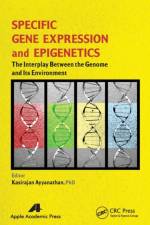
This title includes a number of Open Access chapters.This new volume on gene expression and epigenetics discusses environmental effects related to specific gene expression. The book also shows methods for bioinformatic analysis of the epigenome. The book is divided into two sections: the first looks at eukaryotic DNA methylation and the second addresses how to integrate genomic medicine into clinical practice.
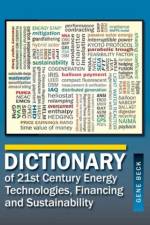
This comprehensive desktop reference addresses the diverse terms and acronyms that form the backbone of 21st century energy technologies, applications of those technologies, and the sustainability sector of the U.S. economy. The convergence of these disciplines has resulted in an explosion of specialized terms, acronyms, and jargon. The references encompass a wide range of legacy as well as emerging renewable energy technologies including the finance and sustainable segments of business that form an integral part of those technologies.
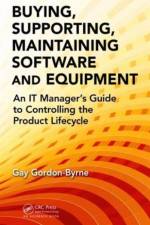
Explaining how to avoid common vendor traps, this book will help readers better control the negotiation of IT products and services and, ultimately, better manage the lifecycle of those purchases. Illustrating the types of problems typically experienced during product use, the book describes how to better control the useful life of your equipment, and supplies tips on how to avoid excessive charges from predatory vendors. The book concludes by delving into issues of product end of life.
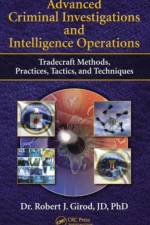
Tradecraft is a term used within the intelligence community to describe the methods, practices, and techniques used in espionage and clandestine investigations. This book reveals how intelligence officers and investigators conduct their tradecraft. Readers will learn how to plan an operation, how to build an identity and cover story for deep cover operations, and how to detect those who have created false identities for illegal purposes. They will also get insight into the technical aspects of intelligence, counterintelligence, and criminal investigations, and legal considerations for conducting intelligence investigations.
The Lefaivre Rainbow Effect is a groundbreaking treatment for those suffering from a traumatic brain injury. This textbook is the culmination of more than 25 years of successfully implementing this transformative treatment pioneered by the author. The book demonstrates how rehabilitation professionals, including occupational therapists, doctors, nurses, social workers, speech pathologists, and neuropsychologists, can use the Lefaivre Rainbow Effect in their practices to improve the therapeutic outcome for their clients. It discusses the dual role healthcare providers have of delivering care to maximize recovery, coupled with the necessity to submit medical legal reports to an adversarial system.
Clausewitz Talks Business: An Executive's Guide to Thinking Like a Strategist distills the wisdom of Carl von Clausewitz's monumental 1832 classic On War¿considered by many eminent scholars as the most distinguished Western work on war ever written. This book transposes Clausewitz's most enduring concepts on leadership and strategy to help today's executives and managers think like strategists. Tapping into the universal lessons of strategy, the book uncovers potential solutions to some of the most obstinate competitive problems.
This book shows how to embed a tutorial directly into game design mechanics so that games naturally and comfortably teach players to have fun. It links game design principles with psychology through the game tutorial and offers easy-to-implement changes that can make a huge difference in how players receive games. It explains how to educate new players and engage experienced players at the same time through a combination of good design and basic understanding of human educational, motivational, and cognitive psychologies.
This book describes how a multinational company developed a global structure for learning around the TWI program in order to create and sustain standardized work across multiple language and cultural platforms. Shingo Prize-winning author Patrick Graupp collaborates with two practitioners who performed the planning and implementation of LEGO's worldwide Learning Organization. Complete with the organization and implementation models used by the LEGO Group, this book describes the critical elements that made the implementation a success as well as the stumbling blocks encountered and how they were overcome.
Abonner på vårt nyhetsbrev og få rabatter og inspirasjon til din neste leseopplevelse.
Ved å abonnere godtar du vår personvernerklæring.