
Gjør som tusenvis av andre bokelskere
Abonner på vårt nyhetsbrev og få rabatter og inspirasjon til din neste leseopplevelse.
Ved å abonnere godtar du vår personvernerklæring.Du kan når som helst melde deg av våre nyhetsbrev.

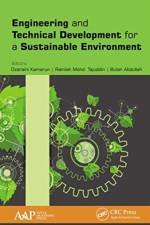
This volume covers a diverse array of alternative technologies and their development with particular attention to the utilization of bioresources for the achievement of a sustainable environment. The book presents a selection of alternative technologies being used in developing and developed countries that can be indigenous to the region, cost-effective, and often driven by dominant societal interest and geographical status. Several engineering and technological processes are included to mark their importance in product performance and preservation of the environment.Topics cover: - strategies for the management of rain and ground water for consumption- wastewater treatment using indigenous techniques of phytoremediation- scientific and engineering approaches to the prevention of flood and landslides in the tropics- wind power generation- soil evaluation of contamination due to heavy metals- green and sustainable building approaches- bioethanol production- energy conservation techniquesRefreshing and informative, Engineering and Technical Development for a Sustainable Environment revisits conventional approaches of managing natural agents (such as wind, rain and groundwater resources as well as wastewater treatment) in light of current sustainableoriented techniques using modern scientific concepts and strategies. It presents in-depth evaluations and analyses using systematic up-to-date scientific and engineering tools.
The demand for quality milk products is increasing throughout the world. Food patterns are changing from eating plant protein to animal protein due to increasing incomes around the world, and the production of milk and milk products is expanding with leaps and bounds. This book presents an array of recent developments and emerging topics in the
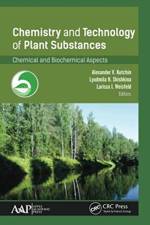
Chemistry and Technology of Plant Substances: Chemical and Biochemical Aspects demonstrates the progress and promise of developing new chemical substances from renewable sources of chemical raw materials. The volume brings together new achievements in the field of research and processing of plant raw materials and the synthesis of natural compounds for the production of biologically active substances and drugs. The volume looks closely at the rational use of renewable raw materials, which is the source of new compounds and intermediates for the chemical industry. It covers a wide range of problems associated with the use of the components of plants to produce new substances with a wide variety of purposes. According to the latest estimates, plants form about a million chemical substances. In some cases, plant products have pharmacological or biological activity that can be of therapeutic benefit in treating diseases. In addition, due to the structural diversity of plant material, chemical synthesis is easily reachable. Synthetic analogs of natural products with improved potency and safety can be prepared by chemical synthesis. Such synthetic analogs are safer for humans. Plant materials are often used as starting points for drug discovery. Chemistry and Technology of Plant Substances: Chemical and Biochemical Aspects presents the theoretical trends and recent practical achievements on complex processing of plant-based raw materials. Low molecular weight components, isolated from plant material, are widely used in fine organic synthesis. High molecular weight polysaccharides of conifers and other greens, such as pectin and hemicellulose, are the basis for the creation of anticoagulants and other drugs. The range of research papers presented in the book is quite wide: from fundamental and applied problems of wood chemistry and organic synthesis to biological activity of natural compounds. The book provides valuable information for those skilled in organic chemistry, chemical engineers, researchers and scientists as well as for faculty and upper-level students. This volume, Chemistry and Technology of Plant Substances: Chemical and Biochemical Aspects, was created on the initiative of Emanuel Institute of Biochemical Physics of the Russian Academy of Sciences (Moscow) and the Institute of Chemistry of Komi Scientific Center of Ural Branch of the Russian Academy of Sciences (Syktyvkar).
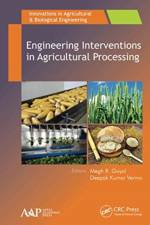
Engineering Interventions in Agricultural Processing presents recent advanced research on biological engineering, bioprocessing technologies, and their applications in agricultural food processing, and their applications in agriculture science and agricultural engineering, focusing on biological science, biological engineering,
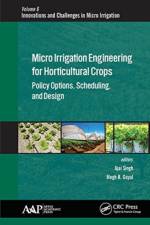
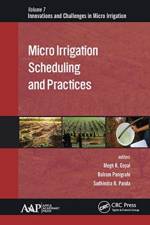
Many countries around the world are struggling with the challenges of water scarcity, including water for crops. Micro irrigation methods are an effective means to make the most efficient use of available water. This volume, Micro Irrigation Scheduling and Practices, continues the efforts of the book series Innovations and Challenges in Micro Irrigation to provide informative and comprehensive knowledge on micro irrigation methods and practices. This new book presents some of the latest information and research on micro irrigation and covers the area of performance, practices, and design, focusing particularly on the performance of vegetable, fruit and row crops in conjunction with different scheduling and practices. Irrigation scheduling is an important water management strategy, and this book addresses scheduling methods and issues. Design aspects of micro irrigation systems have also been discussed in the book. The authors present their research and studies on scheduling practices and design micro irrigation systems with a variety of fruits and vegetables, including peppers, chili, watermelon, oranges, banana, litchi, rice, sugarcane, sorghum, and marigolds. Micro Irrigation Scheduling and Practices will serve as a valuable reference for researchers, water resources professionals, agricultural extension agencies, farmers, and faculty and students.
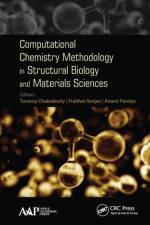
Computational Chemistry Methodology in Structural Biology and Materials Sciences provides a selection of new research in theoretical and experimental chemistry, focusing on topics in the materials science and biological activity. Part 1, on Computational Chemistry Methodology in Biological Activity, of the book emphasizes presents new developments in the domain of theoretical and computational chemistry and its applications to bioactive molecules. It looks at various aspects of density functional theory and other issues. Part 2, on Computational Chemistry Methodology in Materials Science, presents informative new research on computational chemistry as applied to materials science. The wide range of topics regarding the application of theoretical and experimental chemistry and materials science and biological domain will be valuable in the context of addressing contemporary research problems.
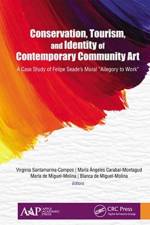
This unique volume aims to promote new models of sustainable management in the field of contemporary mural art. Cultural heritage has become an essential tool for society, stressing the necessity to properly conserve cultural resources in order to maintain a socially, economically, and environmentally sustainable development. In this book, the mural "Allegory to Work" by the artist Felipe Seade, located in Uruguay, is used as a case study. The work of Felipe Seade, a prominent political mural artist of the twentieth century, reflects the influence of Mexican heritage and the socio-political themes of that time, which were commonly used by the Social Realism art movement. The authors look at the mural-and its restoration-through the lens of tourism, globalization, and new interest in cultural heritage. The book demonstrates that the restoration should be aware that the perspective of the protagonists must be incorporated in the intervention process. This first-of-its-kind volume brings together historical, ethnographic, tourism, and scientific research that leads to a sustainable project, from the point of view of identity, economy, politics, and society. This volume, with over 50 color illustrations and many black and white photos, will be valuable for college and research libraries, undergraduate and graduate students, researchers and professors in the field of cultural heritage and art as well as those involved in community-based research.
Improving agricultural water use efficiency (WUE) is vitally important in many parts of the world due to the decreasing availability of water resources and the increasing competition for water between different users. Micro irrigation is an effective tool for conserving water resources. Studies have revealed a significant water savings, ranging from 40% to 70% under drip irrigation compared with surface irrigation. This new volume, Engineering Interventions in Sustainable Trickle Irrigation: Irrigation Requirements and Uniformity, Fertigation, and Crop Performance, presents valuable research that evaluates crop water and fertigation requirements, examines optimum irrigation and fertigation scheduling, and analyzes the performance of agricultural crops under micro irrigation. With an interdisciplinary perspective, this volume addresses the urgent need to explore and investigates the current shortcomings and challenges of water resources engineering, especially in micro irrigation engineering. The volume discusses crop water requirements, fertigation technology, and performance of agricultural crops under best management practices. The chapter authors present research studies on drip irrigated tomato, chilies, cucumber, eggplant, cabbage, garlic, sugarcane maize, cashew nut, sapota, banana, mango, and blueberries. Removing the research gap, this volume provides new information that will be valuable to those involved in micro irrigation engineering.
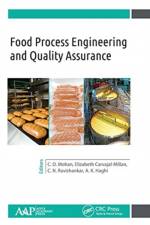
This volume covers a selection of important novel technological interventions in dairy science, from the physical properties of milk and other milk products to nonthermal processing of milk. It also discusses safety methods in dairy science, which includes cleaning-in-place and techniques to determine adulteration in milk.Milk is a perishable commodity, and being rich in nutrients, it acts as the perfect substrate for the growth of microflora (sometimes dangerous for consumption). To reduce this, different thermal and nonthermal techniques are used. Thermal treatments are common techniques used for extending the shelf life of milk, such as, for example, pasteurization, sterilization, and UHT, but loss of nutrients is a concern associated with these treatments. Nonthermal treatments like high-pressure processing, pulse electric field, ultra-sonication, and irradiation are also explored in the processing of milk to minimize the loss of nutrients as compared to thermal treatment. Post-process contamination is also a major factor that can affect the shelf life of milk, and safe packaging plays an important role when the milk and milk products are stored at refrigeration or ambient temperature. Many advances in these dairy technologies are presented in this informative volume. Technological Interventions in Dairy Science: Innovative Approaches in Processing, Preservation, and Analysis of Milk Products will prove valuable for industrial professionals, scientists, regulatory personnel, consultants, academics, students and field-related personnel. The book also attempts to bridge the gap between research and industrial application of recent techniques.
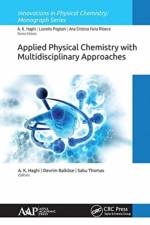
Presenting illustrative case studies, highlighting technological applications, and explaining theoretical and foundational concepts, this book is an important reference source on the key concepts for modern technologies and optimization of new processes in physical chemistry. This volume combines up-to-date research findings and relevant theoret
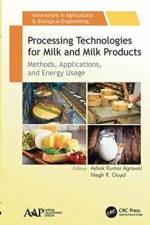
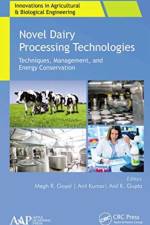
Milk is nature's perfect food (lacking only iron, copper, and vitamin C) and is highly recommended by nutritionists for building healthy bodies. New technologies have emerged in the processing of milk. This new volume focuses on the processing of milk by novel techniques, emphasizing the conservation of energy and effective methods. This book is divided four parts that cover: applications of novel processing technologies in the dairy industrynovel drying techniques in the dairy industrymanagement systems and hurdles in the dairy industryenergy conservation and opportunities in the dairy industryThis book presents new information on the technology of ohmic heating for milk pasteurization. It goes on to provide an overview of the commercial thermal, non-thermal technologies, and hybrid technologies for milk pasteurization. There are non-thermal technologies such as pulse light, irradiation, ultra violet treatment, etc., that can be used in combination with other technologies for the processing of milk and milk products. This hybrid technology can provide multiple benefits, such extended shelf life, reduced energy costs, reduced heat treatment, and better organoleptic and sensory properties. The book also describes the different aspects of food safety management used in dairy processing. The book also looks at recent advances in microwave-assisted thermal processing of milk and the effects of microwaves on microbiological, physicochemical, and organoleptic properties of processed milk and milk products. Technological advances in value addition and standardization of the products have been reported, but well-established processes for mechanized production are recommended in the book for a uniform quality nutritious product produced under hygienic conditions. This new volume will be of interest to faculty, researchers, postgraduate students, researchers, as well as engineers in the dairy industry.
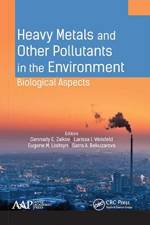
This important new volume presents a plethora of research on the distribution of heavy metals in soils and rocks of natural habitats, farmlands, and urbanized areas along with the factors influencing their bioavailability. The authors evaluate the content of organic matter, soil acidity, mineral fertilizers, and more. Developed for ecologists an
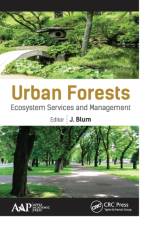
This title includes a number of Open Access chapters. This new research compendium focuses on urban forestry research and management, while also considering the sociological and community aspects. The book looks at the benefits of urban forests with respect to urban sustainability and human health; issues related to expanding the urban tree canopy; managing urban forests in a community context; and improving our understanding of urban forests through research and practice.
This title includes a number of Open Access chapters. Urban horticulture, referring to the study and cultivation of the relationship between plants and the urban environment, is gaining more attention as the world rapidly urbanizes and cities expand. While plants have been grown in urban areas for millennia, it is now recognized that they not only provide food, ornament, and recreation, but also supply invaluable ecological services that help mitigate potentially negative impacts of urban ecosystems, and thus increase the livability of cities. This book provides background on key issues in this growing field.
Abonner på vårt nyhetsbrev og få rabatter og inspirasjon til din neste leseopplevelse.
Ved å abonnere godtar du vår personvernerklæring.