

Gjør som tusenvis av andre bokelskere
Abonner på vårt nyhetsbrev og få rabatter og inspirasjon til din neste leseopplevelse.
Ved å abonnere godtar du vår personvernerklæring.Du kan når som helst melde deg av våre nyhetsbrev.

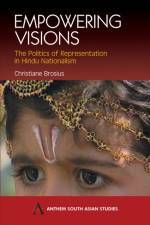
This new study looks at the crucial role played by audiovisual media in Hindu cultural nationalism. The application of new media technology in the context of the construction of 'Indianness' by Hindutva's main political wing, the Bharatiya Janata Party (Party of the Indian People, BJP), is a fascinating example of in-house indoctrination and emotive mobilization that demands critical attention. At a time when public attention is focused on transnational, and mostly Islamicist, movements, 'Empowering Visions' argues that both transnationalism and nationalism have to be treated with equal attention, and to some extent ought to be seen as intertwined processes. This book is unique in its presentation and discussion of profound ethnographic data through interviews with a variety of spokesmen for the Hindutva movement. It also offers an in-depth analysis of visual and audiovisual material that has so far been unrecognized and unexplored in scholarly works.
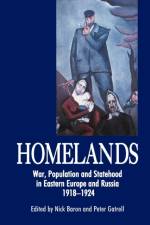
This new volume, by a team of international scholars, explores aspects of population displacement and statehood at a crucial juncture in modern European history, when the entire continent took on the aspect of a ''laboratory atop a mass graveyard'' (Tomas Masaryk). The topic of state-building has acquired a new actuality in recent years, following the collapse of the USSR and the ''Soviet bloc'' and in view of the complex, often violent, territorial and ethnic conflicts which have ensued. Many of the current dilemmas and tragedies of the region have their origins in the aftermath of World War I, when newly independent nation states, struggling to emerge from the rubble of the former Russian empire, first sought to define themselves in terms of population, territory and citizenship. Homelands examines the interactions of forced migration, state construction and myriad emerging forms of social identity. It opens up a fresh perspective on twentieth-century history and throws new light on present-day political, humanitarian and scholarly issues of crucial concern to political scientists, sociologists, geographers, refugee welfare workers, policymakers and others.
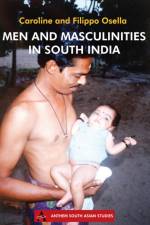
'Men and Masculinities in South India' aims to increase understanding of gender within South Asia and especially South Asian masculinities, a topic whose analysis and ethnographising in the region has had a very sketchy beginning and is ripe for more thorough examination. This is, in short, an almost empty field dominated so far by short articles and collections and the time is right for the first full-length ethnographic study of masculinities. This ground-breaking monograph covers a range of areas including work, cross-sex relationships, sexuality, men's friendships, religious practices and leisure. This book is especially concerned with issues arising from debates which broadly argue over the differences and merits of approaches to gender and identity - rooted in essentialism versus performativity. Questions about the tensions between essentialist and performative theories of self and gender are therefore highlighted throughout the book and explored in relation to various bodies of theory and to South Asian understandings of personhood.
This book is about the right to a basic income: a right without conditions, just as a citizen of a good society should have the right to clean water.
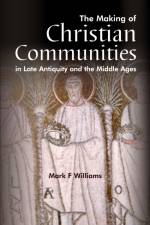
This volume explores the idea that survival of the Christian faith depended upon the making of these communities, of which the Christians of this period were themselves acutely ? and sometimes acrimoniously ? aware.
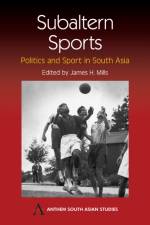
A unique volume about the relationship between politics and sport in South Asia.
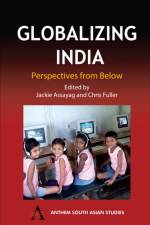
This is one of the first books to present a collection of writings on the effects of globalization on India and Indian society.
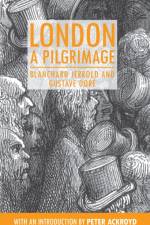
'London: A Pilgrimage' was conceived in 1868 by the journalist and playwright Blanchard Jerrold. Accompanied by the famous artist Gustave Doré, Jerrold prowled every corner of the heaving metropolis, sometimes with plain-clothes police for protection. 'London: A Pilgrimage' is a forgotten classic of social journalism, a frank and brutal look at the poverty striken, gin-swilling London of the nineteenth century, written in a perceptive, bold and gripping style. 180 incredible etchings by Doré escort Jerrold on his odyssey through the pulsating city, into the Lambeth gas works, seedy opium dens and grubby bathing houses; peering curiously into the desperate lives of the flower sellers, lavender girls and organ grinders. 'London: A Pilgrimage' is an enlightening work that brings to life the chaotic and gloomy past of a great city on the cusp of modern times. Peter Ackroyd's excellent introduction sheds further light on the period and the context in which Jerrold and Doré felt compelled to reveal to the world the squalor into which London was slowly sinking.
In the field of literary and cultural studies, interest in nineteenth-century biology has been substantial for the last 20 years, yet the focus has been almost exclusively on evolutionary theory, neglecting other branches of nineteenth-century biology. This collection corrects that imbalance, shedding light on other discoveries in cell biology, physiology, neurology and virology. It examines the issue of authority in science, demonstrating the social ?embeddedness? of the natural sciences, and gender issues. It also shows how scientists and creative writers drew on a common imagination as well as narrative techniques and stylistic devices; indeed, often inspired by the same subjects. This important new book, including contributions from some of the most distinguished experts in the field, demonstrates that the relation between literature, culture and biology in the nineteenth century is far more complex than habitual references to Darwin would have us believe.
In an age of radical transformation, the Victorians were caught between a vanishing past and an uncertain future. In the face of such a dizzying present, connecting with their past became for the Victorians a kind of survival strategy - this nostalgia took forms as diverse as their obsession with history and origins; the religious revivalism of the Oxford Movement; and the new Houses of Parliament, built in 1834, whose design looked longingly back to the Middle Ages.This rich and elegant work describes how the unsettled cultural climate provided fertile soil for the flourishing of elegy. John Rosenberg shows how the phenomenon of elegy pervaded the writing of the period, tracing it through the voices of individuals from Carlyle, Tennyson, Darwin and Ruskin, to Swinburne, Pater, Dickens and Hopkins. Finally, he turns from particular elegists to a common experience that touched them all - the displacement of the older idea of the earthly city as a New Jerusalem by the rise of a new image of the Victorian city as an industrial Inferno, a wasteland of sprawling towns and of rivers so polluted they caught on fire. This beautifully written meditation provides a vivid, compelling and authoritative portrait of an era that, in the face of an exhilarating and menacing present, longingly embraced the stability and comfort of a past both real and imagined.
Rural India Facing the 21st Century is a unique study of rural development in South India, concluded over a twenty-year period. Set against the context of international, national and state policies, the book focuses on a wide number of themes, including the stagnation of the ‘green revolution’, growing differentiation and inequality, the ecological crisis, resistance to reform, corruption and the enduring need for state intervention in rural development. Written by an international team of young scholars under the direction of Professor Harris-White, Rural India Facing the 21st Century draws together a profound analysis of a broad range of issues to provide a masterly overview of overall rural development. Its highly original methodology and findings will be of considerable interest for development policy.
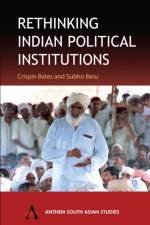
A far-reaching and extensive rethinking of India's political and economic structures at every level, engagingly presented by a team of eminent academics and practitioners.
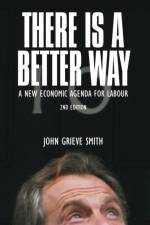
In this critical account of New Labour's economic and welfare policies in their first two terms in office, John Grieve Smith suggests that, far from pursuing any radical new agenda, they have been actively consolidating the Thatcherite Revolution. If Labour is to offer a genuine alternative to the Tories, and achieve its long standing objective of a fairer society, radical developments in policy are needed. John Grieve Smith discusses the policies needed to ensure expansion and full employment here and in the rest of the European Union. He examines the whittling away of pensions and other social security benefits, and the growing reliance on means testing, together with the need for higher and more progressive taxation if the quality of health and education services is to be improved.
A unique title considering the challenges to the World Bank's development goals and reducing world poverty.
The essays in this volume demonstrate how the Rossettis ? from the celebrated Dante Gabriel and Christina to the comparatively neglected Maria and William ? drew upon a shared cultural experience, and describe how each contributed to the intellectual debates of the age and played a substantial role in their various fields. Bringing together significant contributions from some of the most renowned experts on the Rossettis, Outsiders Looking In provides important new perspectives on this talented family and their brilliant legacy.
A remarkable collection of essays, considering every angle of the Chechen conflict.
John Keble had an immense influence on nineteenth-century literature and culture. A founding figure of the Oxford Movement, he was mythologized as the living embodiment of Christian ideals. His 1827 volume of verse The Christian Year was the best-selling book of poetry in the Victorian era while his lectures as Oxford Professor of Poetry were highly influential. Those indebted to his ideas include figures as diverse as John Henry Newman, Christina Rossetti and Alfred Tennyson. Despite his evident importance, Keble?s social, political and cultural impacts on his times have, until recently, been significantly underestimated. This interdisciplinary volume is a major contribution to our understanding of the importance of Keble?s life and work. It provides an entirely fresh perspective on Keble?s writings, bringing critical work on Keble into the twenty-first century, in particular, demonstrating the importance of his contribution to nineteenth-century literature, politics and theology. Including works by a number of prominent scholars, John Keble in Context provides a wide range of perspectives on Keble?s place in politics and religion, his writings and his influence on his literary heirs and successors. This unique and timely volume offers the first major reassessment of Keble?s work for several decades, and a comprehensive introduction to this key figure. John Keble in Context will appeal to students of Victorian literature, history, religion and culture.
These essays both enhance an understanding of China's immense success in meeting these challenges in the past and provide an indication of the challenges that still lie ahead. China's system reforms have been described as 'groping for stones to cross the river'. The journey across the river is far from over, and the other bank is only dimly visible.
A rare insight into a turning point of Indian history, commemorating the second centenary of Tipu's final battle against the British at Sriranagapatnam in 1799.
'Public Corruption' is a stimulating and entertaining book about a daunting problem: the influence on public corruption of the changing nature of warfare. It will be of as much interest to the general reader and those around the seats of power as it is to historians and social scientists. The quality of the writing alone makes it a delight to read.
A far-reaching and extensive rethinking of India's political and economic structures at every level, engagingly presented by a team of eminent academics and practitioners.
This title represents the most forward thinking and comprehensive review of development economics currently available.
A key South Asian Studies title that brings together some of the best new writing on physicality in colonial India.
Abonner på vårt nyhetsbrev og få rabatter og inspirasjon til din neste leseopplevelse.
Ved å abonnere godtar du vår personvernerklæring.