






Gjør som tusenvis av andre bokelskere
Abonner på vårt nyhetsbrev og få rabatter og inspirasjon til din neste leseopplevelse.
Ved å abonnere godtar du vår personvernerklæring.Du kan når som helst melde deg av våre nyhetsbrev.

Offers an overview of international protocol and its associated practices, including those found within the context of diplomatic relations and the business world
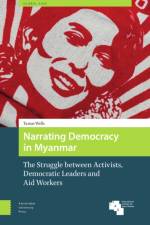
This book analyses what Myanmar's struggle for democracy has signified to Burmese activists and democratic leaders, and to their international allies. In doing so, it explores how understanding contested meanings of democracy helps make sense of the country's tortuous path since Aung San Suu Kyi's National League for Democracy won historic elections in 2015. Using Burmese and English language sources, Narrating Democracy in Myanmar reveals how the country's ongoing struggles for democracy exist not only in opposition to Burmese military elites, but also within networks of local activists and democratic leaders, and international aid workers.
The Syntax of Hungarian aims to present a synthesis of the currently available syntactic knowledge of the Hungarian language, rooted in theory but providing highly detailed descriptions, and intended to be of use to researchers as well as advanced students of language and linguistics. As research in language leads to extensive changes in our understanding and representations of grammar, the Comprehensive Grammar Resources series intends to present the most current understanding of grammar and syntax as completely as possible in a way that will both speak to modern linguists and serve as a resource for the non-specialist.
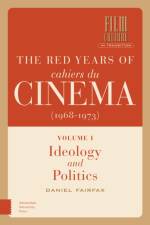
The uprising which shook France in May 1968 also had a revolutionary effect on the country's most prominent film journal. Under editors Jean-Louis Comolli and Jean Narboni, Cahiers du cinéma embarked on a militant turn that would govern the journal's work over the next five years. With a Marxist orientation inspired by the thinking of Louis Althusser, Jacques Lacan and Roland Barthes, the "red years" of Cahiers du cinéma produced a theoretical outpouring that was formative for the establishment of film studies as an academic discipline in the 1970s, and is still of vital relevance for the contemporary audiovisual landscape. It was also the seminal experience for a generation of critics who have dedicated the following half-century to the task of critically responding to the cinema. The Red Years of Cahiers du Cinéma (1968-1973) gives a historical overview of this period in the journal's history, combining biographical accounts of the critics who were involved with Cahiers in the post-1968 and theoretical explorations of the text they wrote. Volume I focuses on the relationship of film with the spheres of ideology and politics.
Abonner på vårt nyhetsbrev og få rabatter og inspirasjon til din neste leseopplevelse.
Ved å abonnere godtar du vår personvernerklæring.