Gjør som tusenvis av andre bokelskere
Abonner på vårt nyhetsbrev og få rabatter og inspirasjon til din neste leseopplevelse.
Ved å abonnere godtar du vår personvernerklæring.Du kan når som helst melde deg av våre nyhetsbrev.

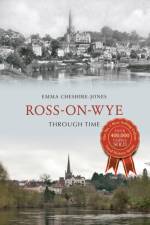
Ross-on-Wye sits high on a sandstone cliff overlooking a horseshoe bend in the beautiful River Wye. The birthplace of tourism, it boasts a rich tapestry of heritage and a unique landscape. Ross-on-Wye Through Time highlights the rich gems Ross has to offer. St Mary's church is its best-known landmark and can be seen from all approaches, housing notable tombs of past stalwarts of the town. John Kyrle was just one of these figures and his name was given to the local high school and an inn. In more recent years, names associated with the town have included Dennis Potter and Richard Hammond. Today Ross is known for its independent shops, picturesque streets, the Market Square and Market Hall. This fascinating collection of old and new photographs shows how much and, in some cases, how little this historic market town has changed.
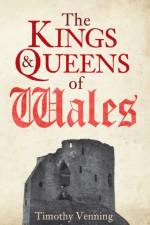
The Welsh kings and queens who ruled prior to the Norman Conquest of Wales are shrouded in mystery. Most of what we know is from legend, names in annals, and from their opponents. This book sets out to identify what we know or can reasonably surmise about these rulers, to disentangle their history, and to assess their achievements. The Welsh ruled over large areas of Britain in the pre- and post- Roman eras, before they were pushed back into Wales itself by the Anglo-Saxons. Caratacus and Boudicca are names that stand out from early tribal states, and medieval Welsh legends refer to shadowy 'High Kings' who ruled after the Romans left - Vortigern, Ambrosius, and, of course, the enigmatic 'Arthur'. Venning explores these mysterious figures before discussing the kings and queens of each area of what we now know as Wales - the north, the centre and south-west, and the south-east - as well as the short-lived Welsh states in the rest of Britain. The thirteenth-century unifiers of Wales, Llywelyn 'Fawr' and his grandson Llywelyn 'the Last', were contemporaries of great nation-builders in England, Scotland, and France, but their political achievements did not last. The precarious Welsh state was permanently overrun by the English war machine.
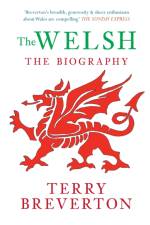
The Welsh: The Biography tells the story of the remarkable survival of the oldest nation and oldest language in Europe. We see how the four original major Celtic tribes are still reflected in the location of Britain's four oldest cathedrals, and how after one and a half millennia of constant invasions and eventual conquest, the Welsh retained their sense of nationality. The story of the Welsh is one of defending the nation against overwhelming odds, and of a major contribution to European literature. Its tenth century laws are acknowledged as the most progressive in the world until the later twentieth century. Almost uniquely in the world, Wales has had heroines as well as heroes, princesses as well as princes who contributed to its progress. Wales has given heroes such as Owain Glyndwr who are recognised across the globe, and men such as David Lloyd George, to whom Hitler attributed the winning of First World War. The character of the Welsh - their pacifism, literary abilities and influence - is splendidly described in this unique history of the Welsh as a people.
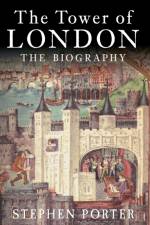
The Tower of London is an icon of England's history. William the Conqueror built the White Tower after his invasion and conquest in 1066 to dominate London, and it has become infamous as a place of torture, execution and murder. The deaths of royals attracted most attention: the murder of the Princes in the Tower, the beheading of Henry VIII's wives Anne Boleyn and Katherine Howard, and Lady Jane Grey, Henry's great-niece, and queen for just nine days. Few prisoners recorded their experiences, but John Gerard, a Catholic priest imprisoned during Elizabeth I's reign, wrote of being questioned in the torture room, which contained 'every device and instrument of torture'. After being hung from manacles, his wrists were swollen and he could barely walk. Members of the aristocracy could not be tortured, and those incarcerated for a long time used their time to write. Sir Walter Raleigh wrote his vast History of the World in the Tower. Control of the Tower was vital at times of crisis, during rebellions and civil wars. It has also been the country's principal arsenal. It housed the Royal Mint, the national archives, the Crown jewels and wealthy Londoners' riches, and in the royal menagerie it contained one of the earliest zoos. Stephen Porter's landmark history traces the evolution of the Tower and its changing role, the many personalities who lived or were imprisoned there, and the 'voices' of contemporaries during the Tower's long history, spanning more than 900 years.
Our capital city has always been a thriving and colourful place, full of diverse and determined individuals developing trade and finance, exchanging gossip and doing business. Abandoned by the Romans, rebuilt by the Saxons, occupied by the Vikings and reconstructed by the Normans, London would become the largest trade and financial centre, dominating the world in later centuries. London has always been a brilliant, vibrant and eclectic place - Henry V was given a triumphal procession there after his return from Agincourt and the Lord Mayor's river pageant was an annual medieval spectacular. William the Conqueror built the Tower, Thomas Becket was born in Cheapside, Wat Tyler led the peasants in revolt across London Bridge and Chaucer's Canterbury Tales was the first book produced on Caxton's new printing press in Westminster. But beneath the colour and pageantry lay dirt, discomfort and disease, the daily grind for ordinary folk. Like us, they had family problems, work worries, health concerns and wondered about the weather.
Wolverhampton Wanderers FC was founded in 1877 as St Luke's Football Club, and became one of the founding members of the Football League. The Origins of Wolverhampton Wanderers tells the story of the formative years of Wolverhampton Wanderers FC, with particular reference to the lives and actions of the principal founders of the club: John Brant Brodie, John Baynton, and Jack Addenbrooke. This is the story of quite ordinary young men from the backstreets of Wolverhampton who created something truly extraordinary, famous and enduring - the Wolves! The early years were dramatic and often turbulent, and the fledgling club nearly foundered on more than one occasion, but thanks to the efforts of the founders and supporters, it came through and survived. The Origins of Wolverhampton Wanderers deals with events and people well outside living memory, showing an appreciation of their contribution to the history and development of this famous old club, and it does much to add to our knowledge of the history of Wolverhampton Wanderers.
Tourism was born in Market Harborough in 1841 when Thomas Cook, a local cabinetmaker, set off towards Leicester and had his dream of worldwide working-class travel. The town was born to serve travellers. Centuries before, the town had been built to provide a market place for trades-people near to the 'new' highway connecting Northampton and Leicester. Eight hundred years later, the market is still busy, though now indoors, and the original Square is still bustling with shoppers. As a boy on the playing fields of the local school, former England team captain Martin Johnson discovered his finesse in Rugby. In the nineteenth century, William Symington and his family put Market Harborough on the manufacturing map by creating pea flour and a range of tempting sauces. In the last century the town could claim to be a 'crisp capital' of England, being the home of Golden Wonder crisps.
Owing its name to the famous battle, Waterloo is nearly two centuries old. Growing inland from an attractive seafront, it has retained its character and most of its buildings during that time. It has attracted the attention of photographers who have left an illuminating record of the past comparable with the still recognisable present. In contrast, Litherland was an agricultural community from the Domesday Book until industrialisation. William Gladstone's father built Seaforth House, which gave its name to the area. Others were encouraged to build magnificent residences enjoying views over sandy shores. The houses have disappeared and the Royal Seaforth Container Dock has changed the shoreline almost beyond recognition. This book recreates the old village life and chronicles the changing scenery.
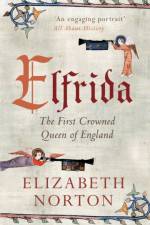
Contrary to popular belief, Anglo- Saxon England had queens, with the tenth-century Elfrida being the most powerful and notorious of them all. She was the first woman to be crowned Queen of England, sharing her husband King Edgar's imperial coronation at Bath in 973. The couple made a love match, with claims that they plotted the death of her first husband to ensure that she was free. Edgar divorced his second wife, a former nun, after conducting an adulterous affair with Elfrida, leading to an enmity between the two women that lasted until their deaths. During her marriage Elfrida claimed to be the king's only legitimate wife, but she failed to secure the succession for her son, Ethelred. Elfrida was implicated in the murder of her stepson, King Edward the Martyr, who died on a visit to her at Corfe Castle. She then ruled England on behalf of her young son for six years before he expelled her from court. Elfrida was eventually able to return to court but, since he proved himself unable to counter the Viking attacks, she may have come to regret winning the crown for Ethelred the Unready. Wife, mother, murderer, ruler, crowned queen. The life of Queen Elfrida was filled with drama as she rose to become the most powerful woman in Anglo-Saxon England.
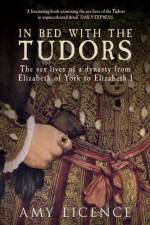
Learn what went on behind closed doors in the Tudor court. Illegitimate children, adulterous queens, impotent kings, and a whole dynasty resting on their shoulders. Sex and childbirth were quite literally a matter of life or death for the Tudors - Elizabeth of York died in childbirth, two of Henry VIII's queens were beheaded for infidelity, and Elizabeth I's elective virginity signalled the demise of a dynasty. Amy Licence guides the reader through the births of Henry VII and Elizabeth of York's two sons, Arthur and Henry, Catherine of Aragon's subsequent marriages to both of these men, Henry VIII's other five wives and his mistresses, and the sex lives of his daughters. This book details the experiences of all these women, from fertility, conception and pregnancy through to the delivery chamber, on to maternal and infant mortality. Each woman's story is a blend of specific personal circumstances, set against their historical moment: for some the joys were brief, for others it was a question that ultimately determined their fates.
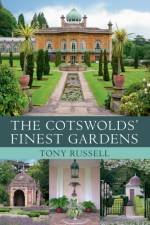
Using evocative text and delightful imagery, Tony Russell brings to life each of the fifty gardens featured, covering their history, plants, architecture and personalities along the way. The diversity of gardens to be found within the Cotswolds and within this book is quite astonishing. Here you will find grand landscapes such as Blenheim Palace and Dyrham Park, influential pioneers at Iford Manor and Rousham, historical gems such as Prior Park and Painswick Rococo Garden, national icons at Westonbirt Arboretum and Hidcote Manor, contemporary masterpieces at Througham Court and Abbey House and an abundance of English gardens in all their beauty, overflowing with roses, herbaceous borders and pastel shades. All the gardens featured allow public access at some time during the year. The Cotswolds' Finest Gardens is undoubtedly set to become a classic in its genre, a book that will appeal to gardeners and non-gardeners alike, those who live within the region as well as those who visit.
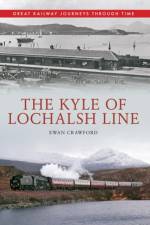
The Kyle of Lochalsh Line was opened in 1870 to connect the ferry terminus at Stromeferry on Scotland's west coast with Dingwall and Inverness on the east coast. It had been intended to reach Kyle of Lochalsh but the company ran out of money, and the Highland Railway would open an extension to the Kyle in 1897 to improve transport links for the fishing industry. At the time, the extension was mile for mile the most expensive railway ever built in Britain. The line passes through some of the most dramatic and beautiful scenery in Britain and although it was marked for closure by Doctor Beeching, its importance to the isolated communities it serves led to a reprieve and in 1980 it was featured by Michael Palin in Great Railway Journeys of the World. In this book, Ewan Crawford uses a mixture of contemporary and period images to bring the history of the line and its landscape to life.
The railway came to Peebles in July 1855. However, this small town in the Scottish Borders soon became the subject of a dispute between the North British Railway and the Caledonian Railway. The Peebles Railway, the first to reach the town, was taken over in 1876 by the North British. In 1855, however, the Symington, Biggar & Broughton Railway was authorised and, in 1861, formally absorbed by the Caledonian Railway. The North British responded with a new line from Peebles to Galashiels which blocked the Caledonian. In this book, Roy G. Perkins and Iain MacIntosh look at the two North British lines, from where the original Peebles Railway left the line south of Edinburgh to Galashiels, using a fascinating collection of modern and period photographs. Although the railways in the Borders were closed in the 1960s, sections of them are still in partial use as cycle paths and the new Borders Railway will also bring fresh life to parts.
The kingdom of Scots was the last of the non-Anglo-Saxon states of Britain to survive as a political entity. Alone of the 'Celtic' nations, it was not absorbed into England by conquest. James VI of Scotland came to the throne of England in 1603, and when union with England finally came in 1707 during the reign of Queen Anne, it was technically on equal terms. This success owed much to the abilities and tenacity of a succession of rulers. The story of the rulers of Scotland's constituent states and then of the united kingdom of Scots from Kenneth MacAlpin onwards is complex and often violent. It is full of rapid reversals of fortune, brilliant and incompetent leadership, family strife, and triumph and tragedy closely intertwined. The obscure earlier history is often as fascinating as the better-known stories of the Bruce and Queen Mary, though less familiar. This saga of a thousand years is a tribute to the qualities of Scotland's rulers.
Elizabeth Woodville, wife of Edward IV, mother of Elizabeth of York and the Princes in the Tower, and grandmother of Henry VIII, has been vilified and defended in turn. Was she a cunning enchantress, an ambitious advancer of her family's fortunes, or a courageous and tragic figure who lost husbands, brothers and sons during this turbulent period? Discover the real story of the 'White Queen'. Born into a family of Lancastrians, the exceptionally beautiful Elizabeth captured the heart of the young Yorkist king, Edward IV, and found herself caught in the complex web of rivalries, loves and conspiracies that lay at the heart of the Wars of the Roses. She would wield immense influence as queen, watch her brother-in-law confine her sons to the Tower of London to face an unknown fate, and ultimately unite the Houses of Lancaster and York through the marriage of her daughter to Henry Tudor.
Winchester, the ancient capital of Wessex, has a rich and fascinating history. From the time of its Iron Age settlements, rulers, bishops and inhabitants over the last two millennia have left their mark on the city. Anglo Saxon street plans, medieval gateways and castles still preside, as do buildings of religious and scholarly importance. It is this history, tinged with myths and legends, and tales of our most celebrated monarch King Alfred, which attracts people from all around the world. Centuries later, early photographs show social scenes and economic growth. This progress brought inevitable redevelopment, especially in the 1950s and 1960s, leaving some streets untouched and others with hardly a single old building left standing. On the whole Winchester has preserved its heritage, providing a fine backdrop for contemporary events. Where scenes are seemingly unchanged it is always satisfying to view them again through a modern lens.
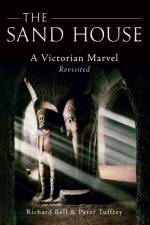
The majority of South Yorkshire's twenty-first century residents are oblivious to the unique and fascinating Sand House that graced Doncaster from the mid-1850s until the Second World War. It was created by excavating the ground from around a massive block of sandstone and then hollowing out rooms within, in order to create a 40-metre-long, 12-metre-wide residence equipped with all the mod cons that a wealthy Victorian businessman would want. And yet there is nothing to be seen now of this incredible Sand House. The two authors show how the idea for the Sand House arose from its creators' combined business interests of property development and sand extraction. From its modest beginnings as a two-up-two-down dwelling, it grew to become a ten-roomed mansion, complete with stable and ballroom. Not only dances but other major social events took place in the house and its 'sunken garden'; guests were allowed to explore the property's extensive tunnels and admire the abundance of carvings hewn from the sandstone within. The Sand House's sad demise in the mid-twentieth century means that this marvellous creation is no longer available for visitors to admire, but its story lives on through the pages of this book.
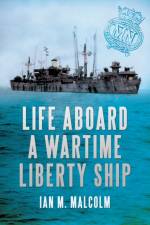
During the Second World War, when Britain's very survival depended on her Merchant Navy, ships were being sunk faster than they could be replaced. The mass production of the Liberty Ship, on the assembly-line method in the USA, solved the problem: Britain received 200 of them under the Lend-Lease agreement. From 1943 until 1951, Ian Malcolm was a radio officer/purser with Alfred Holt & Co., owners of the Blue Funnel Line and the Glen Line. His voyages on the Liberty Ships Samite and Samforth, described in this book, were made during wartime, after which he spent a year on the Samnesse, trading mainly between Italy and East Africa. Subsequent voyages were made to the Continent, Far East, Australia and Indonesia. Dealing mainly with life on board his ships and how he spent the sometimes prolonged spells in port, Ian begins his story with his entrance into the Merchant Navy as a radio officer and continues with his crossing to Canada on the Queen Elizabeth to join the Samite in Baltimore. During the Samite's fifteen month voyage, she called at various ports in the USA and North Africa while Ian's next ship, the Samforth, on her ten-month voyage, visited Canada, the USA, Egypt, Arabia, India, Mozambique, Uruguay, Argentina, Brazil, Norway and Finland. Life Aboard a Wartime Liberty Ship is an engaging memoir of a young man's maritime adventures, the people he met, the countries he saw, and the intoxicating thrill of life at sea.
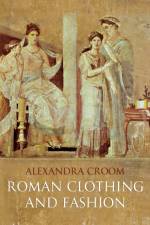
There is plenty of information about military dress in Roman Britain and the rest of the Roman Empire, but the evidence for civilian dress has not been comprehensively looked at since the 1930s. In this richly illustrated survey, Alexandra Croom describes the range and style of clothing worn throughout the Western Empire and shows how fashions changed between the first and the sixth centuries. After a short introduction to the evidence (from archaeology, art and literature), and to the manufacture of clothing and its use in status display, she systematically treats male and female dress, looking at the tunic, toga (for men), mantle (for women) and cloaks; underwear, footwear and specialist wear; hats, hairstyles and jewellery. The book concentrates on the clothing work in the Mediterranean region, but includes a section on provincial fashions. A fine and varied corpus of illustrations (including colour plates) helps to bring the everyday world of the Roman Empire to life.
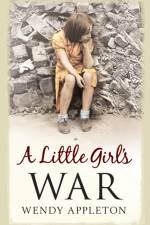
Wendy ran home through the streets of Bexleyheath with the air-raid siren wailing, her little gas mask box bumping against her hip. Just as she reached her front gate, a Spitfire spiralled out of the air and crashed into the school field at the end of the road. You never forget a moment like that. Growing up in Bexleyheath in the Second World War, bombs, air-raid sirens and fear were all Wendy had ever known. Here, through the eyes of a small child, we see family life on the Home Front in 1944 in its entirety - from bombed-out houses to burnt potato peelings, from maths lessons and classroom antics to air-raid sirens and crashing planes. After the family slept through an air raid that destroyed the houses directly opposite, Wendy's parents decided it had become far too dangerous. Wendy, her sister Thelma and her brother Brian were evacuated to the Burnley area of Lancashire. Surrounded by a new accent, shining front steps and outdoor lavatories, this little girl felt a long way from home. However, the two women who took Wendy and her sister into their home helped her adjust to a new way of life. She remembers fondly the kindness of these women, as well as her other experiences as an evacuee: a new school, nits, chickens, gravy, and her first trip to the seaside. Wendy Appleton describes beautifully the memories that were imprinted so deeply on her young mind. As she discussed her recollections with her older brother and sister and started to write them down, everything came flooding back - so much so that at times she was in tears. She is delighted to share within these pages the sights, songs and sounds of her wartime childhood.
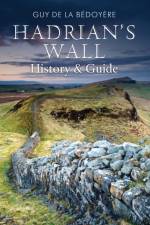
Stretching 73 miles from coast to coast and reaching a height of about 13 feet, Hadrian's Wall should have been counted as one of the seven wonders of the ancient world. Today, a World Heritage site, it stands as the most imposing monument north of the Alps and attracts millions of visitors a year. Yet, despite all the excavation and research that has been carried out, this is the first detailed guide to be written for many years. Having first dealt with the practical questions of transport, clothing and maps, Guy de la Bedoyere explains why and how the Wall was constructed. With the help of almost 100 sketch maps, drawings and photographs, he then conducts the visitor, stage by stage, along the full length of the Wall, providing map locations, route and parking instructions, details of access and opening times, and a full account of everything that can be seen. He also covers the outpost forts, the forts and settlements to the rear (South Shields, Corbridge and Vindolanda) and the local museums which house so many of the artefacts discovered along the Wall. This indispensable guide-book concludes with a list of dates, a glossary and a summary of all the key sources.
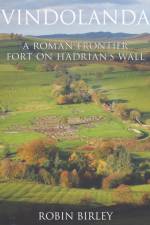
The beautiful site the Romans called Vindolanda lies in south-west Northumberland, in the district of Tynedale, more or less half way between the North Sea east of Newcastle and the Irish Sea to the west of Carlisle. It is just within the boundary of the Northumberland National Park, and is a part of the World Heritage Site of Hadrian's Wall. The Wall itself was built on the whinstone ridge a mile to the north, with the fort of Housesteads two miles to the north-east, and that of Great Chesters five miles to the north-west. This book follows the site throughout its many phases of use and occupation. It explores the everyday life of those who lived and worked on the site and provides valuable new insight into the larger context of Rome's Northern Frontier: Hadrian's Wall. The translations of the Vindolanda Scrolls ('send fresh socks' etc) are also a treat!
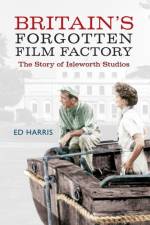
The story of Isleworth Studios is essentially that of the British film industry from 1914 to 1952. Beginning with the first British Sherlock Holmes screen adaptation and ending with its Oscar-winning swansong, The African Queen, in the intervening years it was one of the most technically advanced studios in the country and home to some of the best and the worst examples of British cinema. It experienced the transition from silent films to talkies. Britain's only movie mogul, Alexander Korda, arrived, looking to rival Hollywood, followed by Douglas Fairbanks Jr looking to rival Korda. Buster Keaton struggled with alcoholism; Richard Burton made his screen debut; Bogart, Hepburn and Huston made a classic; and Emeric Pressburger directed his first and only film at Isleworth. Little by little the old dream factory's physical shape is now crumbling or altered, or is disappearing altogether. Soon it may be gone. Isleworth Studios has a history worthy of more than just an addendum in the annals of the British film industry. This is its story told for the very first time.
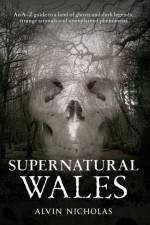
Wales is a land of ghosts and dark legends, strange animals and unexplained phenomena. From the Abergele Ghost Ship to the Witch Lakes of the Brecon Beacons, Alvin Nicholas takes the reader on a comprehensive A-Z tour. Supernatural Wales is the definitive guide to Welsh ghosts, hauntings, monsters and mysteries. Here you will find haunted castles and manor houses, mountain spectres and ghost ships. Learn how to track mystery panthers, try your hand at ghost hunting and explore a land of lake monsters, sea serpents, vampires and werewolves. With well over 100 entries, Supernatural Wales covers everything from spooky secret passages to phantom armies and mystery light phenomena. Thoroughly researched, this book includes new information and first-hand research that will lead you to the heart of mysterious Wales. The book includes never-before-published OS grid references so you can walk where ghosts walk and stand, if you dare, where disembodied voices are heard and where grim goblins, spectral horsemen and dogs of darkness appear. Sure to delight both armchair enthusiasts and serious researchers alike, Supernatural Wales is packed with fascinating stories and intriguing information that will compel readers to refer to this book again and again.
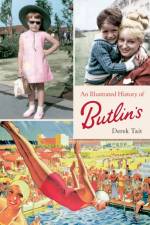
For over seventy-five years, Butlin's have been entertaining families of all ages. Billy Butlin opened his first holiday camp in Skegness in 1936 and continued to expand with camps at Clacton, Ayr, Pwllheli, Bognor Regis, Mosney, Minehead and Barry Island. In post-war Britain, families could enjoy a holiday at Butlin's for the equivalent of a week's wage. Their slogan was 'Our True Intent is all for Your Delight'. Over the years, hundreds of thousands of people visited Butlin's and many have wonderful memories of the friendly redcoats, the funfair rides, roller skating, boating, the talent contests and the beauty pageants.
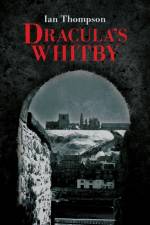
DRACULA is such an iconic figure that he has inspired hundreds of films and television programmes for over a century. He has appeared in over 215 films and, since its publication in 1897, Dracula has never been out of print. Most people have a very strong image of Dracula and for many the seaside town of Whitby in North Yorkshire is a big part of this. Indeed, many of the scenes in Dracula were places that Bram Stoker regularly visited. Ian Thompson has had a lifelong interest in horror films and scary stories, and Dracula is a story that has fascinated him. As a result, he has made many pilgrimages to Whitby. In this fascinating book, the reader is taken around Dracula's Whitby, to the very places Bram Stoker and his Dracula frequented. This book will inspire not only fans of Bram stoker's literary creation, but also visitors and residents alike.
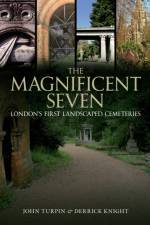
A ring of spectacular cemeteries, developed at the edges of London in the decade from 1832, have long been referred to as The Magnificent Seven. At the time, they set a new aesthetic for the burial of the dead, and remain rich in social history and beauty to this day. It was entrepreneurs, rather than the religious authorities, who responded to the squalor of the City's brimming churchyards by fi nancing seemly, hygienic concepts of burial in the rural outskirts, now embraced by inner London. The Seven became showcases for neoclassical and neo-Gothic architecture, matched by splendid - sometimes eccentric - memorials recording Victorian society, and the sweep of London's history to the present day. From grand Kensal Green in the west to modest Tower Hamlets in the east; from heady Highgate to charming Norwood and Nunhead; and from the military influences of Brompton to the Non-conformist woodland of Abney Park - a host of characters and stories are visited in this distinctive coverage of the subject.
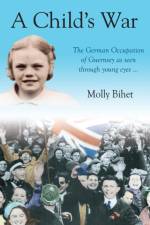
Molly's touching account of life in Guernsey during the German Occupation brings events of the Second World War to life through the eyes of a young child. The Channel Islands were the only British territory to be occupied during the Second World War and many Islanders were immediately imprisoned. Molly's story begins on a lovely afternoon on the 28th of June 1940, when she recalls waving a recently bought cucumber at planes flying over the harbour, only to realise that they were German planes when they started to machine-gun and bomb the previously peaceful harbour. Molly's recollection of her childhood engages the reader from beginning to end and provides a charming account of her life set against the backdrop of war.
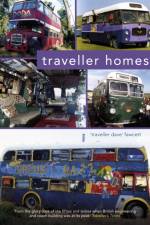
Living in a 1966 Albion Chieftain lorry, converted to a home, Traveller Dave has spent much of the past two decades in Europe, working on farms and travelling around, all the time taking photographs of the other interesting traveller homes he has seen. From mid-1980s Glastonbury to France and Portugal, all manner of vehicles are shown here, creatively converted to full-time homes. Making their homes from redundant buses and lorries, travellers have made a fantastic variety of one-off mobile homes using their own creativity and materials they have recycled or restored and Traveller Dave has managed to photograph and document these colourful vehicles from the early 1980s onwards. Inside the pages of Traveller Homes, Traveller Dave takes us on a journey through the years, showing us how this alternative lifestyle has created a multitude of unique vehicles, each tailored to its owner's personal style and taste. Be surprised and amazed at the variety, creativity and style to be found within.
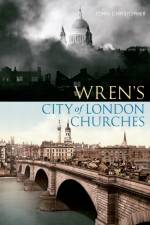
LONDON needed rebuilding after the great fire of 1666. Eighty-eight churches had been destroyed and a grand plan to rebuild them was started by Sir Christopher Wren. In the end, he designed fifty-one new churches and the splendour that is St Paul's Cathedral. Of the fifty-one churches, many have been lost, either to a combination of Victorian indifference, fire, subsidence or German bombs. Twelve Wren City churches survive in their original form, while many of the remaining churches have been rebuilt or substantially altered. Wren left an amazing legacy and John Christopher takes us on a tour of the churches, showing them as built and showing us a comparison scene of today.
Abonner på vårt nyhetsbrev og få rabatter og inspirasjon til din neste leseopplevelse.
Ved å abonnere godtar du vår personvernerklæring.