


Gjør som tusenvis av andre bokelskere
Abonner på vårt nyhetsbrev og få rabatter og inspirasjon til din neste leseopplevelse.
Ved å abonnere godtar du vår personvernerklæring.Du kan når som helst melde deg av våre nyhetsbrev.

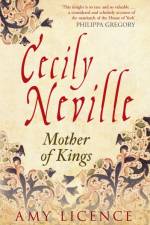
Known to be proud, regal and beautiful, Cecily Neville was born in the year of the great English victory at Agincourt and survived long enough to witness the arrival of the future Henry VIII, her great-grandson. Her life spanned most of the fifteenth century. Cecily's marriage to Richard, Duke of York, was successful, even happy, and she travelled with him wherever his career dictated, bearing his children in England, Ireland and France, including the future Edward IV and Richard III. What was the substance behind her claim to be 'queen by right'? Would she indeed have made a good queen during these turbulent times? One of a huge family herself, Cecily would see two of her sons become kings of England, but the struggles that tore apart the Houses of Lancaster and York also turned brother against brother. Cecily's life cannot have been easy. Images of her dripping in jewels and holding her own alternative 'court' might belie the terrible heartache of seeing her descendants destroy each other. In attempting to be the family peacemaker, she frequently had to make heart-wrenching choices, yet these did not destroy her. She battled on, outliving her husband, friends, rivals and most of her children, to become one of the era's great survivors.
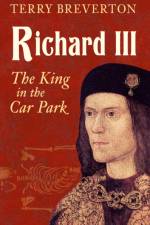
The bloody Wars of the Roses between the Houses of Lancaster and York ended with the killing of Richard III. With the recent discovery of his skeleton, and the consequent controversy over his final resting place, it is time to re-examine the life of Richard as a duke and king. Was Richard the grotesque usurper and murderer of the Princes in the Tower, as depicted by Shakespeare just over a hundred years after his death in battle? Or has his name been blackened over the years, as claimed by his apologists, the Richard III Society?This biography sifts the contemporary evidence, placing Richard in the context of his times, and assesses the other candidates put forward to have killed the Princes in the Tower. John Locke wrote that 'the actions of men are the best interpreters of their thoughts' and upon this basis the investigation leads to one conclusion.
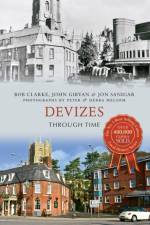
Devizes is a typical bustling Wiltshire market town. Architecturally the town boasts a variety of buildings spanning almost a thousand years, and over 500 are currently listed. The town, located centrally in the county of Wiltshire, continues to thrive as a commercial hub despite losing the canal to industrial traffic and the railway by the mid-1960s. A range of industries have made Devizes their home, including Brown & May and Wadworth's, and there has been major development in and around town. This series of images - many not published before - has been drawn from the collection housed at the Wiltshire Museum. The museum is also the recipient of all profits made by this book.
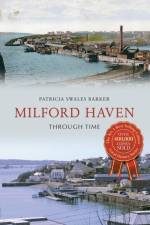
Milford takes its name from the Milford Haven Waterway, a natural harbour on which the town stands. It is a relatively modern town, founded at the end of the eighteenth century on land owned by Sir William Hamilton, but the neighbouring parishes of Steynton and Hubberston are much older, with medieval churches. Hakin, a thriving community within the latter parish, was for many years a centre of shipbuilding and the terminus of a mail service to Ireland. The new port of Milford attracted the whaling fleet and was the venue for the Royal Dockyard until 1814.The decline of the fishing fleet provided an opportunity in the late 1950s for the Haven to embrace the oil industry. More recently, as an LNG importation port, it has again become one of the largest ports in the country. The last twenty years have seen a transition at Milford from working docks to a busy marina with cafes, restaurants and shops.
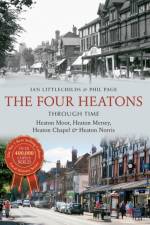
The Four Heatons have grown into popular residential suburbs over the years, each with its own identity. The area plays host to a range of good local shops, cafe bars, restaurants, traditional pubs and an independent cinema. Its architecture, parks, open spaces, and leafy, tree-lined streets tell the story of the rise of Victorian and Edwardian affluence, which built the foundations of the vibrant and busy community we know today. High on a ridge, with panoramic views to the Peak District, Cheshire Plain and the Pennines, the Heatons presented an attractive and healthy place to live for wealthy families in the late nineteenth and early twentieth centuries. Much of the Heatons is now protected by conservation areas. Join the authors on a unique journey around the Heatons, and learn more about the area's fascinating history and development through time.
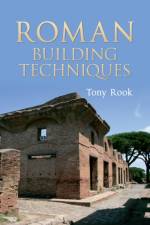
Building and architecture flourished throughout the Roman Empire. The Romans discovered new techniques to solve problems but also to impress the world. They built aqueducts to bring water into their cities and towns, grand baths for cleansing and socialising, and elaborate villas for the cream of their society. In this book, scientist and archaeologist Tony Rook takes the reader through Roman building techniques. He explores the structures that were found throughout the Roman Empire, including roads, bridges and aqueducts, as well as the Romans' answer to under-floor heating - the hypocaust - and vaults, domes, tiles and pipes. Lavishly illustrated with stunning photographs and the author's own detailed line drawings, Roman Building Techniques looks at Roman innovations, practices and materials in a thorough yet readable way.
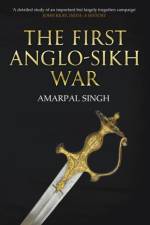
During the eighteenth and early years of the nineteenth century, the red tide of British expansion had covered almost the entire Indian subcontinent, stretching to the borders of the Punjab. There the great Sikh ruler Ranjit Singh had developed his military forces to thwart any British advance into his kingdom north of the River Sutlej. Yet on the death of Ranjit Singh, unworthy successors and disparate forces fought over his legacy while the British East India Company seized on the opportunity and prepared for battle. In the winter of 1845, the First Anglo-Sikh War broke out. From the start, the two-month campaign was marred by Victorian arrogance and bluster on the British side and personal ambition, intrigue and treason in the Sikh camp. Five keenly fought contests ensued, including the great battle of Ferozeshah where the British force found itself caught between two powerful Sikh armies and came close to destruction. Declining to retreat, Sir Hugh Gough, the British Commander-in-Chief, told his second in command: 'My mind is made up. If we must perish, it is better that our bones should bleach honourably at Ferozeshah than rot at Ferozepore: but they shall do neither the one nor the other.' The fate of the British Empire in India would be decided that day. Amarpal Singh writes a warts-and-all tale of a conflict characterised by treachery, tragedy and incredible bravery on both sides. In an innovative approach to history writing, the narrative of the campaign is accompanied by battlefield guides that draw on eyewitness accounts and invite the reader to take a tour of the battlefields, either physically or virtually. Fully illustrated with period drawings, modern-day photographs and new maps, The First Anglo-Sikh War gives a forgotten conflict the meticulous attention it deserves.
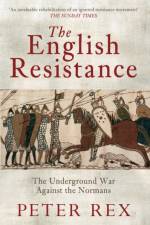
In 1066 the English were conquered by the infamous William the Conqueror. However, the English did not just roll over and die before their oppressors; far from it. For over five years the English violently rebelled against the invading Normans, murdering quislings, burning towns and sacking cathedrals. Peter Rex tells the story of each rebellion, their often colourful leaders (including Hereward the Wake, Edgar the Aetheling and Eadric the Wild) and the rebels themselves, whom the Normans called 'silvatici' or forest dwellers. He also considers William's attempts at pacifying the English, especially his notorious 'harrying' of the North, which amounted to genocide. For those who thought it was all over with King Harold's death, this book reinforces the view that the English are not so easily overcome.
Churches are Britain's most completely surviving class of historic monument. They are also usually the oldest buildings within their settlements. As such, these structures, from parish church to cathedral, from medieval to Georgian, are a huge architectural and archaeological resource. The last couple of decades have witnessed an unprecedented upsurge of public interest in the historic environment, and the growth of the tourism and 'heritage' industries has focused new attention on churches. While some visitors to churches, cathedrals and monastic ruins seem content to wander around with little or no understanding of what they are looking at, many have an interest in learning about the history or usage of the building. How far does it go back? Where is the earliest part of the building? Warwick Rodwell discusses the archaeological techniques that can attempt to answer such questions. In this lavishly illustrated, informative guide, Professor Rodwell explores the buildings themselves, their component parts, from foundations to finials, their sites, furnishings, fixtures and fittings, as well as churchyards and monuments.
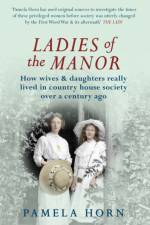
In the world of the late-Victorian and Edwardian country house the mistress and her daughters had many social duties and responsibilities to carry out both in their home community and in London, where they spent the Season and where the girls officially entered Society by being presented at Court. Pamela Horn's book examines the lives of these ladies from their childhood and marriage to their role as a 'Lady Bountiful'. It covers their leisure pursuits, sporting activities, country house weekends, and much more besides, up to the life-transforming years of the First World War.
On 22 August 1485 on a battlefield in Bosworth, Leicestershire, King Richard III, the last of the Plantagenet kings, was dealt a death blow by the man who had sworn loyalty to him only a few months earlier. That man was Rhys ap Thomas, a Welsh lord, master of Carew Castle in Pembrokeshire. For his service that day he was knighted on the field of battle by Henry Tudor. Rhys ap Thomas's life had been inextricably linked with both Richard and Henry; all three young men grew up under the shadow of the Wars of the Roses, suffering losses and betrayals. Ironically, on his death Rhys chose to spend his final days at the Grey Friars in Carmarthen and was buried by the monks just as Richard had been almost forty years before, perhaps in an act of remorse. This is the story of the man who helped forge the course of British history.
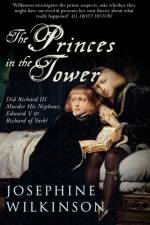
In the summer of 1483 two boys were taken into the Tower of London and were never seen again. They were no ordinary boys. One was the new King of England; the other was his brother, the Duke of York, and heir presumptive to the throne. Shortly afterwards, their uncle, Richard, Duke of Gloucester, took the throne as Richard III. Soon after, rumours began to spread that the princes had been murdered, and that their murderer was none other than King Richard himself. Since 1483 the dispute over Richard's guilt or innocence has never abated. The accusations, which began during his own lifetime, continued through the Tudor period and beyond, remaining a source of heated debate to the present day. For much of this time it has been taken for granted that Richard murdered his nephews to clear his path to the throne, but there are other suspects. One is Henry VII, Richard's successor, who is alleged to have discovered the princes in the Tower following his victory at Bosworth. Recognising them as the rightful heirs to the throne, he ordered their deaths. More recently another suspect has come forward: Henry, Duke of Buckingham, who was motivated by personal and dynastic ambition. Yet the evidence that the princes were murdered at all is far from conclusive; could it be that one, or both of the princes survived? Now, in the wake of the discovery of Richard III's remains in a car park at Leicester, it is time to revisit the question of what became of his nephews, the boys known to history as the Princes in the Tower. This study returns to the original sources, subjecting them to critical examination and presenting a ground-breaking new theory about what really happened and why.
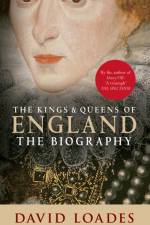
This is the history of the men and women who occupied the highest position in English, and later British, society. From Richard III's infamous life and death, to Henry VIII's wives, Charles I's execution and Queen Victoria's exceptionally long reign, their dramatic story unfolds within the pages of this book. For about a thousand years they were superior lords, the leaders of a nobility which ruled, and for about three hundred years thereafter they were sovereigns, whose servants ruled in their name. Now, with the rise of democracy, they no longer rule. The Queen is a symbol and a social leader, vastly experienced in the ways of the world, and the head of a family that strives to be useful in a modern community. The records of the monarchy vary from one period to another, and many of them are political in nature. However, it is always necessary to remember the human being behind the constitutional facade. This is an attempt to recover their identities.
As one of the oldest league clubs in the Football League, Sheffield Wednesday can boast a rich and fascinating history, from their formation back in 1867 to present day. The Owls have now played over 4,600 games in league soccer and hundreds more in cup competitions. Known the world over, thanks in part to their unique name, the club continues to attract a loyal and sizeable following to their Hillsborough ground, with hopes of regaining their long-since-lost Premier League place still alive. The City of Sheffield is the birthplace of association football, and The Wednesday helped progress the game in the North of England in those early days, becoming the top club in Sheffield and a respected opponent countrywide. After being elected into the Football League in 1892 they have lifted the league title on four occasions, the FA Cup three times, the League Cup once and have represented England in European football on three separate occasions. A plethora of international players have also appeared for the club - the likes of John SherIdan, Ron Springett & Des Walker - while the club remains a vital member of its local community. In Sheffield Wednesday: A Pictorial History, Jason Dickinson, the club's official club historian, takes readers on an illustrated tour of The Wednesday's history.
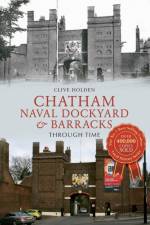
Chatham has had an association with the Royal Navy since Elizabethan times, moving to its current site in 1622. It provided the facilities to build, repair, maintain and supply ships. In the mid-nineteenth century, work began on expanding the dockyard into St Mary's Island, where three huge basins and five new docks were constructed, almost quadrupling its size, in order to support twentieth-century vessels. Work then commenced on a new home for Royal Navy seamen. The new barracks, HMS Pembroke, opened in 1903 providing accommodation for 5,000 officers and ratings for the following eighty years. The dockyard and barracks finally closed in 1984 and the Royal Navy bid farewell to Chatham. However, its legacy remains and its many historic dockyard and barrack buildings provide a warm welcome for residents and visitors alike.
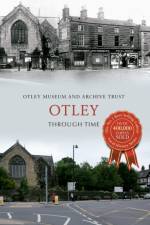
From its beginnings as an Anglo-Saxon settlement, through its development as an agricultural centre with all its related trades and services, the market town of Otley has seen many changes. The invention of Otley's world-famous Wharfedale printing machine contributed to the development of Otley's printing and engineering industry. The railway arrived in 1865, terraced houses replaced thatched cottages and unpaved thoroughfares gave way to tarmac. Today, such changes continue. The railway and most of the factories have disappeared but Otley has retained its popular market town character. The medieval bridge, the twelfth-century parish church and the medieval Kirkgate street plan still serve the townspeople. The selection of photographs in this book show the present alongside the intriguing past, taking readers on a trip around the historic streets of Otley.
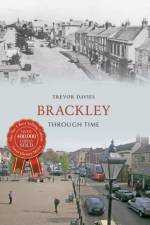
Brackley is a market town with a long history and strong set of traditions expressed through culture, sport and festivals. Set within the beautiful rolling countryside of south Northamptonshire, it consists of a market place with an attractive Georgian town hall built in 1706 and a broad, tree-lined uphill high street to the north. Up until 1987, this carried volumes of traffic on what was the A43 - the main link between the north and south - essentially dividing the town into two sides. An unintended consequence of the construction of the town bypass was to lessen passing trade and put pressure on town traders, but with excellent road communications easy access is gained to all points of the compass. Today, Brackley's identity is in part shaped by its association with Silverstone and the motor sport industry, and the current masterplan for the town is intended to herald a new era of prosperity for the town.
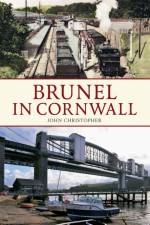
Cornwall marks the extreme south-western extent of Brunel's kingdom and the county is surprisingly rich in his works. The Royal Albert Bridge, which crosses the River Tamar, connected the broad gauge network with the Cornwall and West Cornwall railways - both engineered by Brunel - to take the trains coming from Paddington all the way to Penzance via a series of over sixty spectacular timber viaducts. The original viaducts have gone now, either modified or replaced over the years, but in many cases the masonry piers remain like rows of monolithic sentinels. As a result there is much to reward the Brunel hunter, including the branch line to Falmouth and many surviving examples of his railway stations. There are other connections, literally. His Great Eastern steamship was the first vessel to successfully lay a telegraphic cable to connect Europe and the USA - a story told at the historic Porthcurno Telegraph Museum near Land's End. John Christopher, an acknowledged expert on Brunel, takes us on a tour of Cornwall, exploring his works in the county. This is the latest in a series of books which are about rediscovering Brunel's works in your area.
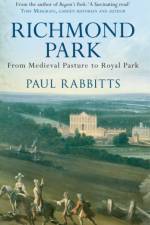
Richmond Park is the largest Royal Park in London, covering an area of 2,500 acres. From its heights there is an uninterrupted view of St Paul's Cathedral, 12 miles away. The royal connections to this park probably go back further than any of the others, beginning with Edward I in the thirteenth century, when the area was known as the Manor of Sheen. The name was changed to Richmond during Henry VII's reign. In 1625 Charles I brought his court to Richmond Palace to escape the plague in London and turned it into a park for red and fallow deer. His decision, in 1637, to enclose the land was not popular with the local residents, but he did allow pedestrians the right of way. To this day the walls remain. In 1847 Pembroke Lodge became the home of the then Prime Minister, Lord John Russell, and was later the childhood home of his grandson, Bertrand Russell. However, Richmond Park emerges from its historical record as a place that has seen many changes in fabric and detail and yet remains the embodiment of a medieval deer park. It is a palimpsest, retaining subtle clues to each period in its history.
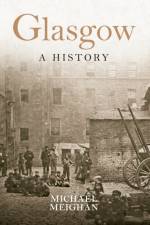
Located on the banks of the River Clyde, Glasgow was once the second city of the Empire, producing ships, locomotives, cars and heavy engineering for the world. Its docks would see huge numbers of exports. But Glasgow is much more than this; it is a religious centre, with one of Scotland's earliest churches, a centre for the Virginia tobacco trade, a home of designers and architects, inventors and entrepreneurs, artists and industrialists. It is that variety of talent, and the melting pot of immigrants and other Scots, sucked into the city at its peak that saw the phenomenal growth in wealth and culture that has left the city with a legacy of fine Victorian architecture, and it is its decline that has seen a legacy of remote council estates. However, Glasgow has risen again, and is truly a vibrant city, thanks to its self-promotion from Dr Michael Kelly's 'Glasgow's Miles Better' campaign to its use in gritty film and TV productions, as well as its ability to look at the past and preserve the best of the old, while producing some of the most startling modern architecture outside of London. Michael Meighan tells the story of Glasgow, from its drumlin days in the Ice Age to the growth of the Church, its industries, its people and the phenomenal expansion of the Victorian era and the legacy it has left us.
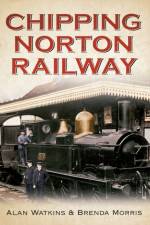
The Banbury & Cheltenham Direct Railway, which the Chipping Norton Railway is a part of, developed in several stages. The first section to open was the branch from Kingham to Chipping Norton on the Oxford, Worcester & Wolverhampton Railway in 1855. The section from Chipping Norton to King's Sutton (just south of Banbury on the Great Western Railway main line) was completed in 1881. The line ran through a number of stations, including Hook Norton, Bloxham, Adderbury and King's Sutton, before entering Banbury. In 1951, British Railways withdrew passenger services between Chipping Norton and King's Sutton. A landslide at Hook Norton in 1958 caused freight services to be halted between Hook Norton and Chipping Norton. Chipping Norton Railway is a fascinating account of the people who worked the line, those who rode it and those who remember it fondly still.
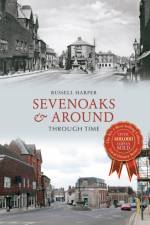
What the historian Sir John Dunlop, writing in 1964, called 'The Pleasant Town of Sevenoaks' has come a long way since it was established as a small market town in Saxon times. Now an affluent town benefitting from excellent transport links, it has for many years attracted those, often with young families, who appreciate its enviable position, not too far from London, yet surrounded by stunning countryside, with excellent schools and a good range of shops and other facilities. Sevenoaks & Around Through Time provides readers with a visual journey through the history of the town and its villages, using old and new photographs to show how much the town has changed, but also how much has stayed the same. It is this mix of old and new that contributes so much to the character of Sevenoaks, which is still - in the twenty-first century - a pleasant town.
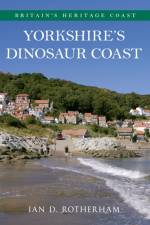
North Yorkshire boasts some of the most stunning countryside and amazing seaside anywhere in England, and its history is equally dramatic. Whitby Museum holds evidence of the great sea creatures that formerly populated this region millions of years ago. The soft shale rocks reveal and release fossils of remarkable sealife from small ammonites to giant plesiosaurs. This is truly the 'Dinosaur Coast'. From the southern areas around Filey to the far north of our story at Saltburn-by-the-Sea, each area has its own tales to tell. Within these pages, we take a journey in words and full-colour pictures along Yorkshire's Dinosaur Coast. Discover the twentieth-century seaside resorts of Filey and Scarborough and the secret cliffs of Robin Hood's Bay. Visit the home of Dracula, the fishing villages of Staithes and Runswick Bay, and stand on the pier at Saltburn to watch the great ships that still service the area's industry. Wildlife, history, heritage and landscape combine to make the northern coastline of Yorkshire a fascinating place to visit. This is Yorkshire at its best.
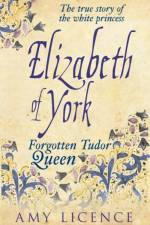
As Tudors go, Elizabeth of York is relatively unknown. Yet she was the mother of the dynasty, with her children becoming King of England (Henry VIII) and Queens of Scotland (Margaret) and France (Mary Rose) and her direct descendants included three Tudor monarchs, two executed queens and, ultimately, the Stuart royal family. Although her offspring took England into the early modern era, Elizabeth's upbringing was rooted firmly in the medieval world. The pivotal moment was 1485. Before then, her future was uncertain amid the turbulent Wars of the Roses, Elizabeth being promised first to one man and then another, and witnessing the humiliation and murder of her family. Surviving the bloodbath of the reign of her uncle, Richard III, she slipped easily into the roles of devoted wife and queen to Henry VII and mother to his children, and has been venerated ever since for her docility and beauty. But was she as placid as history has suggested? In fact, she may have been a deeply cultured and intelligent survivor who learned to walk a difficult path through the twists and turns of fortune. Perhaps she was more of a modern woman than historians have given her credit for.
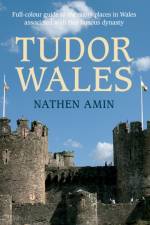
The Tudors are one of history's most infamous families and the era over which they reigned still captures the public's interest without rival. 'Tudor England' in itself has become a well known phrase that covers many aspects of the era, particularly architecture, arts and the lifestyle. What is often overlooked however is that the Tudors, whilst coming to encompass all that is considered great about England, were a Welsh dynasty with their roots firmly entrenched in the hills across Offa's Dyke. This guide will take you on a journey throughout the beautiful country of Wales and expose the reader to the hidden gems of the Tudor era, from Harlech Castle in the north to Pembroke Castle in the west, and from the holy Bishop's Palace at Lamphey to the sacred Cathedral at St David's. From Dale, Carew and Penmynydd to Raglan, Conwy and Denbigh, every part of W ales has Tudor links, both to the royal Tudors and their more obscure Welsh ancestors. This guide will put you on the path to a true Tudor experience in the Land of their Fathers.
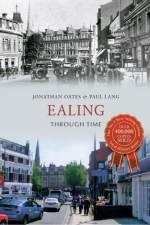
Ealing was once known as the 'Queen of the Suburbs', though this phrase is more commonly used now by estate agents. Ealing Through Time enables the reader to judge for themselves whether the viewpoints of Ealing justify the title in question, both in the past and in contemporary times. Ealing was a 'country town near London' when these postcards were commissioned. It was blessed by many fine open spaces and was near to the countryside too. Yet it also had good transport links by train and tram to the capital and the West of England. It had a number of prestigious private schools and other establishments that made it attractive to middle-class residents. Much the same can be said now, despite the many changes that have taken place in the last century.
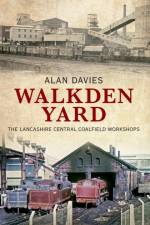
Located close to the Ellesmere Colliery, the Walkden Yard ultimately became the NCB Central Workshops for Lancashire. From here the workshops served the Bridgewater Trustees' collieries, providing engineering support as well as maintaining the numerous railway locomotives and the many hundreds of wagons that the company owned. Opened in 1878, Walkden Yard transferred to the National Coal Board upon nationalization after the Second World War and its importance grew as it served the other Lancashire collieries too. At Walkden there were a machine shop, joiners' shop, electricians' shop, paint shop, tinsmiths', locomotive repair shop, wagon sheds and wagon machine shop. The yard itself employed hundreds of men and boys but was closed in 1986 with the decline of the Lancashire coalfield. A housing estate now sits atop the site of the Walkden yard and it is hard to remember that the site once serviced the many locomotives that belonged to the NCB, or that the Coal Board and its predecessors operated many locomotives over their own lines as well as the railway company ones and that a huge industry was maintained at Walkden yard, repairing locomotives and rolling stock. In this book, Alan Davies tells the story of the Walkden yard and the locomotives of the Lancashire coalfield.
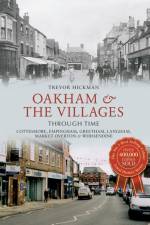
Oakham, the county town of Rutland, has a fascinating history. Oakham Castle's Norman hall was built by Walkin de Ferrers around 1190, and also houses the famous horseshoes, which were collected from members of royalty and peers of the realm who passed through the town. The impressive tower of All Saints church dominates the skyline from miles around. Rutland County Museum on Catmose Street was constructed in 1794 to be the home of Rutland Fencible Cavalry. Walking around the lanes and minor roads that crisscross Rutland today is still a trip back in time. This unique selection of old and new images, compiled by local historian Trevor Hickman, is essential reading for anybody who knows and loves Oakham and the surrounding villages. Featured alongside Oakham are Cottesmere, Langham, Empingham, Whissendine and many more.
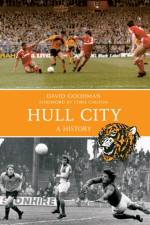
Hull City have been in existence 110 years, and while the last ten have seen the club rise from the bottom of League Two to reach the Premier League, there is a rich and varied history to look back on. Highlights such as an FA Cup semi-final, the magnificent Raich Carter era and the Wagstaff and Chilton years have been punctuated by lows such as the club missing out on promotion to the old First Division on goal difference, being the first club to go into administration and having to suffer the ignominy of twice being locked out of their own ground. Extensively researched, including interviews with ex-players and supporters, David Goodman has attempted to gain the inside story on the extraordinary journey from the club's humble beginnings through to their move to the KC Stadium. This book is essential reading for all supporters of the Tigers.
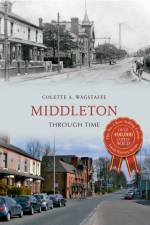
The weary traveller passing through Middleton in days of old would have witnessed a more pastoral, idyllic scene that we can only imagine. Just what kind of reception would one have been greeted with when stopping off at Ye Olde Boar's Head back in the 1700s? Was it a stern set of 'rules of the inn' or a warm, hearty welcome to the town when the pace of life was much slower and the streets were devoid of the traffic and crowds we see today? The advent of photography brought scenes as they were from the mid-1800s onwards, demonstrating a true reflection of life on the streets. Many of these early captured scenes have been transformed beyond recognition but a surprising number remain relatively untouched. This book follows a journey of exploration, meandering from north to south, to look at just how much or how little has changed in Middleton Through Time.
Abonner på vårt nyhetsbrev og få rabatter og inspirasjon til din neste leseopplevelse.
Ved å abonnere godtar du vår personvernerklæring.