










Gjør som tusenvis av andre bokelskere
Abonner på vårt nyhetsbrev og få rabatter og inspirasjon til din neste leseopplevelse.
Ved å abonnere godtar du vår personvernerklæring.Du kan når som helst melde deg av våre nyhetsbrev.

Abergavenny grew up around the Norman castle, on the site of a Roman fort. The town's location meant it was frequently embroiled in border warfare. Despite this turmoil, the town, with its ancient market, prospered. It was known for its Welsh flannel, as well as more unusual products - the milk from local goats was used to treat consumption, and their hair to make fashionable periwigs!The town continued to expand in the nineteenth century with the coming of the railway and the iron and coal industries of Gwent, and the Abergavenny Cymreigyddion Society drew the attention of scholars and literary figures. Today this quaint historic town is the 'Gateway to Wales', known for its proximity to the rural beauty of the Black Mountains and the Brecon Beacons National Park.
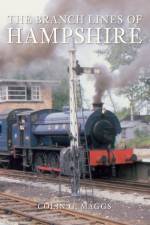
Although the majority of the branch lines of Hampshire belonged to the London & South Western Railway, they offered the opportunity to see a wide variety of locomotives serving both rural outposts and the major towns. In the west of the county, the railway centred on Bournemouth and Southampton. During the Second World War these two lines rose to become important arteries carrying men and materials to south coast ports. Other branches are interesting for their industrial and freight services; among them Fawley, which served and continues to serve the oil refinery. Some branches in Hampshire were shut down even before the Second World War: Ringwood - Bournemouth closed to all traffic in 1935, while the Hurstbourne - Fullerton line closed to passengers in 1931. Freight lingered on until 1956. Many branches have been lifted, but a few remain open today. A casualty in 1914 was the branch to the Royal Pier, Southampton, which connected with the Isle of Wight ferry, while another route to the Isle of Wight, that via Lymington, was eventually electrified. All the Hampshire branches are described in detail, and the text includes lively anecdotes of the trains and those who served them. The book is illustrated with over 150 black and white photographs, maps and ephemera, which capture the history of the county's railways.
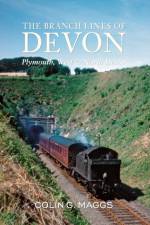
The branch lines of Devon were particularly numerous and this second volume on the county covers Plymouth, west and north Devon. They vary from the Turnchapel and Yealmpton commuter lines, to the Exeter and Barnstaple branch, which for many years of its life was a main line, becoming a branch line within the last forty years. One branch still open is the Plymouth to Gunnislake line, which remains because it offers the most direct route. Many of the branches have interesting histories. The Princetown branch was famous for being the highest station in England. The Torrington to Halwill Junction line began life as the 3-foot-gauge Marland Light Railway whose main purpose was to carry clay. In 1925, the line was rebuilt as a standard-gauge line and extended to become the North Devon & Cornwall Light Railway - the last major railway construction in the West of England. In this absorbing, entertaining and well-researched book, Colin G. Maggs, foremost railway historian, provides a marvellously wide-ranging view of over 170 years of rail travel. Profusely illustrated with over 200 fascinating photographs, maps and ephemera, this book will appeal not only to railway enthusiasts, but to local historians as well.
The branch lines of Devon were particularly numerous and this volume covers those in Exeter and the south, central and eastern parts of the county. They were also tremendously varied, ranging from the Exmouth branch - the nearest the West Country comes to a suburban-type commuter line - and the Paignton line - which for many years of its life could be considered a main line - to the Culm Valley Light Railway - a curiosity which required locomotives with a short wheelbase and slight axle loading and restrictions on rolling stock. Many Devon branch lines were originally built to the broad gauge and were later narrowed, some lasting until its very end in May 1892. Three of the branches in the area have been preserved: part of the Seaton line is now a narrow-gauge electric tramway, the South Devon Railway at Buckfastleigh is a typical GWR branch, and the Dartmouth Steam Railway is capable of taking main-line engines. In this absorbing and well-researched book, Colin G. Maggs has provided a marvellously wideranging view of over 160 years of rail travel in the county. Well illustrated with over 200 fascinating photographs, ephemera and maps, The Branch Lines of Devon Part One: Exeter, South, Central & East Devon will appeal not only to railway enthusiasts, but local historians as well.
Jersey is the largest of the British Channel Islands and is just 14 miles away from the French coast. Once part of the Duchy of Normandy, it became independent from France in 1204 and has governed itself ever since. St Helier is the historic capital of Jersey and the centre of its government. Named after its Patron Saint, Helier, the town has grown from a small fishing and agricultural hamlet hugging the seashore, to a bustling port and holiday resort.St Helier has a rich heritage and can even boast in having a battle fought in its town square. Royal Square, as it is now called, is where the States Chamber and ancient Royal Court House are to be found. Once a walled town, the area has expanded into a modern metropolis, but still retains a charm all of its own. This development through time has been traced and captured in this fascinating and unique book.
Growing up as a child in Singapore and Malaya in the 1960s was an idyllic experience. Thousands of children of naval personnel will have the same fond memories of the time spent there, as Derek has. Who could forget the constant hot weather or the strange smells that you only seemed to find in the Far East? Who could forget the heavy monsoon rains, chit-chats or Tiger Balm Gardens? Other memories will include the markets, hawkers, amahs and snake charmers. Shopping was an experience in itself. Bartering was a way of life and anyone who lived there at the time would remember CK Tang's and Change Alley. Only going to school till 1.00 p.m. because of the heat and spending the rest of the day on boat trips or at the beach was wonderful, as were all the fantastic toys that were available at the time. This book will remind people of those far off sunny days of childhood, and will bring back many happy memories to those who shared in the experience.
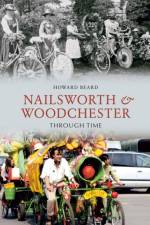
Lying together in one of Stroud's five valleys, Nailsworth and Woodchester provide an interesting contrast with one another. As a parish, the former is only just over a century old, created from portions of Avening, Horsley and Minchinhampton, while Woodchester has pre-Conquest roots and is the site of the great Roman villa, with its celebrated Orpheus Mosaic. Both parishes possess many fine buildings and are home to thriving, vibrant communities. Using period and modern photographs, this book aims to highlight changes in Nailsworth and Woodchester over the last century or so. Matching images invite the reader to compare how landscape, architecture and street scenes have altered and to enjoy fascinating glimpses of Victorian and Edwardian people going about their daily lives.
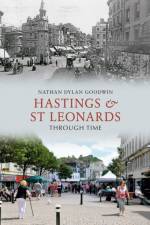
'Hastings and St Leonards, the charming marine resort of fashionable English society, possess attractions and recommendations that render the borough unique and unrivalled among English watering places. Strangers who have not visited the place are liable to be misled by the separate mention of the two names into the idea that St Leonards and Hastings form two separate and independent towns, which in fact they originally were. That stage, however, has long since been passed - ' The above extract was taken from the 1897 edition of Views and Reviews - Hastings and exemplifies how the town was regarded as a stylish seaside resort by Victorian and Edwardian society. The town eventually lost favour among the wealthier classes, which set in motion a steady decline, only worsened by the onset of the Second World War. But Hastings today is undergoing a process of change and revival; a number of developments have been taking place which are moving the town towards a position in which it is once again 'unique and unrivalled among English watering places'.
The Peak District is noted for its beautiful and varied scenery, its fascinating history, and its abundance of folktales. The sixty-two pieces in this collection include both wonder tales (fairy tales) and local legends, together with a few genuinely historical stories that have caught the popular imagination. Some of the tales are tragic, some are comic; some are very short, some are longer; many (even the historical ones) have ghost-story elements, which readily attach themselves to real-life stories. What they all have in common is that they reflect aspects of Peak District life, character, scenery and history. All the stories in this collection are written with recitation in mind, because folktales are for telling aloud. Notes at the end of the collection explain the sources and significance of each tale. Sketch maps are included to indicate the locations in which the tales are set, so interested readers can visit the scenes, most of which are illustrated by the author's photographs. Many of these locations are easily accessible by road, but some involve significant walks through the countryside that gave birth to the stories. Folktales of the Peak District will charm its readers and enhance their appreciation of this lovely part of England.
The 50-mile stretch of the River Tamar forms a unique county boundary between the counties of Devon and Cornwall. The Tamar's source is East Youlstone near Bude less than 4 miles from the north Cornish coast. But instead of flowing northward into the Atlantic Ocean it flows slowly south. through reed-fringed mudscapes passing the towns of Launceston, Gunnislake, and Saltash before widening out and eventually meeting the English Channel at Plymouth Sound. In the sound the river merges with the rivers Tavy, Plym and Lynher to form the Tamar Valley, an area of outstanding natural beauty. The river has some 20 road crossings, including some medieval stone bridges, and the famous Tamar Bridge, opened in 1961 which carries the A38 and the Royal Albert Bridge built in 1859 by Brunel ,to carry the railway from Devon into Cornwall. The natural wonders of the environment contrast sharply with the manmade industrial relics which are strewn along the middle reaches of the river. The cries of the raven and the peregrine falcon echo around the site of abandoned mines in which men toiled for more than two centuries. The Tamar has always played an important role in the region's economy with mineral extraction a key industry in the Tamar valley. The Tamar has also served naval interests since 1691, when William of Orange commissioned a new dockyard at the mouth of the river in Devon.
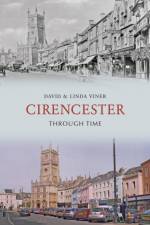
Cirencester Through Time is a unique insight into the illustrious history of this part of the country. Reproduced in full colour, this is an exciting examination of Cirencester, the famous streets and the famous faces, and what they meant to the people of this area throughout the 19th and into the 20th Century. Looking beyond the exquisite exterior of these well-kept photos, readers can see the historical context in which they are set, and through the author's factual captions for every picture, and carefully-selected choice of images, the reader can achieve a reliable view of this market town's history. Readers are invited to follow a timeline of events and watch the changing face of this charming town, as David Viner guides us through the streets of Cirencester. There is something for everyone here, whether they have lived in the area all their lives, or whether they are just visiting this beautiful town. It also shows how photography has continually evolved to keep up with an ever changing society.
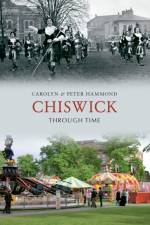
In the 1850s the area consisted of three villages - Turnham Green along the main road to the west and the riverside hamlets of Chiswick and Strand on the Green, separated by fields, market gardens and the grounds of several large mansions. Since that time industry has come and gone, great houses have become institutions before succumbing to development, the fields have been built over and transport has moved from river boats and horse-drawn coaches to the six-lane A4. This is Carolyn and Peter Hammond's third book of old photographs of Chiswick, and once again they have assembled a wide and fascinating collection of images, including paintings and prints as well as photographs and postcards. These images are grouped in chapters by subject and combined with informative captions, allowing interesting comparisons as we trace Chiswick's journey through time from three rural hamlets to a cosmopolitan London suburb.
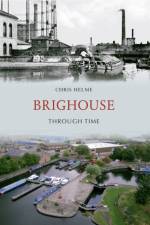
Brighouse Through Time provides a unique opportunity to look, not only at the present day town centre that many readers will be familiar with, but also how many parts appeared particularly during the nineteenth and twentieth centuries. The contrasting images of historical sepia images with those full colour images of the twentieth century is an exciting innovation from books of a similar style of the 1970s and 1980s. This book is not meant to be purely historical, but also an insight and an opportunity to see 'snapshots' in time, which for older readers will evoke many memories from their own childhood days. Whereas younger readers have the opportunity of seeing Brighouse's many changes, and how the town centre has evolved over the last century, a process that is forever ongoing.
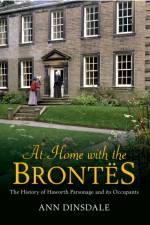
Haworth Parsonage is the world-famous home of the Brontes. Crowds of tourists are drawn to Haworth every year to discover what inspired Anne, Charlotte and Emily. Ann Dinsdale explores their lives there, the impact of the sisters' home on their writing, and their lasting legacy. However, the Parsonage has also been home to several other families. This book begins with the early history of the house and those who lived there before the arrival of the Brontes. After Patrick Bronte's death in 1861 the Parsonage became home to four of his successors before being purchased by the Bronte Society in 1928. Thereafter, it became home to four museum custodians and their families. All of these later occupants witnessed the development of tourism in Haworth, which had begun in Mr Bronte's own lifetime, and experienced the trials and tribulations of living in a literary shrine. Using a variety of sources, mostly unpublished, Ann Dinsdale also tells their stories.
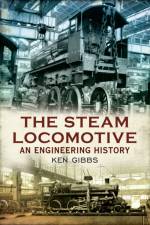
Books on railway history invariably start with the Stephenson's or with Richard Trevithick's locomotive of 1804., but the story begins much earlier with the development of steam engines for pumping out deep mines. Ken Gibbs, a retired engineer who served his apprenticeship in the Swindon Works of British Railways, takes a more practical approach to railway history, using its engineering developments to tell the story of the railways. From the first ideas to the development of better metals, manufacturing, technology in wheel casting, improved boilers and valve gears, his book is a refreshingly different approach to the plethora of picture books showing branch lines in days past. Ken's engineering background and love of railway technology gives us a book suited to the layman and engineer alike, explaining how each development made the railways better, faster or safer. It took over 150 years to develop the steam locomotive from a basic boiler on wheels weighing a couple of tons to the magnificent express passenger and freight locomotives weighing in excess of 100 tons and capable of speeds over 120mph. Read how the steam locomotive developed from those early days to the last days of steam.
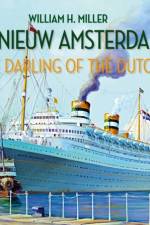
Entering service in 1938, the Nieuw Amsterdam was the Holland America Line flagship until the construction of the Rotterdam in the late 1950s. Her prewar life was short and she was used as a troopship during the Second World War, carrying many thousands of Allied troops to all corners of the world. Of 36,000 tons, she was the largest vessel built in Rotterdam and was launched by Queen Wilhelmina in April 1937. A perennial favourite of the Dutch and their finest Ship of State, Nieuw Amsterdam remained in Holland America Line service until 1974, the last ship to retain the Holland America Line's familiar green, yellow and white funnels. Despite boiler problems in 1967, she was refitted with US Navy-surplus boilers and sailed on, cruising, until withdrawn from service in 1974. Sailing to the breakers, the art deco 'Darling of the Dutch', as she was affectionately known, was broken up. Today, she still has a following, from those who sailed on her but also from those who have grown to appreciate the importance of the Nieuw Amsterdam in terms of ocean liner design.
This book describes the heritage and development of the entire Piper Cherokee family; its safety and ownership characteristics; internal and external details; and a range of special variants from STOL modifications and new engines to seaplanes and tailwheel conversions. The hugely successful Piper PA-28 was produced and sold as a direct competitor to the Cessna 172. Initially produced with a rectangular wing planform and fixed undercarriage, it was available with installed powers ranging from 140 to 235 hp. A retractable undercarriage resulted in the Arrow series. The closely related PA-32 Cherokee Six, Saratoga and Six X are larger high performance aircraft. Versions of the PA-32 fitted with retractable undercarriages are the Lance and the sophisticated Saratoga II series.
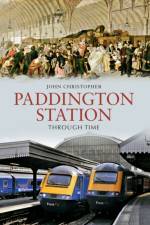
Paddington is part of a hub of underground stations and is home to the world's most famous bear, named after the station. Revel in the selection of images of Paddington Through Time and see how Brunel's masterpiece has stood the test of time. 'I am going to design, in a great hurry, and I believe to build, a station after my own fancy,' stated Isambard Kingdom Brunel in 1851. That station, the second to bear the name 'Paddington', was to be another Brunel masterpiece. His delight at the prospect of building a replacement and permanent station at Paddington is self-evident. The new station was to be built on the plot of land just south of the Bishop's Road Bridge, defined by Eastbourne Terrace and Praed Street on two sides, and by London Street and the canal on the northeast side. Because the new station would be located almost entirely within a cutting, there would be no grand exterior, and instead, Brunel impressed with his immense roof of iron and glass. Paddington is currently in the middle of a huge redevelopment that has seen it retain much of its nineteenth-century design, but updated to suit traffic flows of today. Millions pass through the station weekly, both to the West and Wales and to Heathrow on the Heathrow Express.
Intended for the British Army as a contract for a small, Jeep-like, air-portable vehicle, the Mini Moke was a failure at this role and found its success as a fun, sunshine toy, equally at home on the beach as in the mountains. Over 50,000 were made and many still survive. Its most famous role was in the cult TV series The Prisoner. The Moke was manufactured in Britain and later in Australia and Portugal. With Mini running gear, the Moke is a practical and fun vehicle for the summer and this explains why so many survive to the present day. John Christopher tells the story of the Moke and the varieties from development to preservation.
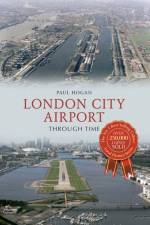
London City Airport was first conceived as part of the regeneration of the London Docklands at the start of the 1980s, a pilot landing on Heron Quays to prove it could be done. Built on the land between the Royal Albert Dock and the King George V Dock, the first commercial services operated from the airport in October 1987, with the official opening by HM The Queen in November of that year. The airport has since become a hub for people travelling to and from the City of London.Now in its twenty-fifth anniversary year, London City Airport is still looking at expansion, with a plan for phased expansion up to 2030. In London City Airport Through Time, Paul Hogan uses a wonderful collection of photographs as well as interviews with some of those involved, to show the development of this key player in British aviation.
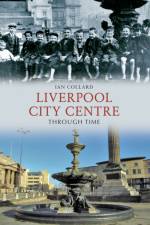
Although Liverpool has existed as a port since the thirteenth century, it wasn't until the seventeenth century that it truly began to grow on the profits of trade with America, importing sugar from the West Indies and Virginia tobacco and exporting textiles from Lancashire. In the eighteenth century the slave trade too began to bring money into Liverpool, but once it was banned in Britain, Liverpool continued to grow, trading with the West Indies, Canada and the US. The results of all this can be seen in Liverpool City Centre Through Time, in which old and new views of such surviving buildings as the Cotton Exchange, the headquarters of the White Star Line and the famous Adelphi Hotel mingle with images of buildings like the Sailors' church and the General Post Office which were damaged by bombing during the Second World War and redeveloped later.
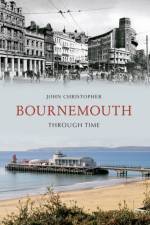
Bournemouth Through Time is a wonderful collection of old and new photographs of Bournemouth. The older images are printed alongside a contemporary full colour photograph, which illustrates the same scene. The contrasting illustrations show how the area has changed and developed during the last 100 years. The photographs illustrate shops, schools, garages, churches, houses and street scenes.As you browse through the photographs, you will notice the increase in the number of vehicles on the roads and the number of residents, how shops and other businesses have evolved and the changes and developments in modes of transportation and the architecture of the area.
Espionage is one of the world's oldest professions, and it played an integral role in Allied successes and failures during the Second World War. Equal to men in both their bravery and in the sacrifices they made, the female undercover operatives of the Second World War deserve to have their incredible stories told. The Women Who Spied for Britain traces the fascinating and sometimes tragic stories of eight women who put their lives on the line and made invaluable contributions to the British war effort. Drawn from many different walks of life, including a princess, a beauty queen, a war widow, a teenage girl and a bawdy Australian journalist, all of these women shared a sense of adventure, daring and determination that allowed them to embrace the role of secret agent. Trained in the art of clandestine warfare, guerilla tactics and radio operation, these women worked closely with resistance movements throughout Occupied Europe. Their stories are portraits of courage, offering a mixture of thrilling adventure, gutsy humour, hard-fought triumphs and, for far too many, horrific tragedy.
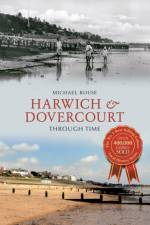
Harwich is one of the Haven Ports. Its position on the estuaries of the River Stour and River Orwell has played a defining role in the history of the town, as it was one of the only safe havens on the East Coast between the Thames and Humber. As a result, Harwich has played a key maritime role through the centuries. The town became a significant naval base in 1657, and soon major batteries were developed including the Harwich Redoubt, Beacon Hill Battery and Bath Side Battery. Dovercourt is actually older than its close neighbour Harwich, having been mentioned in the Domesday Survey, but it is considerably smaller. In truth, however, the towns are contiguous today. Both Dovercourt and Harwich are picturesque coastal towns, with significant tourist interest. This unique selection of old and new images and informative captions is essential reading for anybody who knows and loves these beautiful Essex towns.
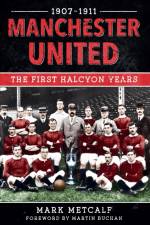
Manchester United may be world famous today, but back in 1907 the club had yet to win either the League Championship or the FA Cup. Things were to change dramatically over the following four seasons, during which time the club moved to Old Trafford under the management of Ernest Mangnall, and captured two League titles, two Charity Shields and a first FA Cup success. But how were these successes achieved? Who were the players that set the Manchester club on a path to greatness? Who were their opponents? Why did Manchester United move to Old Trafford? Find out more in Manchester United 1907-11: The First Halcyon Years, the first in-depth work on this truly great period in the illustrious history of the great Manchester United.
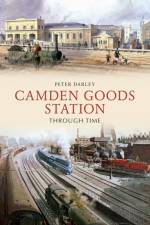
The London & Birmingham Railway was the major project of its day, designed by Robert Stephenson, one of the great railway pioneers, who also supervised its construction and its opening in 1837. Camden Goods Station became the goods terminus and Euston Station the passenger terminus. For a few years trains were hauled by rope from Euston up the incline to Camden before the intensification of both passenger and goods services rendered such technology obsolete. The L&BR left a strong footprint on the landscape from Euston to Camden Town and Primrose Hill. The story moves from rapid economic growth to eventual decline and then to the recent regeneration. The historic features around the former Goods station are providing the basis of Camden's transformation through its markets, media, music, food and entertainment into a global brand. Join Peter Darley in unfolding this story from 1837 to the present day.
Alexander Korda's 1936 film The Shape of Things to Come predicted the nightmare of aerial bombing against London. Even as the storm clouds gathered, the government was woefully slow in protecting its civilian population. Some problems, such as the risk of a catastrophic flooding of the Underground network, were anticipated. But the enduring image of the Blitz is the spontaneous and community driven adoption of the Underground stations as a safe refuge from the raids. As Londoners settled into their new subterranean routine the government ordered the construction of purpose-built deep shelters and most of these still exist. In London Underground at War Nick Cooper examines the impact of the war on the running of the Tube and the plans to protect the system. He asks what life was like for those who sought safety underground and pays tribute to the many 'shelterers' who lost their lives in the raids. These cruel, wanton, indiscriminate bombings of London are, of course, a part of Hitler's invasion plans. He hopes, by killing large numbers of civilians, and women and children, that he will terrorize and cow the people of this mighty imperial city - Little does he know the spirit of the British nation, or the tough fibre of the Londoners. Winston Churchill, radio broadcast, Sept 1940
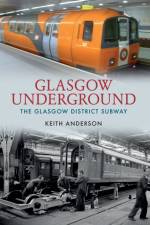
The Glasgow District Subway was second only to London in the UK and was the third underground system to be built anywhere in the world. Originally operated as a cable railway, it was later electrified and the rolling stock from that era continued to be used until it had become very dilapidated by the 1970s. Following a major modernization programme, it is now operated by the Strathclyde Partnership for Transport and the distinctive orange livery of the modern trains has earned it the local nickname of 'the clockwork orange'. The Underground is laid out as a circular route with the trains on a continuous loop, clockwise and anti-clockwise on the twin lines. It serves fifteen stations on both sides of the Clyde including the ornate St Enoch. Keith Anderson traces the development of Glasgow's Subway from its construction through its modification and up to the present day.
Almost forgotten by time, tucked away beyond the sight of the passerby, there is a little piece of old England, which was for many years a forgotten wilderness. If it were not for a weather-beaten plaque on the gatepost few would realise that beyond the rusted gates there lies, in unmarked paupers' graves, 2,861 former patients of the once formidable Menston Asylum. To be admitted to a lunatic asylum in the nineteenth century was fraught with danger, and in many cases meant a life sentence hidden away from society. It is estimated as many as 30 per cent of the asylum population was incarcerated incorrectly and up until 1959 there was no form of appeal. Looking into the faces of the long dead, the forgotten former inmates of this once bustling institution, it is impossible not to feel a certain sadness at their plight. Abandoned by an intolerant society and their families these people all had one thing in common, when death came there was no one to shed a tear or collect their remains. They were given a pauper's funeral and forgotten, until now.
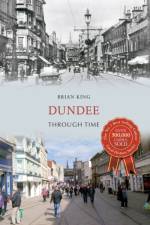
Dundee suffered more than most at the hands of developers in the 1960s and 1970s. Much of the city, the fourth largest in Scotland with a population of around 150,000, was changed in the name of development. Today, the city continues to change, as a multimillion-pound master plan to regenerate and reconnect the waterfront with the city centre is expected to be completed in thirty year period, including the development of a new Victoria and Albert Museum. This fascinating compilation of early Dundee postcards, photographs and lantern and glass slides takes the reader on a tour of one of Scotland's most established cities. Principally sourced from the author's own collection, Dundee Through Time unites a wealth of rare images to reveal that the Dundee of a century and more ago was as colourful and vibrant a city as it is in the present day.
Abonner på vårt nyhetsbrev og få rabatter og inspirasjon til din neste leseopplevelse.
Ved å abonnere godtar du vår personvernerklæring.