


Gjør som tusenvis av andre bokelskere
Abonner på vårt nyhetsbrev og få rabatter og inspirasjon til din neste leseopplevelse.
Ved å abonnere godtar du vår personvernerklæring.Du kan når som helst melde deg av våre nyhetsbrev.

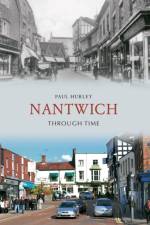
Nantwich occupies a pleasant position on the banks of the River Weaver and at least as far back as the Domesday Book has been one of the most important towns in Cheshire. The oldest and most ancient of the Three Wiches it has had several names over the years, a few being; Warmundestrou, Wich Malbank, Helath Wen, Namptwyche or simply Nantwich. The town is second only to Chester for the number of listed buildings and accordingly is a place of great antiquity. Paul Hurley has taken old photographs and used them as a guide to photograph the scenes as they are today. The oldest is that of the Market Hall when it was in the Town Square in the 1860s through to High Street in the 1970s. Use the book as a guide to take you through this quite unique town and see just how things have changed over the years; buildings, infrastructure, people and vehicles all are featured.
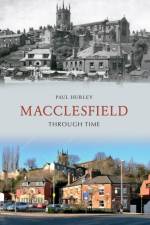
Macclesfield is an ancient Cheshire town that stands beneath the sprawling and beautiful Peak District. It is Cheshire's furthest outpost before taking the road into Derbyshire and many years ago entered the Industrial Revolution in a more genteel manner perhaps, by becoming a silk town. Here all manner of silk items were manufactured such as the narrowest ribbons and the best of silks and satins.It is the perfect place to explore Macclesfield Forest and the Cheshire Peak District but the town itself has plenty to offer including the Heritage Centre with its museums and tea room. Paul Hurley has carefully selected modern and old views to paint a nostalgic historical portrait, so enjoy this pictorial tour of the town and see what is here now and compare it to what was here many years ago.
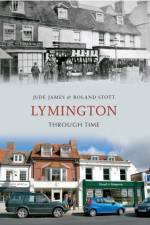
Lymington has long been in need of an illustrated history worthy of its past. From a Saxon settlement onwards as an internationally famous yachting centre, Jude James and Roland Stott present a beautiful and unique historical journey. This comparative volume looks at the contrasts between the industrial past of Lymington as a salt town, its ship building and local fishing industry, and the changes up to the present day. The important role of the Solent is examined, and also surrounding areas. Lymington Through Time not only provides a guide to the industrial past but also a record of the everyday, shops, businesses, and residents at work and play. This fascinating and colourful journey back in time will surprise and delight residents and visitors alike.
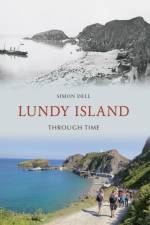
Lundy Island lies far out in the Bristol Channel, between the coasts of North Devon and South Wales. Its position makes it a natural fortress and an attractive refuge since man first inhabited this rocky but fertile outcrop throughout its piratical history up to the present day. Now owned by the National Trust it is a haven for wildlife both above and beneath the waves; cared for and managed by the Landmark Trust. This book explores the island using photographs, many of which have never or rarely been published before, looking at the buildings, the land and the very life and soul of this popular destination for birdwatchers, holiday makers or those simply seeking quiet and solitude. It will be of great interest to those who have come to know and love this beautiful island haven, just three miles long by half a mile wide.
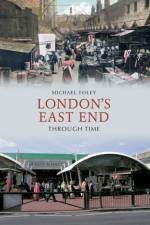
The East End of London has always been looked down on by those who live in the rest of the capital. Jack London's People Of the Abyss is just one of the many books written about the poverty, crime and suffering that has blighted the East End throughout the past. As what is now the East End spread out towards Essex, however, the picture has become very different. Many areas such as Bethnal Green, West Ham and Forest Gate were once small rural villages.Not only has the East End been a centre of poverty but it has also been where many of the worst disasters to occur in London have happened. Among the streets of small terraced houses, however, there are often areas of surprising beauty with parks that have survived from the middle ages and houses that were once lived in by a more affluent population. The East End has always been a contrast of rich and poor, mansion and slum, throughout history.
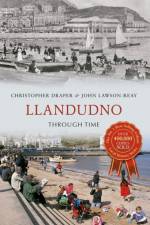
'Llandudno is more stylish than either Rhyl or Blackpool and not dearer', observed Edwardian author Arnold Bennett. Prime Minister Lloyd George considered the resort a perfect tonic, advising colleagues 'to come to Llandudno is a great pick-me-up'. An 1890 visit by romantic novelist and erstwhile Queen of Romania, Carmen Sylva prompted a description so apt it was adopted as the town's official motto, 'A Beautiful Haven of Peace'. To everyone Llandudno evokes an era of quiet traditional seaside pleasures but has the town entirely escaped the destructive winds of change? The 1933 Official Guide to Llandudno advised prospective holidaymakers, As a holiday centre Llandudno has no rival. All the glorious scenery of North Wales is easily accessible by train, coach, motor or steamerA"e; and the Broadway Garage, Craig-y-don was at hand to supply motors or drivers as required. Times change and Broadway Garage no longer supplies Rover cars, charabancs or chauffeurs but instead sells German and Japanese cars and self-service petrol. This collection of then and now photographs meticulously compiled and researched by the Chairman and Vice-Chairman of Llandudno & Colwyn Bay History Society offers a unique insight into the changing fortunes of 'The Queen of the Welsh Resorts'.
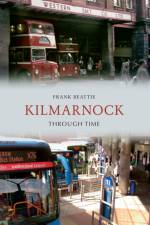
For centuries Kilmarnock was little more than a large village, a market town for a large rural area. It was an area rich in resources and the enterprising people of the town made the best of what they had. Stone for building was quarried locally as was coal and ironstone. Coal mining led to engineering works and those engineers established businesses like Barclays, which went on to sell locomotives all over the world, and Glenfield & Kennedy, which exported hydraulic products.Cottage craft woollen industries evolved into carpet making and BMK carpets; leather crafts and shoe making led to the formation of Saxone. Whisky became important with one firm eventually dominating world sales. Johnnie Walker was founded in Kilmarnock in 1820, but was spirited away in 2012. Kilmarnock Through Time takes an affectionate and nostalgic look at the people and events which have made the town what it is today.
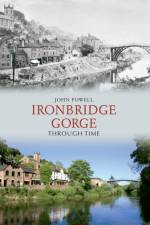
Ironbridge Gorge Through Time is a unique insight into the illustrious history of this part of the country, which is reproduced here in full colour. Looking beyond the exquisite exterior of these well-kept photos, readers can see the historical context in which they are set, and through the author's factual captions for every picture, and carefully-selected choice of images, the reader can achieve a real sense of the gorge's importance to the early industrialists. There is something for everyone here, whether they have lived in the area all their lives, or whether they are just visiting for the first time. Ironbridge Gorge Through Time also shows how photography has continually evolved to keep up with an ever changing society.
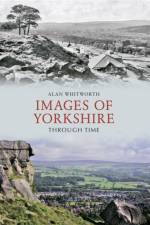
Yorkshire remains the largest county in England, and to those born within its boundaries it is unquestionably the greatest; whether this pride is justified or not, it would surely be difficult to find a county with more claims to the visitor's interest. These include the Yorkshire Dales and the North York Moors. One of the grandest areas of unspoiled country in the whole of England, the Dales are mountains and moorland, as well as peaceful villages, waterfalls and awe-inspiring caverns.The North York Moors, another of the loveliest parts of England, is bounded by the splendour of the Yorkshire coast. The area is rich in history; many monuments, glorious cathedrals, magnificent houses, castles and some of the most beautiful ruins in England bear eloquent witness to the county's often tumultuous past. In this work, the author shares his fascination and love of his native county.
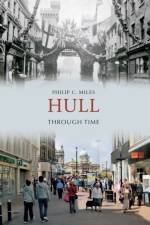
Kingston upon Hull is a fascinating city and over the last 150 years or so has witnessed great changes. The city centre in the late 1890s was made up of pre Victorian slum houses and tiny narrow streets. In the very last years of the 1890s much of the old city centre was completely demolished and many of the old parts of the city centre have been captured on photographs, some of which are included in this book. Today, the city centre is very modern and boasts three excellent shopping centres as well as the more traditional streets. It also has several museums and William Wilberforce's house, which was the home of the anti slavery campaigner. This excellent book with over 190 photographs shows not only the city centre as it was and how it is today but also some of its environs. It is essential reading for anyone who knows and loves the area.
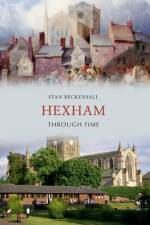
The importance of the attractive town of Hexham began when St Wifrid built his great monastery there in the 7th Century, of which only the unique crypt remains beneath the Priory church. It was bounded by a wall that separated it from the Market Place and the civil administration, which includes the Moothall and Old Gaol. These areas still form the nucleus of the town, which lay in the turbulent Border country between England and Scotland. The vital industry of tanning and glove-making has now gone, but there are smaller industries in its place. The town is a focus of music, the arts and sport. The Queen's Hall houses library, cafe, galleries and theatre. It is linked by roads and by the early Carlisle-Newcastle railway which bring in tourists and local people for many activities such as the Hexham Gathering and the Abbey Arts Festival. Much has changed, but the historic centre remains intact. The author has lived here for over 30 years and is an Honorary Steward and Bailiff of the town.
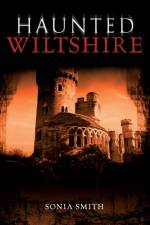
Did you know there were vampires on the darkly atmospheric Salisbury Plain, not far from the famous Stonehenge? Was there really black magic and witchcraft going on in the small village of West Lavington in modern times? Who was the tall, dark, horned figure stalking the stones at Avebury stone circle? Be amazed by the saucy naked phantom highwaymen of Cherhill. Read the chilling tale of a young man who fell in love with a mysterious woman in a residential house in Swindon. Find out how the Black Death came to the beautiful little village of Urchfont, and why you should be careful who you sit next to at Chippenham railway station. If you really are prepared to be scared then read the disturbing tales of hauntings, vampires, poltergeists, witches and phantoms that roam the wonderful Wiltshire countryside.
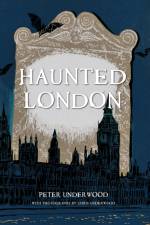
This was the first book on London's ghosts, when Peter Underwood was President of the Ghost Club. He is uniquely qualified to write Haunted London, presenting a parade and gazetteer of the psychic phenomena of Britain's capital city - a city with nearly ten million living inhabitants and the ghosts of many dead ones. As well as all the famous hauntings - the Cock Lane ghost, the Grey Man at Drury Lane, the Tower ghosts, the haunted house at Berkeley Square etc. - the book contains many new and hitherto unpublished findings. Not all ghosts date back to earlier centuries: there are ghost motorcyclists, for instance, and new buildings on the sites of older ones are as likely to have ghosts as those which still stand. For easy reference, Haunted London has divided up London geographically. Ghostly associations are uncovered in churches, theatres, hotels, inns and scenes of murders. Poltergeist infestation is another phenomenon included in this work which is sure to fascinate anyone wanting to get to know London better - whether they be visitors, psychic researchers, students of history, of legend or folklore, or simply lovers of one of the world's finest cities.
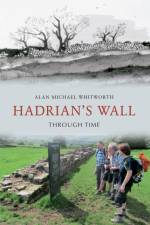
This is a unique and visual companion to the best-known and most spectacular monument to the Roman Empire in Britain. A fascinating look at Hadrian's Wall uses James Irwin Coates 'old views' of the Wall as a comparison to how it looks today. Alan Michael Whitworth also uses several pieces of Roman sculpture from Chesters Fort Museum to help tell the story of the Wall.Lavishly illustrated in full colour, this new visual exploration of the Wall will be essential reading not only for tourists, but for anyone with an interest in local history. Born in New Zealand, Alan Michael Whitworth spent 15 years as the Hadrian's Wall Recording Archaeologist for English Heritage producing a detailed drawn record of all of the visible remains of the World Heritage Monument.
Covering an area of twenty-four square miles, the island of Guernsey is divided into ten parishes, most still bearing their French names. The reader is taken on a tour of the island, from arrival at the town of St Peter Port, with its harbour and bustling markets, to the surrounding districts including St Pierre du Bois and the picturesque Cobo Bay. This collection of past and present photographs offers the opportunity to compare and contrast changing modes of fashion and transportation, shops and businesses, streets and cottages, whilst recalling local people who once lived and worked in Guernsey. The old images come from the authors' private collection of Victorian glass plate negatives, and offer a contrast with the modern photographs which reveal some of the developments that have taken place during the intervening 100 years. Guernsey Past and Present is sure to appeal to anyone interested in the history of this fascinating Channel Island.
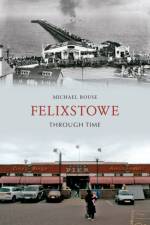
Felixstowe owes its existence to the 19th-century fashion for seaside holidays when the gentry and businessmen chose to build their summer residences in the parishes of Walton and Felixstowe. In earlier centuries Walton had been the more significant settlement, with a manor and a castle. Even the later fort guarding the Suffolk side of Harwich harbour was often considered to be part of Essex. When the Dutch landed on the Common in 1667 and were defeated by Land guard Fort's garrison, all England heard of the place and King Charles II himself paid them a visit. Join Mike Rouse on this fascinating visual journey around this popular and colourful town, as he shows us what affect history has had on the area through time. This new collection of photographs, carefully selected by the author, is sure to surprise and delight residents and visitors alike.
The four years between 1914 and 1918 saw an incredible growth in air power. Beginning with the flimsy early aircraft, seemingly held together just by string and fabric, the author paints a picture of a bygone era when nobody knew quite what could be achieved, or how aircraft could be used. From the early years of the First World War, when men took to the air without guns or parachutes, to the final stage of the conflict when huge, streamlined aeroplane fleets dominated the skies, this is a story of courage and dedication, of sudden death and public adulation for men whose life expectancy was measured in days rather than months. This book is an account of how the development of aerial warfare took place. Drawing on much original material such as diaries and combat reports, it charts the growth of air power during the war years. Original photographs and artwork add to the atmosphere of the time. The air aces, the castor oil and the sudden rattle of machine guns, the Dawn Patrol, Zeppelin raids, dogfights and acts of supreme valour are all here. In wonderful detail, this is the story of how brave young airmen took their lives in their hands and pushed the boundaries of courage and knowledge to the limits.
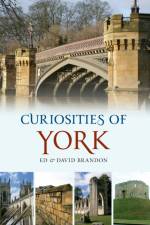
York, founded by the Romans as Eboracum, the capital of Britannia Inferior, is considered one of Europe's best-loved cities. It boasts a wealth of ancient buildings and historic associations. But although the city has a number of attractions of terrific significance, Curiosities of York concentrates on the street furniture and oddities that are easily overlooked when perambulating around its streets. A discursive and idiosyncratic A to Z, the book will introduce residents - and maybe a few locals - to such local secrets as York's labyrinth of snickelways, its twenty medieval churches, and its innumerable public houses. Father-and-son team David and Ed Brandon tour the bar walls, looking for ghosts and unusual street names, and on the way they run into Minerva, Frankie Howerd and the Devil himself. They tell the stories of York's best-known malefactors Dick Turpin and Guy Fawkes, and explore the legacy of rival railway men George Leeman and George Hudson. York is almost 2,000 years old, so no single history can hope to be exhaustive, but Curiosities of York is nevertheless brimming with unexpected treasures. Illustrated with a selection of artful black-and-white photographs, it offers a new perspective on a beloved city.
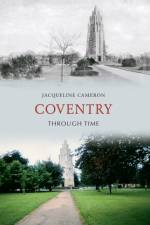
Coventry remembers the night of the Blitz, when many people lost their lives, lovely old buildings were destroyed, and the magnificent St Michael's, Coventry's cathedral, was burnt to the ground. Jacqueline Cameron shows, through old and new photographs, just how this iconic city has risen from these ashes. This full colour book is a fascinating journey around the area, illustrating the changes that have taken place. Consider the beautiful new cathedral, and the revitalised city and you will realize that Coventry might have suffered badly in the Second World War but its spirit had not been killed, the heart of the city beats as strong as ever. It is hoped that, with Coventry Through Time, the readers can see for themselves just how the planners have given the people of Coventry a city to be proud of.
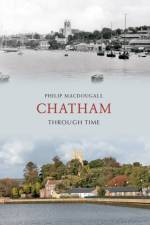
Chatham is a town that has been undergoing change for the last five hundred years. It all began with the arrival of the naval dockyard in the sixteenth century. From this, a town was created which began to grow with the rapidity of a Chatham built warship. The site of the former dockyard is still under development and in the town major changes are not only underway but others are in the pipeline and will include the Brook, the waterfront and the area of the railway station. What better time can there be for a book on Chatham that not only looks at the past but also the present? While many of the photographs show the town as it is today - many of those scenes will also be changing in the near future. This book attempts to capture this evolving town, and will be of interest to anyone who knows and loves this area.
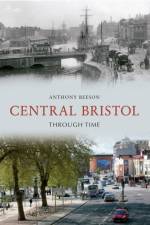
Brycgstowe, 'the place at the bridge', as the Saxon founders of Bristol once called it, is a city of destiny. Once the second port in the country and one of the wealthiest cities in Britain, it has enjoyed centuries of prosperity based on manufacturing, seafaring and trade. Geographically split between the counties of Gloucestershire and Somerset and approached by sea through the dramatic Avon Gorge, the city received a Royal Charter in 1155.It was an industrial city described in the Georgian period as 'by mud cemented and by smoke obscured'. The Bristol of the past is illustrated here in drawings, paintings and photographs, many previously unpublished, from the superb collection held in the Bristol Central Reference Library's Local Collection. They are contrasted with modern colour images documenting the myriad changes the last century has seen in this pleasant city.
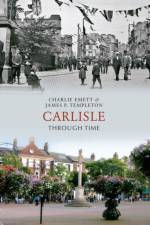
In ad 78/80 the Romans under Agricola established a base near the Solway Firth and called it Luguvalium. From that distant beginning it grew to become England's largest city, stretching to Scotland in the north, the Solway Firth in the west, the north Pennines in the east, and almost to the Lake District in the south. At Cold Fell (2014 feet) it has the largest point of any English city. Carlisle played an important part in being at the centre of the border troubles, and it was the last place in England to know peace. This lavishly illustrated book shows the extraordinary changes that have taken place in this fair city down the centuries and provides a striking account of the changes that have altered Carlisle's appearance. The book acknowledges the transformation that has taken place in Carlisle and celebrates the character and energy of the local people as they move confidently into the twenty-first century.
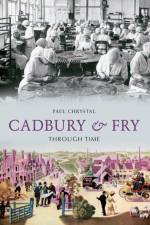
These two British companies did much to pioneer the chocolate industry, not just in the UK but throughout the world. Up until 1918 the two companies were quite separate competitors but Cadbury's growth earlier in the decade along with Rowntree's resurgence led to Cadbury's takeover of Fry. The early days and progress of the companies, both before and after merging, are charted here with many examples of early commercial documents, adverts and posters. The boom years between the wars and in the post-war period are covered, with iconic brands such as Fry's Dairy Cream, Cadbury's Dairy Milk, Crunchie and Creme Eggs described and depicted. This is a fascinating and unique book which will appeal to employees of Fry and Cadbury past and present, residents of Bournville and visitors to Cadbury World; or anyone interested in the history of chocolate, confectionery and the Quaker movement.
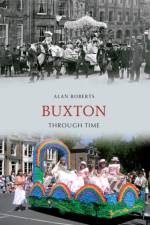
Buxton's growth as an inland spa town began in the 1780s when The Crescent was built for the Duke of Devonshire. This was followed by the natural baths, thermal baths, pump room and several large hydropathic establishments. Buxton became a fashionable spa resort, its popularity later boosted by the arrival of the railways. Large villas and hotels were built, as well as a range of entertainment facilities including the Pavilion Gardens and Opera House, to cater for the town's many visitors. By contrast, Buxton is also considered the gateway to the Peak district. The town's position, high up in the hills and at the head of the Wye valley, gives easy access to miles of stunning scenery. Using a fascinating collection of old and new photographs Buxton Through Time sets out to illustrate these many remarkable features and how they have adapted to the passage of time.
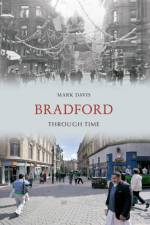
Prior to the nineteenth century, Bradford was very much a backwater. After that it was to become the metropolis of the worsted industry and enjoyed a prosperity scarcely equalled by any other portion of the kingdom. It was said at the time that the real energy of Yorkshire centred in Bradford. The times of growth were astounding and in 1897, when the town received its city status, Bradford truly was magnificent.Wherever you go in Bradford you cannot escape its rich industrial past. Many of the old mills remain, either converted to housing or awaiting demolition. Bradford Through Time goes to show us in many ways what we have lost, many of the older images display a way of life that appears rich and energetic with a real pride. You may be forgiven for thinking in some cases that we have gone backwards and not forwards in time.
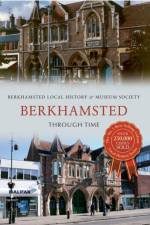
Berkhamsted is a market town in the Dacorum Hundred. The Norman castle, which still belongs to the Duchy of Cornwall today, and Berkhamsted Town Hall, opened in 1860, together epitomize the character of the town. The castle, although a ruin for several hundreds of years, attracts thousands of visitors annually as a place of recreation and historical interest, and reminds us of the town's importance in years gone by. The Town Hall, with its thriving market, dating back to Saxon times, and its meeting rooms, is the hub of Berkhamsted's flourishing community. It was saved from demolition by a band of independent citizens in the 1970s. The 'homestead among the hills' also has a hinterland of fine countryside. All of this and much more is brought to life in this fascinating tour of Berkhamsted Through Time.
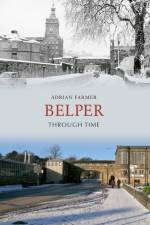
From the late eighteenth century, the Industrial Age transformed Belper from a small village of nail-makers to a busy and successful town. Thanks to the Strutt family, the town was the first in the world to have water-powered cotton mills, and the hundreds of people that flocked to work in those mills were provided with homes, chapels, schools and much more. Since Belper was inscribed on to the UNESCO World Heritage List as part of the Derwent Valley Mills Site in 2001, the drive to save, enhance and restore the historic town has never been greater. By comparing views from years past, this book helps to define what has survived, what has been lost, and what we can do to ensure Belper remains the unique historic community it is today.
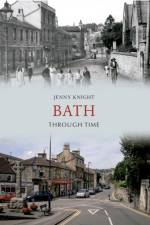
The ancient city of Bath owes much to the location of hot springs in the valley of the River Avon. It was established as a spa town by the Romans and the springs have remained in use since then, renowned for their health-giving properties. It was, however, during the Georgian era that Bath flourished. Jane Austen lived here for a short period and used the city as a setting for Northanger Abbey and Persuasion. In 1987 Bath was designated a World Heritage Site, recognising its unique historical significance. Unsurprisingly, it has become one of the most popular tourist destinations in Britain. Museums, theatres and, of course, the Baths themselves, attract no fewer than 4 million visitors each year. In a fascinating selection of old and new photographs, Bath Through Time charts how the city has changed over the years.
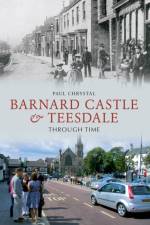
This lavishly illustrated book covers Barnard Castle, Middleton-in-Teesdale and a selection of Teesdale villages including Piercebridge, Gainford, Staindrop, Greta Bridge, Cotherstone, Romaldkirk and Mickleton. In Barnard Castle the story begins with the castle building and the crucial bridging of the Tees with County Bridge. In Middleton we focus on the agricultural and lead mining industries and in the villages we visit picturesque greens, schools, inns and churches.Many books have been published showing the area in old photographs, but none show these in a 'through time' context as this book does. Old images are juxtaposed here with modern equivalents in full colour to demonstrate just how far, or not, things have changed in this historical and beautiful region of England. It will provide residents and visitors alike with a fascinating and nostalgic read.
The beautiful hills of Northumberland hide the secrets of our almost forgotten recent history. The sites of many air crashes are difficult lt to locate, even though these aircraft and sometimes their crew met their fate relatively recently. Chris Davies has located and visited over 140 crash sites. In this thoroughly researched book, he discusses the location, history and stories surrounding thirty of these, from the German aircraft that crashed in the Cheviots during the Second World War to NATO exercises that went horribly wrong in the 1980s. Chris's work in discovering where these men lost their lives has provided closure for many families. Simon Colverson, the nephew of P/O M. W. Rivers, commented in a note of thanks, 'The sight of nearly forty people grouped together on a remote and windy hillside nearly seventy years after the crash to commemorate my uncle was deeply moving, and I will cherish the memory for the rest of my life.' Chris provides a major piece in the jigsaw of aviation history in Northumberland, recording an important part of Northumberland's local history that might otherwise have been lost in the mists of time.
Abonner på vårt nyhetsbrev og få rabatter og inspirasjon til din neste leseopplevelse.
Ved å abonnere godtar du vår personvernerklæring.