




Gjør som tusenvis av andre bokelskere
Abonner på vårt nyhetsbrev og få rabatter og inspirasjon til din neste leseopplevelse.
Ved å abonnere godtar du vår personvernerklæring.Du kan når som helst melde deg av våre nyhetsbrev.

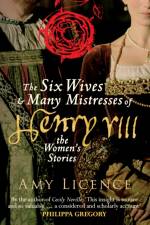
When the tall, athletic Edward of York seized the English throne in 1461, he could have chosen any bride he wanted. With his dazzling good looks and royal lineage, the nineteen-year-old quickly got a reputation for womanising, and few were able to resist his charm and promises. For three years he had a succession of mistresses, while foreign princesses were lined up to be considered for his queen. Then he fell in love. The woman who captured the king was Elizabeth Woodville, a widow five years his elder. While her contemporaries and later historians have been divided over her character, none have denied her beauty. She had previously been married to a Lancastrian knight who had lost his life fighting against the Yorkists. When she petitioned the king to help restore her son's inheritance, reputedly waiting for him under an oak tree, the young Edward was immediately spellbound. But this romance was not to be just another fling. Conscious of her honour and her future, Elizabeth repelled his advances. Edward's answer was to make her his wife. It was to prove an unpopular decision. Since then, Edward's queen has attracted extreme criticism, her story and connections reported by hostile chroniclers, her actions interpreted in the bleakest of lights. In this enlightening book, Amy Licence reassesses the tumultuous lives of the real White Queen and the king she captivated.
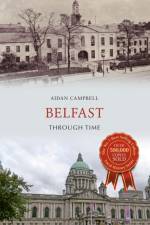
Belfast (Irish: Beal Feirste 'mouth of the sandbank ford') is the capital city of Northern Ireland. The site of Belfast has been described as 'not built on a perfect site' given that the original settlement was located on low-lying land on the Co. Antrim side of the River Lagan. It was during the Victorian period that wealthy business owners moved out of the old town and built grand villas on the hills surrounding the city. There are views of big houses, grand public buildings and churches, schools, public transport including trams, trolleybuses and steam trains, factories and suburbia. Many of these scenes are remarkably unchanged and much of the character of the bustling industrial city remains, while many locations have been swept away and are unrecognisable following recent redevelopments.
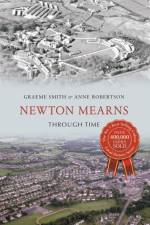
With one foot in the countryside and the other connected to the metropolis, Newton Mearns is the southernmost suburb of Glasgow. The parish of Mearns bounds southwards over undulating landscape and moors to Ayrshire, with the slopes of Clarkston and Busby within its northern edge, marked by the River Earn. From Rouken Glen to Fenwick Moor, from castles and mansions to farmlands, fermtouns, and cotton mills, its 800-year history records a fertile area and an ever-increasing population. In the twelfth century, King David I granted lands to Walter Fitzalan, and subsequent landowners built Mearns Castle and Pollock Castle. In the 1700s, they were joined by elegant mansions and estates from Greenbank to Balgray, owned by wealthy Glasgow merchants. Railway travel in the nineteenth century brought more villas, and cars and buses from the 1920s enabled new housing and commercial developments. Today, schools and golf courses abound, the countryside is attractive and the climate is fresh.
With rolling green hills and extensive woodlands, it's easy to see why the Chiltern Hills are one of the most beautiful and well visited of all England's natural wonders. Crossing five counties and covering 833 square kilometres, the Hills are home to a huge variety of habitats including chalk grasslands, scrub, river valleys, commons and farmland. This book will take the reader on a journey of the Chilterns, from its earliest settlers to today's enthusiastic trekkers, exploring how the Hills have been shaped by their occupants and, in turn, how the Hills have shaped them. Exquisitely illustrated and expertly researched, A Journey Through The Chiltern Hills is a must-read for anyone interested in this beautiful and breathtaking area.
Who invented the flying machine? Was the Titanic really the first 'unsinkable' ship? How would one use a phonoscope?Using old Victorian documents, Caroline Rochford takes the reader on a guided tour of hundreds of fascinating nineteenth-century inventions from across the globe, some strange and some remarkably familiar. Think solar power is a modern concept? Think again! Today everyone has a camera, but imagine the excitement of taking a snap of a giraffe hotel! This is a surprising journey, taking the reader on a trip from the clouds to the bottom of the ocean, with stops everywhere in between. Discover the use of whispering machines, crime-fighting streetlamps and over 200 other remarkable Victorian inventions.
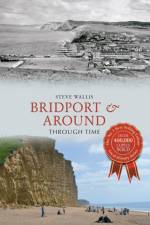
Bridport is a thriving market town in western Dorset. It lies a short distance inland of a spectacular section of the Jurassic Coast World Heritage Site, and is surrounded by some equally attractive hilly countryside. Although the town originated in Saxon times, it expanded a great deal in the Middle Ages, partly due to the success of the local rope industry. Many of its products were used in the local fishing and shipbuilding industries, which were concentrated around Bridport Harbour. At one time, Bridport Harbour was the second largest producer of ships in the country. In an early example of marketing, when the railway reached here in the 1880s, its name was changed to West Bay in the hope that this would sound more attractive to tourists. Comprising a magnificent range of images old and new, this book explores the historical development of this fascinating town and its attractive surrounding area.
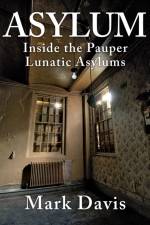
A stranger has comeTo share my room in the house not right in the head, A girl mad as birds - Dylan Thomas, 'Love in the Asylum'With the advent of 'care in the community' for the mentally afflicted, the self-contained villages for the apparently insane have now been consigned to the history books. These once bustling Victorian institutions were commonly known in the nineteenth and early twentieth centuries as the 'county asylum' or the 'pauper lunatic asylum', and were an accepted and essential part of society for nearly two centuries. It is difficult to believe that, in 1914, there were 102 such asylums, accommodating over 100,000 patients, the majority of whom lived their entire lives under care and treatment. In 2014, with the exception of those that have already been demolished, these buildings now lie empty and derelict, or have been converted for contemporary living. Through this photographic book, we journey into the inner sanctum of a world of lost dreams, where hope was more often than not unwillingly traded for an uncomfortable acceptance.
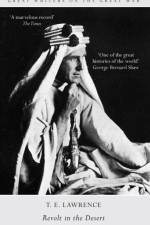
Revolt in the Desert is the extraordinary story of the war in Arabia between 1916 and 1918, written by one of the war's most extraordinary characters, Lawrence of Arabia. It tells of his adventures and life amongst the Arab tribesmen, the daring raids on the Turks, the demolition of railway lines, the attacking of desert outposts, and of the opening of 'the road to Damascus' and eventual overthrow of the Turks in the inhospitable landscape of the Middle East. Few had made headway with the Bedouin and Arabs before Lawrence, but his strength of character and his personality suited this war perfectly and he was soon considered to be hugely important in the fight in the Middle East both by his superiors and by the Arabs who rallied around him. This is his story, from his viewpoint. T.E. Lawrence truly was a great writer on the Great War.
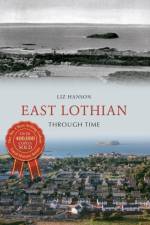
East Lothian, previously known as Haddingtonshire, has both benefitted and suffered from its strategic location between Scotland's capital city and England's northernmost county. Prior to 1707, the region bore the brunt of battles between the two countries, not only on land but along 32 miles of coastline. The rich, fertile soils, on the other hand, have produced wealth through agriculture and the patchwork of large, neat fields are synonymous with the landscape of East Lothian today. The proximity to Edinburgh makes it a prime location from which to commute. Attractive pantiled properties abound throughout the villages and countryside, all within short distances of the clean beaches or links golf courses, while tranquillity can also be found in the woodlands or gentle moorland slopes of the Lammermuir Hills. The reminders of troubled times can be viewed today by a stroll around a castle, but twenty-first-century East Lothian is thriving.
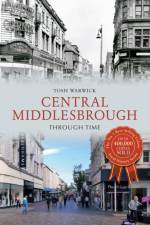
It is hard to imagine the Middlesbrough area before its industrial might was established. In 1801, the area was a small hamlet with a population of just twenty-five. Middlesbrough's growth began with the development of the coal export trade in the area, but expanded rapidly with the discovery of extensive iron ore deposits in the Cleveland Hills. The burgeoning manufacturing town subsequently gained the nickname 'Ironopolis' and was hailed as 'the youngest child of England's enterprise'. It is thought that Middlesbrough was the first major British town and industrial target to be bombed during the Second World War. The steel industry and railways were obvious targets for the Luftwaffe. Middlesbrough suffered heavy damage and following the war substantial redevelopment was necessary. The substantial changes the town has since seen are explored in this fascinating volume, celebrating the rise of Middlesbrough from the ashes of its past.
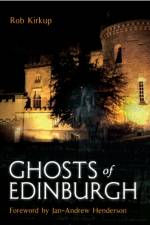
From the murderous cannibalism of Sawney Bean to the bodysnatching exploits of Burke and Hare, Edinburgh has seen its fair share of ghoulish happenings over the years. But does it truly deserve its reputation as one of Britain's most haunted cities? Along with his fearless team of 'spook seekers', Rob Kirkup donned his ghost-hunting gear and took to the streets of Scotland's capital to find out whether today's visitors have anything to fear. Might one meet a foul-mouthed poltergeist beneath the South Bridge, or have a close encounter at Edinburgh Dungeon? Should one avoid Greyfriars Kirk at night, or keep their eyes peeled at Bedlam Theatre? From the disembodied voices of Cammo Estate to suspicious sounds at Mary King's Close, the team really did see it all, and now's your chance to join them on their quest. Using state-of-the-art paranormal detection equipment, and drawing on his extensive field experience, the author shows us why it's worth keeping your wits about you in one of the world's most terrifying cities.
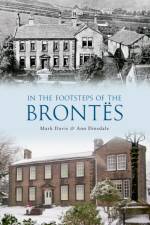
The lives and works of the celebrated Bronte family are so ingrained in our cultural psyche that we think we know them inside out - but walking in the footsteps of the literary greats and their characters offers a new perspective on their work. Our journey begins in Cambridge with the arrival of the young Patrick Bronte and follows his family's fortunes as they grow up in their home village of Haworth. We see the wild moorland locations that would inspire the haunting Wuthering Heights and the dour schools they attended that would later feature in Jane Eyre. We visit the homes of family and friends that provided the settings for many of their novels and travel with them across the industrial West Riding to York and the coast. This spectacular collection of photographs old and new explores the people and places that the brilliant Brontes knew and loved.
With few TVs, children in the 1950s made their own entertainment: they played conkers, built dens and go-karts, climbed trees and re-enacted fights from the latest cinema blockbuster. Food was, for many years, still rationed and bought from the local corner shop. There was no pre-packed food, frozen food or many of the other luxuries that we take for granted today. Families would gather around the radio to hear the latest dramatizations such as the incredibly popular show Dan Dare, which was sponsored by Horlicks and was first broadcast in 1951. A trip to the cinema included a Pathe News reel, cartoons and a double bill featuring the latest movies. Much has changed for children over the years and this book shows what life was once like for the children of the 1950s including home life, school days, music and fashions.
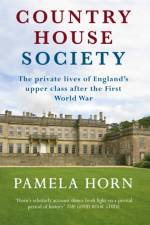
The First World War particularly affected the landed classes with their long military tradition; country houses were turned into military hospitals and convalescent homes, while many of the menfolk were killed or badly injured in the hostilities. When the war ended efforts were made to return to the pre-war world. Pleasure-seeking in night-clubs, sporting events and country-house weekends became the order of the day. Many of the former rituals, such as presentation at Court for debutantes, were revived. Yet, overshadowing all were the economic pressures of the decade as increased taxation, death duties and declining farm rentals reduced landed incomes. Some owners sold their mansions or land to newly enriched businessmen. Others turned to city directorships to make ends meet or, in the case of the women, ran dress shops and other small businesses. The 1920s proved a decade of flux for High Society, with the lighthearted antics of the 'Bright Young People' contrasting with the financial anxieties and problems faced by their parents' generation. Pamela Horn draws on the letters and diaries of iconic figures of the period, such as Nancy Mitford and Barbara Cartland, to give an insight into this new post-war era.
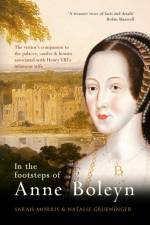
Follow in the footsteps of Anne Boleyn from Hever Castle, to Richmond Palace and ultimately to the Tower of London. On the morning of 19 May 1536, a French blade stilled the heart of an English queen. Her name was Anne Boleyn and her story has made an indelible mark on history. This book will take you through stately homes, castles, chapels and artefacts with a connection to Anne. Explore Hever Castle, Anne's childhood home where two breathtaking Books of Hours both signed and inscribed by Anne Boleyn herself are housed; visit Thornbury Castle where Henry VIII and Anne stayed during their 1535 royal progress and see the octagonal bedchamber where they slept; stand in the very room in Windsor Castle where Anne was made Marquis of Pembroke. Each location is covered by an accessible and informative narrative, which unearths the untold stories and documents the artefacts. Accompanied by an extensive range of images, including photographs, floor plans and sketches, this book brings the sixteenth century vividly to life - and takes you on your own personal and compelling journey in the footsteps of Anne Boleyn.
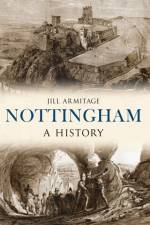
When an Anglo-Saxon chieftain named Snot settled in the area and built a wall around the town, he named it Snottingham, meaning homestead for his people. They utilized the caves and passages under the town as homes and workplaces, giving us the oldest subterranean industries in existence and an alternative name Tig guocobauc, meaning the dwelling of caves. When the Normans arrived they subjugated the people and built a fortified castle on the hill. Nottingham Castle subsequently became one of the greatest fortresses of medieval England. Much frequented by early kings, it features in the tales of Robin Hood, that legendary outlaw synonymous with Nottingham and the arch enemy of the sheriff. Nottingham is world renowned for its lace making and Raleigh Bicycle Co., Boots the Chemist and Player's Cigarettes have their roots in Nottingham. It was also home of the Rebel Writers Byron, Lawrence and Sillitoe. With its many and diverse elements, Nottingham is a vibrant new city with a varied and exciting past.
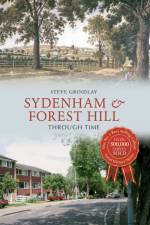
For centuries, Sydenham was a small hamlet on the edge of a large tract of common land, known as Sydenham Common, in the parish of St Mary's, Lewisham. London was more than an hour's travel away. Over little more than half a century, three events radically altered Sydenham, turning it from a rural hamlet into a populous, even fashionable, suburb of London: the enclosure of Sydenham Common, the coming of the railway in 1839 and the construction of the Crystal Palace on Sydenham Hill. Today, Sydenham and Forest Hill are attractive and popular places to live, with good access to green spaces and local amenities. Join local historian Steve Grindlay on a photographic tour of Sydenham and Forest Hill past and present, showcasing points of interest such as the Horniman Museum, the Kirkdale Building and Jews Walk. Sydenham and Forest Hill Through Time is an essential volume for anyone who knows and loves these leafy suburbs.
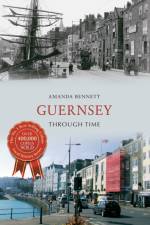
Guernsey is the most western of the Channel Islands, with a proud maritime history spanning many centuries. Only 25 square miles, the island nevertheless has a great variety of landscapes, from the rugged cliffs in the south to the low-lying dunes in the north. The ten parishes, each with their own unique community spirit, are home to over 60,000 people. This grows greatly during the summer as visitors come to experience the island's quiet country lanes and the bustling streets of St Peter Port. Historically, Guernsey people have made their mark not just on the sea, but in thriving stone industries, agriculture and horticulture, and in recent years, international banking. Guernsey Through Time explores this fascinating little island through the historical photograph collection of the Priaulx Library, many of which have never been published. Locals and visitors alike will discover a unique insight into how Guernsey has changed over time.
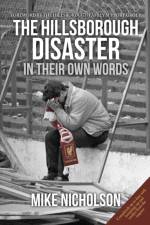
'Hillsborough will be remembered as one of the biggest injustices of the twentieth century, because those who were there to protect the public turned against them in their hour of need. The power of print media was at its absolute peak at that time, before the internet and mobile phones, so they had huge power but no accountability as we found out with Hillsborough. It was a one-way street. The media basically set opinion.' Andy Burnham, Shadow Home SecretaryHillsborough used to be known simply as a suburb of Sheffield and the home of Sheffield Wednesday Football Club. After Saturday 15 April 1989, the meaning of the word changed forever for an entire generation and the date remembered as the worst sporting disaster in British history. Many thousands of men, women and children set off to support Liverpool in the semi-final of the FA Cup with hope in their hearts but, tragically, 96 never came home. A human crush on the Leppings Lane terraces ended the lives of those 96, injured hundreds of others and traumatised thousands more. Documenting eyewitness accounts from before, during and after the disaster, with statements from the bereaved families and fans of other clubs, and a foreword by Margaret Aspinall, Chairman of the Hillsborough Family Support Group, The Hillsborough Disaster: In Their Own Words is the story of those whose lives changed forever on that bright, sunny day in Sheffield. This book is their truth.
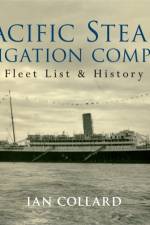
Founded in 1838 in Liverpool, the Pacific Steam Navigation Company was the first to operate steamships in the Pacific and primarily traded from the UK to the Pacific coasts of South America. Its most famous ships included the Reina del Pacifico and the Reina del Mar. With a line of notable firsts to its name, the Pacific Steam Navigation Company name had disappeared by 1984, part of the rationalization of Furness Withy Group. In 1990, Furness Withy itself was sold to Hamburg Sud, another line which had operated on the South Atlantic and Pacific routes. Many in Liverpool and in South and Central America, from Panama to Tierra del Fuego have fond memories of the Pacific Steam Navigation Company and this history and fleet list will bring back memories of those vessels of the line, both deep sea and coastal, which once operated on the South American run.
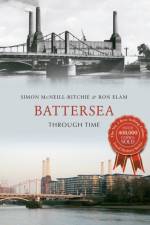
Battersea has grown to be a fashionable and vibrant district of south-west London. Referred to as Patricesy in the Domesday Book, Battersea was historically best known for market gardening, providing fruit, vegetables and flowers for the City of London. However, the area moved from rural to urban with the coming of the railways, industry and large-scale housing from the 1840s, provoking a population growth from 4,000 to 120,000 by the beginning of the twentieth century. Glimpses of the past can still be seen around modern Battersea, but much has changed over the years. Using a selection of old and new photographs, local historians Simon McNeill-Ritchie and Ron Elam trace Battersea's unique journey over the past century. Featuring landmarks such as Battersea Power Station, Battersea Dogs & Cats Home and Battersea Park, this book is essential reading for anyone who knows and loves this famous South London district.
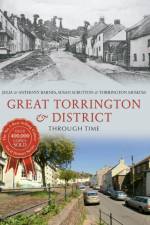
Great Torrington, or Cheping Torrington as it was once known (Chipping being the old name for market) was a considerable town, even in medieval times. It grew steadily from its agricultural roots through an industrial phase and was at the centre of road, canal and railway links. In Victorian times it had mills for corn, sawmills, grist mills and tucking mills, lime kilns and a glove-making factory, which employed 1,000 people, mostly in their own homes. Then there was a fell mongers and skivers works for curing the chamois leather to supply the glove factory. In the twentieth century a giant milk and butter processing plant and glass works were built here. One of Devon's largest land owners, the Rolles, made their home here in the grandest house in North Devon, Stevenstone, and they still live in the area at Heanton Satchville. Further back in history, the town was the scene of a bloody battle during the Civil War, and must be the only town in England to have had its church accidentally blown up by gunpowder kegs when over 200 prisoners locked up inside killed. Many artefacts from Torrington's colourful past can still be found here: the castle walls, built first in the thirteenth century. The remains of the canal, built without act of Parliament by John Rolle, in 1823, has been preserved by the Torrington Commoners and makes an attractive walk alongside the River Torridge. Then there was an early narrow gauge railway built to bring china clay from the pits at Peters Marland to be distributed to the china companies in the Midlands.
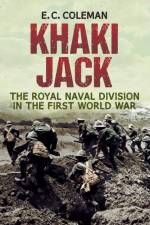
Many thousands of Royal Naval seamen and Royal Marines fought in the trenches of the Great War alongside soldiers from across the Empire. Their graves may be found around Antwerp, on the Gallipoli peninsula, and all along the Western Front. The seamen and marines, supported by Army battalions, fought at Anzac Cove, on the Somme, and at Passchendale. They suffered giant siege mortars whilst delaying the enemy in Belgium, flies and the stench of widespread carnage on Turkish shores, and gas attacks whilst sheltering in flooded shell-holes on the Western Front. At the armistice, the Royal Naval Division had suffered 46,794 casualties, of whom 10,797 lost their lives. At the same time, the Division earned many decorations for gallantry, including eight Victoria Crosses. The Germans regarded the Royal Naval Division as 'one of the four most famous fighting Divisions of the British Army. From the rout on the Western Front in 1914 to Gallipoli and the Zeebrugge raid, E.C. Coleman tells the history of the RND.
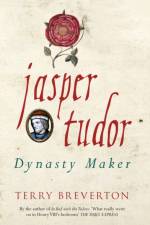
The Wars of the Roses were a bitter and bloody dispute between the rival Plantagenet Houses of York and Lancaster. Only one man, Jasper Tudor, the Lancastrian half-brother to Henry VI, fought from the first battle at St Albans in 1455 to the last at Stoke Field in 1487 and lived to forge a new dynasty - the Tudors. Fighting the Yorkists, rallying the Lancastrians and spending years in exile with his nephew, the future first Tudor monarch, Henry VII, Jasper was the mainspring for continued Lancastrian defiance. He was twenty-four years old in his first battle and fifty-three when he won at Bosworth Field in 1485. Now he could style himself 'the high and mighty prince, Jasper, brother and uncle of kings, duke of Bedford and earl of Pembroke'. Without the heroic Jasper Tudor there could have been no Tudor dynasty. This is the first biography of the real 'kingmaker' of British history.
For a King renowned for his love life, Henry VIII has traditionally been depicted as something of a prude, but the story may have been different for the women who shared his bed. How did they take the leap from courtier to lover - perhaps even to wife? What was Henry really like as a lover?Henry's women were uniquely placed to experience the tension between his chivalric ideals and the lusts of the handsome, tall, athletic king; his first marriage, to Catherine of Aragon, was on one level a fairytale romance, but his affairs with Anne Stafford, Elizabeth Carew and Jane Popincourt undermined it early on. Later, his more established mistresses, Bessie Blount and Mary Boleyn, risked their good names by bearing him illegitimate children. Typical of his time, Henry did not see that casual liaisons might threaten his marriage, until he met the one woman who held him at arm's length. The arrival of Anne Boleyn changed everything. Her seductive eyes helped rewrite history. After their passionate marriage turned sour, the king rapidly remarried to Jane Seymour. Henry was a man of great appetites, ready to move heaven and earth for a woman he desired; Licence readdresses the experiences of his wives and mistresses in this frank, modern take on the affairs of his heart. What was it really like to be Mrs Henry VIII?
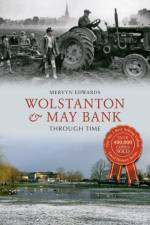
The impact of people and places in Wolstanton and May Bank is recorded in this pictorial record that recognises the contribution of village notables, dear old friends and long-gone institutions. A wealth of photographs depicting the joys of community life mingle with contemporary pictures, showing, often with dramatic impact, the shocking demolition of facilities we perhaps took for granted, such as The Plough, the Oxford Arms and The Marsh Head. Elsewhere, images of former shops such as Holdridge's, Swettenham's and the Spinning Wheel show how High Street shopping patterns have changed. Author Mervyn Edwards has only ever lived in Wolstanton and May Bank, and through this unique selection of old and new images, he presents a tribute to the place he happily calls home.
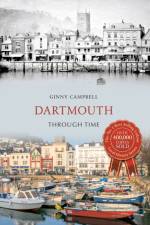
Situated within the South Devon Area of Outstanding Natural Beauty, Dartmouth is a popular tourist destination on the River Dart. As Ginny Campbell's beautifully illustrated pages show, it has an abundance of history. Its port was the sailing point for the Crusades of 1147 and 1190, and the Pilgrim Fathers visited in 1620 to repair the Speedwell. The area boasts many picturesque medieval and Elizabethan buildings, including the Butterwalk, where Charles II once dined, and Dartmouth Castle, which has guarded the mouth of the river for over 600 years. The admiralty began officer training on the river in 1863 and, in June 1944, 485 ships departed from the river carrying American servicemen to Utah Beach for D-Day.
In November 1914, Hearts led the Scottish First Division. In the middle of a debate about the morality of continuing professional football during the First World War and a campaign to shame footballers into joining up, eleven Hearts players enlisted in Sir George McCrae's battalion on 25 November. Hearts supporters and players and supporters from myriad other clubs flocked to join as well. Officially known as 16th Royal Scots, this unit was the first to be described as a footballers' battalion. On 1 July 1916, 15th and 16th Royal Scots attacked near the village of Contalmaison in the Somme Valley. Three Hearts players would die that day; seven would be killed in total during the war, and many more would be wounded. In this book, Tom Purdie tells the story of the Hearts players and supporters who served their country during the Great War and those who were left behind in Edinburgh who, with unstinting effort and sacrifice, helped to bring the club through that extremely trying time in its proud history.
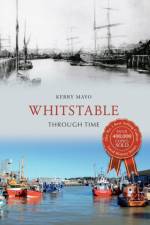
'Whitstable is a stirring little town, with strong business proclivities, and a history stretching far back into the remote past.' So wrote a Kentish Gazette correspondent in 1873, although he could have been writing of Whitstable today. Roman soldiers are thought to have dined on its oysters, and the area was certainly settled at the time of the Domesday Book. Over the years, the lives of Whitstable's people have been inextricably linked with the sea. Sea salt production, diving, smuggling, shipbuilding and fishing have all sustained the lives of the townspeople, along with copperas mining and tourism. Today, Whitstable is a vibrant and creative town with boutiques, art galleries, restaurants, cafes, and pubs, but it retains its working harbour and its people have a strong sense of pride in this 'stirring little town', and the bright, prosperous future before it.
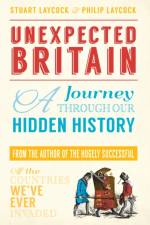
Many Britons like to think they have a basic understanding of Britain's amazing history. The Roman invasion, Alfred and the Danes, 1066, Magna Carta, Bannockburn, Agincourt, the Wars of the Roses, Henry VIII and his wives, the Reformation, etc., etc. The trouble is that concentrating on just a few over-familiar landmarks like these can give a distorted picture of the land we live in. What would our history look like if, instead of looking at all the bits everybody knows, we started telling it through some of the bits everybody doesn't knows? We set off to find out. The result is Unexpected Britain, tracing the story of Britain from a time before Rome to a time within the lives of people still living, but going beyond the well known to explore a world of different angles and fascinating, little-known facts that bring fresh life to the story of what Britain has been and what Britain is.
Abonner på vårt nyhetsbrev og få rabatter og inspirasjon til din neste leseopplevelse.
Ved å abonnere godtar du vår personvernerklæring.