







Gjør som tusenvis av andre bokelskere
Abonner på vårt nyhetsbrev og få rabatter og inspirasjon til din neste leseopplevelse.
Ved å abonnere godtar du vår personvernerklæring.Du kan når som helst melde deg av våre nyhetsbrev.

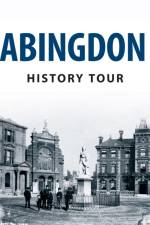
Abingdon History Tour is a unique insight into the illustrious history of this Oxfordshire town. This is an exciting guided walk around Abingdon, its well-known streets and striking buildings, and explains what they meant to the people of this town throughout the nineteenth and into the twentieth century. Readers are invited to follow a timeline of events and watch the changing face of Abingdon as Pamela Horn guides us through the local streets.
Situated on the north bank of the River Tyne, at the lowest bridging point, Newcastle is generally regarded as the capital of the north-eastern region of the United Kingdom. Initially a Roman settlement, Pons Aellius, the city grew to become an important site during the expansion of the wool trade in the fourteenth century and later played an integral role in the nation's booming coal industry. Today the city hosts the Great North Run and boasts numerous icons, among which are its famous Newcastle Brown Ale and successful Premier League team, Newcastle United FC. Evidence of Newcastle's past can be seen in its streets. The city's Roman origins are represented by remaining sections of Hadrian's Wall, and its industrial heritage is evident in its quayside and warehouses. In addition to these more visually obvious fragments of the past exist little-known passages, buildings, tunnels and other secret places that reveal more of Newcastle than meets the eye. Join author Ken Hutchinson in exploring the more clandestine aspects of the city's long and varied history.
He is one of the most reviled English kings in history. He drove his kingdom to the brink of civil war a dozen times in less than twenty years. He allowed his male lovers to rule the kingdom. He led a great army to the most ignominious military defeat in English history. His wife took a lover and invaded his kingdom, and he ended his reign wandering around Wales with a handful of followers, pursued by an army. He was the first king of England forced to abdicate his throne. Popular legend has it that he died screaming impaled on a red-hot poker, but in fact the time and place of his death are shrouded in mystery. His life reads like an Elizabethan tragedy, full of passionate doomed love, bloody revenge, jealousy, hatred, vindictiveness and obsession. He was Edward II, and this book tells his story. Using almost exclusively fourteenth-century sources and Edward's own letters and speeches wherever possible, Kathryn Warner strips away the myths which have been created about him over the centuries, and provides a far more accurate and vivid picture of him than has previously been seen.
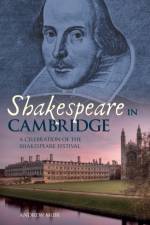
Opening with a look at a Cambridge play satirising Shakespeare in his own time, we follow Cambridge's part in Shakespeare appreciation through the centuries. Against this background the book celebrates the annual open-air Cambridge Shakespeare Festival. Playing yearly to around 25,000 people of all ages and from all backgrounds, the festival has been running since 1988. The book illuminates the manner in which their productions increase our pleasure in, and understanding of, Shakespeare's dramatic art and how his plays were designed, produced and received in their own time. This book provides a clear guide to the complex topics surrounding the staging of Shakespeare's plays, as well as exploring the Bard's enduring influence in the city, and on Cambridge University and its inhabitants. It is a boon for Shakespeare lovers and scholars of all ages and levels of interest.
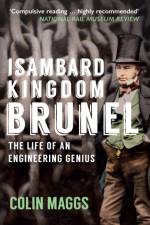
In his time Isambard Kingdom Brunel was the world's greatest engineer. His list of achievements is truly breathtaking: the Thames Tunnel, the first underwater tunnel in the world; the SS Great Britain, the first propeller-driven ship; the Clifton Suspension Bridge, then the longest span of any bridge in the world; and the Great Western Railway. History has been kind to his memory: many of his creations still exist and he is lauded by historians as a truly 'Great Briton'. In this full-scale biography Colin Maggs presents a portrait of a complex, ambitious and determined genius. But the Brunel that emerges is not without flaws. He made mistakes, both personal and technical - he wasn't always right but never admitted he was wrong. Drawing on Brunel's diaries, letters and business papers, we see the real Isambard, a more human figure, emerging from behind the towering structures and machines he created.
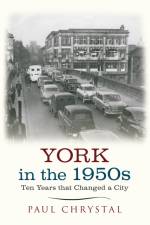
The 1950s in York was a decade of reconstruction and regeneration after the depredations of the Second World War. This book charts these changes to give a unique picture of the city that gradually emerged over the years 1950-59. It covers developments in the railway and confectionery industries that provided the foundation for growth and prosperity - the changing face of trade on the high street; the growth of tourism; the role of the media in the city; music, cinema, theatre and entertainment; schools, colleges and hospitals in the city; and York City FC. Using archive material from The York Press, York City Archives and the prestigious Borthwick Institute at the University of York, this book provides a unique history of York in an often forgotten decade, forgotten even though it provides the bedrock for much of what we see today.
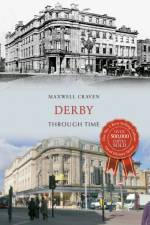
Derby is an exceptional and underrated city. It was an important centre of the Midlands Enlightenment, boasting Dr Erasmus Darwin and John Whitehurst FRS among its eighteenth-century residents. It produced an artist of international repute in Joseph Wright ARA and has been a centre for the production of fine porcelain and fine clocks for almost three centuries. It was a county town for five centuries and was in its Georgian heyday much admired by writers such as Daniel Defoe. Despite the best endeavours of a peculiarly unappreciative and iconoclastic bunch of city fathers over the years, many of its fine Georgian and Regency features have managed to survive. In 90 pairs of photographs ranging from 1765 to the present, Maxwell Craven has attempted to show why it is still a city of which its citizens can be proud and how it has changed, in places out of all recognition.
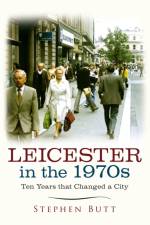
The 1970s was a decade of change. Supermarkets began to take over from traditional stores, high-rise office blocks appeared on the skyline, and Leicester's first shopping centre replaced familiar Victorian shops and hotels. It was a time of industrial unrest. The lights went out as coal stocks diminished. Pay packets were depleted as Leicester's workers faced a three-day week, prices in the shops began to soar, and we all shivered during the 'winter of discontent'. It was a turning point in the way we viewed ourselves and the world. Social attitudes to mental health, homosexuality and feminism were still rooted in the past, but the world was changing. People took to Leicester's streets to support anti-racism, and we began to clean up our environment. In Leicester in the 1950s Stephen Butt remembers what made the decade so special for so many, but also the events which were to change significantly the course of Leicester's future.
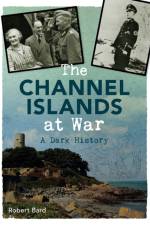
The incredible true story of what really happened in the Channel Islands during the Second World War. The Channel lslands were occupied on 30 June 1940 when four German planes landed at Guernsey Airport. They were the only part of Britain to be occupied during the Second World War. The islands had been officially demilitarised on 19 June, but the War Office in London overlooked the necessity to inform the Germans. This led to a German air attack on 28 June, which resulted in thirty-eight civilian deaths. Hitler was extremely proud of the conquest of the Channel lslands, and saw it as a stepping-stone to the full invasion of the rest of Britain. The occupying forces were instructed to behave correctly. This would show the rest of Britain that there was nothing to be feared from life under the Third Reich. This book looks at the German Occupation, the unsavoury events that occurred on the Islands, and why at the end of the war a cover-up of these events was instigated by the British Government.
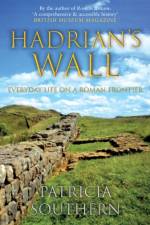
Hadrian's Wall is a major World Heritage site, set in stunning countryside in Cumbria and Northumberland, where the Wall and its forts are the most visited Roman remains in Britain. It runs through the narrow gap across the Pennines between the Solway Estuary in the west to the appropriately named Wallsend on the River Tyne in the east. For much of its length it is still visible, especially in the central sector where it runs along the north-facing cliff known as Whin Sill. Building started around AD 122 after the Emperor Hadrian visited the north of Britain and inspected sites in person to mark out the line of his new frontier. Hundreds of Roman legionaries from Chester, Caerleon and York marched north to quarry the stone and build the Wall, which took several years to complete. This book tells the story of how the Wall was built and manned by Roman soldiers, what life was like on the frontier and what happened to it when the Romans left.
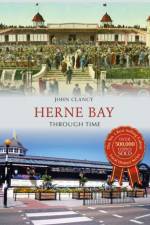
Herne Bay rose to prominence in the 1830s when a group of London investors recognised its potential and built a pleasure pier and promenade here, making it one of the UK's earliest seaside resorts. Its popularity increased when the railway reached this part of Kent and continued to do so throughout the Victorian era. However, like many other seaside resorts, its popularity as a holiday destination steadily declined after the Second World War when there was an increasing preference for overseas travel. Following extensive seafront regeneration in the 1990s, a jetty was built to create a small harbour for leisure boats and from where tourists could take boat trips to a seal-watching site in the Thames Estuary. The Victorian seafront gardens were fully restored, as was the Central Bandstand, after many years of neglect and closure to the public. Today, Herne Bay is slowly regaining its popularity as a holiday resort and is a firm favourite with daytrippers. Its glory days are slowly returning.
The centre of Manchester is an area rich in social and cultural history. Its buildings, streets, churches and alleyways chart the journey from the rise of Victorian wealth through to today's vibrant metropolis, which is the most visited English city outside the capital. This secret trail can easily be completed in the course of a day, and aims to uncover and raise awareness of essential facts and stories surrounding the city centre. Included in this fascinating tour are the Giant's Basin in Castlefield; the site and remains of the Haienda night club; Manchester heroes like Alan Turing, Mark Addy and Richard Cobden; the political and musical heritage of the Free Trade Hall; hidden delights like the Richmond Tea Rooms; the Manchester Craft Centre; the steepest street in Manchester; and much more to enjoy and explore.
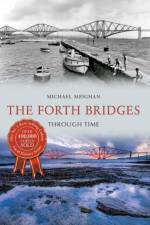
The River Forth is one of Scotland's great waterways. It has a majestic history and heritage, part of which is the Forth bridges. Of these, the most iconic is the Forth Rail Bridge, which opened in 1890. But there is also the Kincardine Bridge, opened in 1936 and once the longest swing bridge in Europe, the Forth Road Bridge, opened in 1964, and the new Queensferry Crossing, due to be completed in 2016. In this book, Michael Meighan looks at all these bridges as well as the Clackmannanshire Bridge and the fords, ferries and smaller bridges which preceded these great crossings. The Forth crossings have a special place in the history and culture of Scotland, and in the hearts of all Scots, and Michael Meighan pays tribute to them in a wonderful mix of both old and new images.
Barnsley, Rotherham and Worksop sit on top of the Midland coalfield, stretching from Nottingham into Yorkshire and the mining industry in this area once supported tens of thousands of jobs in collieries dotted across the landscape. In this book, the culmination of some forty years of research, author Ken Wain tells the story of the mining industry in the area from the primitive mines of the medieval period to the rundown of the industry and the end of deep mining in Britain. The Coal Mining Industry of Barnsley, Rotherham and Worksop tells the life stories of the many collieries in this part of England. From the large towns to small villages built around their local pit, Ken gives an insight into the growth of coal mining in the area as well as some of the human stories of disaster and of the working and living conditions for the miners and their families.
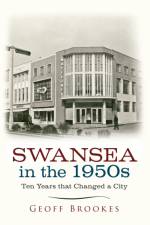
The 1950s. The mid-point of the twentieth century. When those born in the nineteenth century met their grandchildren who would live in the twenty-first. A pivotal moment, certainly. And is it really true? Had we 'never had it so good', as Prime Minister Macmillan said?This book is the story of Swansea in those years, when post-war austerity moved towards the indulgence of the sixties. A period of affluence and full employment, a time of increased confidence and optimism. A time when Swansea began to rebuild itself after terrible wartime devastation and looked to a bright future, despite an exhausted valley where the trains crept slowly between the twisted slag heaps alongside a poisoned river. Everything would soon be so much better. The future was so brightSwansea in the 1950s follows the development of Swansea through this momentous decade. The story of how Swansea played its own part in the big news of the era - the Coronation, the Atom Bomb, Rock Around the Clock, the Korean War, Sputnik, the Suez Crisis and television, - and how it managed its own triumphs and disasters.
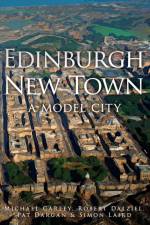
Edinburgh's New Town, built between 1767 and 1850, is one of Europe's finest neoclassical neighbourhoods, a triumph of town planning, with UNESCO World Heritage status. But the importance of the New Town goes far beyond the quality of its architecture. Nearly 250 years after it was built, today it is not only a carefully conserved Georgian neighbourhood but a vibrant community in which people from all walks of life thrive in harmonious surroundings. Those include over 7,000 residential properties of enormous variety, and its shops, schools, pubs, restaurants and community facilities, which contribute to its unique quality of life and attract visitors from around the world. This book celebrates the history and achievements of the New Town. Through photos, drawings, historic maps and aerial photography, the authors explore the New Town's origins in the philiosophy of the Enlightenment and the role of politics, land ownership, finance, design and materials in its development. This is a friendly and accessible introduction to the exteriors and interiors of its buildings, with a walking tour included, drawing on both historic maps and modern satellite images. It links the New Town to current debates on urban architecture, concluding that it is an inspiring model for new communities around the world. This is a book for the passionate, knowledgeable lover of Georgian architecture, but equally for the casual visitor who wants to get to know the New Town better.
Hugh Llewelyn has travelled throughout Britain to gather this collection of his photographs of the diesel shunters. In addition to the main classes deployed by British Railways from the 1940s up to the present time, he also covers many of the rarer engines to be found working the docks and industrial centres. The shunters are shown in great detail and the images include not only the preserved examples, but also many of the neglected engines either in storage or abandoned. The result is a fabulous visual reference for rail enthusiasts with a wealth of detail for model makers.
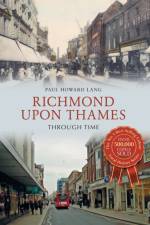
Richmond upon Thames was the first borough to be known as the 'Queen of the Suburbs', before Ealing or Surbiton were known by this sobriquet. With around 100 parks and green spaces, including Kew Gardens and Richmond Park, as well as fine examples of Tudor, Regency, Georgian and Victorian architecture, Richmond remains a desirable place to live, with a long and interesting history. In Richmond upon Thames Through Time, author Paul Howard Lang hopes to show how Richmond, to a great extent, has retained the 'Queen of the Suburbs' title. Telling the story of Richmond and its environs through a selection of beautiful photographs and postcards, he showcases the many changes that have taken place over time, as well as what has remained the same. This is an essential volume for anybody who is familiar with this attractive, historic town.
Once a relatively small rural settlement on the River Clyde, Glasgow expanded dramatically over the centuries to become the largest city in Scotland. From the early eighteenth century, Glasgow prospered as it emerged as one of Britain's principal transatlantic trade hubs with North America and the West Indies, as well as one of the world's largest seaports. As the Industrial Revolution took hold, Glasgow continued to thrive, becoming world famous for its shipbuilding and marine industries. In Victorian times Glasgow was recognised as the 'Second City of the British Empire', while today it is one of the top ten financial centres in Europe. In 2014, Glasgow will be brought to the world's attention once more when it plays host to the Commonwealth Games. Central Glasgow Through Time explores the heart of this vibrant, modern and stylish city through a series of old and new images, and celebrates the rich history and heritage of this part of Glasgow.
With a foreword by the Duke of Edinburgh, who travelled to the Antarctic on the maiden voyage of the RRS John Biscoe, this is the story of the ship's final voyage in the Antarctic to the British Antarctic Survey bases. Illustrated with fabulous photographs by the author, the book tells the story of the most famous of British Antarctic Survey vessels, the RRS John Biscoe.
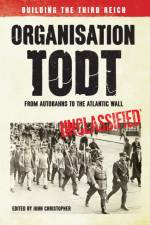
Based on a confidential wartime British Government report, this in-depth dossier details the inner workings of Organisation Todt, which not only built the Reichsautobahns, but also Germany's Siegfried Line and the Atlantic Wall. Founded by the charismatic Fritz Todt, the OT was responsible for the construction of all of the major military works across Europe - from the Siegfried Line and Atlantic Wall, to the U-Boat pens and V1 and V2 weapon sites. When Fritz Todt died in a fl ying accident in 1942 he was succeeded by Hitler's chief architect, Albert Speer, who was also appointed as Reich Minister of Armaments and War Production. Although the OT was not a military organization as such, it literally underpinned the Nazis' stranglehold on the occupied territories. Not just through the fortifications but also through the systematic and highly controversial use of enforced labour drawn from the populations of the vanquished countries. At its peak the OT consisted of a force of almost two million men and women, and it is through the depth of detail revealed in this handbook that we discover the largely untold human story.
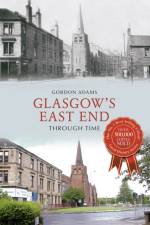
The history of Glasgow extends back into the mists of legend, even beyond the sixth century AD when the city's patron saint, St Mungo, entered its story. From a small monastic community on the banks of the Molendinar Burn, Glasgow became the possession of Bishops and Archbishops. With the arrival of the Industrial Revolution, it developed into a powerhouse of the British Empire, and was sometimes credited as the Empire's Second City. Its teeming population and developed industry brought about problems, particularly to the city's East End, where housing conditions and poor health became a major concern. Much of Glasgow's physical history was sacrificed in slum clearances for the benefit of its inhabitants. The east end has never seemed more alive than during the twentieth Commonwealth Games, which the city hosted. It remains a friendly and vigorous place - and surprisingly verdant given its past!
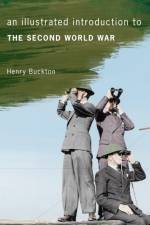
The Second World War is so far the only truly global war that has ever taken place. It involved the vast majority of the world's nations, with the great powers eventually forming two opposing military alliances: the Allies and the Axis. It was the most widespread war in history, with more than 100 million people from over thirty different countries serving in military units. In this state of 'total war', the major participants threw their entire economic, industrial and scientific capabilities behind the war effort, erasing the distinction between civilian and military resources. Marked by mass deaths of civilians, including the Holocaust and the only use of nuclear weapons in warfare, it resulted in an estimated 80 million fatalities. All of this made the Second World War the deadliest conflict in human history. This introduction to the Second World War follows the major events that led up to the war and occurred during it, year by year.
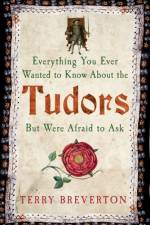
The Tudor Family is the most intriguing royal dynasty in British history. Their era took us out of the Middle Ages through the Renaissance, founded the British Empire and made Britain a world power for the first time. The flowering of literature and music was unprecedented in British history. And what a family! From Henry VII who usurped Richard III at the Battle of Bosworth, through his famous son whose multiple marriages led to the break with the Roman Church, to the brilliant reign of Henry VIII and Anne Boleyn's daughter, Elizabeth I, we see over a century of people and events that sometimes seem more fiction than reality. Did Henry VIII compose Greensleeves? What were Thomas Cromwell's bizarre toilet habits? Did Anne Boleyn have six fingers on one hand? For details of these, and many more entertaining Tudor facts, just open this book.
The Roman military is an iconic, ancient institution; everybody is familiar with the image of fearsome Roman soldiers marching in their famous columns. In this book, Roman military experts John and Hilary Travis turn their attention to the shields used by the historic Roman stalwarts, drawing on their expertise, their wealth of illustrated material and the world of re-enactments. In its study of the panoply of shields used by the Roman army, this book differs from those preceding in that it has combined the reams of published information on sculptural imagery and archaeological hard evidence with an in-depth look at the artefacts themselves, their component parts and physical manufacture, going further by reconstructing and subjecting them to regular use in combat conditions.
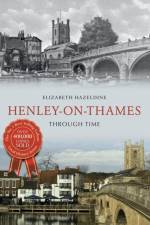
Nestled in a valley and surrounded by stunning countryside, Henley-on-Thames is a small market town in the heart of Oxfordshire. Henley's population is very much connected to its past and has many long-established local families, but new arrivals have further added to its diversity. Thanks to Henley's proximity to the Thames, the town thrived through its trade links, conveying goods by barge. Henley also had a rich brewing legacy, with breweries such as Greys Brewery, Ives Brothers and W. H. Brakspear & Sons providing employment to the local populace. Henley-on-Thames' historic links are most evident through its large number of impressive listed buildings. The Chantry House, a fine, timber-framed structure that stands in a corner of St Mary's churchyard, is itemised in documentation from the 1460s. The Bell hostelry has been identified as the town's oldest structure. While much has changed in this riverside town, Henley-on-Thames Through Time celebrates both the old and new as the reader is taken on a journey through Henley's spectacular heritage.
From humble cottages and quintessential village houses to elegant manor houses, The Cotswold House is the first book to give a complete overview of the history, social and architectural, of the Cotswold home. Characteristic features tie all these buildings together. Limestone, whether grey or cream, appears throughout Cotswold homes, its workability apparent in the numerous mullioned windows, solid chimney stacks and fine doorways and porch heads. This book considers the differing periods and styles and the characteristic features, illustrated throughout with examples from across the region and with a focus on individual details, from exterior features such as stone roofing, gables and chimneys, to interior features of timber work, fireplaces and furniture.
The rugged but beautiful land of Wales was a refuge for the ancient Britons as waves of invaders attacked and settled other parts of Britain. The Britons endured in the mountain strongholds against these raids, eventually becoming the Welsh people, the ancestors of the Cymry of today; forming a land of small kingdoms ruled by Welsh princes. In this book, Martin Hackett takes us on a journey through the military history of Wales, looking at the armies involved and the weapons they used. He covers the length and breadth of the country, examining in detail twenty-four battles that have shaped the history of Wales, beginning with the guerrilla campaigns of the Celts against the Romans and moving through the defensive wars against the Saxons and Normans, followed by the great rebellions of the Llywelyns and Owain Glyndwr against the English invaders. The book is completed by the English Civil War and the French invasion of Fishguard during the Napoleonic Wars. Profusely illustrated throughout with maps and photographs, this book brings to life these forgotten milestones of Welsh history, many of which are truly lost battlefields without memorials to commemorate their turbulent past.
Set in the heart of the Stour Valley, Sudbury is an ancient market town situated in an area of outstanding natural beauty. During the late Middle Ages, the town was a centre for the weaving and silk industries, the wealth of which led to many great houses and churches being built, giving the town a major historical legacy. Sudbury became notable for its art in the eighteenth century, being the birthplace of Thomas Gainsborough and the inspiration of John Constable. The nearby settlements of Long Melford and Lavenham are also noted for their spectacular churches and are popular destinations for day-trippers. Sudbury, Long Melford and Lavenham Through Time explores the history and beauty of this scenic area, showcasing how it has developed over the years.
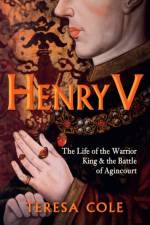
In the latter years of the fourteenth century a child was born, so unimportant that even his exact date of birth is unknown. Yet before his twenty-seventh birthday the turn of fortune's wheel had brought him the crown of England. The kingdom he inherited as Henry V was deeply divided after the seizure of the throne by his father, Henry IV, the first Lancastrian king. Within a short time, however, by sheer force of personality and will, Henry had mended the rifts, pardoned and released prisoners, and united the whole country behind his claim not just to be King of England, but also King of France. One staggering victory against all the odds on the field of Agincourt brought him lasting fame, and took him within touching distance of succeeding in his claim. Henry V looks at the life and legacy of a king whose heroic achievements and tragic early death may truly be said to have changed the course of British history.
Abonner på vårt nyhetsbrev og få rabatter og inspirasjon til din neste leseopplevelse.
Ved å abonnere godtar du vår personvernerklæring.