



Gjør som tusenvis av andre bokelskere
Abonner på vårt nyhetsbrev og få rabatter og inspirasjon til din neste leseopplevelse.
Ved å abonnere godtar du vår personvernerklæring.Du kan når som helst melde deg av våre nyhetsbrev.

In these days of ubiquitous, non-stop media and information you would think that there were few secrets anywhere left to reveal: but when it comes to Harrogate there remain a surprising number of facts and idiosyncrasies which, over the years, have remained obscure, to say the least. Secret Harrogate is an historical journey through one of England's most visited towns, unearthing nuggets of its early history and spectacular development into one of Europe's foremost spas. This book reveals and unravels scores of fascinating and little-known details about Harrogate that will fascinate and inform its many visitors as well as its current inhabitants, many of whom probably thought they knew it all. The book gives a unique perspective on the many less-obvious aspects of Harrogate's history and will go a long way to explaining why today's Harrogate is as it is, and how it may develop in the future.
The teeming nature of life in eighteenth-century Edinburgh elevated the Old Town's taverns to a critical role in the city's social life, and there was 'no superabundance of sobriety in the town'. Much of the business life of the city was carried out in taverns where it was even normal for doctors to consult their patients. The Edinburgh taverns of the eighteenth century are described as having 'a coarse and darksome snugness which was courted by their worshippers'. These earlier basic hostelries were swept away during the period 1880-1910, which is recognised as the golden age of pub design. These new pubs were decorated with an abundance of spectacular ornaments to attract customers into their shining interiors. This book won't tell you how many real ales or malts the pubs stock or whether the burgers are worth popping in for. What it does provide is a record of Edinburgh Pubs that are architectural gems of exceptional quality or which have a particularly interesting historical association.
Whitby is a beautiful fishing town on the North Yorkshire coast, best known for its fish and chip restaurants and its connections with the world's most famous vampire - Dracula. But, did you know that Whitby has more secrets locked away among the narrow streets and beneath the tall cliffs?Why are Easter celebrations a result of a meeting in Whitby? What Whitby innovation kept people safe at sea until the invention of radar? Who or what is buried in the mysterious grave with the skulls and crossbones? And what secrets lurk beneath the waves off its coast?In Secret Whitby you'll find the answers to these questions, and many more revelations that will surprise you and keep you guessing with every turn of the page.
The medieval era is often associated with dynastic struggles, gruesome wars and the formidable influence of the Church. But what about the everyday experience of the royal subjects and common people? Here, alongside the coronations, diplomatic dealings and key battles, can be found the fabric of medieval life as it was really lived, in its folk songs, recipes and local gossip. With a diverse range of entries - one for each day of the year - historian Toni Mount provides an almanac for lovers of all things medieval. A detailed picture is gathered from original sources such as chronicles, manor court rolls, coroners' rolls and the records of city councils. We learn not only of the royals and nobles of official history but also the quarrels of a miscellany of characters, including William and Christopher of York, Nalle Kittewritte who stole her neighbours' washing, and Margery from Hereford who was murdered by an Oxford student. The world in which they laboured, loved and lived is vividly reimagined, one day at a time.
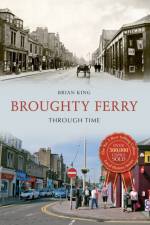
Broughty Ferry has gone through many changes since its origins as a small fishing village nestled in the shadow of a fifteenth-century castle. The industrial age saw wealthy jute barons arrive and build their grand residences there, while the coming of the train saw the town become a popular destination for holidaymakers. The twentieth century and beyond has seen Broughty Ferry evolve into a popular and affluent suburb. This compilation of images follows Broughty Ferry through all of these changes and shows how, despite officially becoming part of Dundee in 1913, 'the Ferry' has always maintained an independent air.
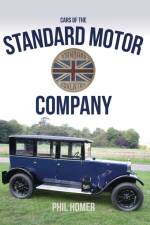
The Standard Motor Company grew to be one of the biggest companies in Coventry and employed some 11,000 people at its height. Based at its huge factory at Canley, Coventry, it produced cars for sixty years. The purchase of the Triumph marque in 1945 added a second brand to the stable and all post-war Triumphs were designed, developed and built in Standard factories. This book covers the formative years of the company from 1903 to 1912 and describes the vintage Standards produced between 1913 and 1930, as well as the post-vintage and Flying Standards of 1931-1939. The author discusses the acquisition of Triumph and covers the post-war Standards and Triumphs produced between 1945 and 1961 as well as the Leyland takeover and the company demise. This concise introduction includes descriptions of the cars built by Standard, and includes a fascinating variety photographs of surviving cars, period factory photos and brochure material.
In 1939 and 1940 the Nazi blitzkrieg crushed Poland and the Low Countries and France. This was a new type of warfare with air and ground forces working hand-in-glove and sweeping away all resistance. On the ground the new panzer divisions symbolised this combat revolution, and in the air its symbol was the all-conquering Luftwaffe with its fleets of Stuka dive bombers. When Hitler looked further east in 1941, the Luftwaffe turned with him, spearheading the largest invasion in world history as the Wehrmacht launched Operation Barbarossa to annihilate Stalin's Soviet Union. Within weeks they had destroyed thousands of Red Air Force planes and ruled the skies. Yet less than four years later that same Red Air Force was flying unopposed over Hitler's burning Reich Chancellery in Berlin and his much-vaunted Luftwaffe lay in utter ruins. How did this happen?Using original research and exceptional illustrations, including photos of planes from both sides, this book explains how the Nazi Luftwaffe's certain victory in the east was transformed into ashes through incompetence, misjudgement and hubris.
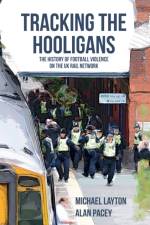
'On an average Saturday, some thirty trains carried police escorts of between two and eight officers. Officers sometimes reached the destination with their uniforms soiled with spittle, and other filth, burnt with cigarette ends, or slashed.'Charting the history of violent acts committed by football hooligans on the British rail network and London Underground, numerous retired police officers offer a frightening, and often humorous, insight into how they battled 'the English disease'. Recalling incidents of random, mindless violence, as well as organised acts carried out by some of the country's top hooligan firms, the authors document the times where nothing but a truncheon and the power of speech stood between order and chaos. Exploring a period of fifty years, retired officers Michael Layton and Alan Pacey pay particular attention to the turbulent and dangerous times faced by the police in the 1970s and 1980s, when hooliganism in the United Kingdom was at its peak, as well as exploring more recent instances of disorder. Tracking the Hooligans is an essential account of the uglier side of the beautiful game, and a fitting tribute to those who gave their time, and sometimes their lives, keeping the public safe.
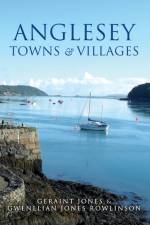
Most of the settlements in Anglesey are villages or hamlets, but the island has five towns. Although they are not large, they have a wealth of history and each one has developed in its own unique way. Holyhead, the largest town, has always had a connection with the sea and it became important in particular as a ferry port for crossings to Ireland. It is a busy shopping centre for the western part of Anglesey. Beaumaris, the island's smallest town, can trace its history to the building of the castle by Edward I. It was once a busy port, but in the last 200 years it has developed as a popular holiday resort. Llangefni, which is the administrative centre of the island, is a comparatively new town that has thrived because of its central location and its many businesses and organisations. Amlwch became a town as a result of the discovery of copper on nearby Mynydd Parys. Today it is the main shopping centre for the north of the island. Menai Bridge was a scattered community known for its ferry before Thomas Telford completed the Menai Suspension Bridge in 1826. This signalled its rapid growth, and today Menai Bridge is a thriving small town. Illustrated by both modern and archive photographs, Anglesey Towns & Villages explores the fascinating development of the island's many settlements. Discussing aspects such as education, religion, notable figures and places, this is a must for anyone who knows and loves this island.
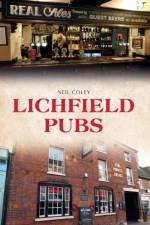
'As smooth as oil, sweet as milk, clear as amber and strong as brandy.'Boniface, in George Farquhar's play The Beaux Stratagem, describing Lichfield ale. Farquhar was one of the visitors to Lichfield in the eighteenth century when the city was notorious for its many pubs and brothels. Today, thankfully, only its pubs are famous and continue to add colour to this fine Georgian city. The great medieval cathedral forms a magnificent backdrop to the many pubs of the city, some of which were visited by Lichfield's most famous son, Samuel Johnson, whose brooding statue can be found in the city's market square. Many of Lichfield's ancient pubs, some of them old coaching inns from the days of stagecoaches and highwaymen, are still in existence; others, sadly, have gone. This book tells the story of those lost pubs - where they were and why they disappeared - as well as examining those that still grace the city, tracking their history through the centuries and telling their many uplifting, sad, and sometimes strange stories. Find out about haunted pubs, the pub where an army regiment was founded and the two rival inns where political parties encouraged mob violence in the street that separated them. Lichfield Pubs is a book that residents and visitors alike will not want to miss.
This comprehensive book provides the full background and history of the groundbreaking Kawasaki Z1. The author describes how 'King Zed' became a sensation after its launch in 1972, combining incredible performance with convenience, reliability and practicality. Although pipped to the post as the first four-cylinder 'superbike' by the 1969 Honda CB750, Kawasaki riposted with extra power and a top speed of 135mph, knocking the opposition into second place. The fastest production motorcycle of its time, the Z1 received rave reviews in the motorcycle press. Rod Ker describes the various makeovers that the model received later in production, and how it was given a new lease of life as the fuel-injected GPZ1100. Finally superseded in 1984 by lighter and more efficient models like the all-new water-cooled GPZ900R, the Z1 had already become established as a classic and an appreciating asset.
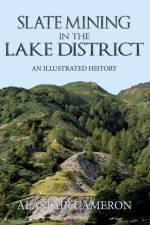
The remnants of slate mining and quarrying form as much a part of the Lakeland historic landscape as the stone walls, heathered moorlands and Lakeland farms do. A significant number of local families currently living in Lake District villages has had some connections with the slate industry in the past, and a few are still involved in the industry today. Although many believe that slate was worked during the Roman era, the present 'style' of slate-working started shortly after the Norman Conquest to help build the Norman castles, abbeys and priories in Britain. The Normans were familiar with slate; it had been worked for centuries earlier at sites in the Ardennes and in the Loire valley. By 1280 there are references to slate being worked at Longsleddale and by the fifteenth century the industry was well established throughout the district. Using historic detail, photographs and captions, Slate Mining in the Lake District: An Illustrated History explores the history of the industry in the Lake District. Considering slate mining's key role in the heritage of this iconic national park, Alastair Cameron also details its present-day operations.
London's forgotten scandals, secrets and personalities from the twentieth century, told by the writer of the popular blog Another Nickel in the Machine.
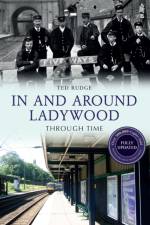
Modern Ladywood, with its high-and low-rise housing, dual carriageways, open green spaces and trees on nearly every street corner, bears no resemblance to the old Ladywood many generations experienced. Working-class, back-to-back courtyards with terraced houses fronting them were erected alongside factories from the 1840s. They were built on either side of a canal and railway that cut through the middle of Ladywood. Following Ladywood's redevelopment in the 1960s, only the canal, railway and a handful of the original buildings remain. Over time the whole population of Ladywood was moved; some remained local, others moved out. Now, through the medium of photography, the differences and similarities between Ladywood of past and present can be explored in this fully updated edition of In and Around Ladywood Through Time.
Dr Philip MacDougall, local historian, takes you on a journey through the City of Chichester revealing much of its lesser-known history. Here you will find the story behind the city's nineteenth-century banking crisis, the activities of a London mob of criminals who targeted the Goodwood races, a fascinating collection of letters written during the First World War and even how local politicians once bribed potential voters with lashings of beer. Blending the serious and the not so serious and drawing heavily on primary sources, including newspapers and original documents, Secret Chichester gives a fascinating look at this city's past with images from long ago and today.
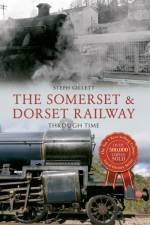
The Somerset & Dorset Railway, known as the S&D (said to also stand for 'Slow and Dirty' or 'Serene and Delightful'), ran from Bath across the Mendip hills to Bournemouth on the south coast. Never a high-speed line, the main traffic for the Somerset & Dorset during the winter months was freight and local passenger traffic. In the summer, however, there was heavy traffic as Saturday holiday services from the northern industrial towns passed along the line. In 1962, John Betjeman travelled along the Somerset & Dorset from Evercreech Junction to Highbridge and Burnham-on-Sea, making a BBC documentary called Branch Line Railway, in which he pleaded for the line to be spared from the Beeching cuts. However, despite an active campaign to save it, and the promise by the new Labour government that there would be no more railway cutbacks, on 7 March 1966 the whole line was closed. 2016 will see the fiftieth anniversary of the closure of this much-mourned railway; here in this well-illustrated book, the history of the line is preserved.
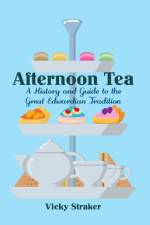
The Edwardian era was the golden age of etiquette and gentility, and the taking of tea was rather like a ceremonial masquerade. At this time, it was not uncommon for ladies to change up to five times a day, and one of their outfits would have been a tea dress. Tea was the only time the mistress of the house would serve her guests; the china used, the manservant who answered the door and the delicacies presented were of paramount importance. In this beautifully illustrated book, Vicky Straker invites us to tea in the Edwardian era and serves it up with over thirty of her own delicious contemporary recipes. Also included are chapters on dress, etiquette and the servants who prepared the tea. The First World War, the Temperance Association and changes in domestic service each had their effect on the rise in fashion of afternoon tea, as well as its eventual demise. This book explores why tea was so important for the Edwardians in a world of flourishing aspirations and how it became so popular across all social classes. After all, who among us has not found comfort in a good cup of tea and its scrumptious accompaniments?
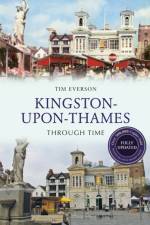
This fascinating selection of photographs illustrates the extraordinary transformation that has taken place in Kingston-upon-Thames over the years. The book offers an insight into the daily lives and living conditions of local people and gives the reader glimpses of familiar places during this century of unprecedented change. Many aspects of Kingston's recent history are covered, famous occasions and individuals are remembered and the impact of national and international events is witnessed. Drawing on detailed local knowledge of the community, and illustrated with a wealth of photographs, this book recalls what Kingston-upon-Thames has lost in terms of buildings, traditions and ways of life. It also acknowledges the regeneration that has taken place and celebrates the character and energy of local people as they move through the first years of this new century. This latest edition of the book has been fully updated with new contemporary photography and revised captions.
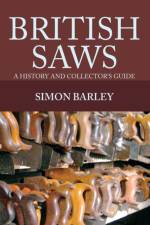
Along with knives, hammers and axes, the saw is a tool that has been used by humans for thousands of years. A toothed piece of metal fitted with a handle has been applied to cutting almost every material ever invented, from the softest wood to the hardest metals. In Britain, an industry to supply the nation's saw users began to grow rapidly in the eighteenth century, and marched with the Industrial Revolution to become the largest in the world. Millions of saws were made, and like most other tools, they were exported worldwide, but they don't survive very well, because their blades are thin, can break, are used up by sharpening and rust away. The nineteenth century was the peak of British output, when saws made chiefly in Sheffield, from that city's unique crucible steel, poured out of dozens of works, all employing specially skilled men to make beautiful tools of steel, brass and wood. These attractive objects are highly collectable, and an enlarging international community of tool enthusiasts is becoming avidly knowledgeable about the huge range of saws that are still to be had from car boot sales, specialist auction houses and online. Using a wide range of photographs, Simon Barley provides a collector's guide to British saws.
Little Germany takes us back to the nineteenth century, when Bradford, West Yorkshire, was the wool capital of the world. Over the centuries, Germany and Great Britain have been close trading partners. When Bradford became renowned for its rapidly expanding textile trade, prosperous German wool merchants entered the country and many of them settled in Bradford. These men, comparatively few in number but with great determination, influenced Bradford's markets with their knowledge of commerce and philanthropic culture. They were merchants who left their mark, men who built the palatial warehouses in Little Germany. At the beginning of the Industrial Revolution and throughout the nineteenth century, cottage industries had given way to industrialisation and factories replaced traditional production. Bradford grew from a country market town into an industrial city, with smoke-blackened buildings and a polluted landscape. It was a city of great wealth against abject poverty and slums. Workers came to Bradford in their thousands, attracted by the prospect of work. German pork butchers from Hohenlohe in south Germany settled in the industrial cities of Great Britain. Their cheap and tasty 'take-away' meals were popular with factory workers, who had no time to cook due to long working hours.
With a proud history of industry and creativity, Manchester is one of the world's greatest cities. In 2015 it was designated 'The Northern Powerhouse' but, of course, being the home of the Industrial Revolution, it always was. Manchester gave the world technological innovation as well as manufacturing strength. By the second half of the nineteenth century Manchester was home to more than 100 mills and well over 1,000 warehouses. It was in Manchester that Whitworth devised a standard for screw threads in 1841. Here John Dalton developed modern atomic theory, Rutherford split the atom and Alan Turing and colleagues developed the world's first computer. It also has a great cultural heritage, from the Halle Orchestra, founded in 1858, to the first regional repertory theatre set up by Annie Horniman in 1908. 'Madchester' was at the centre of the UK music scene in the '80s. 2015 saw the opening of HOME - a major new million arts centre. The skyline of Manchester is again being transformed. The Victorian men of Manchester would be surprised to see the vast modern buildings that now sit side by side with the old. Here we tell Manchester's story from Roman Britain through to the twenty-first century.
Have you ever wondered what the Tudors ate? What was served at the courtly feasts of Henry VIII, or what kept peasants alive through the harsh winters of the sixteenth century?The Tudor Cookbook provides over 250 recipes from authentic period manuals for starters, mains, desserts and drinks, from chicken blancmange to white pease pottage with seal and porpoise. It even covers vegetarian dishes - the Tudors designed dishes of vegetables to look like meat to be cooked during religious festivals when abstinence from meat was required. A few of the more outlandish ingredients and methods of cooking are now illegal, but the rest of the recipes have been trialled; many are delicious and surprising.
Did you ever wonder what the Tudors ate and drank? What was Elizabeth I's first meal after the defeat of the Spanish Armada? Which pies did Henry VIII gorge on to go from a 32 to a 54-inch waist? The Tudor Kitchen provides a new history of the Tudor kitchen, and over 500 sumptuous - and more everyday - recipes enjoyed by rich and poor, all taken from authentic contemporary sources. The kitchens of the Tudor palaces were equipped to feed a small army of courtiers, visiting dignitaries and various hangers-on of the aristocracy. Tudor court food purchases in just one year were no fewer than 8,200 sheep, 2,330 deer and 53 wild boar, plus countless birds such as swan (and cygnet), peacock, heron, capon, teal, gull and shoveler. Tudor feasting was legendary; Henry VIII even managed to impress the French at the Field of the Cloth of Gold in 1520 with a twelve-foot marble and gold leaf fountain dispensing claret and white wine into silver cups, free for all!
In the early nineteenth century, a few scattered farms and cottages were all that could be seen on the site of what is now Crewe. However, the arrival of the Grand Junction Railway heralded a new era, and Crewe was born. The settlement's rapid expansion meant that it soon became an important and vibrant town. This comprehensive guide provides a fascinating insight into the rich and varied history of one of the Midlands' youngest towns. Beloved views show the Crewe of old, reprinted so the reader can trace the town's history in an engaging new way. With a map of interesting local landmarks, you can trace the footsteps of those who once walked Crewe's streets.
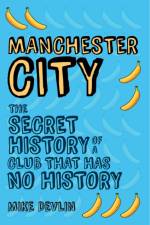
How did the inflatable banana save football?Did you know Pope John-Paul II was a follower?How MCFC almost started World War III. 'You have no history' is a familiar chant heard by Manchester City fans, who are used to being tormented for years of apparent underachievement. From the very first match on 13 November 1880, through to the present day and beyond, read and learn about the history of a great club. Documenting all the club's ups and downs, Mike Devlin tries to convince you that the club that has no history really does have one after all.
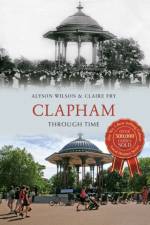
In ancient times Clapham was a secluded Surrey village, clustered round a manor house and church. By the seventeenth century, the wealthy of London were building houses here as rural retreats and, by 1800, their mansions in extensive grounds surrounded Clapham Common, which was becoming a place of recreation. The development of the railways in the nineteenth century meant that families who could afford large houses moved further out to the countryside, selling off their ground to developers who built the terraced houses which cover the area today. Around forty years ago, after a period of neglect and bomb damage from the Second World War, the area started to become 'gentrified' and is now a desirable London suburb. Clapham Through Time traces these changes over the years. A few mansions have survived and been put to new uses, several churches lost during the war have been replaced, Clapham Common is recognisable though used quite differently, but the greatest change is in the appearance of the ordinary streets - the shop fronts, vehicles and people. Many who have arrived in Clapham during the last few years will be amazed by its former appearance!
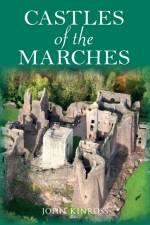
In this stunning, full-colour book, John Kinross explores the fascinating history behind the castles of Herefordshire, Shropshire and the Welsh border. Areas characterised by their rural beauty and agricultural charm, it is no surprise that they are home to such extraordinary relics. From the majestic Goodrich Castle, which is situated on the River Wye and boasts one of the most intact sets of medieval domestic buildings surviving today, to the red sandstone fort at Shrewsbury, protected by the River Severn, each site tells a different tale. The castles of Herefordshire and Shropshire form the background of this book, but the Marcher Court, based at Ludlow Castle, controlled all legal affairs in the area of the Southern Marches. In the north the northern court was based at Chester Castle until being moved to Rhuddlan when the Welsh ceased to cause rebellions. Thus Cheshire castles are included plus the mighty Welsh castles like Chirk and Chepstow. For interest the many moated manors, used especially during the Civil War, are also included, where there are still some remains to be seen. Beautifully illustrated and extremely informative, Castles of the Marches is a must-read that brings the past to life.
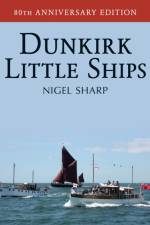
In May 1940, following the rapid advance of German troops through Holland, Belgium and France, the British Expeditionary Force and French army retreated to Dunkirk. Operation Dynamo was instigated in an attempt to rescue as many of them as possible. With the harbour at Dunkirk severely damaged, much of the evacuation would have to take place from the beaches; only small, shallow-draught boats could do this. After appealing to boatyards, yacht clubs and yachtsmen throughout the south east of England, the Admiralty managed to round up around 700 small craft which, along with 200 military vessels, were able to rescue an astonishing 338,226 troops over nine days. In 1965, forty-three vessels which had taken part in the evacuation commemorated the twenty-fifth anniversary by crossing from Ramsgate to Dunkirk, and the Association of Dunkirk Little Ships was formed soon afterwards. A further fifty years on, over 120 Little Ships are still in commission and it is thought that hundreds of others may still survive. This is their story.
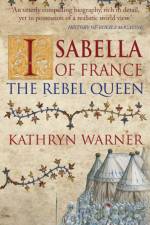
Isabella of France married Edward II in January 1308, and afterwards became one of the most notorious women in English history. In 1325, she was sent to her homeland to negotiate a peace settlement between her husband and her brother Charles IV, king of France. She refused to return. Instead, she began a relationship with her husband's deadliest enemy, the English baron Roger Mortimer. With the king's son and heir, the future Edward III, under their control, the pair led an invasion of England which ultimately resulted in Edward II's forced abdication in January 1327. Isabella and Mortimer ruled England during Edward III's minority until he overthrew them in October 1330. A rebel against her own husband and king, and regent for her son, Isabella was a powerful, capable and intelligent woman. She forced the first ever abdication of a king in England, and thus changed the course of English history. Examining Isabella's life with particular focus on her revolutionary actions in the 1320s, this book corrects the many myths surrounding her and provides a vivid account of this most fascinating and influential of women.
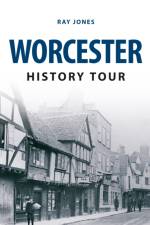
Worcester History Tour takes the reader on a journey through the town of Worcester, which became the focus of manufacturing success with the establishment of its numerous porcelain works. From Worcester Cathedral to the docks from which Worcester's famed porcelain products were transported, Ray Jones explains the history behind the town's most significant landmarks. Since then, Worcester has undergone large changes, but remnants of its industrial past remain.
Abonner på vårt nyhetsbrev og få rabatter og inspirasjon til din neste leseopplevelse.
Ved å abonnere godtar du vår personvernerklæring.