



Gjør som tusenvis av andre bokelskere
Abonner på vårt nyhetsbrev og få rabatter og inspirasjon til din neste leseopplevelse.
Ved å abonnere godtar du vår personvernerklæring.Du kan når som helst melde deg av våre nyhetsbrev.

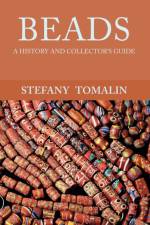
Until recently beads were under-researched. Even today in the UK, antique markets, necklaces and single beads still turn up in bargain boxes at cheap prices, whether glass, plastic, semiprecious stones - in fact almost anything that can have a threadable hole - or ethnic jewellery, holiday souvenirs or lavish carnival costume accessories. Throughout history, beads have shown prestige and wealth in their roles as trade goods, heirlooms and dowry, markers of tribal loyalty, prayer aids, magic talismans, love tokens and signs of status in life. Beads reveal the most amazing skills and give us an idea of the things we value enough to copy in miniature. They continue to display astonishing ingenuity - they are made of almost every possible material. Handmade or mass-produced glass, stone, ceramic, bone, shell, coral, amber, jet, cast or handwrought metals; found objects; constructed with tiny beads stitched together or woven in traditional patterns: each piece leads to new discoveries. This book helps you explore the origins of many of your treasures, whatever types of bead you collect, covering a wide range of categories such as 'eye beads', Millefiori Trade Beads found in the 1960s, exotic tropical seeds necklaces, carved nuts, Art Deco chokers, real or reproduction Egyptian Mummy beads, Tibetan stone Zi beads with applied designs, rosaries and prayer beads or even the antique beads found on traditional English lace bobbins!
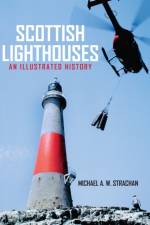
Before the age of the lighthouse Scotland's untamed seas and perilous rocky coast too often witnessed the watery end to the mariner's voyage. From its establishment in 1786, it was the remit of the Northern Lighthouse Board to tame these harsh seas with the building of guiding lights around Scotland's rugged coast 'For the Safety of All'. The history of Scotland's lighthouses would be dominated by one family of engineers. For its first 150 years, the NLB would be shaped by four generations of the Stevenson family as lighthouse builders, innovators and inventors. From humble beginnings at Kinnaird Head, this family would perfect the engineering marvels of the Bell Rock and Skerryvore, and pioneer wireless technologies into the modern age. The lighthouse story is also one of habitation on the Stevensons' creations on the extremities of civilisation as the light-keepers, and their families, lived and served on the wind-battered terrain of Scotland's edge. It was a story of survival, a unique way of life, which came and went within the pages of this history. The technological breakthroughs which began with the Stevensons advanced to automation and the end of the light-keeper. Nowadays the lights still flash, but there's nobody there.
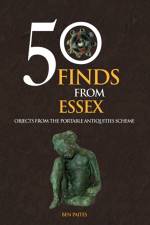
Home to the first recorded town in Britain, Essex has a vast wealth of history. However, historical accounts of the county have tended to focus on the major settlements and have left large parts unexplored. Through the work of the Portable Antiquities Scheme (PAS), alongside continuing professional excavations, it has been possible to fill in those gaps. Not only have there been many objects recorded with the PAS that are individually significant, but recording these finds has allowed us to identify many new archaeological sites that had previously been unrecognised. From Bronze Age hoards to Medieval pilgrim badges, the PAS records for Essex cover every period in history. The Burnham-on-Crouch hoard provides insight into the burial of objects in the Late Bronze Age, while the Ardleigh pommel highlights the incredible skill of Anglo-Saxon goldsmiths. The work of the PAS also provides evidence of how people continue to deposit objects today. Some of these finds have improved our understanding of society in the past, while others can be admired for their beauty alone. 50 Finds from Essex showcases a select group of objects recorded with the PAS and explains their significance within our wider understanding of the archaeology of Essex.
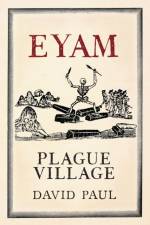
In September 1665, plague was inadvertentlytransported from London to Eyam in Derbyshire on a consignment of cloth. This small country village subsequently became famous for its decision to instate a A ecordon sanitaireA f, isolaoiing itself to prevent the disease from spreading. Much of EyamA fs population perished during that torrid period. Eyam: Plague Village follows the local rector, the Revd William Mompesson, as he tries to support his parishioners and contain the disease. Basing his account closely on the known facts, David Paul describes the events during this time in the villageA fs history from the perspectives of the rector, his wife Catherine, and the fictional character of Beth Hounsfeild, CatherineA fs cousin.
Secret Newark goes behind the facades of the familiar to discover the lesser-known aspects of the town's fascinating past. Situated on the important old Roman road, the Fosse Way, the ancestral market town grew around the, now ruined, Newark Castle and its large marketplace. Later, during the English Civil War, the town was a hotbed of royalist support and was besieged three times by parliamentarian forces. Today the town serves as a thriving and picturesque site, boasting many heritage attractions and activities. Newark has many secrets, and as you walk along the streets you are walking through history. There are clear reminders of the town's past everywhere, waiting for you to stop, look and listen to their intriguing stories. On a journey through this ancient town, Jillian Campbell and Mike Cox tell these forgotten or untold tales. You may think that you know Newark, but take another look around and you will find more than you could possibly imagine.
Nottingham was crowned England's first City of Football, the Major Oak in Sherwood Forest was chosen as the country's best-loved tree and both Nottingham Forest Football Club and the city's Theatre Royal celebrated their 150th anniversaries, all in 2015. Forest is the second oldest football league club in the world (after Notts County, which began in 1862) and Don Wright tells its unique story largely through the exceptional individuals who formed and shaped it. Inspired by Italian freedom fighter Giuseppe Garibaldi's redshirts, the young founders of the Forest Football Club, who played on the Forest recreation ground near the centre of Nottingham, decided that Garibaldi red would be their colour and so it has remained ever since. Forest are the original reds of world soccer. Walter Roe Lymbery was in turn captain, chairman and secretary/treasurer, setting the club on its feet. Another Victorian, Sam Weller Widdowson contributed new methods and ideas. He invented the shinguard, proposed the referee's whistle and introduced the 2-3-5 line-up that was universally adopted and still in use up to the 1950s. Tinsley Lindley was a famous Forester and Corinthian who championed the cause of the professional player. Forest won the FA Cup for the first time in 1898 and celebrated by opening the City Ground. Frank and Fred Forman became the first brothers from the same Football League club to be capped by England. Less well known were winger Bob Firth and centre-forward Randolph Septimus Galloway both of whom made their mark in Europe as managers. Firth made Real Madrid champions of Spain in 1932/32 and Galloway guided Sporting Lisbon to three Portuguese titles from 1950 to 1953. Back home, Bob Marsters' Forest defeated Everton to win the Victory Shield in 1919. But the master managers were Billy Walker, twenty-one years in office, and Brian Clough, eighteen years in charge. Walker gave the Reds a glorious decade when they climbed from the Third Division South to the top flight and won the FA Cup in 1959. Clough, with Peter Taylor's help, made Forest English champions and twice champions of Europe. Truly, the Forest story is the stuff of legends.
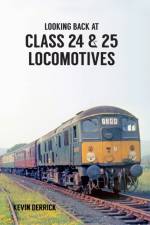
Looking Back at Class 24 & 25 Locomotives takes a closer look at these plucky and versatile Type 2 locos in a full-colour photographic album. The images follow the locomotives from their introduction in the late 1950s and throughout their service years, continuing to their final demise from everyday service. Inside we look at some of the variations that have appeared over the years and at many of the liveries they have borne. A varied selection of locations and workings have been chosen from a vast library of colour photographs, which are accompanied by informative captions; they are sure to appeal to both the enthusiast and the modeller alike.
Subterranean Stockport reveals a hidden world beneath the streets of Stockport - a Greater Manchester town with a rich industrial past. It includes water tunnels from the eighteenth and nineteenth centuries - excavated to supply water-powered corn and silk mills - as well as caves, culverts, sewers, icehouses, and abandoned air-raid shelters. This book documents the adventures of a group of urban explorers who have spent several years investigating and photographing underground Stockport. With history, anecdotes, sketches, and over 100 colour photographs, Emma Brown has created a unique record of Stockport's forgotten places.
Barrow-in-Furness is a small post-industrial town at the end of a long peninsula in the north of England. Its isolated location has produced a stalwart and close population. It started life as a small hamlet and grew to become an industrial leader, first in iron and steel and later in ship-building and engineering, drawing a workforce from all over the country. The ship-building industry continues to be a major employer but today there is less diversity than in Barrow's heyday. Although the town is known for its industry, it sits in one of the most beautiful areas of Cumbria. It boasts a rich heritage and spectacular views to the Lake District and across Morecambe Bay and, surrounded on three sides by the sea, it enjoys its own temperate climate. Furness Abbey was a great influence on the area in the medieval period and there are castles, churches, monuments and memories just waiting to be discovered by the unsuspecting visitor.
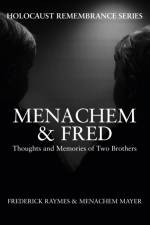
Part of a new Holocaust remembrance series of important testimonies and memoirs from the unique collections of Yad Vashem, the World Holocaust Remembrance Centre. This is the story of two brothers caught up in the Nazi persecution of the Jews. After being transferred to several detention camps throughout Europe, they were eventually transported to Auschwitz. Rescued by the Quakers, they endured stays in several orphanages and eventual separation, before making new lives in the US and Israel, which included for Frederick a role in America's space programme. Touching and gripping, this autobiography arises out of their need to tell their story to their grandchildren. With its interplay between the two brothers, this is one of the most interesting Holocaust narratives to appear in recent years.
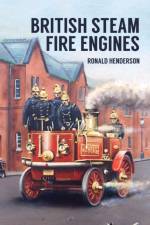
This is the fascinating story of the development of early British steam fire engines by a renowned expert on emergency services vehicles and equipment. Ronald Henderson, a member of the Fire Brigade Society and an expert on steam engines, covers the history of the early inventions that coupled steam with fire pumps. This includes the concepts created by firms such as Braithwaite & Ericsson and their steam fire pump and also further inventions by Merryweather & Sons and Shand, Mason & Co., including hand-drawn and horse-drawn fire engines. This book will appeal to all steam enthusiasts and to those who are interested in early industrial technology. It provides a fascinating insight into the way that steam was harnessed to improve the efficiency of firefighting services and how that led to the modern fire engines of today.
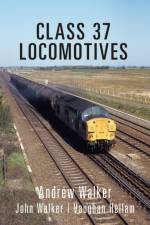
Well-proportioned, versatile, aesthetic, durable - the English Electric Class 37, the great survivor of the modernisation-plan diesel fleet, deserves all of these accolades and more. Never as celebrated as the Deltics, never as idolised as the Westerns, always intended to be a workhorse; this is the locomotive that has, in many ways, surpassed its more illustrious peers as an example of all that is best in motive power design and engineering. This pictorial collection contains nearly 200 photographs of one of the best loved of diesel types, compiled by Andrew Walker with contributions from other photographers who, like him, have always been drawn to these great British locomotives. The Class 37s always roamed far and wide over the national network, and this book covers locations ranging from the Scottish Highlands to South Wales, showing the 37s on freight and passenger duties, at depots and in works. Showcasing images from the 1970s through to the present day, the book provides detailed captions with in-depth technical specifications and information on the individual locos, their history and operation in traffic, and features many of the class variants and their liveries over the decades.
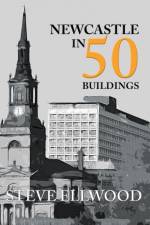
Newcastle in 50 Buildings takes us on a journey through the city's proud architectural heritage, from its earliest existing building - the twelfth-century Norman castle which gives the city its name - through medieval religious institutions and Jacobean buildings on the Quayside to the Georgian-era houses and shops - often referred to as 'Tyneside Classical' - built by the famed developer Richard Grainger. The book also shows how Newcastle has continued to redevelop and reinvent itself through its most notable contemporary buildings. Born and bred in Newcastle, writer and photographer Steve Ellwood tells the story of his home city through its greatest buildings with the assistance of a series of contemporary and old photographs, postcard images and drawings. Steve also hopes that this book will encourage readers to visit the city and see these buildings for themselves as well as discovering the city's other architectural delights.
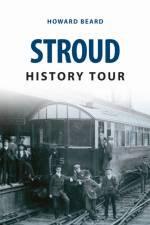
Stroud History Tour offers a unique insight into the history and buildings of a fascinating Cotswold market town. An itinerary has been created which will lead the reader to view the many places of interest lying along Stroud's streets, public areas and byways. Although intended to begin at the town's surviving railway station, the route can be joined at any point and, similarly, abandoned where desired - perhaps at one of Stroud's many street cafes. By following the proposed tour it will become apparent which parts of the town date from the earliest times and also how its religious buildings have altered, or been put to new uses. In addition, interspersed among the captions, are anecdotes taken from the author's personal and family history. A numbered map is included to assist the reader in exploring the fascinating changes that have taken place over the last century or so in Stroud.
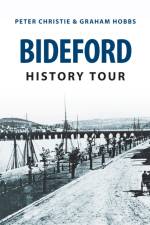
Bideford History Tour is a unique guide to the fascinating past of an historic English port town. Sited astride the River Torridge, its two halves are linked by the thirteenth-century bridge with its twenty-four arches all of different sizes. Founded by the Saxons, it has a long and fascinating history as a port and market town. Peter Christie and Graham Hobbs guide the reader through its charming streets, showing how its famous landmarks and hidden-away gems have transformed over time. With the help of a handy location map, readers are invited on this tour to discover for themselves the changing face of Bideford.
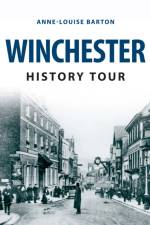
Winchester History Tour is a unique insight into the illustrious history of the ancient capital of Wessex. From the time of its Iron Age settlements, rulers, bishops and inhabitants over the last two millennia have left their mark on the city. Anglo-Saxon street plans, medieval gateways, and castles still preside, as do buildings of religious and scholarly importance. It is this past, tinged with myths and legends, and tales of our most celebrated monarch King Alfred, which attracts people from all around the world. Local author Anne-Louise Barton guides the reader through streets that are steeped in history, showing how its famous landmarks and hidden-away gems have transformed over time. With the help of a handy location map, readers are invited on this tour to discover for themselves the changing face of Winchester.
The Alvis company of Coventry were motor and aero engineers who made some of the finest motor cars during the period 1920 to 1967, when car production stopped. There were no independent coachbuilders left and mass production was not for Alvis. Total production was a mere 21,250 and fewer than 7,000 after the Second World War. It is the post-war cars that this book focuses on. The successor to Alvis's iconic Fourteen, the Three Litre, had a production run of seventeen years and the newest is now nearly fifty years old. John Fox offers a fascinating look at both technical and historical aspects of Alvis cars during this period, utilising rare archival and modern photographs.
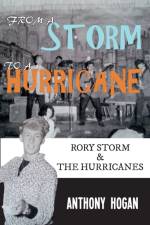
Rory Storm and the Hurricanes were one of the top bands in Liverpool between 1959 and 1962, bigger even than The Beatles. They shared the bill with the Fab Four on many occasions in their home city and in Hamburg, and their first drummer was none other than Richard Starkey - better known as Ringo Starr - who left the Hurricanes to join the Beatles. The Hurricanes were leading lights of the burgeoning 'Mersey Sound' and a pulsating live act, led by their charismatic front man, Rory Storm. Born Alan Caldwell, Rory was a natural performer who wooed crowds with his stage antics, once even diving from a swimming pool high board halfway through a song. But, despite the band's huge local following, fame somehow passed them by. Frontman Rory suffered from a crippling stammer and, though unaffected while on stage, it seemed to deter record companies. As their fellow Liverpudlians enjoyed huge international success, Rory Storm and the Hurricanes drifted into obscurity, finally ending in tragedy. Anthony Hogan has painstakingly researched the lives and careers of Rory Storm and The Hurricanes in this fascinating and moving account of one of the great untold rock 'n' roll stories, featuring over 100 photographs, many unseen before in public.
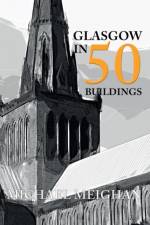
Glasgow has a long and rich history and the buildings housed within this architecturally impressive city tell its tale accordingly, from its sixth-century origins, to its current role as a vibrant and cosmopolitan centre of new industry and education. Glasgow in 50 Buildings explores the history of this wonderful city by presenting a selection of its greatest architectural treasures. From the medieval Provand's Lordship to the contemporary Riverside Museum, this unique study celebrates Glasgow's architectural heritage in a new and accessible way. Historian Michael Meighan guides the reader on a tour of the city's historic buildings and modern structural marvels. The churches, theatres, commercial and public edifices of Glasgow's rich industrial heritage are presented alongside the innovative buildings of a twenty-first-century city. Images are arranged chronologically to tell the story of Glasgow's development through its most significant buildings. A specially designed map appears at the beginning of the volume to show where each building is located and the text is illustrated with colour photographs and archival images, showcasing the best of Glasgow's heritage in fifty buildings.
From drone warfare in the Middle East to digital spying, today's governments have harnessed the power of cutting-edge technology to awesome effect. But what happens when ordinary people have the same tools at their fingertips? Advances in cybertechnology, biotechnology and robotics mean that more people than ever before have access to potentially dangerous technologies - from drones to computer networks and biological agents - which could be used to attack states and private citizens alike. In The Future of Violence, security experts Benjamin Wittes and Gabriella Blum detail the myriad possibilities and enormous risks present in the modern world, and argue that if our national governments can no longer adequately protect us from harm, they will lose their legitimacy. They explain how governments, companies and citizens must rethink their efforts to protect our lives and liberty. As a senior fellow at the Brookings Institution and co-director of the Harvard Law School-Brookings Project on Law and Security, Benjamin Wittes is arguably the Unites States' leading expert on security and law. Gabriella Blum is the Rita E. Hauser Professor of Human Rights and Humanitarian Law at Harvard University.
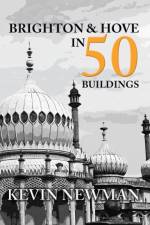
Brighton & Hove in 50 Buildings is an exciting new look at one of Britain's most famous and influential cities, telling the story of this 'city of sin' and 'Queen of watering places'. Readers experience a fresh look at the one-time fishing village through fifty of its most famous, unusual and influential buildings. It is not simply a guide to Brighton's most famous architecture, but looks also at the buildings that tell a story, whether it be of the rich and famous, the adventurous, the go-getters and those left behind in a destination first built for the rich and regal. The book takes you across the many different areas of the city and covers buildings from royal retreats to tourist favourites.
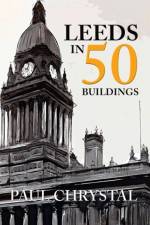
Buildings are among the crucial features that define a city. They create the cityscape and form the horizon while, at a more personal level, they provide the homes for its citizens, their places of education, worship, entertainment, arts and commerce. The fifty buildings described in this book chart the history of Leeds from its pivotal role in the Industrial Revolution as a major producer of wool and white broadcloth at the White Cloth Hall, Marshall's Mill and the stunning Corn Exchange. Leeds boasts four universities, the Brotherton Library taking pride of place with the Rose Bowl Building. The Thackray museum of medical history, the City Museum and the Armouries provide cutting edge culture along with the Art Gallery, the West Yorkshire Playhouse and the Arena. For sport there is Headingley and Elland Road while the beautifully elegant Victoria Arcades provide a special shopping experience. The skyline is pierced with windy Bridgewater Place, the Electric Press and Broadcasting Tower. Fine churches and mosques abound, as do old pubs like Whitelocks, the Whip and the Angel, and further afield are the splendours of Kirkstall Abbey, Temple Newsam and Harewood House. All of these buildings and many more are covered in this fascinating book: their history and the role they play today in one of England's leading cities provide an enthralling historical narrative for the Leeds of yesterday and of today.
The film Ghostbusters was released in June 1984 and became a cultural phenomenon and an instant classic, reaching No. twenty-eight in the American Film Institute's top 100 comedies of all time and voted funniest film of the past twenty-five years by Entertainment Weekly in 2008. The release of the film marked the beginning of a franchise that would include a sequel (with a third film being released in 2016, more than thirty years later), comics, television series and action figures. In this book, author and collector Matt MacNabb takes a look at the best of Ghostbusters collectables, including action figures of the four Ghostbusters themselves, some of the most famous ghosts from the films and models of Ecto-1. The book also looks at some of the most unusual collectables as well as looking at what might be collectable in the future. Covering collectables from 1984 to the present day, including many of the superb toys produced by Kenner, this is an essential read for anyone looking to own their very own iconic jumpsuit, Slimer or Ecto-1.
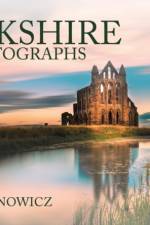
Yorkshire is not only the largest county in England, it is also the most beautiful; just ask anyone living there. If there is a heaven then it must surely look like this and landscape photographer, Dave Zdanowicz, has captured its essence in this collection of divine images. From the distinctive landscapes and timeless villages of the Yorkshire Dales National Park to the spectacular, wave-battered east coast, and from the dramatic North York Moors to the rolling hills and dales of the Peak District, this book has it covered. For its proud inhabitants, long-term visitors and even casual tourists, this book is a must. Scan through these photographs and you'll quickly see why Yorkshire is known as 'God's Own County'.
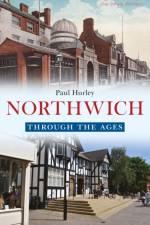
Northwich Through the Ages offers a unique insight into the illustrious history of this part of the country with a completely new set of past and present images. Reproduced in full colour, this is an exciting examination of Northwich, the famous streets and the famous faces, and what they meant to the people of this town throughout the nineteenth and into the twentieth century. Looking beyond the exquisite exterior of these well-kept photos, readers can see the historical context in which they are set. Through the author's factual captions for every picture, and carefully selected choice of images, the reader can also achieve a reliable view of the town's history. Readers are invited to follow a timeline of events and watch the changing face of Northwich, as Paul Hurley guides us through the town's streets. There is something for everyone here, whether they have lived in the area all their lives, or whether they are just visiting this fabulous town. Northwich Through The Ages also shows how photography has continually evolved to keep up with an ever-changing society.
Secret Penrith goes behind the facades of the familiar to discover the lesser-known aspects of the town's fascinating past. Penrith has many secrets, and as you walk along the streets, you are walking through history. There are clear reminders of the town's past everywhere, waiting for you to stop, look and listen to their intriguing stories. Join author Andrew Graham Stables on a journey through this beautiful town and its history. You may think you know Penrith, but take another look around and you will find more than you could possibly imagine.
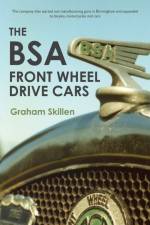
This is the first book to cover the little-known car production of the famous Birmingham Small Arms company (BSA). BSA had its roots in gun manufacture in Birmingham and then expanded to include bicycles, cars and motorcycles and the take-over of Daimler. In 1929 they built an innovative front wheel drive three wheeler light car which led on to more conventional models, all being front wheel drive. Reported in the press as being 'milestones in history', the models included the Three Wheeler, the FW32, T9 and Scout, BSA being pioneers worldwide of large-scale production front wheel drive. Today the concept is almost universal, but BSA were first. Due to impending and necessary wartime commitments, car production stopped in 1940. Drawing on his technical background in the aeronautical world and full access to unique photography and illustrations from the BSA archive as well as the BSA Front Wheel Drive Club, Graham Skillen has produced a unique book that will be of interest not only to BSA fans, but to classic car enthusiasts in general.
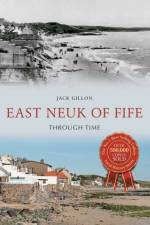
Neuk is the Scots word for nook or corner, and the delightful East Neuk, with its string of picturesque fishing and farming villages, is one of the most attractive parts of the country to investigate. Few regions present a greater number of attractions than the East Neuk with its sandy beaches, wild and precipitous cliffs, remarkable caves, celebrated golf links, notable churches, historic castles and historical associations. These villages, running from from Crail to Largo, are quite distinct from those of any other part of Scotland and have stood almost unchanged for centuries and thus present, in their uneven, angular streets, red-tiled roofs and crow-stepped gables, an accurate representation of the ancient burghs of our past.
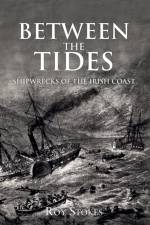
There have been millions of shipwrecks, but just a few have been remembered. A ship can disappear suddenly without a trace. Or a loss may involve a fascinating web of intrigue and drama. Exploration, the aftermath of wrecking in remote regions of the world and the interaction of survivors with local inhabitants are the stuff of storybooks, great novels and factual accounts. Ships and shipwreck have been at the vanguard of man's development. Conquest, discovery, colonisation and naval engagements have meant that millions of ships and men were lost. Their loss has played an important role in the march of civilisation, but despite centuries of advancements in construction technology and maritime regulation, ships still wreck for many of the same reasons. From this captivating vantage point, Roy Stokes examines some of the historic shipwrecks of the Irish coast. A historic snapshot of the East India trade is provided through the shipwreck of the East Indiaman; its ability to turn investment into fortune attracted traders, bankers, and rogues. Moving forward, Stokes considers Ireland's previously little-understood role in the naval battle with Germany during the First World War. Many other historic wrecks are also explored, including the paddle steamer Queen Victoria, which, discovered by the author in 1983, became the first historic shipwreck to be protected under new legislation. This thought-provoking book is sure to capture your interest with details of not only the shipwrecks themselves, but also the men who crewed them. Between the Tides exhibits an extensive volume of research, which supports a number of detailed accounts of historic shipwreck events that have occurred around the coast of Ireland.
Sheffield is the fourth largest city in England and was where the Industrial Revolution began in earnest. It is renowned for its high-quality steel and fine cutlery, for its two large universities and for having the biggest shopping centre in Europe, yet there is so much more to know about this proud South Yorkshire city. In Secret Sheffield, the authors pull back the carpet of history to reveal what lurks beneath. They delve into Sheffield's murky and mysterious past, its dark secrets and forgotten tales, introducing us to some interesting characters along the way.
Abonner på vårt nyhetsbrev og få rabatter og inspirasjon til din neste leseopplevelse.
Ved å abonnere godtar du vår personvernerklæring.