


Gjør som tusenvis av andre bokelskere
Abonner på vårt nyhetsbrev og få rabatter og inspirasjon til din neste leseopplevelse.
Ved å abonnere godtar du vår personvernerklæring.Du kan når som helst melde deg av våre nyhetsbrev.

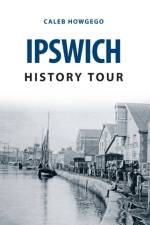
Ipswich lies on the estuary of the River Orwell in East Anglia. The town has a rich and varied histroy with continued human habitation dating back to at least the fifth century. As a result, it has grown up with England from its earliest beginnings and has witnessed untold changes from the Norman Conquest - when the town's name was recorded in the Domesday Book of 1086 as 'Gepeswiz' - to the Industrial Revolution, which saw the re-emergence of the town as a thriving port. Ipswich History Tour is a unique insight into the illustrious history of this Suffolk town. Complete with a map of some of the town's most notable places, readers are invited to follow a tour of some of the stories and characters that make up the history of Ipswich as author Caleb Howgego guides us through the local streets.
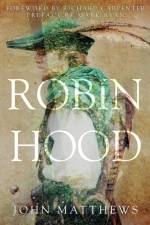
The identity of Robin Hood has been questioned many times since the Outlaw of Sherwood first sprang to fame in the twelfth century. No two authorities seem able to agree as to his origins, antecedents, or even whether or not he was a historical personage or a mythical figure. Historians, both amateur and professional, have for years been bringing out new books in which they claim to have found 'the real Robin Hood', but his identity remains clouded. More recent studies have sought to push the boundaries of the story further out into recorded time - seeking Robin Hood among the records of government and law enforcement, in the ballads of the twelfth to fourteenth centuries, and in the folk memory of the people of Britain. For them, Robin is a product of the ballad-maker's muse, or a literary fabrication based on the lives and deeds of several outlaws or the garbled memory of an actual person whose real life bore little or no resemblance to the romanticised songs of the ballad-makers. The continuing popularity of the Robin Hood mythos in modern dress through film, TV and novelisation shows how deeply the archetype is embedded. With no less than four new feature films in production at the moment, Robin Hood has never been more in the public eye. This is the only contemporary book to fully explore the mythology of Robin Hood rather than concentrating on the human identity of the famous outlaw. It ties Robin to the ancient archetype of the Green Man, the lore and legends of the Faery race, to the possible Eastern influence of the English Mummers' plays, and suggests the real identities of several of the Merry Men.
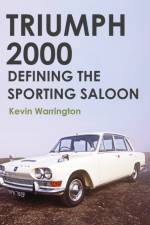
Encompassing the full development of the Triumph 2000, from the early Vanguard model to the Mark 2 models, this book covers the revolutionary aspects of Triumph engineering, including the small-capacity six-cylinder engine and independent suspension, as well as the iconic Michelotti design and quality cabin. Packed with detail, the full evolution of the Mark 1 model is described, along with the introduction of the Mark 2 version, which was to have considerable success as a rally car. The Triumph 2000 is also compared to its main British competitor, the Rover P6. The journey finishes with the takeover by British Leyland, and all the subsequent implications for Triumph. Kevin Warrington offers an essential guide to the Triumph 2000, with a wide range of photographs and features.
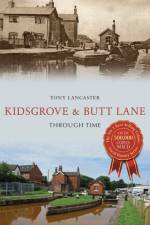
At the northern end of the borough of Newcastle-under-Lyme, Kidsgrove and Butt Lane were quiet and rural areas of scattered settlements that became an industrial centre of great importance in the economy of North Staffordshire. Today, the areas are largely residential, with housing belonging mainly from the post-war era onwards. Coal mines and ironworks changed the landscape and population and housing increased; development by the Trent and Mersey Canal and the arrival of the railway allowed the area to flourish. Nowadays, most of the heavy industry has declined and many once-familiar sights have been swept away. However, it is possible to recreate something of the atmosphere of this industrial past and its social consequences through the illustrations and detail that accompany them. Drawing on a rich store of photographs and historical information, this book reveals a fascinating past for readers to enjoy as local author Tony Lancaster guides us through the streets, revealing the changing faces of Kidsgrove and Butt Lane.
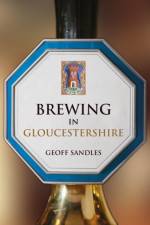
'Gloucestershire is a poor county for real ale': that was the sad assessment of the county's brewing heritage in the 1976 Good Beer Guide according to the Campaign For Real Ale. Just two breweries were in operation then, supplying only four real ales. The ubiquitous Whitbread PA was easy to find, but it took a determined effort to seek out the delights of XXX, BB and SBA from the highly regarded and picturesque Donnington Brewery near Stow on the Wold. It was all a far cry from the glory days of brewing in Gloucestershire, when most towns could boast their own local brewery, producing beers of character. It's tempting to be overly sentimental about the closure of much-loved breweries such as Wintle's Forest Brewery of Mitcheldean, Tayler's Cotswold Brewery of Northleach and so on ... but there were economic and social factors that made such rationalisation inevitable. With the closure of the Whitbread Flowers Brewery in Cheltenham in 1997, it was feared that the rich history of brewing in Gloucestershire was under threat. However, nearly twenty years later, Gloucestershire is awash with breweries producing truly wonderful and distinctive beers. Indeed, beer drinkers have never had it better. Cheers!
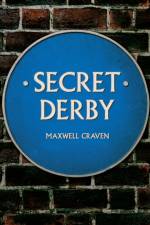
Derby's history goes back almost 2,000 years, despite a refoundation on a revised site in the tenth century. It is a county town but in the seventeenth and eighteenth centuries it was home to a number scientific and entrepreneurial innovators. Their efforts led to a radical transformation of the borough in the Regency period, which was followed by the introduction of heavy industry: iron founding, railways and textiles. In the twentieth century, some of the older industries went into eclipse and were succeeded by new, high-tech ones. Derby became the focus of a new diocese in 1927, was elevated to city-status in 1977 and entered the present century much expanded and with a lot to look forward to. Yet Derby retains much of its historic core and is full of neglected corners, lost elements and little-known aspects, some of which were once crucial components of its long history, such as missing medieval churches, impressive ancient houses, unexpected survivals and partly unrealised 1930s' urban renewals. If you think you know your Derby - think again!
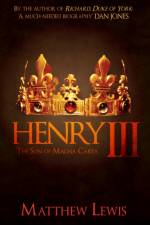
Henry III became King of England within days of his ninth birthday. His father, King John, had overseen a disastrous period in English history and the boy king inherited a country embroiled in a bitter, entrenched war with itself. With barons inviting a French prince to take the crown, the young Henry was forced to rely on others to maintain his position. As he grew into adulthood, Henry had to manage the transition to a personal rule, wrenching power from men who had held it almost unchecked for years. With a settled position at home, attention could turn to the recovery of lost territory abroad and the salvaging of Henry's family reputation. All would not go according to plan. Failures abroad led to trouble back in England as restless barons became disillusioned. They found a figurehead in Simon de Montfort, a man who would transform himself from Henry's favourite to a de facto king. Imprisoned and stripped of his power, Henry would again have to fight for his kingdom, now relying not on older mentors but on his immensely capable son. Henry was handed a monarchy in peril, a crown that was cracked and tarnished. He was given fifty-six years to mend the damage his father had done. It would spell over half a century of highs and lows in a country crying out for stability; the final measure of Henry's achievement displayed in the crown that he left to his son, Edward I.
From the moment it became public news, the validity of Edward's marriage to Elizabeth Widville, the beautiful widow of a Lancastrian knight, was repeatedly called into question. This alarmed Elizabeth Widville and led her into political killings. She was terrified that she would lose her crown and that her children by the king would never succeed to the throne. But after Edward's death a bishop publicly announced that he had previously married the king to Lady Eleanor Talbot. As a result, Edward's children by Elizabeth, including his eldest son and heir to the throne, Edward, were then declared illegitimate, making Edward's brother Richard the legitimate heir to the throne. Later, claims were put forward that Edward had numerous mistresses and left behind many illegitimate children. Dr John Ashdown-Hill, a central figure in the Looking for Richard Project and a renowned Richard III historian with a special talent for getting behind the mythology of history, now turns his attention to Richard's eldest brother, Edward IV. He unravels the complex web of stories around Edward's private life, discussing the truth behind Edward's reputation. Did Edward have numerous mistresses? Did he produce many bastards? Who was his legal wife? And what caused the early death of Eleanor Talbot?
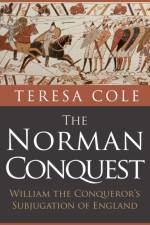
1066 saw three kings of England, the last of whom was William, Duke of Normandy. Tradition tells us the conquest of England by the powerful Normans was inescapable, and suggests England benefited almost at once from closer links with Europe. But new discoveries have thrown doubt on these long accepted beliefs. The Battle of Hastings itself must be re-assessed, its very site disputed, as must the whereabouts of the mortal remains of the defeated King Harold. As for the kings themselves; was Edward the Confessor as saintly and William as dominant as they have been portrayed, and was Harold more than just the hinge on which history turned?Nine and a half centuries later it is appropriate to look again at the course and outcomes of the Norman Conquest of England, the genocide committed in northern England, the wholesale transfer of lands to Norman lords, and the Domesday Book designed to enable every last drop of riches to be extracted from a subdued kingdom.
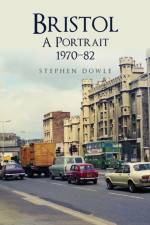
Stephen Dowle first started taking photographs using a pre-war Coronet Cub given to him by his father. He spent the 1970s and the early 1980s documenting his home city and the lives of the inhabitants who resided there. The photographs taken are atmospheric and evocative, revealing poignant scenes that have changed significantly over the following years. With over 100 unique images, each accompanied by Stephen's informative, often wry, descriptions, Bristol: A Portrait 1970-82 is a significant work that documents the recent past, capturing the city during a period of great change and bringing it to life again. A nostalgic read for Bristolians and a historical account for others, this book is a must-have for residents of this great city, old and young.
Durham City is a remarkable place, a priceless historical gem and, deservedly, a World Heritage Site. Over 1,000 years Durham's great beauty and history has inspired many architectural descriptions and guides. This book follows in their footsteps but then takes a different path. Wandering through the cathedral's darkened cloisters, the city's narrow medieval streets and the river's winding pathways, Secret City of Durham is one man's view of this famed peninsula - an occasionally quirky tour through history that looks beyond the iconic architecture and behind the fascinating jumble of city buildings. The author peels back their facades to reveal the bewildering changes and on the way points out the lesser-known facts and characters associated with them. What points the way to Durham Cathedral and St Cuthbert's tomb and where can it be found? Who lived in Windy Gap? Why St Mary-the-'Less'? Secret City of Durham answers these fascinating questions and many more in a modern pilgrimage through the city.
The Viking Conquest of England in 1016 - a far tougher and more brutal campaign than the Norman Conquest exactly half a century later - saw two great warriors, the Danish prince Cnut and his equally ruthless English opponent King Edmund Ironside, fight an epic campaign. Cnut sailed in two hundred longboats, landing first in September 1015 on the Wessex coast with 10,000 soldiers. The two forces fought each other to the point of exhaustion for the next fourteen months. It was a war of terrifying violence that scarred much of England, from the Humber to Cornwall. It saw an epic siege of the great walls of London and bruising set-piece battles at Penselwood, Otford, and the conclusive Danish victory at Assandun on 18 October 1016. Edmund's death soon afterwards finally resolved a brutal, bloody conflict and ended with Cnut becoming the undisputed king of England. This book tells the extraordinary story of Cnut the Great's life. Cnut was far removed from the archetypal pagan Viking, being a staunch protector of the Christian Church and a man who would also become Emperor of the North as king of Denmark and Norway. His wife, Emma of Normandy, was a remarkable woman who would outlive the two kings of England that she married. Their son Harthacnut would be the second and last Danish king of England, but the greatness of his dynasty did not long survive his death. This saga also features the incompetent thelred the Unready, the ferocious Sweyn Forkbeard and the treacherous Eadric Streona, recreating one of the great stories of Dark Age England.
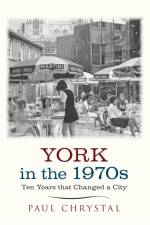
This is the third volume in a unique and exciting series on the modern history of York. With the dawning of the 1970s the city underwent seismic changes that saw it become one of Europe's foremost historical and cultural cities. Tourism had come to stay, with such major events as the pedestrianisation of Stonegate, the opening of the world-famous National Railway Museum, the momentous excavations in Coppergate, which paved the way for the celebrated Jorvik Viking Centre, and the opening of the Minster undercroft to the public. Join Paul Chrystal as he describes and depicts all of these and many more fascinating details about York during this pivotal decade in the city's splendid history.
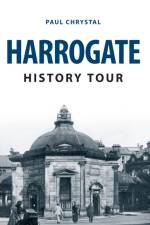
Harrogate History Tour is a unique insight into the illustrious history of this famous Yorkshire spa town. This new book guides us through the streets and alleyways, showing how its famous landmarks used to look and how they've changed over the years, as well as exploring its lesser-known sights and hidden corners. With the help of a handy location map, readers are invited to follow a timeline of events and discover for themselves the changing face of Harrogate.
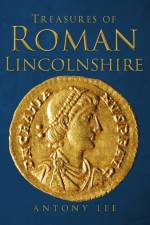
The county of Lincolnshire has a rich and varied Roman heritage. From the major Colonia at Lincoln, featuring some of the most significant remains to be seen in Britain, to sweeping agricultural landscapes filled with vibrant rural settlements, nationally important industries and intriguing finds assemblages from both professional and amateur archaeology, Lincolnshire encompasses all that Romano-British archaeology has to offer. This book explores that heritage through small finds and monuments, using individual objects and physical remains to uncover life in Roman Lincolnshire, from soldiers, priests and politicians to slaves, farmers, craftsmen, women and children, whether born locally or from the far reaches of the Roman world. Each object and site provides a window into issues such as cultural identity and the impact of Rome on everyday people, forming an overview of life in Lincolnshire almost 2,000 years ago, as told through its most fascinating physical remains. Antony Lee is the archaeological curator at The Collection: Art and Archaeology in Lincolnshire. His particular interests are in Romano-British ritual and religion, the development of urbanism and the expression of cultural identity through small finds.
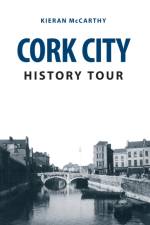
Cork City History Tour is a unique insight into the illustrious history of Ireland's second city. Local author Kieran McCarthy guides us through the streets of the 'Rebel City', showing how its famous landmarks used to look and how they've changed over the years, as well as exploring its lesser-known sights and hidden corners. With the help of a handy location map, readers are invited to follow a timeline of events and discover for themselves the changing face of Cork.
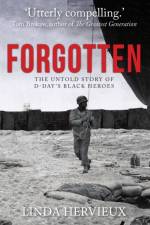
Forgotten is an extraordinary blend of military and social history - a story that pays tribute to the valour of an all-black battalion whose crucial contributions at D-Day have gone unrecognised to this day. In the early hours of June 6, 1944, the 320th Barrage Balloon Battalion, a unit of African-American soldiers, landed on the beaches of France. Their orders were to man a curtain of armed balloons meant to deter enemy aircraft. One member of the 320th would be nominated for the Medal of Honor, an award he would never receive. The nation's highest decoration was not given to black soldiers in the Second World War. Drawing on newly uncovered military records and dozens of original interviews with surviving members of the 320th and their families, Linda Hervieux tells the story of these heroic men. In England and Europe, they discovered freedom they had not known in a homeland that treated them as second-class citizens - experiences they carried back to America, fuelling the budding civil rights movement. In telling the story of the Battalion, Hervieux offers a vivid account of the tension between racial politics and national service in wartime America, and a moving narrative of human bravery and perseverance in the face of injustice.
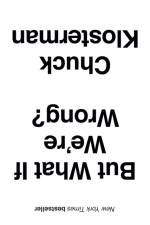
This has always been the case, no matter how often that certainty has failed. Though no generation believes there's nothing left to learn, every generation unconsciously assumes that what has already been defined and accepted is (probably) pretty close to how reality will be viewed in perpetuity. And then, of course, time passes. Ideas shift. Opinions invert. What once seemed reasonable eventually becomes absurd, replaced by modern perspectives that feel even more irrefutable and secure - until, of course, they don't. But What If We're Wrong? visualizes the contemporary world as it will appear to those who'll perceive it as the distant past. Chuck Klosterman asks questions that are profound in their simplicity: How certain are we about our understanding of gravity? How certain are we about our understanding of time?What will be the defining memory of rock music, five hundred years from today? How seriously should we view the content of our dreams? How seriously should we view the content of television? Are all sports destined for extinction? Is it possible that the greatest artist of our era is currently unknown (or - weirder still - widely known, but entirely disrespected)? Is it possible that we 'overrate' democracy? And perhaps most disturbing, is it possible that we've reached the end of knowledge?Kinetically slingshotting through a broad spectrum of objective and subjective problems, But What If We're Wrong? is built on interviews with a variety of creative thinkers - George Saunders, David Byrne, Jonathan Lethem, Kathryn Schulz, Neil deGrasse Tyson, Brian Greene, Junot Daz, Amanda Petrusich, Ryan Adams, Nick Bostrom, Dan Carlin, and Richard Linklater, among others - interwoven with the type of high-wire humor and nontraditional analysis only Klosterman would dare to attempt. It's a seemingly impossible achievement: a book about the things we cannot know, explained as if we did. It's about how we live now, once 'now' has become 'then'.
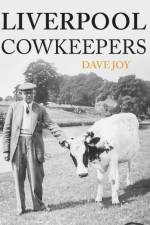
The mid-1800s witnessed a mass exodus from the Pennine 'Dales' as the then latest generation of farmers and miners sought a new life in the New World. However, many of these found a new life for themselves a bit closer to home - they became Liverpool Cowkeepers, keeping cows in their back yards and selling milk to a rapidly expanding city population with an insatiable need for fresh food. The Liverpool Cowkeepers became part of the life and economy of the city and continued to serve its people for over a hundred years. They overcame many challenges and survived through hard work, good Yorkshire business nous and the ability to adapt. They started out as farmers, adapted to become city cowkeepers and then adapted again to become suburban milkmen - part of the best doorstep food delivery service in the world and a key part of the British way of life. Dave Joy draws on his own family history to tell the story of the lives and times of the Liverpool Cowkeepers. The Joy family came from the upper Wharfedale valley in the beautiful Yorkshire Dales and established cowhouses in the Liverpool districts of Wavertree and Garston. They continued in this way of life for several generations, becoming one of the city's last cowkeeping families.
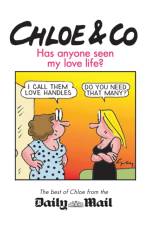
A compilation of the funniest cartoons from the much-loved Chloe & Co. Specially selected by Gray Joliffe, Chloe & Co features many of his best laugh-out-loud cartoons. Featuring Chloe, Angela and their friends, Chloe & Co enjoys a reputation for being uniquely naughty for a national daily newspaper. Now in its twentieth year, Chloe & Co appears each day in the Daily Mail and is syndicated worldwide. CHLOE, twenty something, bachelor girl, party girl, is more interested in 'Mr Right now' than looking for Mr Right. A money-motivated shopaholic, she likes expensive restaurants and drinking bubbly in bars with her girlfriends, loves being a man magnet and thinks cooking is a town in China. ANGELA, on the other hand, is intelligent, insecure, and usually into diets and fads which never work. Her self-obsession and over-sensitivity get in the way of her finding love with a nice man, and she resents Chloe getting more than her fair share of food and fellas. Angela's love life has gone missing.
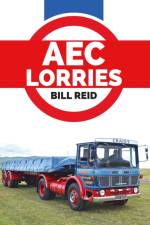
AEC Lorries explores the story of lorry use in the last fifty years, showing the diverse use of the vehicles and their configurations for many different types of work, with a focus on one of the great British manufacturers - AEC. AEC lorries have always been held in high esteem at home and abroad because of their powerful engines, and relative simplicity. They were to be found in many large and small fleets, capable of any type of work. A large proportion of AEC production was exported, particularly to British Commonwealth countries, where they endured hostile climates, severe overloading, and abuse on poor roads; nevertheless, they remained as good working equipment. It has been said by many in the transport sector that, if AEC engines had been developed, rather than other types within the British Leyland range, AEC vehicles would have become a range of lorries and buses that were second to none. Lorries are now the lifeblood of the nation and, without them, our lives would be much less rich. Railways have always been of great interest, but road transport, in its many forms and diverse liveries, has become an object of enthusiastic interest. This book looks to explore one of the most iconic and recognisable brands of British roads, using 180 rare and unpublished images.
Norwich is not only one of the most attractive cities in England, it is also one of the most historically significant, with a proud heritage dating all the way back to the Iceni, who bravely fought the Roman invasion. At the time of the Norman Conquest, Norwich was the largest city in England after London and until the Industrial Revolution was the capital of the most populous county in the country. Much of this rich and vibrant past is still in evidence today. Author Michael Chandler takes the reader on their very own A-Z tour around the city's history, exploring the nooks and crannies that have made Norwich what it is today, and relating many a fascinating tale of the most interesting people and places. Fully illustrated with stunning photographs from the past and present, this new guide to the town's history will appeal to residents and visitors alike.
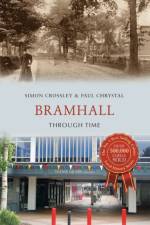
Bramhall is a thriving, bustling and leafy suburb of Stockport, close to Manchester. It has been voted the least 'lonely place' in Britain; according to research from the University of Sheffield, Bramhall came bottom of the loneliness index nationwide. It has a rich history stretching back to the Anglo-Saxon period. This book takes us back to Bramhall's early days to meet Saxons Brun and Hacun, whose lands were given by Willliam the Conqueror to Hamon de Massey, who eventually became 1st Baron of Dunham Massey. The Edwardian shops and businesses in the village centre have been replaced by trendy boutiques and cool bars, but old Bramhall is still characterised by the grand Bramall Hall, with its beautiful park, as well as the town's many farms and old pubs. The book also takes in neighbouring Cheadle and Cheadle Hulme, Gatley, Hazel Grove and Manchester International Airport in Ringway, where old and new pictures are juxtaposed to show how things have changed in these communities.
Would you like to own James Bond's Aston Martin, the Batmobile, the General Lee from The Dukes of Hazzard, or Luke Skywalker's X-Wing fighter? You can - in miniature. A Star Car is any type of vehicle - car, motorcycle, van, truck, bus, plane, helicopter, boat, ship, submarine, or spacecraft - used in a film or television programme. Many have become stars in their own right. Die-cast models of these motor stars began to appear in the 1960s. Corgi released the James Bond Aston Martin and the Saint's Volvo in 1965, followed by the classic television Batmobile in 1966. Dinky soon began releasing Gerry Anderson models, starting with Lady Penelope's pink Rolls-Royce from Thunderbirds. The success of these initial releases meant many more would follow. These early models were aimed at children, and were packed with gadgets - from ejection seats to missile launchers. Today, both toys and adult collectables are still being produced - often from shows that aired in the 1960s, 1970s, and 1980s: from the stone-age cars of The Flintstones, to the 23rd Century spaceships of Star Trek. Until now there has been no guide to help novice Star Car collectors build and care for their collections. Film and Television Star Cars is here to help, filled with collecting tips from an experienced collector.
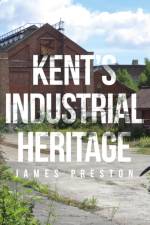
Kent is thought of as the 'Garden of England' and has been described as a county of 'hops, apples and cherries'. This may be true of a large part of the county, particularly after the Weald lost its important broadcloth and iron industries, but north Kent bordering the Thames and Medway became in the nineteenth century the most highly industrialised area of south-east England outside London. Kent, strategically located on the approach to London, had a long association with the armaments industries. It cast iron cannon from Tudor times to the early eighteenth century, provided the navy with warships from private and royal dockyards, and was an important manufacturer of gunpowder and explosives. It became a major supplier of paper to London stationers, and a source of millions of bricks and millions of tons of lime, cement, stone and sand for nineteenth-century developments in London and overseas. To fill a demand created by these industries for machinery, an engineering sector developed, which was at times at the cutting edge of technology. Barge building developed to exploit cheap water carriage of the county's products. Diversified farming provided the raw materials for a variety of agriculturally related activities including milling, tanning, malting and brewing. This book outlines the important place Kent industry held in the economy of southern England, and illustrates what remains extant in what is now essentially a post-industrial era.
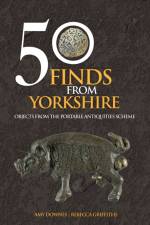
Yorkshire has been at the heart of English history for over 2,000 years and has been shaped by Roman and Viking invaders, the conflict of the Wars of the Roses and the English Civil Wars. With such a wealth of heritage to uncover, 50 Finds from Yorkshire considers the spectacular and the everyday finds that help to illuminate Yorkshire's hidden past. Objects found by the public, and recorded with the Portable Antiquities Scheme, have produced some of the most important discoveries from the region in recent times. These finds have helped to refine our understanding of Yorkshire's history and the lives of the people who lived there. Ranging from spectacular hoards of silver buried by the Vikings to unique Celtic fittings which show that people in Yorkshire had their own style, these finds can be woven into the narrative of the past. They also get us closer than ever to the ordinary people, with seals naming individuals and trader's tokens identifying occupations. There are also tantalising glimpses of the Roman cult of Mithras active in rural Yorkshire. Every object found is another thread in the rich tapestry that is the history of Yorkshire. 50 Finds from Yorkshire highlights these amazing discoveries and explores how they help to define our understanding of one of the most significant areas of Britain.
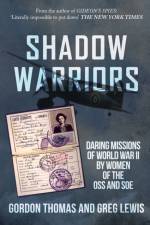
Shadow Warriors is a fascinating look at the women of the UK and US secret service branches during the Second World War. These were women of enormous cunning and strength of will, and many of the Shadow Warriors' stories have remained untold until now. In a dramatically different tale of espionage and conspiracy in the Second World War, this book unveils the history of the courageous women who volunteered to work behind enemy lines in Nazi Occupied Europe. Sent by the United States' OSS and Britain's SOE into Occupied Europe, these brave women wove a web of resistance groups across the continent. So effective did the female agents become in their efforts that the Germans often placed a bounty of a million Francs on the heads of operatives disrupting their troops. Their extraordinary heroism, initiative and resourcefulness contributed to the Allied breakout of the Normandy beachheads and even infiltrated Nazi Germany at the height of the war, into the very heart of Hitler's citadel - Berlin. Young and daring, the female agents accepted that they could be captured, tortured or killed, even as others were always readied to take their place.
From the third quarter of the seventh century when St Chad wandered into a watery valley in the heart of the Kingdom of Mercia to the Black Death, the English Civil War and the days of the Enlightenment when it was home to great minds such as Samuel Johnson and Erasmus Darwin, Lichfield has a proud and distinctive identity. This extraordinary history is embodied in the buildings that have shaped the city. Lichfield in 50 Buildings explores the history of this rich and vibrant community through a selection of its greatest architectural treasures. From its 1,300-year-old cathedral, the impressive Guildhall to the modernist Garrick Theatre, this unique study celebrates the city's heritage in a new and accessible way. Well-known local author Joss Musgrove Knibb guides the reader on a tour of the city's historic structures and modern architectural marvels.
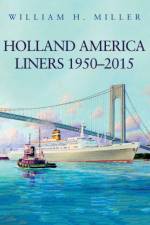
Founded in 1873, the Holland America Line provided services carrying passengers and freight between the Netherlands and North America. When the Second World War ended, only nine of Holland America Line's twenty-five ships had survived and the company set about rebuilding. The pride of HAL's post-war fleet was SS Rotterdam, completed in 1959, which was one of the first ships on the North Atlantic equipped to offer two-class transatlantic crossings and single-class luxury cruising. However, competition from the airlines meant that in the early 1970s Holland America ended their transatlantic passenger services; in 1973 the company sold its cargo-shipping division. Now owned by the American cruise line Carnival, Holland America offers round-the-world voyages and cruises in the Mediterranean, the Caribbean and Asia. In this book, renowned ocean liner historian and author William H. Miller takes a look at the Holland America Line and its post-war fleet up to 2015.
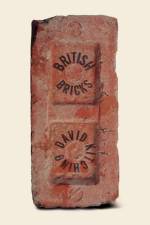
Bricks are all around us, yet we seldom stop to look at them. There is an almost infinite range of bricks and, likewise, brick colours. Years ago every small district had its own brickworks to meet local demand, and larger businesses began to develop alongside better transport links that allowed them to supply regionally. Many of these local works left a record of their existence in the form of their name, pressed into the frog of the bricks they made - in some cases, the only sign that they ever existed. This book uses the named examples to look at the development of brickworks in Britain and the wide range of bricks that they made. From the single kiln in a field to the massive continuous kilns and chimneys that grew in areas where the right clays were available, millions of bricks were produced to feed the demands of housing, transport and industry. Specialist requirements for bricks to resist high temperatures were met by using fireclay and silica rock for refractory bricks. Today there are far fewer producers, but their output can be enormous and modern works continue to supply the demand for the humble brick.
Abonner på vårt nyhetsbrev og få rabatter og inspirasjon til din neste leseopplevelse.
Ved å abonnere godtar du vår personvernerklæring.