





Gjør som tusenvis av andre bokelskere
Abonner på vårt nyhetsbrev og få rabatter og inspirasjon til din neste leseopplevelse.
Ved å abonnere godtar du vår personvernerklæring.Du kan når som helst melde deg av våre nyhetsbrev.

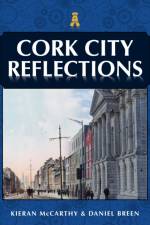
One hundred years ago in Ireland marked a time of change. The continuous rise of an Irish revival, debates over Home Rule and the idea of Irish identity were continuously negotiated by all classes of society. In Cork City Reflections, authors Kieran McCarthy and Daniel Breen focus on the visual changes that have taken place in the port city on Ireland's south-west coast. Using a collection of historic postcards from Cork Public Museum and merging these with modern images they reveal how the town has changed over the decades. Each of the 180 pictures featured combines a recent colour view with the matching sepia archive scene. The authors have grouped the images under thematic headings such as main streets, public buildings, transport, and industry. Readers will be able to appreciate how Cork City has evolved and grown over the last century but also how invaluable postcards can be in understanding the past. In an age where digital photography and the internet have made capturing and sharing images so effortless, it is easy to forget that in the decades before the camera became popular and affordable, postcards were the only photographic souvenirs available to ordinary people. This book, which vividly contrasts Cork past and present, will evoke many memories and appeal to residents and visitors alike.
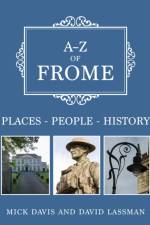
People have lived in the Frome area since prehistoric times and the present town dates back as far as the Saxon era. In the early days it was famous for the quality of its cloth, but the industry and trade declined in the eighteenth century. Over the centuries it has had its fair share of rioting and crime, as well as some notable personalities and eccentrics such as Thomas Bunn, an eighteenth-century philanthropist. It was also the birthplace of Benjamin Baker, builder of the Forth Bridge, and, more recently, Jenson Button, the racing driver. Today it has over 370 listed buildings - more than any other Somerset town - fourteen pubs and two thriving bookshops, as well as an increasing creative and artistic community. In this book, local authors Mick Davis and David Lassman take a journey through Frome to discover some significant and little-known aspects of its rich and varied past. From buildings and streets to people and events, A-Z of Frome highlights fascinating aspects of the town's history. Here are stories of UFO sightings, a world-famous Roman coin hoard, local inns, the search for underground tunnels and much more. Illustrated throughout, this book will appeal to local residents, visitors and anyone interested in the town's fascinating and illustrious history.
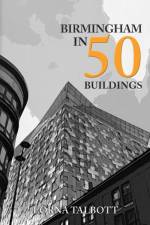
Although Birmingham's history goes back beyond the Middle Ages, there are only a few fragments of medieval Birmingham left, some of which have been moved from their original site as the city expanded. The city expanded rapidly in the industrial age and although Birmingham has many properties from the eighteenth and nineteenth centuries, it was radically transformed by the bombing raids of the Second World War and the subsequent rejuvenation by city planners. Some 1960s and 1970s buildings like the Rotunda have become icons of the city, but in recent years much of the mid-twentieth-century building, often in concrete brutalist style, has in turn been replaced by new structures like Beetham Tower and Birmingham Library. As England's second city, Birmingham was a major centre of manufacture, and many of the buildings still stand today. It was also the home of a significant art and architecture movement, the Arts and Crafts movement, which has left its mark on the architectural legacy of Birmingham. Birmingham in 50 Buildings explores the history of this fascinating West Midlands metropolis through a selection of its most interesting buildings and structures, showing the changes that have taken place over the years. It uncovers the earliest churches and dwellings in the city, unique pieces of industrial architecture, the amazing heritage of Victorian religious and municipal structures, art deco cinemas, modernist high-rise blocks and iconic shopping centres. This book will appeal to all those who live in Birmingham or have an interest in the city.
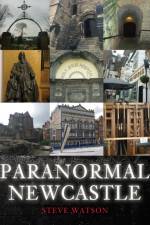
Newcastle, the largest city in the North East, has a long and proud history stretching back to Roman and Saxon times. Its position defending the mouth of the River Tyne gave it an importance in the medieval border wars with Scotland and by the sixteenth century it controlled the coal trade from Tyneside to the rest of England. The city became an industrial powerhouse in the eighteenth and nineteenth centuries, and the legacy of civic buildings, industrial heritage and housing can still be seen throughout the city. Today the city is as well known as a cultural and commercial centre as an industrial city, and its distinctive past and present-day identity is a vital part of the city's heritage. Newcastle is steeped in the supernatural and paranormal and many places both grand and everyday have rich and complex stories to tell. In this book author Steve Watson investigates the rich supernatural heritage of this city at places such as the castle keep, the site of infamous local gaols, and the nearby Black Gate, which has seen hundreds of years of the bloody history of Newcastle; the Literary and Philosophical Society, said to be home to sixteen ghosts ranging from a Witchfinder General to a little girl; the Tyneside Theatre and Opera House where a stagehand and a performer died tragically; the City Hall; and many more. Paranormal Newcastle takes the reader into the world of ghosts and spirits in the city. These tales of haunted places, supernatural happenings and weird phenomena will delight the ghost hunters and fascinate and intrigue everybody who knows Newcastle.
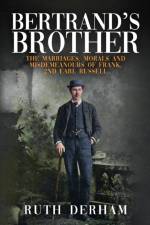
Frank Russell was the grandson of Prime Minister Lord John Russell and elder brother of philosopher and political activist Bertrand Russell. He was, in his own right, a radical political reformer and outspoken self-determined moralist. He was also the black sheep of his illustrious family: a serial adulterer, tried for bigamy in the House of Lords, who, as a young man, had been sent down from Oxford for supposed homosexual practices. His accuser was his first wife, Mabel Edith, the nave daughter of socialite and 'adventuress' Lady Selina Scott, who forced him repeatedly to publicly defend his good name and honour at a time when male same-sex relationships were reviled and sodomy punishable by up to ten years' penal servitude. Their decade-long cause clbre rivalled and was reported alongside the famous misdemeanours of Oscar Wilde. In this first biography of Frank Russell, his story is told through extensive use of private papers and contemporary public accounts. The cultural tensions and moral prejudices of the late Victorian and Edwardian eras are exposed, and Frank's innate rebelliousness and deeply embedded sense of injustice are explored, producing a portrait of a man vulnerable yet hubristic, well-meaning yet often offensive; a free-thinker, an aristocrat. A 'common man enlarged'.
Mental health has become the health issue that dominates debate above all others, but it remains poorly understood. One in four people will suffer a mental health issue in the course of each year, and most of them will not seek help because of the stigma that still attaches to mental ill health. Suicide rates are growing year on year. But why? Are we in the grip of a modern epidemic? And if so, how did we get here?To get under the skin of this, Psykhe throws new light on the history of mental health, offering a compelling description and analysis of how events from Classical times to the capitalist age have by turn shaped, reshaped, advanced, stultified and advanced again the course of human progress in this most difficult of medical disciplines. This is a gripping narrative that discusses not only how these events have defined todays attitudes towards mental ill health, and the modern-day services with which we seek to treat it, but also ultimately offers a fresh perspective on one of life's most fundamental questions - just what does it mean to live well as a human in the twenty-first century?
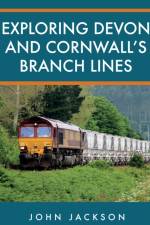
The two most westerly counties in England remain hugely popular for travellers looking for a break in the UK. Perhaps less well known is the fact that, against all the odds when faced by the Beeching Axe, a number of popular destinations can still be reached by today's railway. From Barnstaple to Gunnislake, Exmouth to Falmouth, John Jackson explores the variety of lines and stations that remain on the railway map in the counties of Devon and Cornwall. With much of the area's industry now consigned to history, there is little remaining freight traffic in the area. The main exception is the flow of Cornish china clay for export that is still carried by rail and centred on the area around Par and St Blazey. The author has spent countless hours chasing these somewhat elusive workings in recent years. From rolling countryside to seaside views, these two counties have it all.
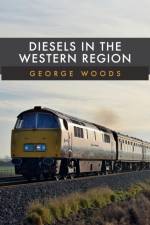
The Great Western Railway was always a little different to the rest of the railways, and that was still the position when in 1955 British Railways announced their Modernisation Plan that would see steam replaced by diesels and electrics. The rest of the railway regions opted for diesel-electric locos but the Western would be different, opting for diesel-hydraulics. The first entered service in 1957 and by 1964 six different classes were introduced. Unfortunately there were problems with them all, which were largely solved as experience was gained, but the BRB was in favour of standardisation using the diesel-electric type and they saw the Western hydraulics as non-standard, which resulted in their early withdrawal from service by 1977. This book of mostly unpublished colour pictures taken by George Woods shows them in service from 1966 to 2019, and also includes the Class 50 locos that became their replacements.
Donald Trump is one of the most divisive leaders, at home and abroad, in American history. His humble bid to win another four years in the White House will be the most watched election in history. He'll like that. But how does America actually elect its president and what role is played by the mysterious electoral college?In Tuesday's Child: How America Chooses Its Presidents, Church looks at the historical background of the electoral college and how it works today. In what becomes fifty individual elections, Church shows how candidates can choose which states to woo (or ignore) in their quest to amass 270 electoral college votes out of the 538 available. This book takes a fun look at election statistics, examining if tall candidates beat small, young defeats old, Virgo edges Sagittarius and bad hair trumps good.
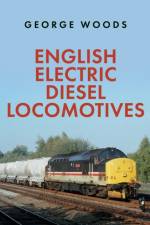
English Electric built their first diesel loco in 1936 and, before the company closed in 1968, built thousands of diesel and electric locos that saw service all over the world. They were among the companies chosen by BR to build prototype diesel locos for the Modernisation Scheme of 1955, which would see the replacement of steam traction by diesels and electrics. Locos were built to suit a wide variety of duties, some remaining in everyday service fifty years later. This book of mostly unpublished colour photographs from the collection of George Woods shows them in service all over the BR system from 1966 to 2019 working a wide variety of trains, both passenger and freight, in the great variety of liveries they wore both during their BR service and in later years under private ownership.
Central Leeds History Tour offers an insight into the fascinating history of this Yorkshire city. Author Paul Chrystal guides us around its well-known streets and buildings, showing how its famous landmarks used to look and how they have changed over the years as well as exploring its lesser-known sights and hidden corners. With the help of a handy location map, readers are invited to follow a timeline of events and discover for themselves the changing face of central Leeds.
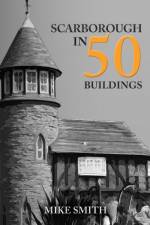
From its origins as a fishing town, Scarborough has become the largest holiday resort on the North Yorkshire coast. In this book, author Mike Smith highlights fifty of Scarborough's architectural landmarks and notable structures, old and new. Through a fascinating and diverse selection of buildings he charts the development and changing face of the town. Scarborough's two magnificent bays are separated by a headland bearing the remains of a Roman signal station and the gaunt ruins of a twelfth-century castle, the two oldest buildings featured in this book. The town's spa buildings are a legacy of the discovery, in 1626, of health-giving springs that prompted the conversion of Scarborough into Britain's first seaside resort. The Rotunda, conceived in 1829 by William 'Strata' Smith, the 'Father of English Geology', was one of the world's first purpose-built museums, and when the Grand Hotel opened in 1867 it was Europe's largest purpose-built hotel. Other buildings are included for their cultural associations with people such as the Sitwell family, while St Mary's Church is the final resting place of Anne Bront Bringing this engaging architectural portrait of Scarborough right up to the present century, the author also highlights stylish seafront apartments and the Stephen Joseph Theatre, which is wrapped in the skin of a former art deco cinema. Illustrated throughout, Scarborough in 50 Buildings will be of interest to residents, visitors and all those with links to this favourite British holiday resort.
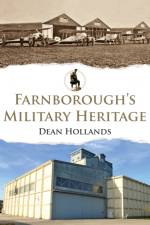
For centuries Farnborough was a small town south-west of London, but today it has transformed into a large, vibrant commercial community, synonymous worldwide with the international air show, which it has hosted since 1949, and the home of military aviation. However, the real origins of Farnborough's military heritage lie not with aviation but with the arrival of the army in 1856 and the building of a new barrack complex in South Farnborough, called North Camp. The army's presence was further expanded with the arrival of the Royal Engineers, at South Farnborough, followed by the formation of the Army Air Battalion, and then the army's Royal Flying Corps. The Royal Flying Corps was eventually replaced by the creation at Farnborough of the Royal Air Force and the Royal Aircraft Establishment was set up. The Royal Engineers also established a camp in North Farnborough and during the war years Farnborough was home to many other units including troops from the Canadian Army. German prisoners of war were engaged in building housing in Farnborough, captured German scientists were brought here and interrogated about their knowledge of aviation and rocket development and captured German planes were flown and frequently crashed at Farnborough. The war years also saw many heroic stories and tragic events unfold as Farnborough was routinely attacked. Farnborough has a fantastic military heritage that includes hospitals, notable burials and a wealth of military buildings and structures as well as a fine and often overlooked collection of military monuments and memorials along with its association with many military personalities. This, then, is the real story of Farnborough's military heritage.
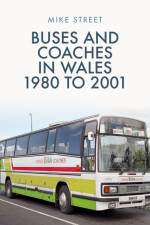
The final two decades of the twentieth century saw great changes in the bus and coach industry in Great Britain. In the early 1980s the National Bus Company reorganisation saw the Welsh operations of Crosville become Crosville Wales (and later Arriva Cymru); South Wales Transport be acquired by Badgerline, which became part of First Bus; and National Welsh being split to create new Rhondda Buses and Red & White companies, both of which eventually fell under the Stagecoach banner. The remaining part of National Welsh was the subject of a management buyout that failed spectacularly in 1992. In 1986 the remaining council-owned fleets were forced into being run as 'arms-length' companies, albeit at first controlled by their respective councils, with some later selling to larger companies and others closing down. In 2001 only Cardiff Buses, Islwyn Borough Transport (controlled by Caerphilly Borough Council) and Newport Transport remained. Some independent operators expanded and were either acquired by other operators or over-reached themselves and failed. Thus, the picture in 2001 was considerably different to that in 1980. This volume is an attempt to document some of the changes that occurred during those decades.
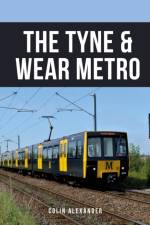
August 2020 marked the fortieth anniversary of the opening of the first section of the Tyne & Wear Metro between Haymarket and Tynemouth. It is an exciting time for the system, with a new fleet of trains about to be ordered, and extensions to the network being proposed. This book explores the decline of the BR suburban lines that were replaced, the phased opening of the new system from 1980, and subsequent extensions. It also looks at those being considered in the future. The successful integration of the Metro with bus and ferry services is considered, alongside the inclusivity of the railway's design, which allows disabled people unprecedented access to public transport. It also illustrates Metro's unique combination of brand-new tunnels, spectacular viaducts and underground stations, taking in the magnificent Victorian infrastructure of the former North Eastern Railway and Blyth & Tyne Railway.
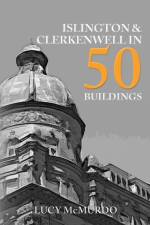
The London districts of Islington and Clerkenwell are charming to explore. Within their streets are the greatest variety of architectural styles, ranging from Tudor, Georgian and Victorian to modernist and contemporary twenty-first-century design. In Islington & Clerkenwell in 50 Buildings, author Lucy McMurdo presents a well-illustrated and engaging perspective of the rich architectural heritage of both areas. Islington has a wonderful vibrancy. Its main thoroughfare of Upper Street overflows with bars, restaurants, cafs, pubs and clubs, giving rise to the nickname 'Supper Street'. Hostelries have lined this street for centuries. It was here, on the main route into the capital, that herdsmen bringing cattle and sheep to Smithfield broke their journey from the north. Until the growth of industry in the 1800s, Islington was renowned for its river, springs and meadows, and a recreational destination for hunters and archers. Industrialisation resulted in an increasing population, transforming Islington's character and replacing fields with terraced houses, Georgian squares, gin distilleries, warehouses, depots and factories. Neighbouring Clerkenwell has always been more densely populated. Until the 1530s it was famous for its monastery, priory and nunnery and, in the late 1600s, it was a haven for French Huguenot immigrants, and later refugees and workers from Ireland, Prussia and Italy. For hundreds of years the River Fleet acted as Clerkenwell's main artery and, together with the district's many springs, was a prime reason for the area's development. The French Huguenots who settled here brought skills in watchmaking, precision engineering, printing, bookbinding and weaving - many of which are still found in the area today.
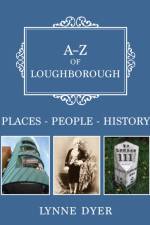
So, what is the significance of the seventeenth-century Sir Thomas Abney to Loughborough, and what is the connection between the young Princess Alexandrina, later to become Queen Victoria, and Loughborough? What is the history of the Bat House, and what is the mysterious Building N on the university campus? Which industry has its last remaining factory in Loughborough? What is the meaning of local words like 'jitty' and 'Ingle Pingle', and why is Bottleacre Lane so named?Being on the edge of the Charnwood Forest, Loughborough has woods and spinneys in abundance, but there is still plenty of space for allotments and meadows. Watercourses criss-cross the town like arteries, running from the heart of the Charnwood Forest, into the River Soar or the Grand Union Canal, and artificial bodies of water have been created on former industrial sites. In this alphabetical tour around the university market town of Loughborough, the second largest town in Leicestershire after the county town of Leicester, the author invites you to learn about the town's history through its buildings, structures, streets and thoroughfares; through its firms and local people; and through its features like waterways, woods andfields. With tales of fairs, follies and families, this book dips into some of the most interesting and intriguing parts of Loughborough's history. But do you agree with Daniel Defoe that Loughborough is a 'market town ... but of no great note?' The author sets out to gently persuade you that there is much more to Loughborough than at first might meet the eye.
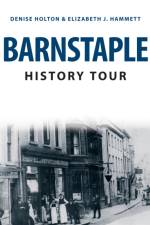
Barnstaple History Tour offers a fascinating insight into the history of this town in North Devon. Authors Elizabeth Hammett and Denise Holton guide us around its well-known streets and buildings, showing how its famous landmarks used to look and how they have changed over the years as well as exploring its lesser-known sights and hidden corners. With the help of a handy location map, readers are invited to follow a timeline of events and discover for themselves the changing face of Barnstaple.
Danger Man is possibly the show that started the whole sixties spy craze, first appearing a full two years before the first James Bond movie hit the big screen. The show's hero was John Drake, an agent for NATO's secret service played by Patrick McGoohan. While immensely popular around Europe the series may well have ended after its first series, if were not for the success of the Bond movies. The show was resurrected and extended to hour-long episodes, and subtlety altered to reflect a more Bondish style. The show was a worldwide hit and McGoohan became an international star, going on to create and star in The Prisoner, possibly one of the most talked about and discussed TV series ever created. Are the two series connected? Was Drake number 6? Many things would suggest both. These series truly define Cult TV. John Buss takes the reader through the collectible items related to these iconic TV shows.
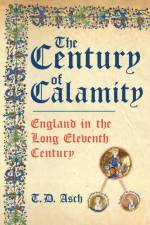
The Century of Calamity is the story of a nation's fall, and the men who caused it. It is the story of how thelrd the Unready's calamitous and vicious rule took England to the brink of collapse; of how Cnut subsumed the country within a northern empire, which disintegrated under his feckless sons; of how Edward the Confessor's wise and prudent rule held the realm together for a quarter of a century; and of how William of Normandy destroyed its way of life forever. It is a story of conquest and of colonisation, of collaboration and of resistance. It is a story of cowardice and of bravery, of loyalty and of treachery. It is a tragic tale of lost heroes and lost causes. And it is the story of how Harold Godwinson betrayed his wife and his brother in return for the ultimate prize, and the terrible consequences of that betrayal for his country, for his family, and for himself.
This comprehensive and readable book covers the Rover models built on the R8 platform, including the Rover 200 and 400. The book begins with the transitional period after the demise of BL and the advent of first Austin Rover and then Rover as well as the early collaboration with Honda to develop a new series of cars. The author also examines the development of the successful K Series engine as well as the collaboration with Peugeot to develop diesel engines from 1992. The book goes on to explore the various models in detail, including the five-door and three-door Rover 200s, the Rover 200 Cabriolet, the Rover 400 saloons, the Rover 400 Tourer and the Rover 200 Tomcat coup Written by an acknowledged authority on Rover cars, this book provides the reader with everything they need to know about the development of this important series of cars at a critical moment in British motor manufacturing history.
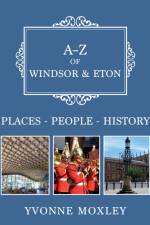
Having provided the setting for many royal and historic events, Windsor Castle attracts millions of visitors from around the world and continues to be a favourite royal residence. This imposing building dominates the surrounding area, but the town itself arrived long before the castle. In the seventh century a settlement was built further south, close to the River Thames, which provided transport to London. Not content with its position, in 1110 the town moved two miles north to wrap itself around the castle and settled where it is today under the name of New Windsor. Over the town bridge, Eton is said to have been a settlement since Saxon times, although Roman and Celtic remains have been found in the area. Originally, Eton prospered from fish farming on the river, but the college, founded in 1440, encouraged its growth. In A-Z of Windsor & Eton, author Yvonne Moxley embarks on an engaging alphabetical journey through the history of these neighbouring Berkshire towns. She visits the places, buildings and streets that are significant and intriguing, and discovers the stories behind them. Along the way, Yvonne introduces the reader to some famous sons and daughters and provides an enlightening insight into the heritage of both towns. Illustrated throughout, this book will be of interest to residents, visitors and all those with links to the area.
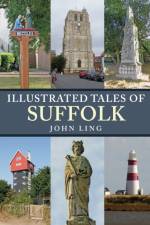
The historical county of Suffolk has a host of strange and mysterious tales ranging from ancient legends and stories of the supernatural to more modern documented cases. These strange and spooky stories include the Green Children of Woolpit, where a boy and girl with green-tinged skin, neither of whom could speak English, were discovered in a wolf pit in central Suffolk in the twelfth century, and the Wild Man of Orford who was a E mermanE captured off the Suffolk coast. The famous Black Dog of Bungay was a giant supernatural hound said to have killed parishioners in Bungay church during a thunderstorm in the sixteenth century, before killing again at Blythburgh church. Many tales have been told of the ninth-century King Edmund of East Anglia, who gave his name to Bury St Edmunds in Suffolk. Another royal connection is the casket said to contain Anne BoleynE s heart that was found during the nineteenth century at Erwarton church. Other old tales include the Kessingland Sea Serpent - SuffolkE s answer to E NessieE ; the Beccles Rat-catcher Pipers, a story which has similarities with the Pied Piper of Hamelin myth; the lost city of Dunwich, sometimes called E BritainE s AtlantisE ; Suffolk witchcraft; and tales of hauntings and other supernatural activity. More recent stories include the 1980 Rendlesham Forest UFO incident dubbed E BritainE s RoswellE . These strange and spooky stories are accompanied by the authorE s photographs of places featured in the text, both present-day and historical, in this hugely entertaining book.
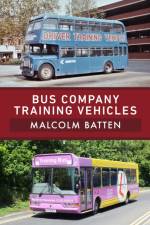
The larger bus operators, whether municipal or company owned, have traditionally trained their own new drivers. Normally older vehicles from the fleet were retained and adapted for training, adorned with 'L' plates. In earlier days they would usually just retain fleet livery. Sometimes they might receive a separate livery, to warn other road users. When the National Bus Company introduced corporate liveries of red or green for its fleets, many of their constituent companies used yellow for their training and service vehicles. Then, as recruitment became more difficult from around the 1980s, colourful liveries with invitational recruitment slogans tended to appear and this has continued since. Rather surprisingly, companies often bought in buses for training from other companies rather than converting their own, and these might be types not otherwise represented in their fleet. This book looks at a variety of training vehicles from around the country over the last fifty years, including examples that have survived into preservation.
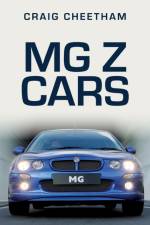
The MG Z cars were produced at a pivotal time when the MG Rover Group separated from their previous owners BMW and stood alone in the highly competitive mass car market. In this readable book, motoring journalist and Austin Rover expert Craig Cheetham reveals the inside story of the development of the range of MG Z cars that were designed to save the company. The book explores the formation of the Phoenix Corporation, the holding company for the MG Rover Group. It also looks at the design and engineering initiatives that would make the MG Z cars more than just a clever rebranding exercise, producing cars with lasting appeal. The book describes the MG Z versions of the Rover 25, the Rover 45 and the Rover 75, providing insights into how each of the models was re-engineered to meet the demanding standards of MG's heritage. It also describes the fortunes of the Z cars in motorsport, in particular the British Touring Car Championship. The book reveals how, despite all these efforts, MG Rover eventually ran out of money, bringing an end the British-owned mass car industry. Complete with tips for owners and prospective buyers on what to look out for, this book is an essential guide to the MG Z cars.
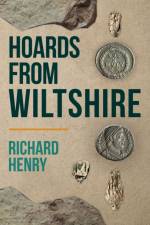
For thousands of years, the landscape of Wiltshire has played host to carefully concealed hoards of material wealth; from tools to weapons, jewellery to money. Over the last two hundred years, the discoveries of these previously hidden treasures have led to the rewriting of our understanding of this country and the people who lived in it. In this book, archaeologist Richard Henry examines ten of the most significant of these hoards. Through considering these finds in relation to their landscape context and scientific analysis, it is clear these items have much to tell us - from medieval silver coins that reflect the battle for power during the Anarchy (1135-1153), to Roman saucepans and wine strainers that may suggest ritual consumption at tribal boundaries. Hoards from Wiltshire explores the types of objects hidden away and the motivations for doing so, deepening our understanding of the people who used and deposited them as well as the history of the county as a whole.
ERF Limited was formed in 1933 when Edwin Richard Foden founded the company with his son Dennis. Under the guidance of design engineer Ernest Sherratt, the best components available at the time were assembled to create vehicles that soon earned a reputation as good lorries capable of earning good revenue with reasonable running costs. This approach continued, more or less, until the end of the company and proved to be a very successful and lucrative business plan with a lot of development costs being borne by the component suppliers. This book is a broad overview of the company, with almost 200 photos offering an insight into the range and model types that spanned the years. The majority of the images included here are previously unpublished and offer a wonderful tribute to this much-loved manufacturer.
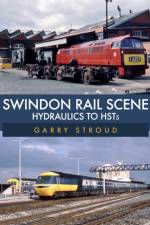
Swindon played an important role in the railway industry from its Victorian roots up to the sound of the final works hooter in 1986. This was without doubt the end of an era; today the works site is a shadow of its former past - gone is the mighty 'A' shop, along with the carriage and wagon shops east of the Gloucester line. With electrification now through the town, the railway landscape has been totally transformed. Covering two decades between the late 1960s to the late 1980s, the images in this book represent not just the works, station and yards during this period, but also the main line and local area to Stratton St Margaret in the east, Wootton Bassett to the west and Purton on the Gloucester line to the north. This was a period of transition when Western Region hydraulics were giving way to diesel electric power, with HSTs eventually arriving in the area.
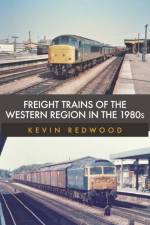
From coal trains in South Wales to clay trains in Cornwall, there were still large numbers of unfitted and vacuum-braked wagons of various types in use across the Western Region at the start of the 1980s. However changes were taking place, and by 1984 the traditional wagon-load freight network had disappeared, and with it many yards were closed or rationalised. The replacement Speedlink Network conveyed modern air-braked wagons, many of them privately owned. Company block trains also connected freight customers across the Region, hauled by a variety of loco classes. Between 1980 and 1986 Kevin Redwood was working in the Area Freight Centre at Bristol with a particular interest in freight traffic. On his days off he frequently travelled across the region to photograph the changing scene. His journeys took him to busy mainline locations like Didcot, as well as more obscure locations in South Wales and the West Country.
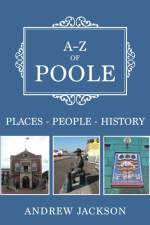
Poole is the second largest natural harbour in the world and the largest in Europe, resulting in a trading history which dates back to Roman times. In the Middle Ages, commodities for export, particularly wool, were funnelled into Poole and it became a place where merchants could dock, store their goods and display their wares. The port grew in importance during the seventeenth and eighteenth centuries and the boom years of trade with Newfoundland, but suffered from an economic slump throughout most of the nineteenth century and into the 1920s and '30s. However, in the decades after the Second World War, many major national companies were attracted to the town, resulting in 10,000 more homes being built in Poole between 1946 and 1966. A major slum clearance scheme also took place during the same period, as over 1,000 condemned homes were demolished, many in the labyrinth of narrow backstreets and alleyways leading from the Eastern Quay into the Old Town. Poole is still a working port, particularly on the Hamworthy side, where Sunseeker yachts off the production line can be seen adjacent to industrial cargo ships moored nearby and the ferry terminal. On the Poole side, the Fishermen's Dock nestles incongruously adjacent to a yachting marina. The Quay and Old Town has preserved many cobbled streets and alleyways containing historic buildings, some dating back to the fourteenth century, once a haunt of Newfoundland merchants, pirates, smugglers and press gangs. This fascinating A-Z tour of Poole, its interesting people, places and historic events, is fully illustrated with photography and will appeal to all those with an interest in this Dorset coastal town.
Abonner på vårt nyhetsbrev og få rabatter og inspirasjon til din neste leseopplevelse.
Ved å abonnere godtar du vår personvernerklæring.