










Gjør som tusenvis av andre bokelskere
Abonner på vårt nyhetsbrev og få rabatter og inspirasjon til din neste leseopplevelse.
Ved å abonnere godtar du vår personvernerklæring.Du kan når som helst melde deg av våre nyhetsbrev.

Between the two world wars there was a golden era of industrial design when the benefits of streamlining were realised, allowing for reduced wind resistance, faster transportation and a more efficient economy. The Art Deco-influenced style was also a huge public relations exercise in the glamour-obsessed 1920s and 1930s. Its most obvious manifestations were on the railways, with beautiful streamlined locomotives in daring colour schemes on prestigious named expresses, especially in Europe and North America. They included the Fliegender Hamburger diesel train in Germany, the American Mercury trains and of course Sir Nigel Gresley's A4 Class, on which the streamlined casing and internal streamlining allowed Mallard to break the world speed record. The idea of streamlining made even more sense in the air, where the great airships were crossing the Atlantic, and aircraft like the Douglas DC3 cut through the air more easily than anything that came before. Meanwhile, on the world's roads, buses and cars lost their perpendicular looks and marques like Cord and Bugatti led the way with increasingly aerodynamic, wind-tunnel-tested profiles. Designers like Raymond Loewy, as well as designing streamlined locomotives, began to apply the same style to products for which wind resistance was irrelevant, such as buildings, refrigerators and even pencil sharpeners. This book tells the story of the streamline era - its designers, its successes and failures, its inspiration and its legacy.
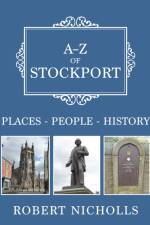
Lying 7 miles south-east of Manchester, the town of Stockport can trace its history back to the foundation of a castle in the area in the late twelfth century and the granting of a borough charter around 1220. The town grew rapidly during the Industrial Revolution but the earlier town is still visible in the narrow cobbled streets and historic buildings in the market area of the town centre. Stockport was famous from the sixteenth century for the production of hemp and rope, and became a centre for hat-making and the silk industry. During the nineteenth century it was at the heart of cotton manufacturing and today the rich and varied history of the town can be seen in its unique hatting museum, underground Second World War shelters, art deco cinema and theatre and regenerated former industrial buildings. A-Z of Stockport delves into the history of this historic town, revealing interesting and significant moments in the story of Stockport. It highlights well-known landmarks, famous residents and digs beneath the surface to uncover some of the lesser-known facts about Stockport and its hidden gems. This A-Z tour of Stockport's history is fully illustrated and will appeal to all those with an interest in this fascinating town in Greater Manchester.
During the Medieval period, farmers across Europe were often obliged to offer one tenth of their yield to the Church, supporting a network of monasteries, abbeys and their varying religious motives. Storage for such offerings, known as tithes, required the construction of large, protective structures, large enough to hold produce from many surrounding farms. As a result, rural England became peppered with tithe barns - long buildings of timber and stone, often in areas with a significant religious presence. Their longevity is owed in part to the alteration of their use over hundreds of years, few now fulfilling the purpose of storage and taxation of farmers on behalf of the Church. Now, these buildings provide much in the way of pleasure as historical attractions, wedding venues, restaurants and, for some, family homes. Here, some of the country's notable examples are explored, shedding light on a little-known regular feature in Britain's towns and villages.
Second Generation DMUs in Scotland covers the modern diesel multiple units introduced by BR from 1981. It features locations from across Scotland, and also looks at Carlisle. This book covers units from the experimental Class 140s, introduced in 1981, to contemporary examples including Class 185s still in use with TransPennine Express. Possibly the best unit introduced to Scotland are the Class 156 units based at Corkerhill depot in Glasgow. These units can be found working from Newcastle to Mallaig. The new generation of DMU fleets can go faster and travel further and have generated a huge following. Here, Colin J. Howat combines previously unseen historical black-and-white photography with modern digital examples to tell their story.
Idyllic and breathtaking, the Yorkshire Dales is one of the most popular and well-known national parks not only in Britain, but throughout the world. Designated a national park in 1954, it attracts millions of visitors each year who are lured there by the spectacular scenery. Then there are historic towns such as Skipton, Settle and Hawes. Its landscapes are famous and rewarding whilst picturesque chocolate box villages are untouched from a bygone era and yield a life full of character. But there is more to the Dales than meets the eye. With 841 square miles of beauty and things to do, it's full of hidden gems that show a glimpse of its lesser-known heritage. In Secret Yorkshire Dales, author Mike Appleton takes the reader on an enlightening and entertaining journey through the park's past, delving beneath the surface to uncover its secrets. You'll discover a network of passages that have shaped the landscape above it, learn why the clack of needles was to be feared and hear folk tales from years past. You'll also find out about hidden kilns and mines, discover why a village had to drive a spike through the heart of a dead man and tread along long-forgotten routes and pathways. Then there are the secret inns, meeting places, notable folk, the intriguing cottage industries and much more that make this area special.
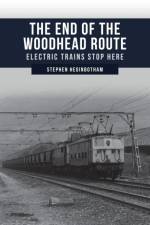
In The End of the Woodhead Route: Electric Trains Stop Here, transport historian Stephen Heginbotham takes a fresh look at this famous and much mourned route. Perhaps the most keenly missed stretch of track in the entire country, the possibility of the Woodhead Route being reopened remains an ever present issue when the state of the nation's railways is discussed. Utilising a superb selection of previously unpublished photographs from the camera of Ian Blackburn, the true story behind this iconic part of the British landscape is told.
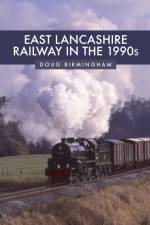
The East Lancashire Railway is a well-established and popular 12.5 mile preserved line travelling from Heywood to Rawtenstall via Bury and Ramsbottom. The East Lancashire Railway Preservation Society decided to reopen the Bury to Rawtenstall line after its closure by British Rail, and under the auspices of the East Lancashire Railway Trust it finally reopened the line between Bury and Ramsbottom to passenger trains in 1987, and eventually to Rawtenstall in 1991. From around 1989, Doug Birmingham started to record the line and documented the change from operating small industrial locomotives to using ex-British Railways steam locomotives to haul passengers up and down this 8-mile section of the former Bury to Bacup line. The images in this book covers the line during the four seasons of the year and primarily feature the many ex-BR steam locomotives, though various ex-BR diesel locomotives that operated on the line during the 1990s can also be found. This book shows the railway progressing thanks to the enthusiasm and efforts of the members and volunteers, ultimately becoming one of the premier preserved railway lines in the country for both steam and diesel enthusiasts, as well as a stellar tourist attraction.
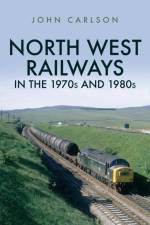
John Carlson takes a new look at the north-western rail scene. Focusing mainly on the years 1975 to 1985, this collection of around 180 colour and black-and white-images, almost all previously unpublished, takes a look the regions railways in the 1970s and 1980s. Captured here are images that encapsulate intercity expresses at speed and rest, show freight being shunted and hauled in yards and on main lines, and portray the enthusiasts and passengers that photograph and ride them. Although focusing on the region's major railway centres, such as Carlisle, Preston and Manchester, branch lines and out of the way vantage points have not been neglected.
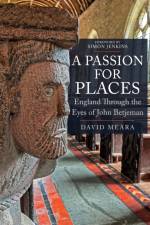
Sir John Betjeman was born at the start of the twentieth century, and lived to become Poet Laureate, an accomplished writer and campaigner, and something of a national treasure. All his life he loved churches, which are woven into his poetic output. He wrote extensively about churches and architecture, telling a journalist in 1955 'If I have a mission, it is to show people things which are beautiful so that they will very soon realise what is ugly. When you look at things, instead of just looking through them, life starts absolutely crackling with interest and excitement.'Now, Betjeman's particular way of looking at churches is in danger of being lost in the face of a more academically driven and forensic art-historical approach. This book picks out some of the buildings, especially churches, which Betjeman was particularly fond of. It highlights and celebrates Betjeman's more poetic, parochial and personal response to the built environment, and his evocation of the English parish church through the ordinary and the charm of hassocks, old incense and oil lamps. Highlighting his religious, aesthetic and social pre-occupations, this book is both gazetteer and commentary on his own particular vision of England and architecture, which deserves to be celebrated afresh.
Four generations of Brandon men lived and served six English kings, the most famous being Charles Brandon, Duke of Suffolk, best friend and brother-in-law to King Henry VIII. Yet his family had a long history tied closely to the kings of the Wars of the Roses back to Henry VI. Charles Brandon's father, Sir William Brandon, supported Henry Tudor's claim on the throne and became his standard bearer, dying at the Battle of Bosworth. Charles's uncle, Sir Thomas Brandon, was Henry VII's Master of the Horse, one of the three highest positions within the court. Charles's grandfather had ties with Henry VI, Edward IV and Richard III. These men held important offices, made great sacrifices, walked the fine line between being loyal courtiers and traitors, and even gave their lives, all in the name of loyalty to the king they served. No more shall the Brandon name be an obscure reference in archives. It is time for them to emerge from the shadows of history.
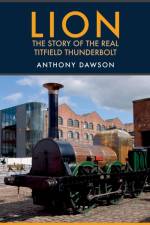
Best known as the Titfield Thunderbolt, Lion is one of the most beloved locomotives in railway preservation - transformed from humble luggage engine to film star, this is a Cinderella story. Built in Leeds in 1838 by Todd, Kitson & Laird, Lion is the only surviving locomotive built for the pioneering Liverpool & Manchester Railway. After a mainline working life of nineteen years, Lion was sold into industrial use in 1859. Drawing on extensive archival research and a detailed study of the original locomotive, this book explores the design and construction of Lion, as well as its career on the Liverpool & Manchester Railway and eventual preservation and restoration, including her several film roles. Finally, the question is asked 'How much of Lion is original?'
England is a nation of gardeners and most of us garden in suburbia. A private paradise encompassed by privet, the suburban garden contains in its small compass the hopes and dreams of millions of gardeners past and present. From Victorian shrubberies to the 1980s 'Good Life', these small plots reveal the ever-changing aspirations and realities of the suburban dweller. Lauded by estate agents and satirised in literature, suburban plots are scattered with seating, sundials, goldfish ponds, and that most divisive of features: the overgrown hedge. With one foot in the country and one in the town, suburban garden style wavers from rural retreat to urban chic, decorative to productive, floral to formal. At its heart it is defined by its location and its size. Neglected by history, and sometimes in reality, this book celebrates the gardens that make up the green patchwork of suburbia. This book is part of the Britain's Heritage series, which provides definitive introductions to the riches of Britain's past, and is the perfect way to get acquainted with Suburban Gardens in all their variety.
On 10 May 1857, the most serious threat to British supremacy in India appeared at Meerut, a large military station near Delhi. After months of increasing tension, sepoys of the 3rd Light Cavalry along with the 11th and 20th Native Infantry pointedly refused to use the new cartridges supplied to them. 'The company Raj is over forever,' declared the men to their British officers as they burned their cantonments, and the cry of 'Dilhi chalo' (Let's go to Delhi) was heard as they marched to the old Mughal capital. There the Mughal empire was declared resurrected and the Emperor Bahadur Shah Zafar, an ageing pensioner of the British Government, affirmed as the ruler of all Hindustan once again. With the mutiny spreading rapidly, it became imperative for the British to recapture Delhi as the success or failure of the uprising hinged entirely on the possession of the city and the destruction of the rebel army. It would take three months of bloody fighting for the British Delhi Field Force to defeat the rebel sepoys and recapture the city, a period in which it became unclear quite who besieged whom. Singh comprehensively narrates the story from the uprising at Meerut to the climactic capture and sack of Delhi.
In the early 1990s, British Rail introduced the 182-strong Class 158 fleet, followed by the 22-strong Class 159s. These units heralded a new era in long-distance travel at the time, replacing 1950s-designed locomotive-hauled coaches on long secondary and inter-city routesWith all 204 units still in service today, this title aims to examine their varied operations, from Scotland to the south-west, from Wales to East Anglia, where they can still be found all across our rail network.
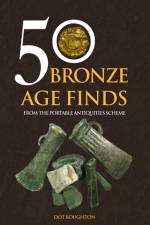
British Bronze Age artefacts made from copper, bronze, gold, flint, jet and shale are renowned throughout Europe for their beauty and exquisite craftsmanship. In England and Wales, many new discoveries are made each year by members of the public and recorded with the British Museum's Portable Antiquities Scheme. Recent nationally important finds include the gold lunula from Tarrant Valley (Dorset) and the gold and silver striped penannular ring from Havant (Hampshire). The metalwork hoard from Boughton Malherbe (Kent) is the third largest metalwork hoard ever discovered in Britain. Here, Dot Boughton investigates finds and hoards discovered over the last twenty years and uses them to discuss the development of the different Bronze Age weapon, tool, vessel and ornament types from their humble origins to their individual peaks in the Early, Middle and Late Bronze Age.
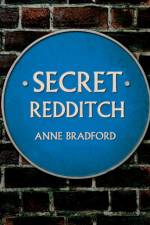
The Worcestershire town of Redditch grew up in the Middle Ages but became famous for needle manufacturing, and by the nineteenth century it produced 90 per cent of the world's needles. Alongside the needle industry, the town was also known for manufacturing fishing tackle, hooks and springs, and in the twentieth century other industries followed, including Royal Enfield. Redditch was transformed in the 1960s when it was designated a New Town, much of it being rebuilt as an example of modern town planning and new housing developments doubling the population. Although the traditional industries have largely disappeared, other new businesses and services have taken their place and Redditch is a thriving town. In Secret Redditch local author Anne Bradford reveals many little-known stories about Redditch from its medieval past to more recent times. These include a hidden cemetery left by the monks and a mysterious stone coffin, the scandalous elopement of an heiress at Hanbury Hall, a tucked-away memorial to a needleworker's death and another memorial stone to a notorious murder, the remains of the now closed Redditch to Evesham railway and much more. The hidden world of old Redditch behind the new town is revealed including little-known stories about the development of the new town and how the shopping centre was built on the old town plan.
In 1961 the first Armoured Fighting Vehicles appeared in the ever-expanding range of Airfix kits. The 1960s and 1970s are considered by many as the golden age of kit building and the enthusiastic schoolboys and young men building these kits became known as the Airfix Generation. The hobby went into decline in the 1990s as plastic kits gave way to video games, but the hobby has recently undergone a revival as the original members of the Airfix Generation, now at the end of careers and family commitments, take a nostalgic look back at their childhoods. Some, like the author, will become once again absorbed by the hobby, but many will be content to buy a few old kits - others are coming to the hobby from an entirely new perspective. All will be delighted to find a new book that tells the early days of the hobby from a model tank perspective. Here, Tom Cole concentrates on the kits from Britain's Airfix and Matchbox and looks at the early imports from Japan, in the form of Fujimi and Nitto, and the European Esci.
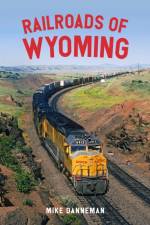
Long before Wyoming was officially part of the union, the Wyoming Territory played a crucial role in westward expansion of the United States as the first transcontinental railroad was built into the area by Union Pacific in 1862, bound for a meeting with Central Pacific in Utah in 1869. Modernised, this 'Overland Route' today bustles with traffic, as trains thunder across the state on main lines destined for California and Pacific Northwest. More recently, Wyoming's expansive Powder River Basin has provided gargantuan amounts of coal tonnage for both UP/Chicago & North Western and Burlington Northern/BNSF. Even though it appears that this prodigious coal traffic has peaked, there is still plenty of trains to be seen moving out of the basin. Additionally, BNSF has a secondary main line that traverses through some extraordinary scenery as it heads north and west toward connections in Montana. All in all, railroads crossing the wonderful Rocky Mountains and High Plains of the 'Cowboy State' are certainly a beholder's delight.
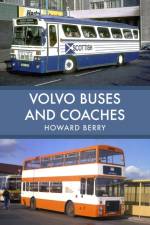
It seems impossible to think that a company who imported their first passenger vehicle into Britain in 1972 would, less than twenty years later, take over what was once Britain's largest passenger and commercial vehicle manufacturer. It is a testament to the quality of Volvo's products that they are one of the most popular chassis on the road today. Covering Volvo from their entry into the UK market, this book gives an overview of all the models to enter the UK market. With a brief description of each chassis type and 180 photographs, all in colour and with informative captions, it showcases Volvo's products in their operating heyday.
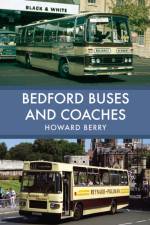
Until production ceased in 1986, Bedford buses and coaches were a familiar sight on roads across the world. From the ubiquitous Bedford OB and the distinctive six-wheeled Bedford VAL right up to the final model, the air-suspended turbocharged Venturer, the advertising slogan 'You see them everywhere' was perfectly suited to the company. Covering the period from 1960 until the end of production, this book gives an overview of the majority of models produced during this period including the VAM, VAL and Y types. Containing a brief description of each chassis type and 180 photographs, most in colour and all with informative captions, it showcases the products of the Dunstable factory in their operating heyday.
Keep Out! takes the reader on an exclusive tour of some of Britain's best kept secrets - those places that the authorities would rather you didn't know anything about or, in some cases, even be aware that they ever existed. That is, until now. Among the locations featured are disused nuclear bunkers, long-forgotten tube stations, top secret military bases and a shipwreck that, to this day, is a very real and permanent danger to the coastal residents near to where it rests - an ever present menace that no-one seems to know what to do with. Also featured is a humble field in rural East Anglia that is now a focal point of twenty-first century logistical technology. So find yourself a secure location, turn the lights down low and prepare to discover those parts of Britain where access, in many cases, is forbidden to all but to all but a select few. Featuring original and archive photography, Keep Out! explores forty such locations across Great Britain, offering short histories of the sites and, when known, information about its present-day role. It is a tantalising glimpse behind an iron curtain of secrecy that reveals the fascinating history of these intriguing and important locations.
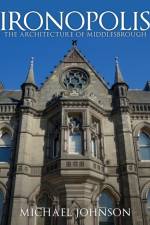
In less than a century, Middlesbrough developed from a small farmstead into an industrial metropolis of 90,000 inhabitants. The genesis of this extraordinary transformation was the establishment of a new coal port on the south bank of the River Tees. Conceived and built by its industrial pioneers, Middlesbrough was a Victorian new town, planned on a strict grid system. Following the discovery of ironstone in the Cleveland Hills, this embryonic town developed into a world-leading centre of iron and steel production, earning itself the epithet 'Ironopolis'. A product of capitalist enterprise, Middlesbrough has a surprisingly rich architectural heritage. From the commercial palaces of the ironmasters' district to the superb Gothic town hall, Middlesbrough's buildings express the civic pride and entrepreneurial spirit of its industrial titans. The town boasts an incredible variety of churches, some designed by the brilliantly original architect Temple Moore, as well as the only surviving commercial building by Arts and Crafts pioneer Philip Webb. Striding over the Tees, Middlesbrough's Herculean bridges are monuments to the ingenuity and skill of its workers. This book is a celebration of Middlesbrough's architectural legacy. Exploring a selection of its finest buildings, it argues that despite the damage wrought by economic change, wartime bombing and destructive planning decisions, Middlesbrough retains a spectacular Victorian townscape that expresses a history of exceptional innovation and artistry. The text is illustrated with archival images and colour photographs taken especially for this volume. Michael Johnson is Senior Lecturer in Design History at Northumbria University. He is the author of The Sunderland Cottage: a history of Wearside's 'Little Palaces' and co-author of The Architecture of Sunderland, 1700-1914.
Bolton has its roots in Lancashire where it was established as a textile town from the Middle Ages, but it was during the Industrial Revolution that it grew to become one of the major cotton manufacturing centres of the world. Engineering, paper making, bleaching, and dyeing followed, with thousands employed in the manufacture of textile machinery, steam engines, boilers, other heavy machinery, and tools in addition to the thousands employed in the spinning mills. As that heavy industry and textile manufacturing declined during the twentieth century, other more modern activities took their place and alongside the town's surviving historic and industrial buildings a modern town has developed. Colourful stories lie behind the face of today's Bolton, some of which are well known, although other events are well worth investigation. How exactly did the borough obtain a plentiful supply of clean drinking water during the period of its rapid expansion in the nineteenth century? What birth pangs accompanied the move towards local democracy after 1792? How is one street linked to two aviation tragedies? How did an American geologist come to make his mark and remain in Bolton for ever?With tales of remarkable characters, unusual events and surprising locations, Secret Bolton will appeal to all those with an interest in the history of this town in Greater Manchester.
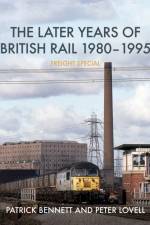
1980 to 1995 was an extraordinary time for the railways of Britain, especially the freight sector. In 1980 there was a unified, monochrome railway. Freight traffic was still abundant, with marshalling yards active and many branch lines still operating. There were hundreds of collieries. In the early 1980s, Sectorisation arrived. The freight division was separated from the passenger side and further sub-divided into different freight sectors. New locomotives were introduced, and the older types started to disappear. As the eighties progressed, the freight sector was constantly changing. The mixed freight train became a thing of the past but new traffic flows developed, particularly in containers and aggregates. The coal sector steadily declined and branch lines became disused. In the early nineties three new freight companies were created in anticipation of privatisation and then finally privatisation itself arrived, with all freight traffic being taken over by an American company. It was a period of enormous change and adaptation, and the story is told here through the images of two photographers who were keen observers of the railway scene throughout the whole of this fascinating period.
In this book, Alan Taylor reveals that the history of Dorset's oil starts in the 1850s with attempts to extract oil and gas from mined oil shale at Kimmeridge. By the early twentieth century exploration geologists had realised the significance of oil seeps and other geological features found along the Dorset coast. It seemed that oil might lie in the rock strata at specific locations deep under the Dorset countryside. The author explains how exploration drilling, during a period of eighty years, led to the discovery of four producing oil fields by BP and others. The unfolding of the development of each field in such an environmentally sensitive area is described. One oilfield, Wytch Farm, has turned out to be the largest producing onshore oilfield in Western Europe. Access to databases held by HM Government's Oil and Gas Authority has enabled the author to produce a set of unique maps and diagrams to illustrate the historical development of Dorset's oil. Packed with interesting facts and stories, this is an essential book for those interested in Dorset's industrial history.
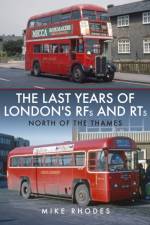
The AEC Regal IVs and Regent IIIs, or to give them their class prefix letters RFs and RTs, are among the most revered buses to have served London over the years. The RFs were maids of all work and were tailored for private hire, Green Line coach work and ordinary stage bus work in both the central and country areas. The first of the type were introduced in October 1951 and a total of 700 vehicles were built for the London Transport Executive. They replaced virtually all the other types of single-deckers then operating in the metropolis. The RT was first introduced to service in 1939 and production ran to 151 vehicles before construction ceased in early 1942. Following the war, the Park Royal factory recommenced building the type in 1947, with the last new chassis being rolled out in 1954, taking the bonnet number RT4825. Both types soldiered on throughout the 1970s as LTE encountered severe problems with their 'OPO' replacements before both finally bowed out within a week of each other in March/April 1979. This account charts the last years of operation of both types from the mid-1970s onward, focusing on North London.
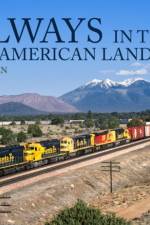
Windswept vistas. Scorched canyons. Glorious scenes of snow and ice. This book shows the North American landscape in all its breathtaking glory, cleaved by the continent's powerful locomotives and captured in a series of stunning original photographs by leading railway artist Mike Danneman. Evoking the romance, drama and beauty of the railways, this wonderful collection of images presents the full breadth of jaw-dropping backdrops offered by this vast expanse of land. The contrast between raw motive power and bucolic peace creates scenes that will delight anybody who wants to enjoy the full majesty of North America from their own home.
In the late 1960s, P&O established ferry services in the North Sea and English Channel. Roll-on/roll-off operations and containerisation were introduced and new ships, facilities and investment was needed to take advantage of developments. What followed was several decades of growth, buyouts and divisions. The twenty-first century saw the closure of several routes as the ferries saw increased competition from low-cost airline and the Channel Tunnel. Throughout this period, P&O attracted a loyal customer base and became one of the most recognisable names on the sea. Utilising a selection of rare and previously unpublished images, maritime historian Ian Collard delves into the story of this iconic company and its ships.
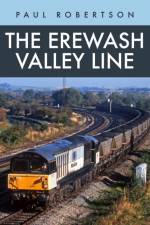
The Erewash Valley line, linking the busy railway junctions at Trent through the once bustling yards of the iconic railway location of Toton and to the main line at Clay Cross, has seen much in the way of change over the last half a century. Infrastructure, traffic types, wagon and locomotive classes have all seen a mixture of rationalisation, overhaul, replacement, withdrawal and investment. This changing scene has provided enthusiasts and photographers with outstanding variety and opportunities to record the changing times, and while the amount of traffic lost can be lamented, the modern-day photographer can still find good variety. With 180 previously unpublished photographs, this book provides a snapshot of diesels working over the route through this period of change, from the corporate British Rail era to the early years of privatisation and up to the present day.
The town of Dartmouth, lying on the River Dart estuary on Devon's south coast, has long had close associations with the sea. It was an important port for south-west England during the Middle Ages and became the home of the English navy. Dartmouth ships played a vital role in the battles against the Spanish Armada in 1588 and since the nineteenth century Dartmouth has been the home of the Royal Naval College. The historic town that grew up around the harbour with its narrow streets and ancient buildings such as the Butterwalk holds many dark and interesting secrets unknown to many who live in or visit the town. In this book author Christine Donnelly explores the stories behind the facade of the town, with characters such as John Hawley, the mayor who was also a pirate; William Veale, the Dartmouth Robinson Crusoe; Thomas Newcomen, the pioneering developer of the steam engine; and Agatha Christie, who lived at Kingswear, across the river. There are tales of witchcraft, tunnels by the harbour, the Scold Stone in the river and a mummified mouse preserved in a pub. With tales of remarkable characters, unusual events and tucked-away or disappeared historical buildings and locations, Secret Dartmouth will appeal to all those with an interest in the history of this town in Devon.
Abonner på vårt nyhetsbrev og få rabatter og inspirasjon til din neste leseopplevelse.
Ved å abonnere godtar du vår personvernerklæring.