

















Gjør som tusenvis av andre bokelskere
Abonner på vårt nyhetsbrev og få rabatter og inspirasjon til din neste leseopplevelse.
Ved å abonnere godtar du vår personvernerklæring.Du kan når som helst melde deg av våre nyhetsbrev.

Our streets are enriched by a huge variety of objects, from water fountains and horse troughs to post boxes, signposts and more. Collectively, these objects are known as street furniture. From Roman-era milestones to modern infrastructure disguised as artwork, they tell us much about contemporary life. This book relates the compelling history of street furnitureE s design and manufacture, featuring notable architects and major ironfounders, as well as curiosities like King Edward VIII post boxes. It brings the story right up to date, detailing the new generation of environmentally friendly and digitally connected street furniture. The book also charts the dangers to our streetscapes, which are particularly vulnerable to change, with heritage street furniture at risk of being forgotten or lost. This book includes many fascinating images of surviving street furniture and vanished pieces, with archive material allowing readers to see long-gone items in use. It will appeal to those interested in social and transport history, in how we lived in the past, and indeed how we may live in the future.
Kent is often referred to as 'the cradle of English Christianity'. Canterbury is not only home to the Anglican Communion but also the location of St Martin's Church, the oldest church in England in continuous use. Kent's religious heritage has benefitted from this, as has its proximity to both the Continent and London. Architecturally, the churches of Kent range from premier Norman churches to tiny manorial churches that still sit in sequestered churchyards having, apparently, been forgotten for centuries. These churches are distinguished by a greater than usual diversity of building material, from the poor-quality but distinctive Kentish ragstone or flint nodules from nearby fields to excellent-quality limestone imported from Normandy and locally produced bricks. Kent's churches also display glimpses into national history with links to early saints like St Mildred and St Sexburga through to Archbishop Thomas Becket, Anne Boleyn, Charles Dickens and Winston Churchill. In this book author John E. Vigar examines not only examples of the great church building campaigns of the medieval period but also later churches. Many have furnishings and memorials where individuals showed their importance in society by beautifying churches to their own glory, including Lullingstone, which was brought up to date in the early eighteenth century by its rich patron, Sir Percival Hart, and examples where new money from industry influenced the county's churches in the Victorian period, outstanding among which is Kilndown. This fascinating picture of an important part of the history of Kent over the centuries will be of interest to all those who live in or are visiting this attractive county in England.
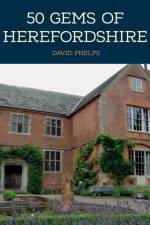
Herefordshire has had the mixed blessing of being a border county, predominately rural and far away from any metropolis. Lying between England and Wales, its past has been bloody, with raids and an unstable boundary. Borders are always porous and much Welsh influence can be found, especially in the west of the county. The county did not play a major part in the Industrial Revolution, which meant it became something of a backwater. Its unspoilt countryside provided a pleasant place to visit, but not such an easy place to make a living. Herefordshire can make the claim of being the birthplace of tourism as rich travellers, thwarted by the Napoleonic War from making the Grand Tour of Europe, found journeys down the beautiful River Wye some compensation. Now modernity is making changes to the county, with pressure for more houses, large-scale agriculture and the climate crisis all having their effect, but Herefordshire remains an intriguing and fascinating place. In 50 Gems of Herefordshire, local author David Phelps visits some of the favourite and lesser-known locations that reflect its heritage, culture and scenic splendour. From churches to castles and cider factory to cathedral, this is a county with much to discover and enjoy. Well-illustrated throughout, this book will appeal to residents and visitors alike.
Bungay History Tour offers an enthralling insight into the fascinating history of this town in Suffolk. Author Christopher Reeve guides us around its well-known streets and buildings, showing how its famous landmarks used to look and how they have changed over the years, as well as exploring its lesser-known sights and hidden corners. With the help of a handy location map, readers are invited to follow a timeline of events and discover for themselves the changing face of Bungay.
As days get shorter and seasons change, winter arrives with snow and ice. No matter how brief the day or severe the weather, railroads continue to haul tonnage and passengers through landscapes cloaked in snowy white. Scenery takes on an added dimension when mercury plunges to uncomfortable temperatures. A crisp winter setting with a train running through it, beautifully lit with low winter sunlight, is just as captivating as a scene of heavily falling snow muffling sights and sounds of a massive train following a white pathway of hidden rails. Even when travel gets tough and the snow gets deep-and it hurts to breathe and your face and hands sting-hardy men and mighty machines keep the tracks clear. Snow season isn't for everyone, but this stunning collection of original photographs will delight any railway fan whether they be warm at home or braving the elements.
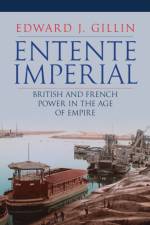
Today's arguments over Britain's relationship with Europe and its place in the world are shaped by its imperial history. The nineteenth century is too often invoked as moment where, thanks to unrivalled industry and an expansive empire, Britain alone exerted global dominance, without the need for European collaboration. This book shows how this is fundamentally wrong by exploring British collaboration with France between 1848 and 1914. Entente Imperial redefines our understanding of Britain's role in the world in the age of empire. In the 1850s, the very moment at which British power climaxed, the author shows how Britain worked alongside its only European rival, France, to exert unprecedented influence throughout the world. Together, France and Britain went to war in Russia and China, established the world's first free-trade treaty, considered shared measurements for trade and the arts, and initiated the Suez Canal's construction. This was a profound moment of Anglo-French integration and European hegemony, but from 1860 until 1904 the two nations drifted apart. As a result of this growing isolation, Britain's influence in Europe declined, as did France's throughout the world. By the twentieth century, Britain and France were compelled to work together in the face of the growing military threat of Germany, and the world was on the edge of war. Despite its world-leading industry and a colossal empire, British influence was contingent on its ability to cooperate with its great rival. This book radically revises Britain's imperial history at a moment when Britain's place in the modern world has never been more uncertain.
Sale History Tour offers an insight into the fascinating history of this town in Greater Manchester. Author Steven Dickens guides us around its well-known streets and buildings, showing how its famous landmarks used to look and how they have changed over the years, as well as exploring its lesser-known sights and hidden corners. With the help of a handy location map, readers are invited to follow a timeline of events and discover for themselves the changing face of Sale.
Assorted strange phenomena abound in Scotland - witches, wizards, fairies, sea monsters, yeti-type creatures, UFOs and a plethora of female spirits called glastigs and caoineags who appear in various forms. There are bewitching grey, white and green ladies, naughty poltergeists, unwanted love children, kilted bagpipers, bloodstained clansmen and abstract, floating columns of light. Alongside everyday 'spooks' are ethereal drummers, phantom vehicles, spectral dogs and horses and a ghost with a marvellous sense of humour who revisited this world disguised as a bouncing cannonball. The Big Grey Man of Ben MacDhui, the A75 Ghost Road, haunted Inveraray Jail, the Phantom of Melrose Abbey, and the ghostly Montrose aviator are well known but a myriad other phantoms reside among the ruins of draughty old castles or haunt battlefields, mountains, roads, barracks, beaches, railway lines, aerodromes, theatres, shops, houses, caves, standing stones, churches and factories and dozens stay in hotels and pubs all over the country. Maybe this surplus of spooky goings-on is triggered by the country's long and bloody history, or maybe it's down to the hauntingly bleak moorlands, craggy mountains and ancient Caledonian forests. Whatever the reason, Scotland is rich in blood-chilling tales and has more ghosts, hauntings and supernatural happenings than any other land on earth.
Under chapter headings such as 'Sources of Africa's cultural fragility', 'Thinking differently about African institutions', and 'Liberating human capital', Hlumelo Biko shows how, twenty years in, this century could yet become Africa's century, as many believe and some hope. Africa Reimagined is a thoughtful analysis of Africa's past, present and future, a sobering assessment of where it stands today, and where it needs to go, at once unnervingly candid and inspiring. Imagine if in the year 2040, forty of Africa's fifty-five nations have chosen to join together in a Pan-African government structure modelled on Swiss decentralised federalism. A merger between Ethiopian Airways, Air Mauritius, Air Kenya, Nigerian carrier Air Peace and South African Airways has transformed air travel. Africa is now home to the world's largest mining company in the form of a rejuvenated Anglo American, the company having returned to its African home base powered by a massive investment from Africa's new sovereign wealth fund. Africa rolls out the world's largest solar plants in the Sahara and Kalahari deserts. These projects are underwritten by a new insurance network based in Mauritius and modelled on Lloyd's of London. Rural employment has risen thanks to a focus on subsistence farmers, who have a shared service model that allows them world-class access to price-sensitive information, equipment financing, reasonably priced input costs and training techniques. A pipedream? Hlumelo Biko says no.
'You see them everywhere' was the slogan adopted by Bedford when advertising its commercial vehicles in the 1930s and it held true for many decades. The company set out to produce reliable vehicles at an economic price. Catering to the small trader with its 30cwt and 2 ton trucks, and 6cwt and 10/12cwt vans, the company was one of the leading manufacturers within its first seven years. During the war Bedford produced more than 250,000 lorries for the armed forces, such as the 15cwt 'pneumonia wagons' and the more solid 3-tonners. With a return to peacetime conditions, Bedford was able to produce new vehicles which it had been unable to launch during the war but regained market supremacy by 1947, when the company produced its 500,000th truck - the first British manufacturer to reach this figure. Bedford entered the market for heavier vehicles in 1950 and its one millionth truck was produced in 1958. Two years later the first of the TK range was announced and the concept of cab ahead of engine was introduced. This basic chassis layout has been followed ever since. The changes of design, use and loads carried in the course of 50 years of steady progress are illustrated in this book, which proves the truth of the slogan, 'You see them everywhere'.
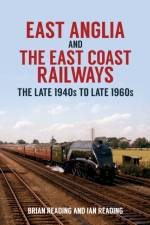
The 1950s and 1960s was a time of profound cultural and technological transformation. With images and vivid recollections, we journey back to post-war East Anglia and the East Coast Main Line with many locations changed beyond recognition. Trackside, at busy stations, and in and around depots, an evolving mood is revealed in pictures. In the 1950s, railway pride and optimism overcame staff shortages; returning locomotives to pre-war performance and introducing modern BR standard classes. By the 1960s, fiscal efficiency and the dawning diesel era turned pride to neglect of steam. Sparkling steel, brass and tallow gave way to dust, rust and flaking paint. Heroic workhorses were lost to scrap. As the mood turned to melancholy, just a few of these great workhorses became pets - polished, loved, and cared for by dedicated railway workers and a growing band of enthusiastic volunteers. People, machines and landscapes are crystalized on film for future generations; reawakening memories for those who lived through this time of change and offering a fascinating insight for those who are too young to have been trackside during this intriguing period of railway history.
Chiswick is considered to be one of West London's most appealing suburbs, renowned for its leafy appearance, riverside pubs and fine houses. Its four original villages - Strand on the Green, Turnham Green, Little Sutton and Old Chiswick - have remained a cohesive body despite the construction of a major road in the 1950s. The area has always been known for its good air, fishing and riverside trades. In the late nineteenth century Thornycroft & Co. shipbuilders launched their vessels and built the first torpedo boat for the Royal Navy. The yard was close to another of the area's main industries - brewing - and Fuller's Griffin Brewery is still a major business here operating from its 350-year-old site beside the Thames. In Chiswick in 50 Buildings author Lucy McMurdo presents an engaging and accessible perspective of the area's rich architectural heritage. Walk around Chiswick's streets and you will see buildings from the 1500s onwards in every architectural style. Until the mid-nineteenth century it was renowned for its market gardens and parkland as well as its grand Palladian villa, Chiswick House, designed in the early eighteenth century by the 3rd Earl of Burlington. This remains one of Chiswick's treasures. With the arrival of the railway in the 1860s the area became rapidly urbanised, the population increased and fields made way for housing. Unsurprisingly, many famous people have made Chiswick their home including artists Hogarth and Whistler and poet W. B. Yeats. Illustrated throughout, this book guides you on a fascinating architectural tour of this leafy and attractive London suburb.
The ancient walled city of Chester has an illustrious military history dating back to Roman times when a fort, four times the size of anything else in Britannia, was built here. In this book, local authors Adrian and Dawn L. Bridge chronicle the city's military history across the centuries. Beginning with the impact of the XXth Legion - Legio Vigesima Valeria Victrix - the authors go on to explore the Dark Ages, Viking, Saxon and medieval eras right through to the twentieth century, with both world wars, and beyond. Chapters focus on themes including local, national and foreign conflicts; military personalities, honours and awards; military units; and buildings and memorials. Both lesser and well-known aspects of the city's military heritage are featured to present a balanced perspective. In addition, the authors highlight women, as well as men, on the front line and the home front. Famous Chester military heroes such as Bomber Command's Leonard Cheshire VC and the Korean War's Kenneth Muir VC feature with lesser-known but equally distinguished local people such as John Dolphin (Head of SOE's Section IX during the Second World War). The Cheshire Regiment looms large in any discussion of Chester's military units. Its origins immediately after the 1688 Glorious Revolution are discussed together with the regiment's history up to its modern merger with the Mercian Regiment. Chester's Military Heritage presents a broad and insightful account of this important aspect of the city's history.
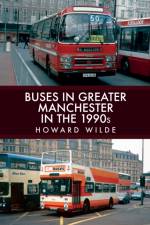
Like many of the conurbations across Britain, the Greater Manchester region in the 1990s offered a fascinating mixture of buses from operators both large and small, new and established. The deregulation of the bus industry that began in October 1986 created a lively if sometimes chaotic environment. Operators came and went; some were rather spectacular in their demise. As the 1990s progressed there was gradual consolidation, as increasing areas of operation came under the control of the emerging larger groups - the likes of First, Stagecoach and Arriva. In this book, Howard Wilde reflects on some of the choice moments of this eventful decade, with a wide selection of photographs from Manchester and the numerous surrounding towns to show a period that was fascinating for the enthusiast, if not always beneficial for the passenger.
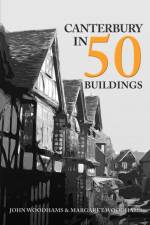
The historic cathedral city of Canterbury has traces of its Roman past. The oldest church in England, St Martin's, can trace its history back to this era but it is the cathedral founded under Anglo-Saxon rule which still dominates the city close by other surviving Saxon buildings, the Burgate and St Augustine's Abbey. Canterbury became an international pilgrimage destination in the Middle Ages after the assassination of Thomas Becket and although the population plummeted after the Black Death, the city wall with its gates was rebuilt. Huguenot weavers helped to revive the city's fortunes and the town grew again in the eighteenth and nineteenth centuries, although some of the town's old buildings such as the castle and the towers in the walls fell into disrepair. Although the Baedeker Blitz in the Second World War destroyed many buildings, Canterbury has retained its historic core but today's city is also graced by noteworthy examples of modern architecture, not least at the University of Kent and the recently redeveloped Marlowe Theatre. Canterbury in 50 Buildings explores the history of this fascinating city in Kent through a selection of its most interesting buildings and structures, showing the changes that have taken place in Canterbury over the years. The book will appeal to all those who live in Canterbury or who have an interest in the city.
Crowds of visitors flock to Whitby to explore the ancient abbey, walk the narrow streets, pass Captain Cook's home and see the replica of his ship Endeavour, but the history of Whitby is much richer, as revealed in this tour of its significant, interesting and unusual buildings. After the Dissolution of the Monasteries the Cholmley family took over much of the abbey's lands, building a grand home and developing the port and local industries. Whitby became one of the busiest ports in the land and magnificent Georgian buildings testify to the wealth brought into the town, not least through whale hunting. Other grand buildings of this time were constructed on wealth from the elsewhere, including slave plantations in the Caribbean. The town has also preserved the more modest homes of sailors and fishermen, including charitable housing, and the continuing connection with the sea is also represented by lighthouses, the foghorn station and lifeboat stations. More recently Whitby has become a holiday destination, with Victorian and more recent hotels, cinemas and a lido built for the use of visitors and local inhabitants. Whitby in 50 Buildings explores the history of this fascinating Yorkshire coastal resort through a selection of its most interesting buildings and structures, showing the changes that have taken place over the years. The book will appeal to all those who live in Whitby or who know it well.
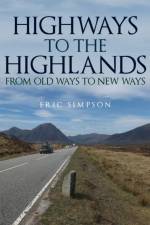
For centuries tourists and other travellers have been travelling north to the Highlands of Scotland. This book follows the main thoroughfares north, using vintage and contemporary images to illustrate how they and the people using them have changed over time. The book starts as many visitors to Scotland have done over the years, by following the Great North Road from Edinburgh to Inverness. The reader continues north from the Highland capital by the east coast, thus joining the highly popular North Coast 500 tourist route going around the North of Scotland from east to west. The return journey south follows the spectacular west coast route all the way to Glasgow. Many of the old picture postcards and other images feature the beautiful scenery and way of life of the people of the Highlands. Illustrating the changes that came about during the twentieth-century transport revolution, this is an affectionate lavishly illustrated tribute to how travel around the Highlands has changed over time.
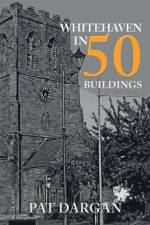
Whitehaven was just a fishing village on the Cumbrian coast until the port was developed by the Lowther family in the seventeenth century to export coal from the Cumberland coalfield. In the next century it benefitted from the trade in tobacco, sugar and other products with the West Indies to become the second busiest port in the country. The wealth brought to the area was demonstrated by a new town, the most complete example of a Georgian planned town in Britain. Built on a grid system, the town has over 170 listed buildings. Alongside the Old Fort and Whitehaven Castle, which later became the hospital, are historic houses, shops, churches, civic buildings, hotels, public houses and banks as well as reminders of Whitehaven's industrial heritage around the harbour, the colliery and the railway. Although the port has declined in recent years and mining ceased in the area, the harbour has been regenerated with a marina and the old colliery buildings preserved and turned into a museum. Whitehaven in 50 Buildings explores the history of this fascinating Cumbrian town through a selection of its most interesting buildings and structures, showing the changes that have taken place in Whitehaven over the years. The book will appeal to all those who live in Whitehaven or who have an interest in the town.
The Chilterns consist of a band of chalk hills to the north-west of London stretching from Oxfordshire to Hertfordshire. It so happened that these hills were directly on the routes of five major companies' routes to the North and Midlands. These were: the Great Northern, the Midland, the London & North Western, the Great Central and the Great Western. As well as the main lines there was a large number of branches, now nearly all closed. To complete the picture, to the north of the Chilterns was the Oxford to Cambridge transversal route, part of which remains open, and part of which is being actively restored. This book relates the story of these lines and their branches, through their construction and operation, the closures of the 1960s, to the situation today. Illustrated throughout with historic and modern photographs, maps, diagrams and timetables.
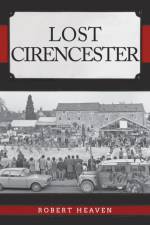
The Gloucestershire town of Cirencester has a rich and diverse history dating back to Roman times when, known as Corinium, it was the second largest settlement outside London. Today, apart from its heritage many visitors are drawn here by the townE s enviable location amid the glorious Cotswold countryside. In Lost Cirencester, author Robert Heaven, who writes for the Wiltshire and Gloucestershire Standard, offers a fascinating visual ride though the last 100 years of the townE s history. Here is a snapshot of life as it was, before and after the wars. Through a series of archive black-and-white and colour images, readers can discover the buildings and streets that were once here; places of recreation and worship; parks that have changed; and activities that were, at one time, popular but which today few can remember. The book provides a reminder of the mop fairs and carnivals that enthralled the people of Cirencester and gives an insight into the lesser-known spectacles such as the flying circus and high-wire acts that once visited the town. Also included are the associations and clubs that held the community together in the good times as well as the bad. The unsung heroes and the locally famous people will also be represented - individuals who were once so familiar but are now names etched on headstones. This engrossing visual chronicle, revealing the changing face of Cirencester, will be of interest to residents and visitors alike.
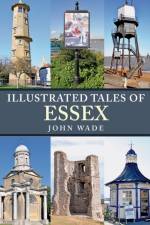
Essex is a place where you learn to expect the unexpected. If you know where to look, thereE s history and mystery at every turn, and this book is here to help you find it all. It brings you stories of strange places with weird names, mystery buildings that make no sense until you know their history, bizarre legends, forgotten facts, lost villages, unknown islands, spirits and ghosts, witches and smugglers. Who knows, for example, the part played by Essex in the colonisation of America? Or that a town in Essex was once the capital of England? Did you know that Captain Cook was married in Essex prior to setting out on his voyages of discovery? Or that legend has it that the story of Saint George slaying a dragon might have begun on Essex soil?All this and more is described by writer and photographer John Wade in Illustrated Tales of Essex. In it he reveals that EssexE s people and places of the past are a million miles away from the modern-day reality-TV view of the county.
On the front line of the Cold War, during a decade that saw East-West tensions - and budgets - rise considerably, the United States Air Forces in Europe reached the peak of their power during the 1980s. Not only did USAFE expand, but it introduced a generation of advanced new types, developed to counter perceived Soviet advances and often in light of America's still recent, and often bitter, experiences in Vietnam. Eagles, Fighting Falcons and Warthogs joined the ranks in increasing numbers, supplementing still considerable numbers of older stalwarts like the mighty F-111 interdictors and the iconic Phantom, which lingered on in specialised reconnaissance and defence suppression roles. But it wasn't all fast jets; Ground Launched Cruise Missiles were introduced, plus a range of support types including tankers, transports and spy planes deployed from the Stateside Commands to support USAFE. Take a step inside the day-to-day operations of the USAFE in the 1980s.
Often regarded as a quiet holiday county, in fact Dorset has many aviation connections. As early as 1908 Bleriots were being built by Bournemouth businessmen, the Royal Navy undertook first landing on a warship at Weymouth in 1910, the Schneider Race was held at Bournemouth in 1913, Dorset was at the front line of the early days of the Battle of Britain with attacks on Portland Naval Base, the Dam Busters bouncing bomb was tested on Dorset ranges in 1943, and aircraft production factories at Christchurch and Bournemouth existed in the 1940 and 1950s. With a wealth of previously unpublished images, Mike Phipp tells this remarkable story.
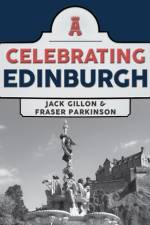
Edinburgh, the capital of Scotland, has much to celebrate. The city has been central to Scottish life and its history for many centuries. Its festivals attract visitors from all over the world, the quality of its architecture has been awarded the highest accolade of World Heritage status, and nature also gifted Edinburgh with the most stunning of settings. Its eminent scientists, engineers, philosophers and men of letters are internationally renowned. It is this combination of factors that make Edinburgh the United Kingdom's second most popular tourist destination. In Celebrating Edinburgh, local authors Jack Gillon and Fraser Parkinson highlight some of the significant aspects of the city's history and identity: its notable individuals, achievements, events and culture. Chapters focus on different themes such as its literary prominence - Edinburgh was UNESCO's first City of Literature in 2004 - and the authors, past and present, who have lived here, from Sir Arthur Conan Doyle and Robert Burns to Ian Rankin and JK Rowling. Here too are the world-famous Fringe Festival, Military Tattoo and Hogmanay celebrations. The city's exceptional architecture and its place as the birthplace of the Scottish Enlightenment in the eighteenth century are also highlighted, together with its natural heritage and fringe of villages including Leith and Portobello. Illustrated throughout, this book will appeal to residents, visitors and all those with links to this marvellous city.
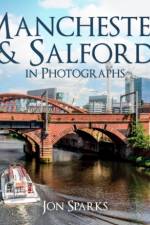
Manchester and Salford boast an extraordinary historical legacy. In particular, nowhere has a better claim to be regarded as the birthplace of the Industrial Revolution. The area played a pioneering role in transport history, with the Bridgewater Canal and one terminus of the world's first fully fledged passenger railway. It saw the collaboration of Marx and Engels, the birth of what became the Suffragette movement and the groundwork for the computer revolution. More recently Manchester saw the discovery of graphene - a form of carbon. All this and much more is reflected in the two cities' rich heritage of great architecture and urban landscapes. Much of this heritage and many of the important buildings are from the nineteenth century onwards, but there are remains dating back to Roman times. This book of exceptional photographs reflects the area through the lens of award-winning photographer Jon Sparks. Here are the contrasting scenes and buildings, old and new, that define the essence, identity and vibrant spirit of Manchester and Salford. From industry to sport, leisure to worship, culture to transport and listed buildings to modern skyscrapers, this is a stunning portrait of two eternally fascinating cities.
Coal and iron making first brought railways to what is now called South Yorkshire. The industrial towns of Sheffield, Rotherham, Barnsley and Doncaster attracted the Victorian pioneers, who built a myriad of often competing lines to the collieries and factories. The carriage of people was almost an afterthought, but once there was demonstrable demand, the passenger routes followed, linking the growing centres of population and connecting with the major cities in adjoining counties and further afield. Perhaps most historically of all, the immense challenge of piercing the Pennines at Woodhead was met with the construction of the Great Central's line from Sheffield to Manchester, later famously electrified and then regrettably closed. This photographic collection presents a selection of images from across this diverse county from the 1970s to the present day, from the dying days of the pits to the era of the internet-enabled trains of the twenty-first century. Many of these pictures feature infrastructure and locations that have long since disappeared from the railway map.
The Blackburn, later Hawker Siddeley, Buccaneer enjoyed an incredible service career that lasted over four decades. Designed as a carrier-borne attack aircraft, the Buccaneer was a solid aircraft designed to take the punishment of carrier operations and the constant stresses to the airframe caused by low-level flying. The aircraft entered service with the Royal Navy in 1962 in place of the Supermarine Scimitar and would continue with the senior service until 1978. The RAF received their first aircraft in 1969 - a legacy of the cancelled TSR.2 and F-111K, which resulted in a capability gap that had to be closed. The Buccaneer went on to serve the RAF in the low-level strike and reconnaissance role until 1994, serving with distinction during the Gulf War of early 1991. A robust and reliable aircraft that was popular with both its air and ground crews, the Buccaneer was a breed apart. A truly great British piece of engineering.
Over the last few years Bristol has received many accolades such as the UK's 'happiest city', 'most desirable location to live', 'kindest and most selfless people', and 'most artistic city'. Although such titles can be subjective, there's no doubt that there is much in Bristol to celebrate both in its past and its present. Bristol has changed over the centuries, being a port, an industrial centre, a university city, absorbing new people and ideas into the old. In this book, local author Cynthia Stiles looks at some of the accomplishments, actions and events that have given Bristol its distinct identity and character, and made it a place worth celebrating. Among the subjects she highlights are the city's traditions, festivals and diversity; its arts scene - from works by Banksy to statues and sculptures in the streets - and the notable people including philanthropists, physicians and politicians. Here too are the city's sportspeople and achievements, together with its royal connections across the ages. Other chapters focus on the revival and regeneration of old buildings, the shipbuilding and aviation industries, and the city as a centre for today's film-makers such as the BBC Natural History Unit and Academy Award-winning Aardman Animations. Illustrated throughout, Celebrating Bristol will be a valuable contribution to local history and of immense interest to residents, visitors and anyone with links to this fascinating city.
With its roots dating back to the late 1940s and the de Havilland Comet airliner, the Nimrod already had pedigree when it first appeared in the late 1960s in place of the Avro Shackleton in the Maritime Reconnaissance role. Fewer than fifty were built for the RAF, the type being steadily upgraded throughout its career right up to its retirement in 2011. Compared to the Shackleton, the Nimrod brought comfort and reliability to its multi-role long-range activities, including anti-submarine warfare, maritime surveillance and anti-surface warfare. The Nimrod saw action during the Falklands War, the Gulf Wars, Afghanistan and a continued contribution (since 1977) to Operation Tapestry - the protection of the UK's Sovereign Sea Areas. Specialist versions of the Nimrod also served in the signals intelligence role while other attempted developments failed, such as the Airborne Early Warning role and the final, costly MRA.4 versions, neither of which entered RAF service. This book tells the story of this remarkable aircraft.
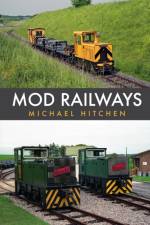
Across the country at numerous locations the government operated another railway, hidden from the public, behind high wire fences. These were the railways serving the Ministry of Defence. A fascinating collection of sites, with differing gauges, origins and functions. At its peak in the 1950 and 1960s the nation was covered with rail-served military locations, varying from a siding right up to huge storage locations, with self-contained internal networks. Each military service had its individual rail command, operating independently, with different locos types and even gauges. Recent history has seen these brought together, amalgamated as the Defence Rail Organisation. Unlike many industrial rail systems, a feature of military rail sites was the high standard of maintenance, not only of the rolling stock, but of the surrounding environment, well kept track formations were a usual order. Part of the fascination of these railways was the mystery that naturally surrounded their operation, use and stock. Some locations remain in use, but the large majority have been taken out of use, mainly as units have closed down, but in some case the abandonment of rail in favour of internal road transport. This book looks at rolling stock used at a number of locations, both standard and narrow gauge, and where appropriate the locations served by these largely unknown systems.
Abonner på vårt nyhetsbrev og få rabatter og inspirasjon til din neste leseopplevelse.
Ved å abonnere godtar du vår personvernerklæring.