























Gjør som tusenvis av andre bokelskere
Abonner på vårt nyhetsbrev og få rabatter og inspirasjon til din neste leseopplevelse.
Ved å abonnere godtar du vår personvernerklæring.Du kan når som helst melde deg av våre nyhetsbrev.

The stories of the most remarkable women from European history in the time of the Tudor dynasty, 1485-1603.
Bournemouth at War is a tribute to the wartime record of the people of the town of Bournemouth in the Second World War.
Utilising previously unpublished photographs, Howard Berry tells the story of Duple-bodied buses and coaches.
Before 'the greatest showman' P.T. Barnham there was Philip Astley, a British man who completely changed popular entertainment. This is his extraordinary story.
As China becomes a pre-eminent world power again in the twenty-first century, this book uncovers Britain's long relationship with the country and its people.
This is the fascinating true story of RAF Sutton Bridge. Between 1926 and 1946, the base saw the development and implementation of a training system that turned inexperienced pilots into Top Guns. 525 graduates and staff fought with The Few to win the Battle of Britain.
For a medieval English king, delegation was a necessary evil; and nowhere more necessary - nor more potentially disastrous - than on the Anglo-Welsh borders. The Marcher lords first empowered by William I were relied upon by subsequent Norman and Plantagenet kings to protect the dangerous frontiers of the realm. In Wales, as in Ireland, the smaller size and military weakness of divided neighbouring states encouraged conquest, with the seized lands enhancing the power of the aggressive English lords. They were granted ever greater authority by the monarch, to the point where they believed they ruled like kings. They intermarried, schemed for extra lands and snatched power in a complex and often violent political process. Owing to their resources and unparalleled military effectiveness, they soon came to overawe kings and dominate national events. The strength of the Marcher lords would come to the fore at numerous times in the nation's history in the shape of notorious figures such as Simon de Montfort and Roger Mortimer. The civil war of King Stephen's reign, the baronial resistance to King John, the overthrow of Edward II and Richard II; all of these crises turned upon the involvement of the lords of the Marches. Timothy Venning explores their mentality and reveals the dramatic careers both of those who prospered from their loyalty to the king and those whose power was gained by treachery - from the Norman Conquest to the beginnings of the Tudor dynasty.
Journey through Winston Churchill's life, filtered through landscapes he encountered in a career almost unimaginable today: Kaiser's Germany days before the Great War; New York the day of the Wall Street Crash; curdled delights of Crimea during Yalta Conference 1945; & French Riviera of post-war years. All left their mark on him, as he did on them.
If Hitler had succeeded in developing a nuclear bomb, that could have been both the end of the Second World War and of civilisation as we know it. A handful of commandos stopped him.
From a New York Times bestselling author and Pulitzer-nominated journalist, the recently de-classified story of the Cold War spies who changed the world.
A highly illustrated, fascinating description of the lost country houses of North and East Yorkshire
This collection of true life crime stories gives a vivid insight into life in Manchester in the past.
Exploring a selection of lives that disproves the stereotype of medieval women as subordinate to men.
With black and white and colour photographs explore the history of the railways in and around Rugby from pre-Grouping to the Rail Blue era.
Previously unpublished images of this rarely documented part of the bus scene. Looking at a variety of demonstration vehicles, on display, in use, and after being sold off.
Explore a fascinating journey in superb photographs through the railway scene in Britain in the 1980s.
The story of entrepreneur George Elliot, containing first hand material and fascinating facts from the Industrial Revolution, and some inspirational moments of the Victorian Era.
Every corner of Nottingham is rich in history, and if the streets could talk they might tell of the people and events they have witnessed. Many ancient secrets have remained untold, such as the purpose of the great Viking 'long-house' found beneath the site of a demolished Victorian factory, and who built the ancient mound that once marked the site of the spot where a king of England raised his standard. Perhaps the city's greatest secret of all lies beneath its streets - a labyrinth of over 500 man-made caves. Visitors to Nottingham are often told not to stamp their feet too hard as they never quiet know where they will end up. Father and son authors Frank and Joe Earp are privy to these and many more of Nottingham's secrets. Come with them as they share their knowledge within the pages of this book.
The town of Halifax is full of magnificent buildings designed by famous architects such as Sir Charles Barry, John Carr, Sir George Gilbert Scott and other buildings designed by the town's own talented architects. The town has altered quite dramatically during the last 150 years. Some of the earlier views dating from the Victorian period would be unrecognisable without more recent pictures to compare against. Changes to transport from the days of horse and carts, to trams and motorisation have brought other more noticeable changes in terms of traffic schemes and street signs in abundance and of course, the 'one way systems'. Halifax Through Time brings these changes to life contrasting the 'old' and 'new' and if the reader was so inclined, by following the structured sequence of photographs, provides a fascinating reference for a stroll around the town.
A fabulous slice of wartime nostalgia, a facsimile edition of the manual used by the Land Girls during the Second World War. With millions of men away to fight in the Second World War Britain was struggling for labour. In order to replace the agricultural workers now fighting the Nazis, the Women's Land Army (originally founded in the First World War) was relaunched in June 1939 by the Ministry of Labour. The majority of the Land Girls already lived in the countryside but more than a third came from London and the industrial cities of the north of England. By the end of the war over 100,000 women of the WLA or 'Land Girls' as they were more affectionately known, had helped feed the nation in its darkest hour. First published in 1941, LAND GIRL was a practical guide for the city slickers who were recruited into the Women's Land Army and sent to work on farms in the English countryside to replace the men who had joined up. An amazing period piece, hundreds of thousands of copies were printed and sold and it became one of the year's best selling books.
Exmoor is one of southern England's few remaining wild landscapes. In this area there are a scattering of attractive villages and the occasional town. Exmoor's importance to the nation is recognised in its protected status as a National Park, and it covers much of western Somerset and an adjacent area of Devon. This book looks at a selection of those villages, including historic Dunster, Selworthy, and the popular Porlock. Dulverton, Lynton and Lynmouth also feature. Views of many of the iconic beauty spots of the coast and inland are also included, such as the Valley of Rocks and those of Lorna Doone country. A selection of landscape views show that even in such an unspoilt area, the countryside is a place that is continually changing. Throughout this book you may be surprised not only by the changes that have taken place, but also by what has remained the same.
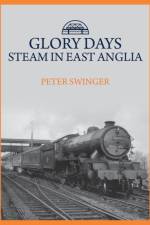
Steam in East Anglia recalls the era when steam ruled the tracks and the railways conveyed passengers and goods, from the commuter lines of Tilbury and Southend to the rural tranquillity of north Norfolk. There are sometimes conflicting ideas about which parts of Britain comprise East Anglia. This book describes and illustrates the steam trains which ran within Essex, Suffolk, Norfolk and parts of Cambridgeshire. The book concentrates on the years between the mid-1930s and the end of steam. Apart from the Pacifics, preservation has not been kind to the London & North Eastern Railway and its forbears. There are precious few locomotives left and it is a tragedy that no B17 or Claud was saved - but it is a relief that two Thompson B1s have been preserved.
Wiltshire is one of the largest counties in southern England. Much of it is comprised of high chalk downland, most famously on Salisbury Plain, and wide valleys and vales, often with rivers running through them, but in the north-west Wiltshire runs into the Cotswolds and south-east Wiltshire lies on the edge of the New Forest. Wiltshire is unsurpassed in its ancient sites, from the Neolithic monuments of Stonehenge and Avebury to numerous barrows and burial chambers. Later ages have also added to Wiltshire's gems, from the distinctive white horses cut into the chalk on hillsides, to Salisbury Cathedral, Longleat and the gardens at Stourhead. In 50 Gems of Wiltshire author Andrew Powell-Thomas explores the many places and their history that make this part of the South West so special. The 50 Gems include ancient sites of the earliest settlers in the area, castles, historic towns and villages, stunning country houses and estates, natural beauty spots and many other treasures. Alongside the justly famous the author includes many lesser-known gems that are equally deserving of attention.
The metre-gauge railways of South East Asia are a popular destination for railway enthusiasts from all over the world. In this book, Peter J. Green looks at the national railways of Thailand, Malaysia, Cambodia, Myanmar and Vietnam in the twenty-first century. While all these railways are modernising at varying rates, it is still possible to step back into the past and experience train travel behind diesel traction, often in carriages with windows that open, through varied and interesting landscapes. Semaphore signalling is disappearing rapidly but can still be seen in parts of Thailand, Myanmar and Malaysia. With a wealth of previously unpublished photographs, this book offers a fascinating insight into the railways of this rapidly changing area of the world.
'Fighter pilots make movies, bomber pilots make history' - or so the bomber pilots say, anyway. Strategic Air Command held a constant nuclear-armed vigil, ready to launch nuclear war at a moment's notice, twenty-four hours a day. SAC was responsible for two of the three components of the Nuclear Triad - manned strategic bombers and land-based intercontinental ballistic missiles (ICBMs) - alongside the Navy's SLBMs. Also responsible for the USAF's strategic reconnaissance aircraft, SAC maintained a large fleet of tankers to support its bombers and spy planes. After a drawdown of strength in the aftermath of the Vietnam War, SAC rebuilt its strength throughout the 1980s as part of a wider revitalisation of the US armed forces under President Reagan. New advanced bombers, tankers and ICBMs joined the fleet with the promise of new stealth aircraft under development.
Since the dawn of the railways, away from the glamour of the main line express, thousands of miles of industrial railway moved raw materials and finished products. From sewage works to sugar factories, all manner of industries were served. These sometimes employed dozens of locomotives, or in other cases simply a horse or a petrol tractor. The Beckton gas works in London ran a massive railway, complete with locomotive roundhouse and signals, while the ironstone industry of the East Midlands operated on the edge of fields. It can be said that one was never more than a mile or two from an industrial railway, though often its existence might not have been well known. A corncucopia of locomotives provided power, while a fantastic array of specialist wagons moved all manner of goods. A few industrial lines have survived as heritage attractions, and one is even a Scheduled Ancient Monument. This book is part of the Britain's Heritage series, which provides definitive introductions to the riches of Britain's past, and is the perfect way to get acquainted with Industrial Railways in all their variety.
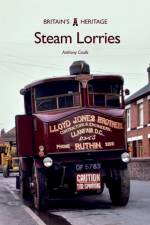
Steam power led the transport revolution in England throughout the nineteenth century, but was crippled on the road network by punitive legislation. As the century turned, the laws were altered in such a way that the development of the English Steam Lorry or Wagon became a viable transport proposition. For the best part of four decades, the steam lorry was a major player on the transport scene, being developed into a highly technical machine designed to beat competition from the petrol and diesel lorry. The most advanced machines were efficient and very fast. Made by a variety of builders, including the famous Sentinel company of Shrewsbury, who built waggons with a double 'g', and Foden, of Sandbach, steam lorries came in many shapes and sizes. This book looks at their birth, and the operation and engineering that set them aside from the traction engine and steam roller. This book is part of the Britain's Heritage series, which provides definitive introductions to the riches of Britain's past, and is the perfect way to get acquainted with steam lorries in all their variety.
The Somerset town of Bridgwater was an important port on the River Parrett in the Middle Ages, linked inland during the Industrial Revolution with the construction of the Bridgwater and Taunton Canal. Bridgwater became the main manufacturing town in Somerset, including shipbuilding, iron foundries and the manufacture of clay tiles and bricks and cellophane. Although these industries have declined in the later twentieth century, it is still a major industrial centre with a diverse cultural life, including an arts centre, music festivals, its Guy Fawkes Carnival and the second biggest fair in the country. In A-Z of Bridgwater author Lynne Cleaver delves into the history of the town, highlighting well-known landmarks, events and famous residents, such as Admiral Robert Blake's birthplace, the Somerset Brick and Tile Museum and the historic port and quayside and the Battle of Sedgemoor fought on the Somerset Levels outside the town, as well as digging beneath the surface to uncover some of the lesser-known facts about Bridgwater and its hidden places of interest. This fascinating A-Z tour of Bridgwater's history is fully illustrated and will appeal to all those with an interest in this Somerset town.
The ancient Suffolk market town of Beccles has a history of more than a thousand years, which saw it flourish as one of the principal trading communities in the county. Situated on the River Waveney, it is often referred to as the 'Gateway to the Southern Broads'. In Secret Beccles, local author Barry Darch sets out to discover the lesser-known and hidden aspects of the town's heritage. At its heart lie two large marketplaces, the newer one (dating from the fourteenth century) still very much in use for a weekly market and for special events. A number of nearby buildings also have large cellars with interesting architectural features. Many buildings have had several changes of use; for instance, the late Anglo-Saxon St Peter's Church became a tannery and later a restaurant. A Georgian theatre that became a corn hall now lies hidden behind a branch of Lloyds Bank. Part of the town's hidden past rests in the names of its streets and paths, such as Shipwreck Alley and Hungate, the street of the dogs. As well as the places and locations, the book will also uncover stories of those significant townsfolk across the ages, ranging from the heroes to the villains. The author also looks at gravestones and memorials and seeks out what secrets are revealed about the town in publications including books, newspapers, maps and letters. Featuring archive and contemporary images, Secret Beccles includes a wealth of little-known or previously unpublished material, which will be of interest to residents, visitors and anyone with connections to the town.
Abonner på vårt nyhetsbrev og få rabatter og inspirasjon til din neste leseopplevelse.
Ved å abonnere godtar du vår personvernerklæring.