











Gjør som tusenvis av andre bokelskere
Abonner på vårt nyhetsbrev og få rabatter og inspirasjon til din neste leseopplevelse.
Ved å abonnere godtar du vår personvernerklæring.Du kan når som helst melde deg av våre nyhetsbrev.

The aim of this book is to focus on information and basic guidelines for free and low-cost best private hospitals in India. The Indian public health sector encompasses 18% of total outpatient care and 44% of total inpatient care. Middle and upper-class individuals living in India tend to use public healthcare less than those with a lower standard of living. My aim is to provide information to the citizens in India about affordable health and wellness as well as specialist services through the best private hospitals free of cost or at low cost in India. In such a situation, my inquiry, the curiosity to know the unknown and raise awareness by combining the explanations of different scopes of health care with low cost and free of cost at best private hospitals will be successful by reading this book. This book will be a companion to all those who are seeking the best private hospitals at almost no cost including food and accommodation. This is my hope and I have confirmed the fact that this book will help people to get the best specialist services in healthcare at absolutely no cost at the best private hospitals with the best doctors in India. So, I have enumerated here the top private hospitals of India with all the best medical facilities free of cost or low cost, including food and accommodation.
This is a religious book on taking up the christian missionary work. This book is a result of the author's own experience as an evangelist in the soils of an Indian State, Orissa in the year 2008. This book points out the traditions in our contemporary churches, which are not in line with the word of God and also inspires the readers to take up the bible and spread the gospel in the soils of Indian land. This book further makes way to understand the complexities of biblical concepts.
Famous film actor Nirmal Kumar and actress Barani continue to act together as hero and heroine in many films. These films are becoming huge hits. Due to this, news of love between the two started coming into the press and media. Both are denying it as gossip. Nirmalkumar's wife Divya is shocked to know this. Meanwhile, Sampath comes to Chennai with a plan to kill actor Nirmal Kumar. At that time, Nirmal goes on a trip to Ooty with his wife Divya. Sampath is looking for him there too. In this scenario, actor Nirmal Kumar's wife is mysteriously murdered in a hostel in Ooty. The story starts with the investigation and then moves toward what is behind the murder.
A dark fantasy fiction story with elements of magical adventures and supernatural powers, the tale explores a person's quest to become the King of Shimla. A gripping mystery, which describes the importance of relationships and casts light on the centuries-long never-ending battle between God and Satan.
The answer to nearly 27 years of searching. Many facts with evidence. Answers to many questions. Here are the questions: 1) Were humans created by God or evolved from apes or artificially created?2) Today's human race is forsaken by the creator. Why?3) Are the reptilians who taught civilization to humans? Is it true?4) The creators of humans came from other planets. Who are they? Where did they come from?5) Who lives in the underworld called Agartha? Where is the path to the underworld?6) Who are the Trinity, Anunnaki, Elohim and Illojim? Where did they come from?7) Why human evolution, which did not develop for several hundred thousand years, has grown at a rocket speed in the last 5000 years?8) Will this human race be destroyed? By whom?9) What caused the extinction of our ancestors, Egyptians, Mayans, etc.?
This book is a collection of articles, two of which have already been published in Bhavan's Journal. In this book, Mrs. Vanaja takes readers on a journey to the world of Hindu, Buddhist and Jain mythology and the sacred, mythological locations of Hindu temples, Buddhist monasteries and Jain tirthas in the Indian sub-continent, Sri Lanka, Nepal, South East Asia, and from Greece to Russia in the west.
This book is a collection of articles, two of which have already been published in Bhavan's Journal. In this book, Mrs. Vanaja takes readers on a journey to the world of Hindu, Buddhist and Jain mythology and the sacred, mythological locations of Hindu temples, Buddhist monasteries and Jain tirthas in the Indian sub-continent, Sri Lanka, Nepal, South East Asia, and from Greece to Russia in the west.
Intensive use of fossil-based energy sources causes significant environmental problems on a global scale. Researchers have been working for several decades to find alternative energy solutions to fossil fuels. Algae are a renewable energy source, with high potential for increasing scarce resources and reducing environmental problems caused by fossil fuel use. Algal Biotechnology for Fuel Applications gives the reader a comprehensive picture of the industrial use of algae for generating power. This book informs readers about the existence of alternative species to the currently used algae species for biofuel production, while also explaining the methods and current concepts in sustainable biofuel production. >- Fifteen chapters covering topics on commercial algae species and algal biofuel production. - Covers anaerobic biotechnology and basic biofuel production from thermal liquefaction - Covers biodiesel production and algal biofuel characterization - Introduces the reader to applied microbial fuel cell technology and algae cultivation methods - Provides concepts about ecological engineering - Covers microalgae culture and biofuel production techniques - Explains the importance of catalysts - Explains the economic evaluation of algae fuel production technology This reference is essential reading for students and academics involved in environmental science, biotechnology, chemical engineering and sustainability education programs. It also serves as a reference for general readers who want to understand the ins and outs of algal biofuel technology.
This book is a quick review of machine learning methods for engineeringapplications. It provides an introduction to the principles of machine learningand common algorithms in the first section. Proceeding chapters summarize andanalyze the existing scholarly work and discuss some general issues in this field.Next, it offers some guidelines on applying machine learning methods to softwareengineering tasks. Finally, it gives an outlook into some of the futuredevelopments and possibly new research areas of machine learning and artificialintelligence in general.Techniques highlighted in the book include: Bayesian models, supportvector machines, decision tree induction, regression analysis, and recurrent andconvolutional neural network. Finally, it also intends to be a reference book. Key Features: Describes real-world problems that can be solved using machine learningExplains methods for directly applying machine learning techniques to concrete real-world problemsExplains concepts used in Industry 4.0 platforms, including the use and integration of AI, ML, Big Data, NLP, and the Internet of Things (IoT). It does not require prior knowledge of the machine learning This book is meantto be an introduction to artificial intelligence (AI), machine earning, and itsapplications in Industry 4.0. It explains the basic mathematical principlesbut is intended to be understandable for readers who do not have a backgroundin advanced mathematics.
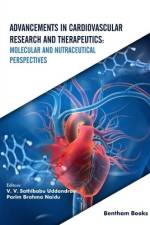
This reference summarizes recent advancements in knowledge about cardiovascular disease and pharmacology. The goal of the book is to inform readers about recent findings on cardiovascular therapeutics and how to conduct experiments to evaluate natural products. It presents 10 chapters that cover basic clinical research on cardiovascular diseases and therapeutic agents derived from natural sources. The book concludes with a series of experiments that demonstrate the methods to test the ameliorative effects of 3 phytochemicals: Biochanin A (red clover), Zingiberene (ginger oil) and Betaine (sugar beet). Key Features - 10 chapters that highlight recent research cardiovascular medicine and pharmacology - Covers knowledge about basic cardiovascular physiology, congestive heart failure treatment and the treatment of heart inflammation. - Covers uses, benefits, and drawbacks of numerous rodent and non-rodent animal models for studying CVD - Updates readers about 21st-century CRISPR-cas9 technology and its uses in CVD. - Covers the significance of Indian Ayurvedic techniques on the cardiovascular system, - Covers information about nutraceuticals for CVD therapy - Includes experiments to evaluate 3 phytochemicals for the treatment of different heart diseases such as hypertension, obesity-cardiomyopathy and the mitigation of inflammatory cytokines in myocardial infarction. This book is an informative resource for cardiologists, and researchers working in the field of cardiovascular pharmacology. It also helps readers to understand the benefits of herbal medications that are commonly available for consumption in homes.
This reference is a guide to biomaterial fabrication techniques. The book comprises ten chapters introducing the reader to a range of biomaterial synthesis while highlighting biomedical applications. Each chapter presents a review of the topic followed by updated information about relevant core and applied concepts in an easy to understand format. The first two chapters present vital information about biomaterial components, such as polymer nanocomposites and scaffolds, and the strategies used for their fabrication. The proceeding chapters explain the principles of the most widely used fabrication techniques, and their application in detail. These include freeze drying, electrospinning, 3D printing, multiphoton lithography, particulate leaching, supramolecular self assembly, solvent casting and melt molding. The book is an essential primer on biomaterial synthesis for students and early career researchers in the field of biomedical engineering, applied chemistry and tissue engineering.
The book presents a multidisciplinary analysis of the context of quantum physics experiments and the function of the human mind that makes it possible to demonstrate that an object-based model of reality formed at the level of the unconscious is the basis of our worldview. The consciousness experiences a "time flow" because of the specific features of perception in the form of a model with a sequential fixation of events. Together with the need to relate objects in terms of the model, this generates a space-time representation of the world around us. Acceptance of a mental character of our construct of reality allows for resolution of the problems in quantum physics and its paradoxes, thereby opening the way to an insight into reality. The presented material is organized in a specific order to facilitate the reader's understanding. First, the fact that if there are no objects in the area of quantum mechanics, then they belong to the corresponding model rather than the reality is proved by case studies of the most discussed and relevant paradoxes of quantum physics. The authors consider a topological variant in constructing an object-based space that describes the physical properties of an object that are the most verified in science and describable with mathematical relations. The functionality of the proposed construct is tested by deriving the "laws" of conservation of energy and momentum in a relativistic form. The book is oriented towards experts in physics and psychology, advanced students, and readers interested in state-of-the-art science and the philosophy connected to it.
Nanotechnology has progressed to the point where it can mimic natural systems such as porous membranes or the structure of leaves. Technological advances have resulted in a boom in the use of nanotechnology in different areas of engineering, including water purification systems. This book explores nanomaterials used for removing various textile dyes from water. It compiles 8 chapters that discuss the materials and nano systems used in these processes. This reference is designed to provide answers to common questions for scholars, academicians and technologists about fundamentals of nanoscience and nanomaterial induced removal of textile dyes. College students (physics, chemistry and materials science, engineering) will be able to easily understand the subject matter. Key Features: Covers the basics of nano systems, from synthesis to applications Explains the basics of nanomaterial behavior and characterization Describes the classifications of dyes Explains the interactions nanomaterials with different dyes Explains the reaction mechanisms of photocatalysis and the kinetics behind adsorption - two important methods for removing dyes from water Discusses nano systems that are useful for textile dye removal from water. 3 types of nano systems are included: carbon based, oxide based, polymer based or nitride based systems Includes references for further reading Simple presentation for easy and quick understanding of the subject
Abonner på vårt nyhetsbrev og få rabatter og inspirasjon til din neste leseopplevelse.
Ved å abonnere godtar du vår personvernerklæring.