









Gjør som tusenvis av andre bokelskere
Abonner på vårt nyhetsbrev og få rabatter og inspirasjon til din neste leseopplevelse.
Ved å abonnere godtar du vår personvernerklæring.Du kan når som helst melde deg av våre nyhetsbrev.

In the early 1990s, the countries of the former Soviet Bloc faced an urgent need to reform the systems by which they delivered broad, basic social welfare to their citizens. Inherited systems were inefficient and financially unsustainable. Linda J. Cook here explores the politics and policy of social welfare from 1990 to 2004 in the Russian Federation, Poland, Hungary, Belarus, and Kazakhstan. Most of these countries, she shows, tried to institute reforms based on a liberal paradigm of reduced entitlements and subsidies, means-testing, and privatization. But these proposals provoked opposition from pro-welfare interests, and the politics of negotiating change varied substantially from one political arena to another. In Russia, for example, liberalizing reform was blocked for a decade. Only as Vladimir Putin rose to power did the country change its inherited welfare system. Cook finds that the impact of economic pressures on welfare was strongly mediated by domestic political factors, including the level of democratization and balance of pro- and anti-reform political forces. Postcommunist welfare politics throughout Russia and Eastern Europe, she shows, are marked by the large role played by bureaucratic welfare stakeholders who were left over from the communist period and, in weak states, by the development of informal processes in social sectors. In the early 1990s, the countries of the former Soviet Bloc faced an urgent need to reform the systems by which they delivered broad, basic social welfare to their citizens. Inherited systems were inefficient and financially unsustainable. Linda J. Cook here explores the politics and policy of social welfare from 1990 to 2004 in the Russian Federation, Poland, Hungary, Belarus, and Kazakhstan. Most of these countries, she shows, tried to institute reforms based on a liberal paradigm of reduced entitlements and subsidies, means-testing, and privatization. But these proposals provoked opposition from pro-welfare interests, and the politics of negotiating change varied substantially from one political arena to another. In Russia, for example, liberalizing reform was blocked for a decade. Only as Vladimir Putin rose to power did the country change its inherited welfare system. Cook finds that the impact of economic pressures on welfare was strongly mediated by domestic political factors, including the level of democratization and balance of pro- and anti-reform political forces. Postcommunist welfare politics throughout Russia and Eastern Europe, she shows, are marked by the large role played by bureaucratic welfare stakeholders who were left over from the communist period and, in weak states, by the development of informal processes in social sectors.
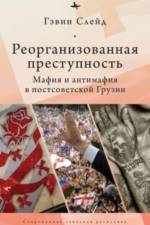
Thieves-in-law' (vory-v-zakone in Russian) are career criminals belonging to a criminal fraternity that began in the 1930s in the Soviet prison camps. For reasons that the book attempts to explain, thieves-in-law became exceptionally prevalent in the former Soviet republic of Georgia. Here, by the 1990s, they formed a mafia network--criminal associations that attempt to monopolize protection in legal and illegal sectors of the economy. At this time, the mafia was in many ways more powerful than the state. In 2005, however, anti-organized crime policy was transferred from Italy and America to Georgia. Legislation targeting the thieves-in-law directly was successful in causing a steep decline in mafia influence and organized criminal activity. This book asks how and why this occurred. In particular, why did the thieves-in-law not resist the attack on them successfully? Based on extensive fieldwork and utilizing unique access to primary sources of data, such as police files, court cases, archives, and expert interviews, the book provides a case study of varying organized criminal resilience to state attack. It studies the dynamics of changing mafia activities, recruitment practices, and organization as these relate to changes in the socio-economic environment and, in particular, anti-organized crime policy in what is the first sustained, directed anti-mafia policy implemented in a post-Soviet country.
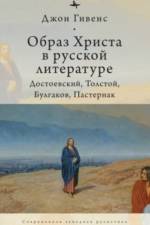
Vladimir Nabokov complained about the number of Dostoevsky's characters "sinning their way to Jesus." In truth, Christ is an elusive figure not only in Dostoevsky's novels, but in Russian literature as a whole. The rise of the historical critical method of biblical criticism in the nineteenth century and the growth of secularism it stimulated made an earnest affirmation of Jesus in literature highly problematic. If they affirmed Jesus too directly, writers paradoxically risked diminishing him, either by deploying faith explanations that no longer persuade in an age of skepticism or by reducing Christ to a mere argument in an ideological dispute. The writers at the heart of this study understood that to reimage Christ for their age, they had to make him known through indirect, even negative ways, lest what they say about him be mistaken for cliché, doctrine, or naïve apologetics. The Christology of Dostoevsky, Leo Tolstoy, Mikhail Bulgakov, and Boris Pasternak is thus apophatic because they deploy negative formulations (saying what God is not) in their writings about Jesus. Professions of atheism in Dostoevsky and Tolstoy's non-divine Jesus are but separate negative paths toward truer discernment of Christ. This first study in English of the image of Christ in Russian literature highlights the importance of apophaticism as a theological practice and a literary method in understanding the Russian Christ. It also emphasizes the importance of skepticism in Russian literary attitudes toward Jesus on the part of writers whose private crucibles of doubt produced some of the most provocative and enduring images of Christ in world literature. This important study will appeal to scholars and students of Orthodox Christianity and Russian literature, as well as educated general readers interested in religion and nineteenth-century Russian novels.
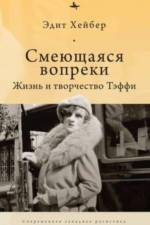
Edythe Haber relies on letters, archival materials, and memoirs by contemporaries to create Teffi's biography, as well as to reveal the inner mechanisms of Russian literary life, both in the country and in emigration, and placing it in the rampant historical context. Readers are presented with a panorama of the brilliant artistic world of the Silver Age and the Paris of Russian emigres.
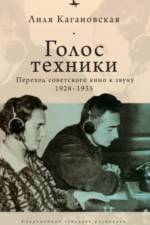
As cinema industries around the globe adjusted to the introduction of synch-sound technology, the Soviet Union was also shifting culturally, politically, and ideologically from the heterogeneous film industry of the 1920s to the centralized industry of the 1930s, and from the avant-garde to Socialist Realism. In The Voice of Technology: Soviet Cinema's Transition to Sound, 1928-1935, Lilya Kaganovsky explores the history, practice, technology, ideology, aesthetics, and politics of the transition to sound within the context of larger issues in Soviet media history. Industrialization and centralization of the cinema industry greatly altered the way movies in the Soviet Union were made, while the introduction of sound radically altered the way these movies were received. Kaganovsky argues that the coming of sound changed the Soviet cinema industry by making audible, for the first time, the voice of State power, directly addressing the Soviet viewer. By exploring numerous examples of films from this transitional period, Kaganovsky demonstrates the importance of the new technology of sound in producing and imposing the "Soviet Voice."
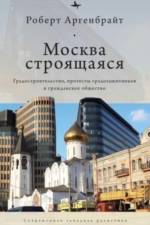
Moscow under Construction explores the growth of place-based opposition to redevelopment practices in Moscow and consequent changes in city's governance regime. Groups of citizens have struggled to defend homes, neighborhoods, heritage buildings, and historic districts. Although their aims typically have been specific and limited, an important consequence of their activism has been to create a culture of protest. In this way, without intending to, local protestors have been building civil society in the Russian capital. The proliferation of "initiative groups" and "social associations" has not only protected specific places in the city and but also changed the governance regime and planning process.
Writing a Usable Past argues that in the twenty years following the Bolshevik Revolution, writers seeking to understand the role of man in human history looked to literary heroes from past eras. Each in his own way, authors Iurii Tynianov, Vladislav Khodasevich, and Mikhail Bulgakov turned to the genre of biography--novels, literary biographies, plays--in search of a hero for their own time. As biographers, they each then felt the pull of the centenary commemoration of the Russian poet Alexander Pushkin and entered into the competition to claim Pushkin as a symbol of Russian culture. The split in Russian culture between those who remained in Soviet Russia and those who became part of the far-flung diaspora creates a fascinating way to explore the role of biography for this contested era.
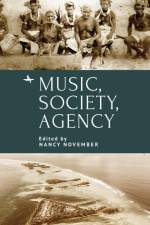
This ten-chapter book explores how music and society are, and have been, intertwined and mutually influential. It examines the agents behind these connections: who determines musical cultures in society? Which social groups are represented in particular musical contexts? Which social groups are silenced or less well represented in music's histories, and why?
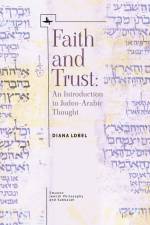
This broad-ranging study, the first full-length investigation of conceptions of faith and trust in the Judeo-Arabic tradition, explores a family of related concepts?faith (iman, emunah), conviction (i'tiqād), and trust/reliance (tawakkul/ittikal)?in Saadya, Ba?ya, Halevi, Maimonides, Abraham Maimonides, and the Egyptian pietist circle of Abraham he-?asid. The work points to a rich spectrum of conceptions of faith and trust?from the purely cognitive to the experiential and affective. What emerges are themes of faithfulness, loyalty, experiential certainty, and trustworthiness, expressed in devotion to a way of life that embodies these ideals. The virtue of trust expresses steadfast commitment to the truth.This study vividly illustrates the ?Jewish-Arab symbiosis,? highlighting the shared spiritual language and rich, intertwined worlds of Islamic and Jewish philosophy, theology, and mysticism.
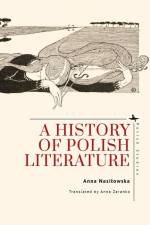
Anna Nasilowska's A History of Polish Literature is a one-volume guide that immerses readers in the rich tapestry of Polish literature and reveals its enduring impact on European identity from the Middle Ages to the late twentieth century. By exploring key themes, writers, and works and grounding her discussion in crucial biographical context, she weaves together the lives of a carefully curated list of Polish writers to paint a vivid literary portrait, elucidating the epochs that these writers shaped. Offering indispensable insights for readers who may be unfamiliar with the world of Polish literature, it is an excellent jumping-off-point for further study and learning.
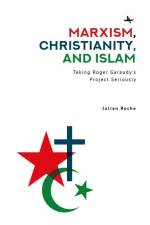
"Roger Garaudy was for many years at the centre of the French Communist Party but was eventually expelled for his liberal views. In the Seventies he developed a project to bring Marxism and Christianity together, to include all humanity in a project to set all people free. What emerges from Garaudy's project is a very modern Marxism, with its emphasis on the individual, its ecological politics, and in its insistence on religion as central to human emancipation. Although Garaudy himself became frustrated by the West and converted to Islam in 1982, ending his life discredited in the West, it is certainly possible that Garaudy's project represents a good, perhaps even the best, starting point for Marxism in today's world"--
The book offers a thorough study of the early poetry (1956?1971) of the Ukrainian/American writer Yuriy Tarnawsky, focusing on its evolutionary path from late modernism to postmodernism, which the author conceptualizes as a ?shift of dominants? from humanist (existentialist) questions to an anti-humanist and post-epistemological perspective.
This volume examines the rhetorical development that occurred over the first two terms of Vladimir Putin's tenure as president of Russia. During that time Putin abandoned any effort at integration with the West, turning toward Eurasia and promoting a mythical image of Russia as a singular geopolitical entity spanning one thousand years.
R. Saadia Gaon (882-942) was unquestionably one of the most important if not the most important medieval Jewish thinker. He dealt with biblical exegesis, philosophy, grammar, poetry, prayer, and Halakha, and in many of these fields he is considered an innovator and a trailblazer, paving new paths for his followers. Many of the sages who lived after him cited from his writings. He served as head of the Academy of Sura, Babylon, but the impact of his works was felt in all generations who lived and followed. This study seeks to describe and analyze R. Saadia Gaon's life, his public enterprise, his works, and his influence on the generations after him.
In Collected Studies (Volume 4): Jews in the Medical Profession, Joseph Shatzmiller, the prominent scholar of Provence Jewry, presents a fascinating glimpse into the world of Jewish doctors and medicine in medieval Western Europe. Drawing on a wealth of archival sources and intellectual history, Shatzmiller delves into the lives and experiences of Jewish physicians who played a crucial role in the medical profession during the Middle Ages. From their scientific collaborations with Christian colleagues to their role as leaders within the Jewish community, this book provides a rich portrait of the complex and dynamic world of medieval medicine. The book covers topics such as the Jewish students in the Faculty of Medicine at the University of Montpellier, Jewish women in medicine, doctors' salaries, pharmacology, and medical books. With its insightful analysis and meticulous research, Jews in the Medical Profession is a valuable contribution to the history of medicine and Jewish studies."The collection of studies that these four volumes offer is the result of more than sixty years of commitment to scholarship. Like many colleagues, I relied in the beginning on printed material in books that dealt with law, religion, and secular literature. Then, as a disciple of George Duby, I discovered the world of archives and hand-written Latin manuscripts. The present collection relies, to a great extent, on previously unknown information discovered during years of search in the archives of Southern France, mostly on those of the county of Provence. They are situated in the cities of Marseille and Aix-en-Provence as well as the town of Digne. The legal registers of the High Middle Ages (1250-1350) as well as those produced by the counties' administration introduce us to the ordinary people of the region, to their daily life and to their preoccupations; their names are spelled out, the dates are recorded and the localities in which they were active are designated. At times these documents encourage us to endorse information found in contemporary literary sources and to overcome our hesitation and excessive caution concerning their value as historical evidence."- Joseph Shatzmiller
Joseph Shatzmiller's Collected Studies (Volume 3): Maimonidean Argument in France is a comprehensive compilation of his research on the intellectual and mental history of the Jews in Provence. The central focus of the book is the ongoing conflict between adherents of Maimonidean philosophy and its opponents, which persisted throughout the thirteenth century due to the movement of translations from Arabic to Hebrew. Additionally, the book delves into other important aspects of Provence Jewry, including their attitudes towards the Albigensian heresy and the intellectual contributions of figures such as Kalonymus ben Kalonymus, Jacob ben Eliyahu, and the renowned biblical commentator, astronomer, and philosopher Gersonides. Shatzmiller's research illuminates the significance of Provence Jewry within the larger framework of Jewish communities in the Mediterranean and western Europe during the Middle Ages."The collection of studies that these four volumes offer is the result of more than sixty years of commitment to scholarship. Like many colleagues, I relied in the beginning on printed material in books that dealt with law, religion, and secular literature. Then, as a disciple of George Duby, I discovered the world of archives and hand-written Latin manuscripts. The present collection relies, to a great extent, on previously unknown information discovered during years of search in the archives of Southern France, mostly on those of the county of Provence. They are situated in the cities of Marseille and Aix-en-Provence as well as the town of Digne. The legal registers of the High Middle Ages (1250-1350) as well as those produced by the counties' administration introduce us to the ordinary people of the region, to their daily life and to their preoccupations; their names are spelled out, the dates are recorded and the localities in which they were active are designated. At times these documents encourage us to endorse information found in contemporary literary sources and to overcome our hesitation and excessive caution concerning their value as historical evidence."- Joseph Shatzmiller
In Collected Studies (Volume 2): Christian Majority-Jewish Minority, Joseph Shatzmiller, the preeminent scholar of the Jews in Provence, examines the complex relationship between Christians and Jews during the Middle Ages. Through a careful analysis of historical documents and primary sources, Shatzmiller sheds light on the diverse experiences of the Jewish minority in Provence, from their legal status in Christian courts to the persecution and violence they faced during times of crisis. This book provides a nuanced understanding of the relationship between Christians and Jews in medieval Western Europe, and the role of the Jewish community in shaping the social and political landscape of the region."The collection of studies that these four volumes offer is the result of more than sixty years of commitment to scholarship. Like many colleagues, I relied in the beginning on printed material in books that dealt with law, religion, and secular literature. Then, as a disciple of George Duby, I discovered the world of archives and hand-written Latin manuscripts. The present collection relies, to a great extent, on previously unknown information discovered during years of search in the archives of Southern France, mostly on those of the county of Provence. They are situated in the cities of Marseille and Aix-en-Provence as well as the town of Digne. The legal registers of the High Middle Ages (1250-1350) as well as those produced by the counties' administration introduce us to the ordinary people of the region, to their daily life and to their preoccupations; their names are spelled out, the dates are recorded and the localities in which they were active are designated. At times these documents encourage us to endorse information found in contemporary literary sources and to overcome our hesitation and excessive caution concerning their value as historical evidence."? Joseph Shatzmiller
In Collected Studies (Volume 1): The Jews of Provence, Joseph Shatzmiller, the foremost expert on Provençal Judaism, offers a comprehensive overview of the medieval history of the Jews in Provence. Through an analysis of community regulations, tax distribution, rabbinic leadership, and everyday life, Shatzmiller provides a rich and powerful mosaic of Jewish society in Provence. This masterful work sheds light on the diverse experiences of Jews in the region, from their interactions with Christian neighbors to their internal conflicts and struggles. With its insightful analysis and meticulous research, The Jews of Provence is an essential read for anyone interested in the history of Jewish communities in medieval Europe."The collection of studies that these four volumes offer is the result of more than sixty years of commitment to scholarship. Like many colleagues, I relied in the beginning on printed material in books that dealt with law, religion, and secular literature. Then, as a disciple of George Duby, I discovered the world of archives and hand-written Latin manuscripts. The present collection relies, to a great extent, on previously unknown information discovered during years of search in the archives of Southern France, mostly on those of the county of Provence. They are situated in the cities of Marseille and Aix-en-Provence as well as the town of Digne. The legal registers of the High Middle Ages (1250-1350) as well as those produced by the counties' administration introduce us to the ordinary people of the region, to their daily life and to their preoccupations; their names are spelled out, the dates are recorded and the localities in which they were active are designated. At times these documents encourage us to endorse information found in contemporary literary sources and to overcome our hesitation and excessive caution concerning their value as historical evidence."- Joseph Shatzmiller
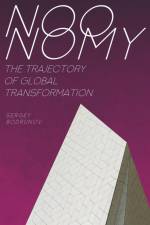
Noonomy explores the effect of modern technological shifts on human society. The author shows that technologies are about to undergo qualitative changes which will create new opportunities for personal development and the satisfaction of wants and, simultaneously, engender risks associated with growth opportunities of human interference with nature and technogenic stress on the environment. Based on the study of cutting-edge technologies and resulting socioeconomic shifts, Bodrunov makes the conclusion about the upcoming civilizational crisis. The crisis can be overcome through the formation of a new industrial society of the second generation reliant on knowledge-intensive material production and gradual removal of humans from immediate material production processes. These two trends can fully develop only subject to the transition from the current socioeconomic formation to a non-economic one-the noonomy.
The book explores the effect of modern technological shifts on human society, showing that technologies are undergoing qualitative changes that open up new opportunities for personal development and satisfaction of wants and, simultaneously, engender risks associated with growing opportunities of human interference with nature and technogenic stress on the environment.
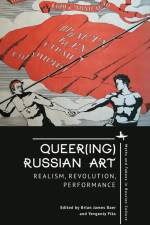
Standing at the intersection of Visual Studies and Queer Studies, the volume Queer(ing) Russian Art: Realism, Revolution, Performance exposes and explores the queer imagery and sensibilities in works of visual art in pre-Soviet, Soviet and post-Soviet contexts and beneath the surface of conventional histories of Russian art.
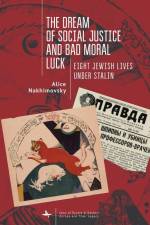
This volume examines the intertwined lives of six women and three men, Russian Jews in the first half of the twentieth century, as their belief in the Soviet dream unraveled. Under what circumstances did they bow to political pressures, and under what circumstances did they resist, even heroically?
From their privileged childhood in Egypt, the paths of once-inseparable twins Taher and Aisha diverge early: When the USSR invades Afghanistan, Taher abandons their shared plans to study medicine in Europe, instead joining their cousin, Ahmed, as a medic for the mujahideen fighting the Soviets. As Aisha's Western perspective grows, so does her fear for her brother, who is becoming increasingly radicalized during the civil war between the Taliban and the Northern Alliance. With powerful imagery, Danuta Hinc's When We Were Twins shows how innocence and loyalty to those we love can be twisted by political forces, leading a young man to choose a fateful path that changes the course of history.
"Empress Catherine II produced a body of written material so vast and diverse that it seems impossible to provide a general characterization of the works contained in the authoritative twelve-volume collection assembled by A. N. Pypin from handwritten source material. This book does not attempt an all-embracing review of Catherine's entire literary output, which consists of works in multiple genres and languages. The Russian empress's writings have been the repeated subject of serious analysis for nineteenth- and twentieth-century researchers; all of these in one way or another demonstrate that across a variety of genres and formats, with a greater or lesser degree of independence and originality, the literary works of Catherine II always express her politics and ideology. If Catherine's policy had the transfer of imperial power to Russia, a kind of translatio imperii, as its strategic goal, then the literary and cultural accomplishments of the empress had to establish a translatio studii, that is, the transfer of the Roman cultural paradigm, knowledge, and civilization onto Russian soil. This book will be devoted to an analysis of these paradigms as they emerged between Catherine II's creations on the page and in the empire itself"--
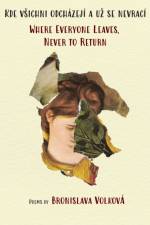
Where Everyone Leaves, Never to Return is a captivating collection of poems in which Czech poet Bronislava Volková, a jongleur of contemporary verse, masterfully combines voice and nuance as she saunters through love, loss, mortality, and eternal life. With a sharp wit, her verses render playful catechisms of why "a loving God can make an unloving man " but they also dive deep into self-discovery, achieving, even if just for an instant, the hard-earned right to a "joyous spirit of inner being." Her work is a testament to her life lived in full--a diverse and all-encompassing experience.
This interdisciplinary study of cosmopolitan spaces in Odesa explores topical issues in cultural diversity, ethnicity, literature, and socio-economic history. The book brings together leading scholars in a ground-breaking discussion of relations between Russians, Jews, and Ukrainians in one of the most fascinating multiethnic cities in eastern Europe.
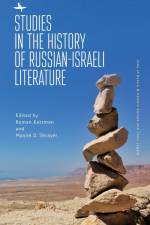
The studies gathered in the collection present the Russian-language Israeli literature that has been forming over the past hundred years in all the variety of genres and aesthetic movements. In every generation and in every aliyah, Russian-Israeli authors tirelessly search for new forms, born of the encounter with the new land.
Abonner på vårt nyhetsbrev og få rabatter og inspirasjon til din neste leseopplevelse.
Ved å abonnere godtar du vår personvernerklæring.