
Gjør som tusenvis av andre bokelskere
Abonner på vårt nyhetsbrev og få rabatter og inspirasjon til din neste leseopplevelse.
Ved å abonnere godtar du vår personvernerklæring.Du kan når som helst melde deg av våre nyhetsbrev.

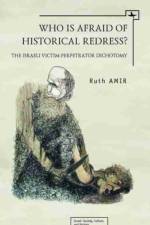
With the Holocaust resonating as the "thick background," historical redress processes in Israel render a particularly challenging case. The simultaneous concern the Jewish community has with past, present and future redress campaigns, as both victim and perpetrator, is unique.
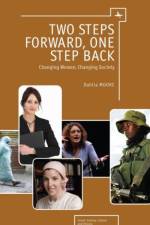
In Two Steps Forward, One Step Back, Dahlia Moore explores the social and cultural forces at play in Israeli society and their effects on the changing status of women. While delving into some of Israel's unique and influential forces, such as the army, religious sects, and recent immigration, Moore also broadens her perspective, juxtaposing the status of Israeli women with that of women in other Western societies. An excellent resource for scholars of gender and gender attitudes looking beyond North America and Europe.
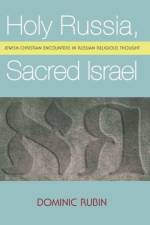
Holy Russia, Sacred Israel examines how Russian religious thinkers, both Jewish and Christian, conceived of Judaism, Jewry and the 'Old Testament' philosophically, theologically and personally at a time when the Messianic element in Russian consciousness was being stimulated by events ranging from the pogroms of the 1880s, through two Revolutions and World Wars, to exile in Western Europe. An attempt is made to locate the boundaries between the Jewish and Christian, Russian and Western, Gnostic-pagan and Orthodox elements in Russian thought in this period. The author reflects personally on how the heritage of these thinkers - little analyzed or translated in the West - can help Orthodox (and other) Christians respond to Judaism (including 'Messianic Judaism'), Zionism, and Christian anti-Semitism today.
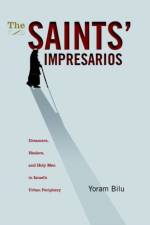
The astonishing revival of saint worship in contemporary Israel was ignited by Moroccan Jews, who had immigrated to the new country in the 1950s and 1960s. The Saints' Impresarios charts the vicissitudes of four new domestic shrines, each established by Moroccan-born men and women in a peripheral development town, following an exciting revelation involving a saintly figure. Each of the case studies discussing the life stories of the "e;saint impresarios"e; elaborates on a distinctive theme: dreams as psychocultural triggers for revelation; family and community responses to the initiative; female saint impresarios as healers; and the alleviation of life crises through the saint's idiom. The initiatives are evaluated against the historical background of Jews in Morocco and the sociopolitical and cultural changes in present-day Israeli society. The original Hebrew edition garnered the coveted Bahat Prize (Haifa University Press) for best academic book in 2006. For readers interested in Israel and Jewish Studies, folk religion and mysticism, cultural and psychological anthropology, and Moroccan Jews.
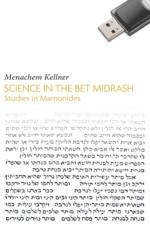
Science in the Bet Midrash explores the religious thought of Moses Maimonides (1138-1204), one of the most influential Jews of the last thousand years. While covering many aspects of his religious philosophy, these essays focus on the way Maimonides elucidated and expressed the universalistic thrust of the Jewish tradition. Maimonides construed the election of Israel as a challenge, not an endowment. This challenge is ultimately addressed to all human beings, not just to Jews.
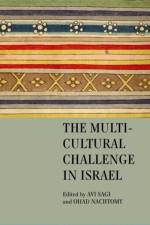
Delving into Israel's multifaceted society, this title explores the many ethnic and religious communities that comprise modern Israel and the ways in which they interact and often misunderstand each other. It covers subjects such as Holocaust education, language rights, military service, and the balancing of religious with secular systems of law.
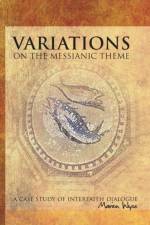
Over fifty years after the Holocaust, Marion Wyse explores interfaith dialogue between the Jewish and Christian communities and attempts to evaluate what goals these communities have reached and where they now stand. While many painful issues have been addressed and Jews and Christians in dialogue have achieved a solid respect for each other, the basic disagreement over the Christian designation of Jesus as the Jewish messiah still stands. Theologians have suggested varying approaches but none convince both parties. This work employs William James' radical empirical method to show that the original Jewish messianic concept, the Christian shift, and the Jewish repudiation of the shift, can each be seen as valid faith variants.
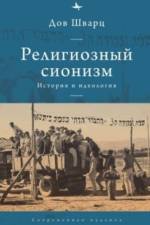
Reviews the history of religious Zionism from both a historical and ideological-theological perspective. The basic assumption is that religious Zionism cannot be fully understood solely through a historical description, or even from social, political, and philosophical vantage points. This is the first study on this subject to be published in English.
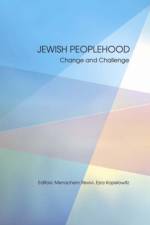
Aims to address the concept of Jewish peoplehood since the initial attempts of early 20th century Jewish intellectuals, Mordechai Kaplan and Salo Baron. This work offers both intellectual and practical frameworks for grappling with the policy outcomes of different understandings of the peoplehood concept.
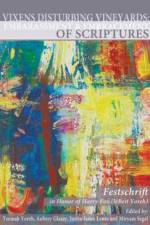
Embarrassment and embracement are two moments in the reading, misreading and re-reading of scriptures, defined broadly to include both canonical and non-canonical texts. Papers dealing with different aspects of this phenomenon are part of a festschrift honoring Professor Harry Fox (LeBeit Yoreh) the originator of this seminal idea in the transmission of texts.
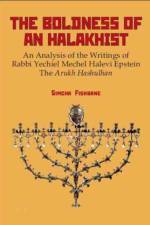
Analyses the writings of Rabbi Yechiel Mechel Halevi Epstein (1829-1908), author of the Arukh Hashulkhan, a bold and unusual approach to Jewish law. Based primarily on the original text of Rabbi Epstein's legal codes and homilies, this covers topics such as women, modernity, customs, and secular studies. It also analyses the rabbi's approach to Jewish law and Jewish life.
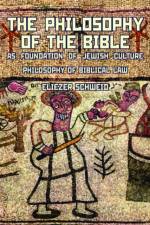
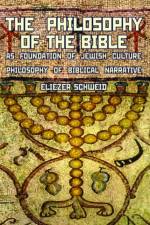
Like Spinoza in his Theological-Political Treatise, Schweid helps us grasp the potential for seeing radically new messages in this oldest of books, the Bible. The American Founding Fathers realized that the Bible offers strong support for the doctrine of popular sovereignty. Socially, it offers a message of egalitarianism, especially in the provisions of the Jubilee. It is hardly an accident that two modern political movements found mottos ready at hand from the 25th chapter of Leviticus: "e;Proclaim liberty throughout the land unto all the inhabitants thereof"e; (engraved on the Liberty Bell), and "e;The land shall not be sold in perpetuity"e; (motto of the Jewish National Fund). Schweid helps us to appreciate the broader message of the narrative of creation and settlement of the land in its ecumenical and planetary dimensions. The world is God's creation, and its resources are to be deployed as necessary for the sustenance and need-fulfillment of all peoples and all creatures equally-a message very much relevant to the ecological crisis facing us all at the present time.
The fundamental book of Eliezer Schweid is a modern interpretation of the Bible as narrative and law which can reopen the dialogue of contemporary Jews with the Bible, from which a dynamic Jewish culture can continue to draw its inspiration. The approach draws at the same time from the philosophical modernism of Hermann Cohen, the dialogical philosophy of Buber, the religious phenomenology of Heschel, and the insights of contemporary Biblical scholars, including literary analysts of the Bible. Schweid helps us to appreciate the broader message of the narrative of creation and settlement of the land in its ecumenical and planetary dimensions. The world is God's creation, and its resources are to be deployed as necessary for the sustenance and need-fulfillment of all peoples and all creatures equally-a message very much relevant to the ecological crisis facing us all at the present time.
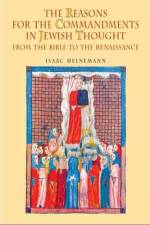
This classic work by early-20th-century Jewish humanist and scholar Isaac Heinemann surveys the crucial phases of Jewish thought concerning correct conduct as codified in the commandments. Heinemann provides his own systematic insights about the intellectual, emotional, pedagogical, and pragmatic reasoning advanced by the major Jewish thinkers. This volume covers Jewish thinkers from the Bible, rabbis and Hellenistic philosophers through the Middle Ages and the Renaissance, including Saadiah, Halevi, Maimonides, Albo, and many others. Heinemann addresses such questions as: "e;What were the Biblical, rabbinic, medieval, and modern rationales offered for the commandments in the course of Jewish thought?"e;
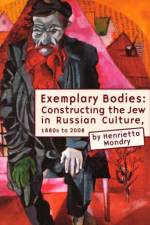
Exemplary Bodies: Constructing the Jew in Russian Culture since 1880s explores the construction of the Jew's physical and ontological body in Russian culture as represented in literature, film, and non-literary texts from the 1880s to the present. With the rise of the dominance of biological and racialist discourse in the 1880s, the depiction of Jewish characters in Russian literary and cultural productions underwent a significant change, as these cultural practices recast the Jew not only as an archetypal "e;exotic"e; and religious or class Other (as in Romanticism and realist writing), but as a biological Other whose acts, deeds, and thoughts were determined by racial differences. This Jew allegedly had physical and psychological characteristics that were genetically determined and that could not be changed by education, acculturation, conversion to Christianity, or change of social status. This stereotype has become a stable archetype that continues to operate in contemporary Russian society and culture.
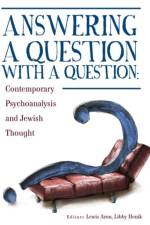
Brings together an international collection of contemporary scholars and clinicians to address the interface and the mutual influence of Jewish thought and modern psychoanalysis.
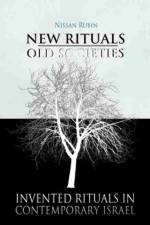
Focusing on the secular society of contemporary Israel, this collection of essays examines the way civil religion invents collective rites for turning points in community life, and personal definitional rites for ratification of identity change in the individual's life cycle.
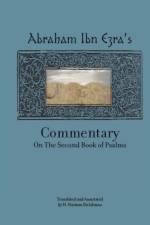
Rabbi Abraham ibn Ezra, poet, philosopher, mathematician, was one of the outstanding personalities produced by medieval Jewry. His chief claim to fame, however, is his commentary on the Bible. This work is suitable for students of Scripture at all levels.
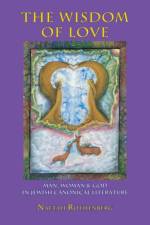
Challenges the discrepancy between the way source texts relate to love and the way they are perceived to do so, introducing readers to the significant treatment of love in the Jewish canon. This book draws various manifestations of love, such as love of God, love of wisdom, and love of one's fellow.
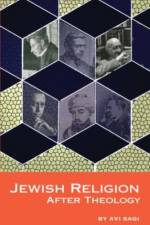
Jewish Religion after Theology ponders one of the most intriguing shifts in modern Jewish thought: from a metaphysical and theological standpoint toward a new manner of philosophizing based primarily on practice. Different chapters study this great shift and its various manifestations. The central figure of this new examination is Isaiah Leibowitz, whose thoughts encapsulate more than any other Jewish thinker this stance of religion without metaphysics. Sagi explores corresponding issues such as observance, the possibility of pluralism, the meaning of penance without messianic suppositions, and pragmatic coping with theodicy after the Holocaust, presenting the different possibilities within this great alteration in Jewish thought.
Brodsky Through the Eyes of His Contemporaries (Volume 1) offers a fascinating record of conversations with poets of various nationalities about Joseph Brodsky: Czeslaw Milosz, Roy Fisher, Lev Loseff, Bella Akhmadulina, Natalia Gorbanevskaya, Tomas Venclova, Viktor Krivulin, Alexander Kushner, and Elena Shvarts. In comparison with the first edition of this volume published in 1992 this new second edition is enlarged with three new interviews and a series of previously unpublished unique photographs from the personal archives of the author and the interviewees. The collection combines biographical details with a new and authoritative interpretation of the poetics, style, and ideas of one of the most influential poets to emerge in post-Stalinist Russia. As a poet, essayist, and playwright, Brodsky is widely known and read in the English-speaking world. This book is a superb guide to further study of Brodsky's work both for specialist scholars and general readers who are intoxicated by poetry.
Abonner på vårt nyhetsbrev og få rabatter og inspirasjon til din neste leseopplevelse.
Ved å abonnere godtar du vår personvernerklæring.