























Gjør som tusenvis av andre bokelskere
Abonner på vårt nyhetsbrev og få rabatter og inspirasjon til din neste leseopplevelse.
Ved å abonnere godtar du vår personvernerklæring.Du kan når som helst melde deg av våre nyhetsbrev.

Intended to accompany undergraduate courses in the history of Russian cinema or Russian culture through film, this reader consists of excerpts from English language criticism and translations of excerpts of Russian-language criticism, as well as commissioned essays on thirty subtitled films widely taught in American and British courses on Russian film and culture.
The impetus for Charms of the Cynical Reason is the phenomenal and little-explored popularity of various tricksters flourishing in official and unofficial Soviet culture, as well as in the post-soviet era. Mark Lipovetsky interprets this puzzling phenomenon through analysis of the most remarkable and fascinating literary and cinematic images of soviet and post-soviet tricksters, including such "e;cultural idioms"e; as Ostap Bender, Buratino, Vasilii Tyorkin, Shtirlitz, and others. The steadily increasing charisma of Soviet tricksters from the 1920s to the 2000s is indicative of at least two fundamental features of both the soviet and post-soviet societies. First, tricksters reflect the constant presence of irresolvable contradictions and yawning gaps within the soviet (as well as post-soviet) social universe. Secondly, these characters epitomize the realm of cynical culture thus far unrecognized in Russian studies. Soviet tricksters present survival in a cynical, contradictory and inadequate world, not as a necessity, but as a field for creativity, play, and freedom. Through an analysis of the representation of tricksters in soviet and post-soviet culture, Lipovetsky attempts to draw a virtual map of the soviet and post-soviet cynical reason: to identify its symbols, discourses, contradictions, and by these means its historical development from the 1920s to the 2000s.
This collection includes two symposia, on ¿The Renaissance of Jewish Philosophy in Americä and on ¿Maimonides on the Eternity of the World,¿ as well as other studies in medieval Jewish philosophy and modern Jewish thought. Contributors include: Leora Batnitzky, Ottfried Fraisse, William A. Galston, Lenn E. Goodman , Raphael Jospe, Steven Kepnes, Haim Howard Kreisel, Charles Bezalel Manekin, Haggai Mazuz, Paul Mendes-Flohr, Alan Mittleman, Michael Morgan, David Novak, James T. Robinson, Norbert M. Samuelson, Dov Schwartz, Yossef Schwartz, Kenneth Seeskin, Roslyn Weiss, and Martin Yaffe.
The American Jewish Communist movement played a major role in the politics of Jewish communities in cities such as Boston, Chicago, Los Angeles, New York, and Philadelphia, as well as in many other centers, between the 1920s and the 1950s. Making extensive use of Yiddish-language books, newspapers, periodicals, pamphlets, and other materials, Dreams of Nationhood traces the ideological and material support provided to the Jewish Autonomous Region of Birobidzhan, located in the far east of the Soviet Union, by two American Jewish Communist-led organizations, the ICOR and the American Birobidzhan Committee. By providing a detailed historical examination of the political work of these two groups, the book makes a substantial contribution to our understanding of twentieth-century Jewish life in the United States.
Identifies and analyses previously unnoticed or only briefly mentioned "linkages and keystones" found in two highly developed clusters of symbols, arising from Anna's momentous train ride and peasant nightmares, and of allegories, rooted in Vronsky's disastrous steeplechase. Within this labyrinth lies embedded much of the novel's most significant meaning.
Brings together significant, representative stories from every decade of the 20th century. It includes the prose of officially recognised writers and dissidents, both well-known and neglected or forgotten, plus new authors from the end of the 20th century. Taken as a whole, the stories capture every major aspect of Russian life, history and culture in the 20th century.
Boris Slutsky (1919-1986) is a major original figure of Russian poetry of the second half of the twentieth century. This title presents a study of the poet. It argues that Slutsky's body of work amounts to a Holy Writ of his times which fuses biblical prooftexts and stylistics with the language of late Russian Modernism and Soviet newspeak.
Explores the history of the Akko Festival for Other Israeli Theatre in the years 1980-2012 as a site of a celebration as well as a confrontation. The Akko Festival is a borderland bringing together established directors and producers from the centre of the field with young and alternative artists outside of it, as well as bringing together the centre's cultural hegemony and Akko's residents.
From her immigration to Mandatory Palestine in 1933 until her death in 1950 American-born Dorothy Kahn Bar-Adon worked as a reporter for The Palestine Post, (later The Jerusalem Post
A fresh and compelling figure, Konevskoi plunged deeply into currents of modern mystical thought and art in the 1890s. This title presents a study of Ivan Konevskoi - poet, thinker, mystic - for many decades the 'lost genius' of Russian modernism.
In the Jewish tradition, it is incumbent upon every generation to attempt to find meaning in its history. Meaning is co-created within the context of the inter-subjective field of a meeting of minds. Psychoanalysis, in some respects like the Jewish tradition from which it emerged, represents a body of thought about man's relation to himself and to others, and places great value on the influence of memory, narrative, and history in creating meaning within the dyadic relationship of analyst and patient. In Answering a Question with a Question: Contemporary Psychoanalysis and Jewish Thought, editors Aron and Henik have brought together an international collection of contemporary scholars and clinicians to address the interface and the mutual influence of Jewish thought and modern psychoanalysis.
Why do Israelis dislike fantasy? Put so bluntly, the question appears frivolous. But in fact, it goes to the deepest sources of Israeli historical identity and literary tradition. Uniquely among developed nations, Israel's origin is in a utopian novel, Theodor Herzl's Altneuland (1902), which predicted the future Jewish state. Jewish writing in the Diaspora has always tended toward the fantastic, the mystical, and the magical. And yet, from its very inception, Israeli literature has been stubbornly realistic. The present volume challenges this stance. Originally published in Hebrew in 2009, it is the first serious, wide-ranging, and theoretically sophisticated exploration of fantasy in Israeli literature and culture. Its contributors jointly attempt to contest the question posed at the beginning: why do Israelis, living in a country whose very existence is predicated on the fulfillment of a utopian dream, distrust fantasy?
The Jew in Medieval Iberia is an exploration of the richness and diversity of Jewish society in Christian Iberia from 1100-1500, providing a fresh look at the ways in which medieval Jews conceived of themselves and their communities, as well as their relationship to the surrounding society. The essays collected in this volume transcend older stereotypes of Christian persecution and Jewish piety to reveal a complex and vibrant community of merchants and scholars, townsmen and women, cultural intermediaries and guardians of religious tradition. Taken together, they present a portrait that adds greater nuances to our understanding of both medieval Jewish and medieval Spanish history.
The second of a three-volume series, this book contains Eva Jospe¿s Moses Mendelssohn: Selections from His Writings, together with an article dealing with Mendelssohn¿s enduring significance. As Raphael Jospe observes in his introduction to the volume, despite the welcome growth in recent years in the availability of English translations of Mendelssohn¿s works, Eva Jospe¿s Selections (including some of Mendelssohn¿s private letters) remain valuable for their clarity, for the logic of their organization, and for the important insight they provide into Mendelssohn¿s personality and convictions. Volume One of this series contains Eva Jospe¿s study of the ¿Concept of Encounter in the Philosophy of Martin Buber,¿ and Volume Three her Reason and Hope: Selections from the Jewish Writings of Hermann Cohen. Together, these volumes offer a multidimensional view of Jospe¿s work and thoughts.
This groundbreaking critical biography of Andrei Siniavskii (1925-1997) as a writer in and of his time shows how this subtle and complex author found his way in a society polarised into heroes and villains, patriots and traitors, how he progressed from identification with the value system and ideology of his time to reaction against it, and his dissidence expressed in literary terms.
This new volume from the author of Scenarios of Power explores the effect of the symbolic representations of the Russian imperial government on law, administrative practice, and concepts of national and imperial identities throughout centuries of monarchical rule. Richard Wortman characterizes the monarchy as an active agent in Russia's political experience, one whose dominant role was resisting change until the inevitable collapse facing all absolute monarchies.
Arriving in ancient Rome over 2,000 years ago, the Jewish communities of Italy have retained their identity throughout the millennia. This book traces their recreation of community, focusing on their economic, intellectual, and social lives, as they moved from south to north.
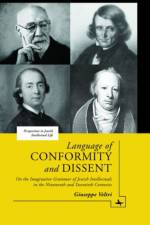
Outlines some aspects of Jewish intellectual life in the nineteenth and twentieth century, presenting a narrative of the relationship between Jewish scholars and their cultural environment. It investigates the language of conformity and dissent and interprets it as an imaginative grammar, comprising an arsenal of images, concepts, and interpretations.
Abonner på vårt nyhetsbrev og få rabatter og inspirasjon til din neste leseopplevelse.
Ved å abonnere godtar du vår personvernerklæring.