


Gjør som tusenvis av andre bokelskere
Abonner på vårt nyhetsbrev og få rabatter og inspirasjon til din neste leseopplevelse.
Ved å abonnere godtar du vår personvernerklæring.Du kan når som helst melde deg av våre nyhetsbrev.

In the sixteenth century, the famous kabbalist Isaac Luria transmitted a secret trove of highly complex mystical practices to a select groups of students. These meditations were designed to capitalize on sleep and death states in order to effectively split one's soul into multiple parts, and which, when properly performed, permitted the adept to free oneself from the cycle of rebirth. Through an in-depth analysis of these contemplative practices within the broader context of Lurianic literature, Zvi Ish-Shalom guides us on a penetrating scholarly journey into a realm of mystical teachings and practices never before available in English, illuminating a radically monistic vision of reality at the heart of Kabbalistic metaphysics and practice.
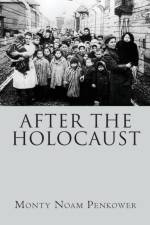
Tells a story of movement. Moving from city to city characterized the author's growing up - from Poland to Belgium and from the East Coast to the West Coast of the United States. The book also moves between past and present, between straightforward story-telling and reflections on memory, politics and religion, and on literature.
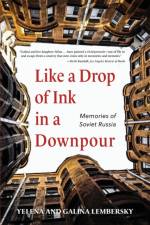
Like a Drop of Ink in a Downpour: Memories of Soviet Russia traces Yelena Lembersky's childhood in Leningrad (Saint Petersburg) in the 1970s and '80s. Her life is upended when her family decides to emigrate to America, but instead her mother is charged with a crime and unjustly incarcerated. Told in the dual points of view, this memoir is a clear-eyed look at the reality of life in the Soviet Union during the Cold War, giving us an insider's perspective on the roots of contemporary Russia. It is also a coming-of-age story, heartfelt and funny, a testament to the unbreakable bond between mothers and daughters, and the healing power of art.
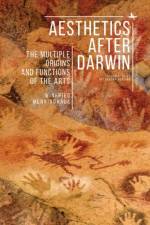
Darwin famously proposed that sexual competition and courtship is (or at least was) the driving force of "e;art"e; production not only in animals, but also in humans. The present book is the first to reveal that Darwin's hypothesis, rather than amounting to a full-blown antidote to the humanist tradition, is actually strongly informed both by classical rhetoric and by English and German philosophical aesthetics, thereby Darwin's theory far richer and more interesting for the understanding of poetry and song.The book also discusses how the three most discussed hypothetical functions of the human arts--competition for attention and (loving) acceptance, social cooperation, and self-enhancement--are not mutually exclusive, but can well be conceived of as different aspects of the same processes of producing and responding to the arts.Finally, reviewing the current state of archeological findings, the book advocates a new hypothesis on the multiple origins of the human arts, posing that they arose as new variants of human behavior, when three ancient and largely independent adaptions--sensory and sexual selection-driven biases regarding visual and auditory beauty, play behavior, and technology--joined forces with, and were transformed by, the human capacities for symbolic cognition and language.
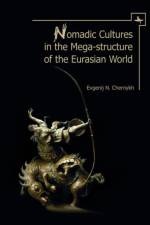
Two major dividing lines have formed the megastructure of Eurasia, determining the historical epochs of the continent's peoples. The first, vertical (longitudinal) line has separated East and West since the Paleolithic Age. The East was dominated by Mongol peoples speaking Sino -Tibetan, Manchu-Tungus, and Altaic languages. The Caucasoid peoples of the West spoke mostly Indo-European, Semite, and Finno-Ugric languages. The second line divided the continent horizontally (by latitude) into North and South. This division was closely connected with the Eurasian Steppe Belt. To the north of it lay the world of hunter-gatherers and fishermen. To the south, settled agriculture was dominant. The Steppe Belt itself was the domain of pastoralists, the nomadic and semi-nomadic herders. These lines converged at the entrance to the Great Silk Road. With the swift development of horse domestication and horseback riding, the nomads moved-from the Early Metal Age (500-400 BCE) to Genghis Khan's and the Genghisid's Great Empire (1200-1400 CE)-to the forefront of Eurasian history as their world became increasingly involved in dramatic and sometimes tragic relationships with their southern neighbors. This book focuses on the tangle of problems in these nomadic peoples' history.
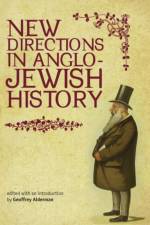
The past two decades have witnessed a remarkable renaissance in the academic study of the history of the Jews in Great Britain and of their impact upon British history. This title presents essays that reflect the richness of this renaissance.
Based on memories of a native son and the research of a scholar, this book is an amalgam of descriptions and discussions, peppered with conversations, personal observations and an acute observer's reflections, focused on the fabric of life in the city of Lodz and its vicinity.
Deals with the concept of exile on many levels - from the literal to the metaphorical. The book combines analyses of predominantly Jewish authors of Central Europe of the twentieth century who are not usually connected, including Kafka, Kraus, Levi, Lustig, Wiesel, and Frankl.
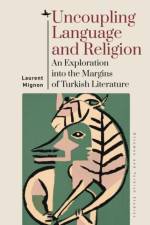
This book is an invitation to rethink our understanding of Turkish literature as a tale of two "e;others."e; The first part of the book examines the contributions of non-Muslim authors, the "e;others"e; of modern Turkey, to the development of Turkish literature during the late Ottoman and early republican period, focusing on the works of largely forgotten authors. The second part discusses Turkey as the "e;other"e; of the West and the way authors writing in Turkish challenged orientalist representations. Thus this book prepares the ground for a history of literature which uncouples language and religion and recreates the spaces of dialogue and exchange that have existed in late Ottoman Turkey between members of various ethno-religious communities.
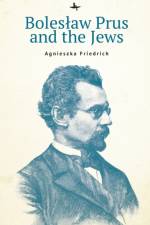
Boleslaw Prus and the Jews shows the complexity of the so-called "e;Jewish question"e; in nineteenth-century Congress Poland and especially its significance in Prus' social concept, reflected in his extensive body of journalistic work, fiction, and treatises. The book traces Prus' evolving worldview toward Jews, from his support of the Assimilation Program in his early years to his eventual support of Zionism. These contrasting ideas show us the complexity of the discourse on Jewish issues from the individual perspective of a significant writer of the time, as well as the dynamics of the Jewish modernization process in a "e;non-existent"e; partitioned Poland. The portrait of Prus that emerges is surprisingly ambivalent.
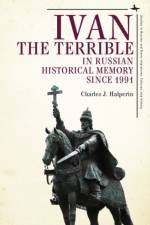
Tsar Ivan the Terrible (Ivan IV, 1533-1584) is one of the most controversial rulers in Russian history, infamous for his cruelty. He was the first Russian ruler to use mass terror as a political instrument, and the only Russian ruler to do so before Stalin. Comparisons of Ivan to Stalin only exacerbated the politicization of his image. Russians have never agreed on his role in Russian history, but his reign is too important to ignore. Since the abolition of censorship in 1991 professional historians and amateurs have grappled with this problem. Some authors have manipulated that image to serve political and cultural agendas. This book explores Russia's contradictory historical memory of Ivan in scholarly, pedagogical and political publications.
For a century, Jews were an unmistakable and prominent feature of Shanghai life. In this book, we hear their own words and the words of modern scholars explaining how Baghdadi, Russian and Central European Jews found their way to Shanghai, created lives in the world's most cosmopolitan city, and were forced to find new homes in the late 1940s.
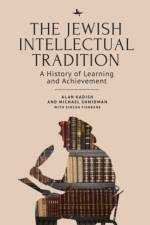
The Jewish intellectual tradition has a long and complex history that has resulted in significant and influential works of scholarship. This book suggests that there is a series of common principles that can be extracted from the Jewish intellectual tradition that have broad, even life-changing, implications for individual and societal achievement.
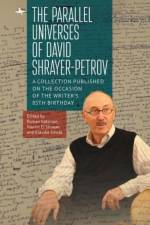
Celebrates the literary oeuvres of David Shrayer-Petrov - poet, fiction writer, memoirist, essayist and translator (and medical doctor and researcher). Published in the year of his 85th birthday, this is the first volume to gather materials and investigations that examine his writings from various literary-historical and theoretical perspectives.
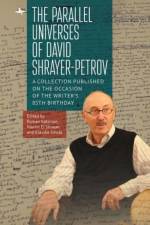
Celebrates the literary oeuvres of David Shrayer-Petrov - poet, fiction writer, memoirist, essayist and translator (and medical doctor and researcher). Published in the year of his 85th birthday, this is the first volume to gather materials and investigations that examine his writings from various literary-historical and theoretical perspectives.
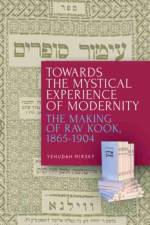
Jurist, mystic, poet, theologian, communal leader, and founder of the modern Chief Rabbinate, Avraham Yitzhaq Ha-Cohen Kook stands as a colossal figure of modern Jewish history and thought. This book traces his life and times in the remarkably intense Rabbinic intellectual milieu of late nineteenth-century Eastern Europe.
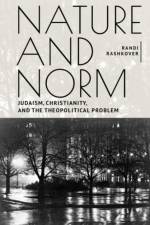
Explores the encounter between Jewish and Christian thought and the fact-value divide that invites the unsettling recognition of the dramatic acosmism that shadows and undermines a considerable number of modern and contemporary Jewish and Christian thought systems.
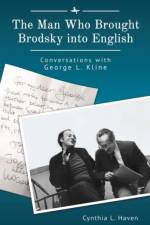
Joseph Brodsky's poetic career in the West was launched when Joseph Brodsky: Selected Poems was published in 1973. Its translator was a scholar and war hero, George Kline. This is the story of that friendship and collaboration, from its beginnings in 1960s Leningrad and concluding with the Nobel poet's death in 1996.
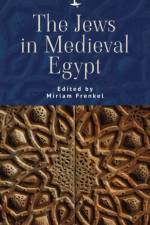
Provides a wide-ranging picture of Jewish life in medieval Egypt as depicted by most recent scholarship. Starting from the last phases of the Byzantine era and ending with the Mamluk period, the book presents a scholarly yet vivid description of Jewish communal organization, judiciary, economic frameworks, family life, and lingual practices.
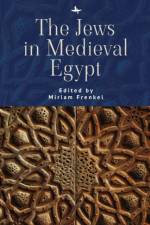
Provides a wide-ranging picture of Jewish life in medieval Egypt as depicted by most recent scholarship. Starting from the last phases of the Byzantine era and ending with the Mamluk period, the book presents a scholarly yet vivid description of Jewish communal organization, judiciary, economic frameworks, family life, and lingual practices.
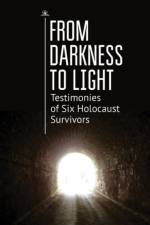
From Darkness to Light is a compilation of personal testimonies of six Holocaust survivors, written in a short story format. The book walks readers through their life experiences before and during the Holocaust, their liberation, and their new life in Israel. Each story is told in their own words, culled from hours of personal interviews with them and their children, so the world can have first-hand knowledge of what happened during that darkest time of our history. These survivors came from different parts of Europe, and not one story is like the other. Now in their eighties and nineties, they still recall in detail their darkest memories. Amid immense pain and suffering, they managed to overcome every hurdle they encountered under the Nazi regime. When these stalwart individuals were liberated, no matter what further anguish and obstacles they faced, they realized their dream to make aliya to Israel. They settled in the Holy Land as visionaries and pioneers to build the Jewish state, which itself was undergoing conflict and difficult economic times. Their love for the Jewish homeland and their creation of families with children, grandchildren, and great-grandchildren exemplify how Hitler's aim to annihilate the Jews was nullified.
When the Holocaust broke out, Hansi and Joel Brand and Israel (Rezs) Kasztner launched an organised effort to save thousands of human lives. Their efforts helped to end the Auschwitz extermination. Their success put them at odds with the political machine of the young state of Israel, and led to Israel's first politically-motivated homicide.
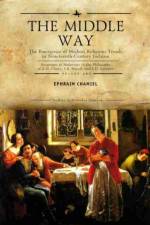
This book illuminates important issues faced by Orthodox Judaism in the modern era by relating the life and times of Rabbi Yudel Rosenberg (1859-1935). In presenting Yudel Rosenberg's rabbinic activities, this book aims to show that Jewish Orthodoxy could serve as an agent of modernity no less than its opponents. Yudel Rosenberg's considerable literary output will demonstrate that the line between "e;secular"e; and "e;traditional"e; literature was not always sharp and distinct. Rabbi Rosenberg's kabbalistic works will shed light on the revival of kabbala study in the twentieth century. Yudel Rosenberg's career in Canada will serve as a counter-example to the often-expressed idea that Hasidism exercised no significant influence on the development of American Judaism at the turn of the twentieth century.
Focuses on memory and history in its purest form, as narrated by witnesses who lived through the most tragic century in Russian history. Their stories involve Grand Dukes, Russian literary and political giants, as well as one of the architects of the Gulag, and show how these lives intertwined.
Abonner på vårt nyhetsbrev og få rabatter og inspirasjon til din neste leseopplevelse.
Ved å abonnere godtar du vår personvernerklæring.