













Gjør som tusenvis av andre bokelskere
Abonner på vårt nyhetsbrev og få rabatter og inspirasjon til din neste leseopplevelse.
Ved å abonnere godtar du vår personvernerklæring.Du kan når som helst melde deg av våre nyhetsbrev.

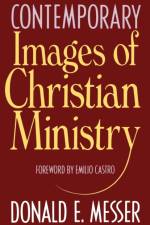
Traditionally, the roles of Christian ministry have been thought of as priest, pastor, and prophet. Donald E. Messer adds five contemporary images: Wounded Healer, Servant Leader, Political Mystic, Practical Theologian, and Enslaved Liberator. By combining these new images with the more traditional roles, readers will develop their own personal vision of Christian ministry.
Seymour and Miller, with four other experts in the field, seek to clarify the agenda, resources, and hopes for Christian education in the twenty-first century. Gone are the days when Christian education was variously envisioned as a school, a home, an educational system, a mission agency, or a school for Christian living. These dreams revealed the conflicts Christian education was to face throughout much of the twentieth century; yet they also clarified its resources and motivated efforts on its behalf. Modern educators such as Seymour and Miller also dream of what Christian education is and what it can become. Here they investigate five approaches through which contemporary Christian educators can develop the theory and practice of Christian education: (1) religious instruction (2) faith community (3) development (4) liberation (5) interpretation. Although they explore these five vital approaches from psychological, philosophical, exegetical, and sociological viewpoints, the authors agree that the central theme is still the teaching of the Good News. It is there we will discover that we are delivered for dependency on the old ways and that we are free to move into new ways of living.
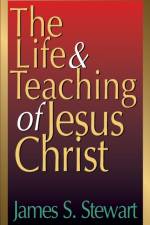
"Jesus wrote no autobiography. He left nothing in writing at all. He committed himself and his teaching simply to the hearts and memories of the men who knew and loved him. And they did not fail him. The four little books that we call Gospels are our primary and practically our only sources of information about the life and the words that have changed the world. We may wish the story had been told with greater fullness and detail; but we know that, short as it is, it is enough. It has given Christ to every race and age." (excerpt from Chapter 1: The Making of the Gospels)
"Prayer is a hard topic for most of us modern folk, and we have little place to talk about it. My own first conversation partners were the great ancient teachers, the Abbas and Ammas of the Egyptian desert...These men and women have been urging me for nearly thirty years to pray and to seek healing for the wounds of my heart I carry from childhood, from my own temperament, from my culture, even the culture of my church. They have also urged me all along to write about what I have learned from them and from my own experience, for, as they tell us, nothing, neither the most wonderful nor the most humiliating thing we are given as Christians, is ever given for ourselves alone...The chapters that follow are in the form of letters to a friend. My intention, of course, is that you, the reader, understand yourself to be the friend to whom I am writing..." --excerpted from the author's Preface "What a wonderful example of spiritual guidance through letters! Out of her own rich experience and struggle and scholarship Roberta Bondi speaks about prayer as one who knows. Those who have a lot of questions about experience of God in everyday life will not want to miss reading In Ordinary Time." --E. Glenn Hinson, Baptist Theological Seminary at Richmond, Richmond, Virginia
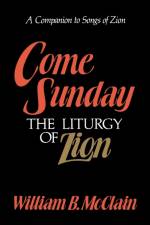
Companion to Songs of Zion; discusses liturgical time, spirituals, gospel songs; includes Scripture/ lectionary index.
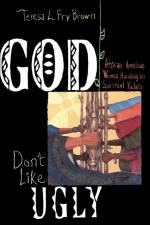
Countering dire pronouncements of the irrelevance of African American institutions, Teresa L. Fry Brown celebrates the way African American women continue, often invisibly, the task of passing on moral wisdom in African-American families, churches, and communities. The book begins with the author's analysis of intergenerational transmission of spiritual values as depicted in selected African American women's literature written since 1960 (gospel music, poems, novels, short stories, and autobiography). An interpretive framework is grounded in three ethical presuppositions based on traditional African American spiritual values, African American Theology and Ethics, Womanist Christology and Ethics, and values culled from the author's own experience and religious beliefs.
The whispers of faith, hope, and ethical direction that flow out of the New Testament materials have always taken their fleshly shape in light of the context in which African Americans have found themselves. Blount analyzes the differences between the first century context, which prompted the biblical writers to reflect ethically upon their faith statements as they did, and the present reality of African Americans in the United States, which motivates their Christian leaders to reflect upon these same statements in such radically different ways.
This resource helps laypersons encounter Jesus and live as his disciples. Jesus is sought as healer, comforter, friend, justifier, sanctifier, liberator, and seeker of justice. 6 sessions; includes leader's guide.
How do politics govern the plot and motivate the characters of the book of Daniel? By revealing a complex pattern of religious/political dynamics not found in other more superficial studies of Daniel, the author of this study provides an essential alternative to standard historical-critical interpretations of this key Old Testament book.
This inspiring and practical book has three parts. Part 1 explores how Jesus came to grips with the shame and humiliation he faced in his own life and how we can imitate his manner of handling shame. Part 2 focuses on how Jesus dealt with the shame that others brought to him and the implications this has for how we can overcome shame by internalizing and reenacting Jesus' stories in our lives. Part 3 explores the parables of Jesus and their implications for helping us live lives grounded in nonshame-based values.
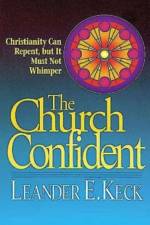
Keck shows how the church is suffering from malaise brought on by oversecularization in aspects of church life including worship, theology, ethos, and communication. This penetrating clarion call to renewal cuts through the conventional ideological labels of "liberal" and "conservative." Keck argues with passion that mainline churches today must neither pretend to be culturally triumphant nor whimper in fear. Rather, the church has grounds to be confident about its proper nature and mission. Keck envisions a renewed church that has recovered a sense of what is basic to its nature and purpose--restoring the praise of God to the center of worship.
In short, anecdotal chapters, the author explains how to diagnose a crisis (public, congregational, and personal) and offers six homiletical strategies for creating sermons when speaking during a crisis.
Contents: Meet John Wesley; A Tale of Two Villages; A Nursery Epic; Student and Missionary; A Prayer Meeting and What Came of It; The Very Soul That Over England Flamed; How They Sang a New Day into Britain; Men of Mighty Stature; Methodism Crosses the Atlantic; The Birth of a Church; The Afterglow; The End of the Long Trail; Methodism in the New Republic; Methodism's Man on Horseback; Camp-Meeting Days; The Winning of the West; The Missionary Spirit; Methodist Breaks and Fractures; Southern Methodism; Through the Civil War and Beyond; A Spiritual Forty-Niner; The Tale of the Years in Many Lands; Forming a World Parish; High Hours in a Church's History; The Battlefields of Reform; The Unification of American Methodism; and Methodism Since World War I.
Many preachers are aware of the presence of children in Sunday morning worship and wish to include them effectively in worship, but have a hard time figuring out how to do so. Preachers who are unhappy with children's sermons in general and all the books of printed children's sermons in particular are looking for a theologically and educationally sound approach to preaching to congregations that include children. This practical guide offers preachers a variety of ideas and helps for making any sermon one that is suitable for both children and adults. The author includes an introductory chapter on the importance of children's participation in worship during their elementary school years as part of their faith development. The chapter concludes with a discussion of how children "listen" to a sermon and the importance of planning for children in preparing sermons.
Charles Wesley is widely remembered as a significant hymn-writer, especially among Methodists, but he is not often regarded either as a major poet or as an important theologian. He quite often takes second place to his more famous elder brother, John, and frequently disappears in the face of John's role as leader of "the people called Methodists." This volume attempts to rectify these unfortunate misconceptions by demonstrating that Charles Wesley is a figure of primary literary significance in the history of English religious poetry. It also seeks to show that Charles Wesley was a theologian of considerable depth and creativity, and to place his work in the context of a variety of church traditions. The essays in this volume originated in papers presented to the Charles Wesley Publication Colloquium, held at the Center of Theological Inquiry in Princeton, NJ, in the fall of 1989.
Abonner på vårt nyhetsbrev og få rabatter og inspirasjon til din neste leseopplevelse.
Ved å abonnere godtar du vår personvernerklæring.