










Gjør som tusenvis av andre bokelskere
Abonner på vårt nyhetsbrev og få rabatter og inspirasjon til din neste leseopplevelse.
Ved å abonnere godtar du vår personvernerklæring.Du kan når som helst melde deg av våre nyhetsbrev.

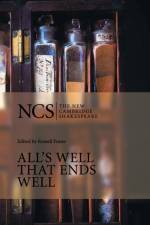
The New Cambridge Shakespeare appeals to students worldwide for its up-to-date scholarship and emphasis on performance. The series features line-by-line commentaries and textual notes on the plays and poems. Introductions are regularly refreshed with accounts of new critical, stage and screen interpretations. For the second edition of All's Well That Ends Well, Alexander Leggatt has written a completely new introduction to Russell Fraser's text of one of Shakespeare's most puzzling, ambiguous and demanding plays. Leggatt's interest in performance is evident throughout the introduction, particularly in his discussion of the instability of the main characters. He also provides a full, illustrated and thoughtful account of the play's critical and theatrical fortunes to the end of the twentieth century, and explores our experience as an audience of seeing and hearing the play performed. An updated reading list completes the volume.
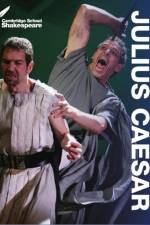
The New Cambridge Shakespeare appeals to students worldwide for its up-to-date scholarship and emphasis on performance. The series features line-by-line commentaries and textual notes on the plays and poems. Introductions are regularly refreshed with accounts of new critical, stage and screen interpretations. This third edition of Julius Caesar retains the text prepared by Marvin Spevak for the 1988 first edition and features a completely new introduction by Jeremy Lopez. Discussing in detail the play's strange and innovative form, Lopez explores the interpretive challenges Julius Caesar has presented to audiences, scholars and theatre companies from Shakespeare's time to our own. The textual commentary has been revised and updated with an eye, and ear, to the contemporary student reader, and the list of further readings has been updated to reflect the latest developments in scholarly criticism. The edition concludes with an Appendix containing relevant excerpts from Shakespeare's main source in Plutarch.
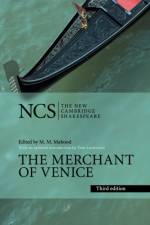
The New Cambridge Shakespeare appeals to students worldwide for its up-to-date scholarship and emphasis on performance. The series features line-by-line commentaries and textual notes on the plays and poems. Introductions are regularly refreshed with accounts of new critical, stage and screen interpretations. This second edition of The Merchant of Venice retains the text and Introduction prepared by M. M. Mahood and features a new introductory section by Charles Edelman. Where Mahood focuses in her Introduction on the expectations of the play's first audience and on our modern experience of seeing and hearing the drama performed, Edelman explores the play's sexual politics. He also foregrounds recent scholarship on the position of Jews in Shakespeare's time and surveys the international scope and diversity of theatrical interpretations of the text in the 1980s and 1990s. He pays particular attention to the ways in which directors and actors tackle the troubling figure of Shylock.
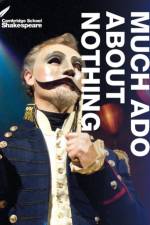
The New Cambridge Shakespeare appeals to students worldwide for its up-to-date scholarship and emphasis on performance. The series features line-by-line commentaries and textual notes on the plays and poems. Introductions are regularly refreshed with accounts of new critical, stage and screen interpretations. This second edition of Much Ado About Nothing retains the text and introduction prepared by F. H. Mares and features a new section by Angela Stock on recent film, stage and critical interpretations of the play. Mares pays special attention in the Introduction to the range of theatrical interpretations that have flourished since the first documented production of the play in the early seventeenth century. In particular, he explores notable performances of the roles of Benedick and Beatrice, from David Garrick to John Gielgud, and Peggy Ashcroft to Judi Dench. The commentary explicates the many sexual jokes in the text that are obscured by the complexity of Elizabethan English.
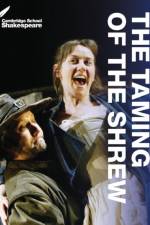
The New Cambridge Shakespeare appeals to students worldwide for its up-to-date scholarship and emphasis on performance. The series features line-by-line commentaries and textual notes on the plays and poems. Introductions are regularly refreshed with accounts of new critical, stage and screen interpretations. This is the third New Cambridge edition of The Taming of the Shrew, one of Shakespeare's most popular yet controversial plays. Ann Thompson considers its reception in the light of the hostility and embarrassment that the play often arouses, taking account of both scholarly defences and modern feminist criticism. For this version the editor pays lively attention to the problematic nature of debates about the play and its reception in the twenty-first century. She discusses recent editions and textual, performance and critical studies.
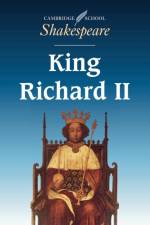
The New Cambridge Shakespeare appeals to students worldwide for its up-to-date scholarship and emphasis on performance. The series features line-by-line commentaries and textual notes on the plays and poems. Introductions are regularly refreshed with accounts of new critical, stage and screen interpretations. For this second edition of King Richard II Andrew Gurr has added a new section to the introduction, in which he discusses a number of important theatrical productions as well as the scholarly criticism of recent years. Gurr foregrounds the growing interest in re-historicising and re-politicising the play, emphasising that, to Shakespeare's contemporaries, King Richard II was a balanced dramatisation of the central political and constitutional issue of the day: how to reign-in an unjust ruler. The Introduction provides a full context for both contemporaneous and modern views of King Richard's fall. An updated reading list completes the edition.
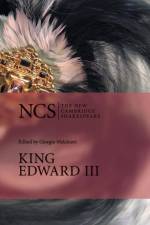
The New Cambridge Shakespeare appeals to students worldwide for its up-to-date scholarship and emphasis on performance. The series features line-by-line commentaries and textual notes on the plays and poems. Introductions are regularly refreshed with accounts of new critical, stage and screen interpretations. King Edward III is a major addition to the Shakespearean canon, and is published here for the first time in an authoritative edition of Shakespeare's works. Its editor, Giorgio Melchiori, claims that Shakespeare is not the play's sole author but that he wrote a significant part of the text. The extent of his contribution is discussed in detail. Melchiori also explores the play's historical background and genesis both in the context of contemporary theatrical practice and in relation to Shakespeare's own early cycle of history plays. An extensive Appendix on the use of sources explains the stages in which King Edward III was composed.
The New Cambridge Shakespeare appeals to students worldwide for its up-to-date scholarship and emphasis on performance. The series features line-by-line commentaries and textual notes on the plays and poems. Introductions are regularly refreshed with accounts of new critical, stage and screen interpretations. This second edition of Coriolanus, edited by Lee Bliss, provides a thorough reconsideration of what was probably Shakespeare's last tragedy. In the introduction, Bliss situates the play within its contemporary social and political contexts and pays particular attention to Shakespeare's manipulation of his primary source in Plutarch's Lives. The edition is alert to the play's theatrical potential, while the stage history also attends to the politics of performance from the 1680s onwards, including European productions following the Second World War. A new introductory section by Bridget Escolme accounts for recent theatrical productions as well as scholarly criticism of the last decade, with particular emphasis on gender and politics.
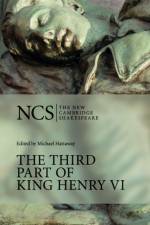
The New Cambridge Shakespeare appeals to students worldwide for its up-to-date scholarship and emphasis on performance. The series features line-by-line commentaries, textual notes on the plays and poems and an extensive Introduction. Shakespeare's plays about the reign of King Henry VI were written at the beginning of his career. A recent series of outstanding productions has demonstrated their theatrical vitality, and their sceptical questioning of Elizabethan orthodoxies has been understood through revisionist readings of the history of Shakespeare's own times. In The Third Part of King Henry VI, Shakespeare extends his essay on monarchical politics by contrasting two kings, the good but ineffective Henry VI with his rival, the sensual and victorious Edward IV. He also shows the perils of aristocratic factionalism in a series of scenes that display the grievous wounds caused by the Wars of the Roses.
Troilus and Cressida, long considered one of Shakespeare's most problematic plays, is both difficult and fascinating. Largely neglected during the eighteenth and nineteenth centuries it has recently proved popular and rewarding on the stage as well as in the study. This edition questions certain received ideas about the play's text, especially the relationship between quarto and folio and offers several new readings of old problems. Dawson's textual choices are often surprising but at the same time carefully grounded. He views the play from a performance perspective - both in the commentary as well as in the detailed section on stage history in the introduction. The introduction also covers the cultural context in which the play was written, probes the controversy about its early performance and provides extensive analysis of character, language, genre and contemporary significance.
The New Cambridge Shakespeare appeals to students worldwide for its up-to-date scholarship and emphasis on performance. The series features line-by-line commentaries and textual notes on the plays and poems. Introductions are regularly refreshed with accounts of new critical, stage and screen interpretations. Over the last two decades there has been a resurgence of theatrical interest in Shakespeare's Pericles, which has been rescued from comparative neglect and is now frequently performed. The editors reject the current orthodoxies, that the text is seriously corrupt and that the play is of divided authorship. They show how the 1609 quarto has features in common with the first quarto of King Lear, now widely regarded as being based on Shakespeare's manuscript. Likewise they regard the arguments concerning divided authorship as unproven and misleading. Instead they show the play to be a unified aesthetic experience.
The New Cambridge Shakespeare appeals to students worldwide for its up-to-date scholarship and emphasis on performance. The series features line-by-line commentaries, textual notes on the plays and poems and an extensive Introduction. Shakespeare's plays about the reign of King Henry VI were written at the beginning of his career. A recent series of outstanding productions has demonstrated their theatrical vitality, and their sceptical questioning of Elizabethan orthodoxies has been understood through revisionist readings of the history of Shakespeare's own times. The Wars of the Roses haunted the Elizabethans. Among many accounts, Shakespeare's was the most ambitious, dramatically innovative and radical. The Second Part of King Henry VI is concerned with the nature of history, the role of conscience and the relation between law and equity. It contains a complex reading of a popular uprising, led by Jack Cade.
The New Cambridge Shakespeare appeals to students worldwide for its up-to-date scholarship and emphasis on performance. The series features line-by-line commentaries and textual notes on the plays and poems. Introductions are regularly refreshed with accounts of new critical, stage and screen interpretations. Edited and introduced by Martin Butler, this first New Cambridge Shakespeare edition of Cymbeline takes full account of the critical and historical scholarship produced in the late twentieth century. It foregrounds the romance, tragicomedy and Jacobean stagecraft that shape the play and offers a refreshingly unsentimental reading of the heroine, Innogen. Butler pays greater attention than his predecessors to the politics of 1610, especially to questions of British union and nationhood. He also offers a lively account of Cymbeline's stage history from 1610 to the present day. The text has been edited from the 1623 Folio and features a detailed commentary on its linguistic and historical features.
The New Cambridge Shakespeare appeals to students worldwide for its up-to-date scholarship and emphasis on performance. The series features line-by-line commentaries and textual notes on the plays and poems. Introductions are regularly refreshed with accounts of new critical, stage and screen interpretations. Edited and introduced by John Margeson, King Henry VIII appears here for the first time in a New Cambridge Shakespeare edition. In his introduction Margeson explores the political and religious background to the play, its pageant-like structure and visual effects, and its varied ironies. He also discusses its stage history, from the famous occasion in 1613 when the Globe theatre burned down during a performance of King Henry VIII to important theatrical productions of the late twentieth century. A balanced account is provided of the authorship controversy that arose in the nineteenth century, when John Fletcher's name was first put forward as a likely collaborator.
The New Cambridge Shakespeare appeals to students worldwide for its up-to-date scholarship and emphasis on performance. The series features line-by-line commentaries and textual notes on the plays and poems. Introductions are regularly refreshed with accounts of new critical, stage and screen interpretations. Shakespeare's plays about the reign of King Henry VI were written at the beginning of his career. A recent series of outstanding productions has demonstrated their theatrical vitality, and their sceptical questioning of Elizabethan orthodoxies has been understood through revisionist readings of the history of Shakespeare's own times. The First Part of King Henry VI, which gives us Shakespeare's portrait of Joan of Arc, is revealed as a successful venture in its own exploratory style, and as a necessary account of key events in the Hundred Years War without which the Wars of the Roses, anatomised in the following two plays, cannot be understood.
Karl Klein's edition of Timon of Athens introduces Shakespeare's play as a complex exploration of a corrupt, moneyed society. Klein sees the protagonist not as a failed tragic hero, but as a rich and philanthropic nobleman, surrounded by greed and sycophancy, who is forced to recognise the inherent destructiveness of the Athenian society from which he retreats in disgust and rage. Klein establishes Timon as one of Shakespeare's late works, arguing, contrary to recent academic views, that evidence for other authors besides Shakespeare is inconclusive. The edition shows that the play is neither tragedy, satire nor comedy, but a subtle and complete drama whose main characters contain elements of all three genres. This edition was near completion at the time of Karl Klein's death, and was prepared for publication by his colleagues and by Brian Gibbons.
The New Cambridge Shakespeare appeals to students worldwide for its up-to-date scholarship and emphasis on performance. The series features line-by-line commentaries and textual notes on the plays and poems. Introductions are regularly refreshed with accounts of new critical, stage and screen interpretations. Edited and introduced by L. A. Beaurline, the New Cambridge Shakespeare edition of King John offers the most complete account to date of the play's stage history, with accompanying illustrations to demonstrate its dramatic potential. Although King John fell out of fashion by the end of the nineteenth century, Beaurline shows how its political importance, rich and varied language, and skilful design suggest that it should occupy a prominent position among Shakespeare's historical tragedies. In the Appendix, Beaurline surveys the arguments about the dating of the play and the anonymous Troublesome Reign of King John, and presents new evidence to support the view that Shakespeare's play was written first.
The New Cambridge Shakespeare appeals to students worldwide for its up-to-date scholarship and emphasis on performance. The series features line-by-line commentaries and textual notes on the plays and poems and an extensive introduction. The Winter's Tale is one of Shakespeare's most varied, theatrically self-conscious, and emotionally wide-ranging plays. Much of the play's copiousness inheres in its generic intermingling of tragedy, comedy, romance, pastoral, and the history play. In addition to dates and sources, the introduction attends to iterative patterns, the nature and cause of Leontes' jealousy, the staging and meaning of the bear episode, and the thematic and structural implications of the figure of Time. Special attention is paid to the ending and its tempered happiness. Performance history is integrated throughout the introduction and commentary. Appendices include the theatrical practice of doubling.
The New Cambridge Shakespeare appeals to students worldwide for its up-to-date scholarship and emphasis on performance. The series features line-by-line commentaries and textual notes on the plays and poems. Introductions are regularly refreshed with accounts of new critical, stage and screen interpretations. In this second edition of Shakespeare's Merry Wives of Windsor David Crane emphasises the liveliness of the play in stage terms. He also claims that this citizen comedy was an expression of Shakespeare's fundamental understanding of human life, conveyed centrally in the character of Falstaff. In the process he examines Shakespeare's free and vigorous use of different linguistic worlds. An account of the play's textual history concludes that at the time of its earliest performances Shakespeare's text was being adapted to specific theatrical needs, and as much in the possession of its players as of its author.
The New Cambridge Shakespeare appeals to students worldwide for its up-to-date scholarship and emphasis on performance. The series features line-by-line commentaries and textual notes on the plays and poems. Introductions are regularly refreshed with accounts of new critical, stage and screen interpretations. In this second edition of The Two Gentlemen of Verona, Kurt Schlueter approaches Shakespeare's early comedy as a parody of two types of Renaissance educational fiction: the love-quest story and the test-of-friendship story, which in combination show high-flown human ideals as incompatible with each other and with human nature. Since the first known production at David Garrick's Drury Lane Theatre, the play has tempted major directors and actors, though changing conceptions of the play often fail to recognise its subversive impetus. This updated edition includes a new introductory section by Lucy Munro on recent stage and critical interpretations, bringing the thoroughly researched, illustrated performance history up to date.
The New Cambridge Shakespeare appeals to students worldwide for its up-to-date scholarship and emphasis on performance. The series features line-by-line commentaries and textual notes on the plays and poems. Introductions are regularly refreshed with accounts of new critical, stage and screen interpretations. For this second edition of King Richard III, Janis Lull has added a new section to her introduction, in which she focuses on contemporary productions of the play as well as recent scholarly criticism. Lull emphasises the importance of women's roles in this popular drama but shows how the text has frequently been cut, rewritten and reshaped by directors and actors to enhance the role of Richard, often at the expense of female characters. The special relationship between King Richard III and Macbeth is also explored while the notes detail the play's language in terms that are easily accessible to contemporary readers.
The New Cambridge Shakespeare appeals to students worldwide for its up-to-date scholarship and emphasis on performance. The series features line-by-line commentaries, textual notes on the plays and poems and an extensive Introduction. Since the late twentieth century, when scholarly attention began to focus on sexuality, collaboration and Shakespeare's late plays, The Two Noble Kinsmen has become an essential script. Turner and Tatspaugh's edition presents a strong case for taking the play more seriously now than ever before. A lively introduction discusses Shakespeare's craftsmanship in adapting a medieval tale for the Jacobean stage, the extent of co-authorship with John Fletcher, the rhetorical complexity of Shakespeare's late style, the themes of sexuality and friendship, and contemporary critical responses to the play. The edition demonstrates the theatrical vitality of The Two Noble Kinsmen and confirms it as a play for today.
The New Cambridge Shakespeare appeals to students worldwide for its up-to-date scholarship and emphasis on performance. The series features line-by-line commentaries and textual notes on the plays and poems. Introductions are regularly refreshed with accounts of new critical, stage and screen interpretations. Edited and introduced by William C. Carroll, this edition of Love's Labour Lost features a lively account of the play's performance history from 1632 to the present day. Stage and screen productions of the late twentieth century receive particular attention and a range of international performances are also explored. New trends in the scholarly criticism are discussed in the introduction, as are the play's sources and historical contexts. Carroll's text is freshly edited from the First Quarto, published in 1598, and presents a highly readable modernised edition of Love's Labour Lost; a play known for its unorthodox ending and extraordinary use of language.
In this lively comedy of love and money in sixteenth-century Venice, Bassanio wants to impress the wealthy heiress Portia but lacks the necessary funds. He turns to his merchant friend, Antonio, who is forced to borrow from Shylock, a Jewish moneylender. When Antonio's business falters, repayment becomes impossibleand by the terms of the loan agreement, Shylock is able to demand a pound of Antonios flesh. Portia cleverly intervenes, and all ends well (except of course for Shylock).
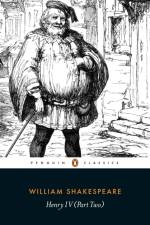
'This, of the history plays, is The Tragedy ... the most lyrical Shakespeare ever wrote' Simon SchamaThe old king Henry IV, sick and weary, must send out his forces - including the unruly Falstaff - to meet another rebellion that threatens to bring the country to the brink of civil war. But as the conflict grows, he must also confront a more personal problem - how to make his troublesome son Prince Hal accept his duty as heir and leave his carousing companions behind. Pitting youth against old age, son against father, carefree hope against the realities of ruling, this is an elegiac drama of pathos and regret.Used and Recommended by the National TheatreGeneral Editor Stanley WellsEdited by Peter Davison Introduction by Adrian Poole
Henry VI Part III is the third of William Shakespeare's plays set during the lifetime of King Henry VI of England, and prepares the ground for one of his best-known and most controversial plays: the tragedy of King Richard III (Richard III of England). It follows on from Henry VI, part 1 and Henry VI, part 2.
Under the rule of King John, England is forced into war when the French challenge the legitimacy of John's claim to the throne and determine to install his nephew Arthur in his place. But political principles, hypocritically flaunted, are soon forgotten, as the French and English kings form an alliance based on cynical self-interest. And as the desire to cling to power dominates England's paranoid and weak-willed king, his country is threatened with disaster.
Leaving behind both home and beloved, a young man travels to Milan to meet his closest friend. Once there, however, he falls in love with his friend's new sweetheart and resolves to seduce her. Love-crazed and desperate, he is soon moved to commit cynical acts of betrayal. And comic scenes involving a servant and his dog enhance the play's exploration how passion can prove more powerful than even the strongest loyalty owed to a friend.
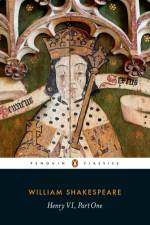
After the death of Henry V, the French revolt and threaten to reclaim their country from English rule. Guided by his Lord Protector, the young King Henry VI journeys to Paris to reaffirm his rule over France. But while Joan of Arc battles the British abroad, discontent is also breeding at home, between the two ancient Houses of York and Lancaster.
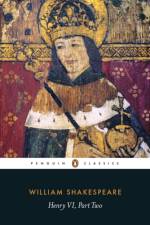
Henry VI is tricked into marrying Margaret - lover of the Earl of Suffolk, who hopes to rule the kingdom through her influence. There is one great obstacle in Suffolk's path, however - the noble Lord Protector, who he slyly orders to be murdered. Discovering this betrayal, Henry banishes Suffolk, but with his Lord Protector gone the unworldly young King must face his greatest challenge: impending Civil War and the rising threat of the House of York.
Abonner på vårt nyhetsbrev og få rabatter og inspirasjon til din neste leseopplevelse.
Ved å abonnere godtar du vår personvernerklæring.