



















Gjør som tusenvis av andre bokelskere
Abonner på vårt nyhetsbrev og få rabatter og inspirasjon til din neste leseopplevelse.
Ved å abonnere godtar du vår personvernerklæring.Du kan når som helst melde deg av våre nyhetsbrev.

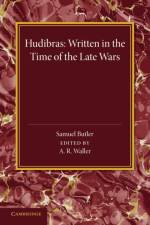
Originally published in 1905, this book contains the text of Hudibras by the satirical poet Samuel Butler (1613-80). The text is taken from the 1678 edition of the poem, and notes on the variations on the text found in previous versions are included at the back of the book.
Samuel Butler (1835-1902) became famous with his satirical Utopian novel Erewhon, based on his experiences as a sheep farmer in New Zealand and published, initially anonymously, in 1872. This earlier book, published in London in 1863 while he was still abroad, is a compilation of his letters home. Having obtained a degree in Classics from Cambridge, Butler had left England in 1859 with generous funding from his father, who hoped that making his fortune in the colonies would cure his son's ambition to become an artist. Butler was highly successful in his farming enterprise, and his letters provide both financial details and information on the practicalities of animal husbandry, pasture management and colonial life. Butler also explored Canterbury and travelled to the Southern Alps, and describes vividly the landscapes, flora and fauna of South Island. This classic source for New Zealand history also sheds light on Butler's later work.
This 1908 volume of Samuel Butler's writings falls into two parts: the first part was derived from Thyer's edition of The Genuine Remains in Verse and Prose of Mr Samuel Butler; the second part contains previously unpublished material taken from the Butler Manuscripts in the British Library.
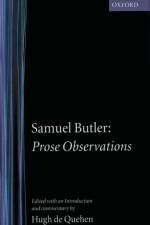
A scholarly edition of Samuel Butler: Prose Observations by Helen Darbishire. The edition presents an authoritative text, together with an introduction, commentary notes, and scholarly apparatus.
'I am the enfant terrible of literature and science. If I cannot, and I know I cannot, get the literary and scientific big-wigs to give me a shilling, I can, and I know I can, heave bricks into the middle of them.' With The Way of All Flesh, Samuel Butler threw a subversive brick at the smug face of Victorian domesticity. Published in 1903, a year after Butler's death, the novel is a thinly disguised account of his own childhood and youth 'in the bosom of a Christian family'. With irony, wit and sometimes rancour, he savaged contemporary values and beliefs, turning inside-out the conventional novel of a family's life through several generations.
Abonner på vårt nyhetsbrev og få rabatter og inspirasjon til din neste leseopplevelse.
Ved å abonnere godtar du vår personvernerklæring.