
Gjør som tusenvis av andre bokelskere
Abonner på vårt nyhetsbrev og få rabatter og inspirasjon til din neste leseopplevelse.
Ved å abonnere godtar du vår personvernerklæring.Du kan når som helst melde deg av våre nyhetsbrev.

This is a magisterial narrative of the most turbulent decade in Anglo-Irish history: a decade of unleashed passions that came close to destroying the parliamentary system and to causing civil war in the United Kingdom. It was also the decade of the cataclysmic Great War, of an officers' mutiny in an elite cavalry regiment of the British Army and of Irish armed rebellion. It was a time, argues Ronan Fanning, when violence and the threat of violence trumped democratic politics. This is a contentious view. Historians have wished to see the events of that decade as an aberration, as an eruption of irrational bloodletting. And they have have been reluctant to write about the triumph of physical force. Fanning argues that in fact violence worked, however much this offends our contemporary moral instincts. Without resistance from the Ulster Unionists and its very real threat of violence the state of Northern Ireland would never have come into being. The Home Rule party of constitutionalist nationalists failed, and were pushed aside by the revolutionary nationalists Sinn Fein. Bleakly realistic, ruthlessly analytical of the vacillation and indecision displayed by democratic politicians at Westminster faced with such revolutionary intransigence, Fatal Path is history as it was, not as we would wish it to be.
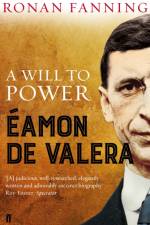
,amon de Valera is the most remarkable man in the history of modern Ireland. Much as Churchill personified British resistance to Hitler and de Gaulle personified the freedom of France, de Valera personified Irish independence. From his emergence in the aftermath of the 1916 rebellion as the republican leader, he bestrode Irish politics like a colossus for over fifty years. On the eve of the centenary of the Irish revolution, one of Ireland's most eminent historians explains why Eamon de Valera was such a divisive figure that he has never until now received the recognition he deserves. This biography reconciles an acknowledgement of de Valera's catastrophic failure in 1921-22, when his petulant rejection of the Anglo-Irish Treaty shaped the dimensions of a bloody civil war, with an appreciation of his subsequent greatness as the statesman who single-handedly severed the ties with Britain and defined nationalist Ireland's sense of itself.
Abonner på vårt nyhetsbrev og få rabatter og inspirasjon til din neste leseopplevelse.
Ved å abonnere godtar du vår personvernerklæring.