
Gjør som tusenvis av andre bokelskere
Abonner på vårt nyhetsbrev og få rabatter og inspirasjon til din neste leseopplevelse.
Ved å abonnere godtar du vår personvernerklæring.Du kan når som helst melde deg av våre nyhetsbrev.

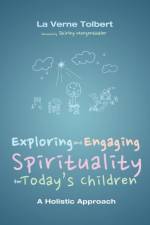
Exploring and Engaging Spirituality for Today's Children: A Holistic Approach answers questions about the most effective ways to help children, pre-teens, and teens develop spiritually. This collection of research gleaned from presentations during the Fourth Triennial Children's Spirituality Conference at Concordia University in 2012 is divided into four major sections: (1) theological and historical foundations, (2) engaging parents and congregations, (3) engaging methodologies, and (4) exploring children at risk, child pornography, social justice, intercultural diversity, and abstinence education. Researchers acknowledge that the home is the foundation for Christian nurture. In Exploring and Engaging Spirituality for Today's Children, both scholars and ministry leaders come together with parents to promote a holistic environment where children are encouraged to love, respect, and obey God. From birth to high school, children's voices resonate throughout these studies as they are invited to share their reflections and experiences. Exploring and Engaging Spirituality for Today's Children is a lively, easy-to-read collection that reflects a broad range of faith traditions and is ideal for all those who are committed to the spiritual development of children.
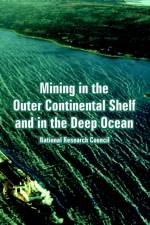
As the worldwide demands for basic minerals increase and some resources on land show signs of rapid decrease, it is inevitable that the search for new sources will extend to the oceans - the largely unexplored 71 percent of the planet's surface. Of great importance is the rich reserve of hard minerals in the oceans - for example the so-called manganese nodules, which vary in size and shape from small pebbles to massive pavements, containing economically attractive deposits of manganese, copper, cobalt, and nickel. It is important to assess the nature and extent of the mineral resources of the seabed and to devise ways of recovering them with a minimal impact on the environment. This report (based on an 18-month study) of a panel of the National Academy of Sciences examines the potential of the resources, evaluates the state of the art of ocean mining, identifies the legal, regulatory, and jurisdictional problems involved, considers the possible environmental questions, and determines how to meet the need for trained engineers to do the job.
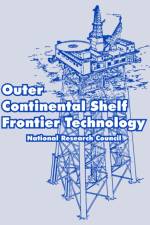
CONTENTS: IntroductionCommittee on Assessment of Safety of OCS ActivitiesExploratory Drilling SystemsDeepwater Drilling and Production Platforms in Non-Arctic AreasArctic PlatformsOffshore Discharge of Drill Muds and CuttingsSubsea Production SystemsDeep Water PipelinesOffshore Storage, Tanker Loading, Floating FacilitiesSupporting Systems for Installation, Inspection, and RepairOil Spill Cleanup and ContainmentDiscussionSummaryParticipants
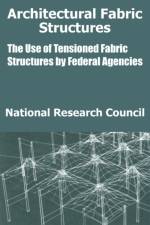
This reprint of the 1985 architectural classic discusses a technology that offers an important alternative to conventional construction, having unique properties that make it useful for certain applications. Due to improvements in materials, structural analysis, and environmental control, these structures can often be considered permanent buildings. The membrane is the principal structural component of a tensioned fabric structure. Under certain circumstances, a tensioned fabric structure can reduce energy consumption in a building. The natural light from the translucent surface reduces requirements for artificial lighting, the reflectivity of the skin reduces heat gain, and the radiation of waste heat from the warm fabric surface to cool sky results in an energy-efficient building in warm climates. In cold climates, a second skin or liner is often used, often with glass fiber insulation in the cavity to further reduce heat loss. In general, as permanent structures, tensioned fabric technology is underutilized. There are many projects or parts of projects that could employ this system.
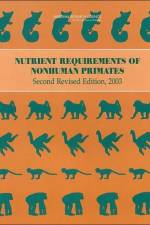
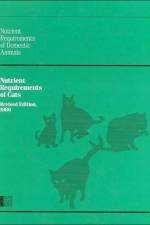
Provides several estimates of nutrient requirements. This volume covers requirements for energy: carbohydrates, including the role of dietary fiber; proteins and amino acids; fats and fatty acids; minerals, fat-soluble and water-soluble vitamins; and water.
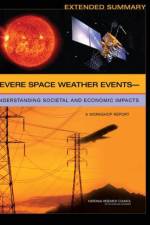
The adverse effects of extreme space weather on modern technology--power grid outages, high-frequency communication blackouts, spacecraft anomalies--are well known and well documented, and the physical processes underlying space weather are also generally well understood. Less well documented and understood, however, are the potential economic and societal impacts of the disruption of critical technological systems by severe space weather. This volume, an extended four-color summary of the book, Severe Space Weather Events--Understanding Societal and Economic Impacts, addresses the questions of space weather risk assessment and management. The workshop on which the books are based brought together representatives of industry, the government, and academia to consider both direct and collateral effects of severe space weather events, the current state of the space weather services infrastructure in the United States, the needs of users of space weather data and services, and the ramifications of future technological developments for contemporary society's vulnerability to space weather. The workshop concluded with a discussion of un- or underexplored topics that would yield the greatest benefits in space weather risk management.
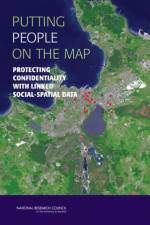
Aims to find that technical approaches for making data available while limiting risk have potential, but none is adequate on its own or in combination. This book offers recommendations for education, training, research, and practice to researchers, professional societies, federal agencies, institutional review boards, and data stewards.
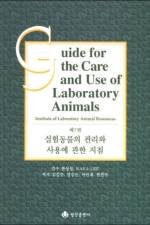
A respected resource for decades, the Guide for the Care and Use of Laboratory Animals has been updated by a committee of experts, taking into consideration input from the scientific and laboratory animal communities and the public at large. The Guide incorporates new scientific information on common laboratory animals, including aquatic species, and includes extensive references. It is organized around major components of animal use: Key concepts of animal care and use. The Guide sets the framework for the humane care and use of laboratory animals. Animal care and use program. The Guide discusses the concept of a broad Program of Animal Care and Use, including roles and responsibilities of the Institutional Official, Attending Veterinarian and the Institutional Animal Care and Use Committee. Animal environment, husbandry, and management. A chapter on this topic is now divided into sections on terrestrial and aquatic animals and provides recommendations for housing and environment, husbandry, behavioral and population management, and more. Veterinary care. The Guide discusses veterinary care and the responsibilities of the Attending Veterinarian. It includes recommendations on animal procurement and transportation, preventive medicine (including animal biosecurity), and clinical care and management. The Guide addresses distress and pain recognition and relief, and issues surrounding euthanasia. Physical plant. The Guide identifies design issues, providing construction guidelines for functional areas; considerations such as drainage, vibration and noise control, and environmental monitoring; and specialized facilities for animal housing and research needs. The Guide for the Care and Use of Laboratory Animals provides a framework for the judgments required in the management of animal facilities. This updated and expanded resource of proven value will be important to scientists and researchers, veterinarians, animal care personnel, facilities managers, institutional administrators, policy makers involved in research issues, and animal welfare advocates.
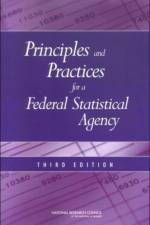
Publicly available statistics from government agencies that are credible, relevant, accurate, and timely are essential for policy makers, individuals, households, businesses, academic institutions, and other organizations to make informed decisions. Even more, the effective operation of a democratic system of government depends on the unhindered flow of statistical information to its citizens.In the United States, federal statistical agencies in cabinet departments and independent agencies are the governmental units whose principal function is to compile, analyze, and disseminate information for such statistical purposes as describing population characteristics and trends, planning and monitoring programs, and conducting research and evaluation. The work of these agencies is coordinated by the U.S. Office of Management and Budget. Statistical agencies may acquire information not only from surveys or censuses of people and organizations, but also from such sources as government administrative records, private-sector datasets, and Internet sources that are judged of suitable quality and relevance for statistical use. They may conduct analyses, but they do not advocate policies or take partisan positions. Statistical purposes for which they provide information relate to descriptions of groups and exclude any interest in or identification of an individual person, institution, or economic unit.Four principles are fundamental for a federal statistical agency: relevance to policy issues, credibility among data users, trust among data providers, and independence from political and other undue external influence. Principles and Practices for a Federal Statistical Agency: Sixth Edition presents and comments on these principles as theyve been impacted by changes in laws, regulations, and other aspects of the environment of federal statistical agencies over the past 4 years.
Addresses the need for research toward the problems of water management during drought episodes. This book covers topics such as the causes and occurrence of drought, drought management options, acceptable risks for public systems, and legal and institutional aspects of drought management.
By focusing attention on individuals rather than on aggregates, this book takes a different approach to studying criminal behavior. It develops a framework for collecting information about individual criminal careers and their parameters, reviews knowledge about criminal career dimensions, and presents models of offending patterns.
Every 10 years the National Research Council releases a survey of astronomy and astrophysics outlining priorities for the coming decade. The most recent survey, titled New Worlds, New Horizons in Astronomy and Astrophysics, provides overall priorities and recommendations for the field as a whole based on a broad and comprehensive examination of scientific opportunities, infrastructure, and organization in a national and international context. Panel Reports?New Worlds, New Horizons in Astronomy and Astrophysics is a collection of reports, each of which addresses a key sub-area of the field, prepared by specialists in that subarea, and each of which played an important role in setting overall priorities for the field. The collection, published in a single volume, includes the reports of the following panels: Cosmology and Fundamental Physics Galaxies Across Cosmic Time The Galactic Neighborhood Stars and Stellar Evolution Planetary Systems and Star Formation Electromagnetic Observations from Space Optical and Infrared Astronomy from the Ground Particle Astrophysics and Gravitation Radio, Millimeter, and Submillimeter Astronomy from the Ground The Committee for a Decadal Survey of Astronomy and Astrophysics synthesized these reports in the preparation of its prioritized recommendations for the field as a whole. These reports provide additional depth and detail in each of their respective areas. Taken together, they form an essential companion volume to New Worlds, New Horizons: A Decadal Survey of Astronomy and Astrophysics. The book of panel reports will be useful to managers of programs of research in the field of astronomy and astrophysics, the Congressional committees with jurisdiction over the agencies supporting this research, the scientific community, and the public.
Focusing on poultry nutrition, this volume includes information on the nutrient requirements of meat and egg-type chickens, incorporating data on brown-egg strains, turkeys, geese, ducks, pheasants, Japanese quail, and Bobwhite quail. It also contains appendix tables that document the information used to derive the nutrient requirements.
Addresses the need for preventing adverse effects of minerals on the health of animals by the application of appropriate nutritional and toxicological principles to set limits on mineral exposure to animals. This book will be useful to food industry professionals, pet and other animal food manufacturers, and animal nutritionists.
Abonner på vårt nyhetsbrev og få rabatter og inspirasjon til din neste leseopplevelse.
Ved å abonnere godtar du vår personvernerklæring.