






Gjør som tusenvis av andre bokelskere
Abonner på vårt nyhetsbrev og få rabatter og inspirasjon til din neste leseopplevelse.
Ved å abonnere godtar du vår personvernerklæring.Du kan når som helst melde deg av våre nyhetsbrev.

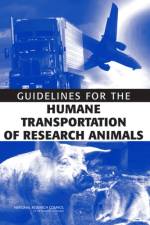
Identifies the problems encountered in the transportation of research animals and offers recommendations aimed at local and federal officials to rectify these problems. This book also includes a set of good practices based on the literature on transportation of agricultural animals, universal concepts of physiology, and more.
Contains the proceedings of a workshop held in June 2005 to investigate methods used to evaluate funding of the biomedical scientists by philanthropic and public funders.
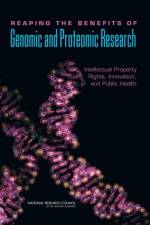
Recommends 13 actions that policy-makers, courts, universities, and health and patent officials should take to prevent the complex web of IP protections from getting in the way of potential breakthroughs in genomic and proteomic research. This report urges patent holders to allow others to perform the tests for purposes of verifying the results.
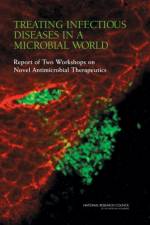
Identifies different approaches to the development of antimicrobial drugs and vaccines based on a greater understanding of how the human immune system interacts with both good and bad microbes. This report concludes that the development of a single superdrug to fight all infectious agents is unrealistic.
Presents details of the story of a population that varies in many dimensions, including national origin, immigration status, and generation. This book describes the contours of this population, from the perspectives of history, demography, geography, education, family, employment, economic well-being, health, and political engagement.
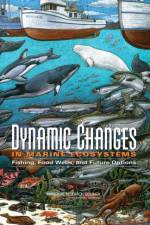
The National Research Council conducted an independent study to weigh the collective evidence for fishery-induced changes to marine ecosystems and the implications of the findings for US fisheries management. This book provides comprehensive information in regard to these findings.
Summary of a Workshop on Using Information Technology to Enhance Disaster Management (2005)
Supporting Local Health Care in a Chronic Crisis: Management and Financing Approaches in the Eastern Democratic Republic of the Congo (2006)
Presents an assessment of the requirements facing the US Bureau of Reclamation of the Department of Interior in the 21st century, an analysis of good practices and techniques for addressing those challenges, and a review of workforce and human resource needs.
Biomedical advances have made it possible to manipulate features of living organisms in useful ways. This book examines the trends and objectives of research in public health, life sciences, and biomedical science that contain applications relevant to developments in biological weapons and ways to anticipate, identify, and mitigate these dangers.
The US Army depends on a broad array of interacting physical, informational, cognitive, and social networks. This book presents an assessment of the importance and content of network science. It provides an analysis of how the Army might advance the transformation to NCO operations by supporting fundamental research on networks.
Election officials look to electronic voting systems as a means for improving their ability to more effectively conduct and administer elections. This work describes the important questions and issues that election officials, policy makers, and citizens should ask about the use of computers and information technology in the electoral process.
Reviews the Department of Defenses (DOD) Research Plan for obtaining toxicologic and other data to assess risk to military personnel. This book provides guidance to DOD on risk assessment methods for assessing toxicologic risk to military personnel from low-level exposures to CWA's.
Policy makers need information about the nation which comes from research based on data. The risk of expanded access to potentially sensitive data is the increased probability of breaching the confidentiality of the data and, eroding public confidence in the data collection enterprise. This book issues guidance on how to exploit these tradeoffs.
Provides a series of space science objectives and missions that could be so enabled in the period beyond 2015 in the areas of astronomy and astrophysics, solar system exploration, and solar and space physics.
Improving Data to Analyze Food and Nutrition Policies (2005)
Starting in the mid 1990s, the US economy experienced an unprecedented upsurge in economic productivity. This workshop convened academic experts and industry representatives from leading companies such as Google and General Motors to participate in a high-level discussion of the role of software and its importance to US productivity growth.
The National Research Council hosted an interacademy workshop in Yekaterinburg, Russia together with the Russian Academy of Sciences in October 2004 as a means of exploring various aspects of industrial innovation in the Urals region of Russia.
Discusses policies, requirements, and techniques to protect Mars from organisms originating on Earth that could interfere with scientific investigations. This report provides recommendations on cleanliness and biological burden levels of Mars-bound spacecraft, methods to reach those levels, and more.
Chemical imaging has a variety of applications for almost every facet of our daily lives, ranging from medical diagnosis and treatment to the study and design of material properties in new products. This book reviews the state of chemical imaging technology, identifies promising future developments and their applications, and more.
The Coeur d and Alene River Basin has been known as 'The Silver Valley' for being one of the productive silver, lead, and zinc mining areas in the United States. This book evaluates the issues and concerns that have been raised regarding EPA's decisions about cleaning up the area.
In 1997, Congress directed the National Research Council (NRC) to carry out a series of assessments of project management at the Department of Energy (DOE). This report presents information and guidance for use towards the development of a viable methodology to suit DOE's needs.
Suitable as a guide for agencies and organizations responsible for program evaluation, for researchers who design scientifically credible evaluations of government and privately sponsored programs, and for policy officials who are investing in the concept of evidence-based policy to guide their decisions in areas of crime prevention and control.
Offers a number of recommendations that could help restore Russia's ability to join with the United States and the broader international community in leading an expanded global effort to control infectious diseases. This report proposes the establishment of two model State Sanitary Epidemiological Surveillance Centers in Russia.
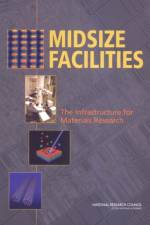
The NRC carried out a study to characterize and discuss ways to optimize investments in materials research facility infrastructure with attention to midsize facilities. This report provides an assessment of the nature and importance of mid-sized facilities, their capabilities, challenges they face, investment, and optimizing their effectiveness.
In 2004, the National Research Council (NRC) published Climate Data Records from Environmental Satellites to provide the National Oceanic and Atmospheric Administration (NOAA) with initial guidelines on how to develop and implement an effective CDR program. This book is a review of NOAA's plan for the Scientific Data Stewardship (SDS) program.
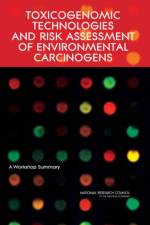
Toxicogenomics is a discipline that combines expertise in toxicology, genetics, molecular biology, and environmental health to help understand the response of living organisms to stressful environments. The National Research Council convened a workshop to discuss how toxicogenomic data could be applied to improve risk assessments.
Abonner på vårt nyhetsbrev og få rabatter og inspirasjon til din neste leseopplevelse.
Ved å abonnere godtar du vår personvernerklæring.