Gjør som tusenvis av andre bokelskere
Abonner på vårt nyhetsbrev og få rabatter og inspirasjon til din neste leseopplevelse.
Ved å abonnere godtar du vår personvernerklæring.Du kan når som helst melde deg av våre nyhetsbrev.

Embark on a visual and logical journey with our Jigsaw Sudoku Puzzle Book for Adults! Immerse yourself in the captivating world of jigsaw sudoku, where 300 medium to hard puzzles await to challenge and engage your mind. This thoughtfully curated collection offers a delightful blend of creativity and strategy, making it the perfect companion for puzzle enthusiasts seeking an exhilarating mental workout. Puzzle Book Features: 300 Puzzles ( 150 Medium, 150 Hard )Perfectly Sized - 6" x 9"Solutions Included in the Back of the Book
Dive into the intricate world of Suguru puzzles with our Suguru Puzzle Book for Adults! This meticulously crafted collection features 300 medium to hard level challenges, designed to captivate and challenge puzzlers seeking a stimulating mental workout. Each puzzle offers a unique blend of strategy and logic, providing an ideal balance for enthusiasts looking to push their cognitive boundaries.This Suguru Puzzle Book features: 300 Puzzles ( 150 Medium, 150 Hard )Solutions Included in the Back of the Book6" x 9" Size
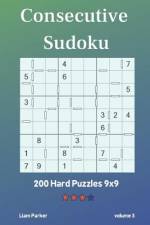
Consecutive Sudoku is played in the same way as Sudoku except that some cells have special markings to indicate that these cells contain consecutive numbers. White bars between squares indicate that the squares are consecutive - meaning that the numbers in these two squares have a numerical difference of '1'. For example: 1 and 2; or 4 and 5. If there is no white bar then the numbers are not consecutive.
Each puzzle consists of a grid containing blocks surrounded by bold lines. The object is to fill all empty squares so that the numbers 1 to N (where N is the number of rows or columns in the grid) appear exactly once in each row and column and the numbers in each block produce the result shown in the top-left corner of the block according to the math operation appearing on the top of the grid. In CalcuDoku a number may be used more than once in the same block.
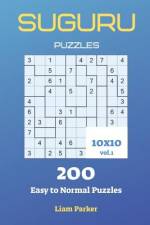
Suguru, also known as Tectonics or Number Blocks, is a Japanese puzzle invented by Naoki Inaba. The task consists of a rectangular or square grid divided into regions. Each region must be filled with each of the digits from 1 to the number of cells in the region.Also, adjacent (touching) cells should not contain the same number, even diagonally.
Binary (also known as "Binairo Puzzle", "Takuzu", "Tohu wa Vohu") is played on a rectangular or square grid. The goal is to fill in the grid with digits "0" and "1" according to the following rules: Each box should contain a zero or a one.No more than two similar numbers next to or below each other are allowed.Each row and each column should contain an equal number of zeros and ones (or one more for odd sized grids).Each row is unique, and each column is unique.
Place the given number of mines into empty cells in the grid such that the numbers in the grid represent the number of mines in the neighboring cells, including diagonal ones.
Each puzzle consists of a 6x6 grid containing given clues in various places. The object is to fill all empty squares so that the numbers 1 to 6 appear exactly once in each row, column and 3x2 box.
Suguru, also known as Tectonics or Number Blocks, is a Japanese puzzle invented by Naoki Inaba. The task consists of a rectangular or square grid divided into regions. Each region must be filled with each of the digits from 1 to the number of cells in the region.Also, adjacent (touching) cells should not contain the same number, even diagonally.
Each puzzle consists of a 6x6 grid containing given clues in various places. The object is to fill all empty squares so that the numbers 1 to 6 appear exactly once in each row, column and 3x2 box.
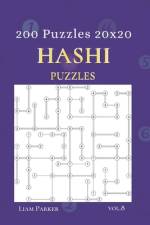
Each puzzle is based on a rectangular arrangement of islands where the number in each island tells how many bridges are connected to it. The object is to connect all islands according to the number of bridges so: There are no more than two bridges in the same direction. Bridges can only be vertical or horizontal and are not allowed to cross islands or other bridges. When completed, all bridges are interconnected enabling passage from any island to another.
Futoshiki(from Japanese, literally "not equal"; also known as "Hutoshiki", "Unequal")Place numbers of the given range in the grid 5x5 such that every row and column contains each number exactly once. Inequality constraints must be satisfied. The open end of the sign denotes the greater number.
Suguru, also known as Tectonics or Number Blocks, is a Japanese puzzle invented by Naoki Inaba. The task consists of a rectangular or square grid divided into regions. Each region must be filled with each of the digits from 1 to the number of cells in the region.Also, adjacent (touching) cells should not contain the same number, even diagonally.
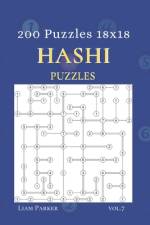
Each puzzle is based on a rectangular arrangement of islands where the number in each island tells how many bridges are connected to it. The object is to connect all islands according to the number of bridges so: There are no more than two bridges in the same direction. Bridges can only be vertical or horizontal and are not allowed to cross islands or other bridges. When completed, all bridges are interconnected enabling passage from any island to another.
Consecutive Sudoku is played in the same way as Sudoku except that some cells have special markings to indicate that these cells contain consecutive numbers. White bars between squares indicate that the squares are consecutive - meaning that the numbers in these two squares have a numerical difference of '1'. For example: 1 and 2; or 4 and 5. If there is no white bar then the numbers are not consecutive.
Each puzzle is based on a rectangular arrangement of islands where the number in each island tells how many bridges are connected to it. The object is to connect all islands according to the number of bridges so: There are no more than two bridges in the same direction. Bridges can only be vertical or horizontal and are not allowed to cross islands or other bridges. When completed, all bridges are interconnected enabling passage from any island to another.
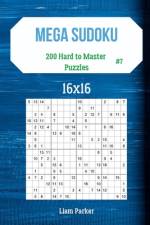
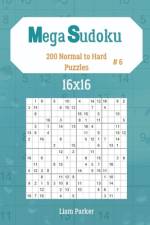
The puzzle a 16 x 16 grid made up of 4 x 4 subgrids (called "regions"). Some cells already contain numbers, known as "givens". The goal is to fill in the empty cells, one number in each, so that each column, row, and region contains the numbers 1 through 16 exactly once. Each number in the solution therefore occurs only once in each of three "directions", hence the "single numbers" implied by the puzzle's name.
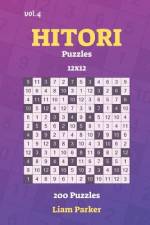
Hitori (from Japanese "Hitori ni shite kure"; literally "let me alone") is played on a grid of squares. At the beginning, each cell contains a number. The goal is to paint out some cells so that there are no duplicate numbers in any row or column, similar to the solved state of a Sudoku puzzle (except with black squares added to the grid).Additionally, black cells cannot be adjacent, although they can be diagonal to one another. The remaining numbered cells must be all connected to each other.
The puzzle a 16 x 16 grid made up of 4 x 4 subgrids (called "regions"). Some cells already contain numbers, known as "givens". The goal is to fill in the empty cells, one number in each, so that each column, row, and region contains the numbers 1 through 16 exactly once. Each number in the solution therefore occurs only once in each of three "directions", hence the "single numbers" implied by the puzzle's name.
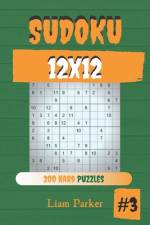
The puzzle a 12 x 12 grid made up of 3 x 4 subgrids (called "regions"). Some cells already contain numbers, known as "givens". The goal is to fill in the empty cells, one number in each, so that each column, row, and region contains the numbers 1 through 12 exactly once. Each number in the solution therefore occurs only once in each of three "directions", hence the "single numbers" implied by the puzzle's name.
Hitori (from Japanese "Hitori ni shite kure"; literally "let me alone") is played on a grid of squares. At the beginning, each cell contains a number. The goal is to paint out some cells so that there are no duplicate numbers in any row or column, similar to the solved state of a Sudoku puzzle (except with black squares added to the grid).Additionally, black cells cannot be adjacent, although they can be diagonal to one another. The remaining numbered cells must be all connected to each other.
Futoshiki(from Japanese, literally "not equal"; also known as "Hutoshiki", "Unequal")Place numbers of the given range in the grid 5x5 such that every row and column contains each number exactly once. Inequality constraints must be satisfied. The open end of the sign denotes the greater number.
The puzzle a 12 x 12 grid made up of 3 x 4 subgrids (called "regions"). Some cells already contain numbers, known as "givens". The goal is to fill in the empty cells, one number in each, so that each column, row, and region contains the numbers 1 through 12 exactly once. Each number in the solution therefore occurs only once in each of three "directions", hence the "single numbers" implied by the puzzle's name.
Futoshiki(from Japanese, literally "not equal"; also known as "Hutoshiki", "Unequal")Place numbers of the given range in the grid 5x5 such that every row and column contains each number exactly once. Inequality constraints must be satisfied. The open end of the sign denotes the greater number.
(Suguru) also known as Tectonics or Number Blocks, is a Japanese puzzle invented by Naoki Inaba. The task consists of a rectangular or square grid divided into regions. Each region must be filled with each of the digits from 1 to the number of cells in the region.Also, adjacent (touching) cells should not contain the same number, even diagonally.Futoshiki(from Japanese, literally "not equal"; also known as "Hutoshiki", "Unequal")Place numbers of the given range in the grid 9x9 such that every row and column contains each number exactly once. Inequality constraints must be satisfied. The open end of the sign denotes the greater number.(Binary) (also known as "Binairo Puzzle", "Takuzu", "Tohu wa Vohu") is played on a rectangular or square grid. The goal is to fill in the grid with digits "0" and "1" according to the following rules: Each box should contain a zero or a one.No more than two similar numbers next to or below each other are allowed.Each row and each column should contain an equal number of zeros and ones (or one more for odd sized grids).Each row is unique, and each column is unique.(Numbricks) is a type of logic puzzle.Numbricks puzzles are similar to Hidato. The most important difference is that it is only possible to move 1 node left, right, up, or down. It is played on a rectangular grid of squares. Some of the cells have numbers in them. The object is to fill in the missing numbers, in sequential order, going horizontally and vertically only. Diagonal paths are not allowed.(CalcuDoku)Each puzzle consists of a grid containing blocks surrounded by bold lines. The object is to fill all empty squares so that the numbers 1 to N (where N is the number of rows or columns in the grid) appear exactly once in each row and column and the numbers in each block produce the result shown in the top-left corner of the block according to the math operation appearing on the top of the grid. In CalcuDoku a number may be used more than once in the same block
Samurai sudoku puzzles consist of five overlapping sudoku grids. The standard sudoku rules apply to each 9 x 9 grid. Place digits from 1 to 9 in each empty cell. Every row, every column, and every 3 x 3 box should contain one of each digit.
Killer Sudoku is a mix of Sudoku and Kakuro. Your goal is the same as in regular sudoku: fill every row, column and 3x3 region with the numbers 1-9 once. The objective is to fill the grid with numbers from 1 to 9 in a way that the following conditions are met: Each row, column, and nonet contains each number exactly once. The sum of all numbers in a cage must match the small number printed in its corner. No number appears more than once in a cage.
Each puzzle consists of a 12x12 grid containing given clues in various places. The object is to fill all empty squares so that the numbers 1 to 12 appear exactly once in each row, column, diagonal and 3x4 box.
In Non-Consecutive Sudoku no two adjacent cells have consecutive values. For example, if a cell contains 3, then any neighbouring square cannot contain either 2 or 4.Fill in the empty cells, one number in each, so that each column, row, and region contains the numbers 1 through 9 exactly once.
The puzzle a 16 x 16 grid made up of 4 x 4 subgrids (called "regions"). Some cells already contain numbers, known as "givens". The goal is to fill in the empty cells, one number in each, so that each column, row, and region contains the numbers 1 through 16 exactly once. Each number in the solution therefore occurs only once in each of three "directions", hence the "single numbers" implied by the puzzle's name.
Abonner på vårt nyhetsbrev og få rabatter og inspirasjon til din neste leseopplevelse.
Ved å abonnere godtar du vår personvernerklæring.